Chile · Pacific Ocean · Historic island
Chiloe
Chiloe is the large, green island off southern Chile, about 8,400 square kilometres, reached by a 30-minute ferry from the mainland near Puerto Montt. It is known for its World Heritage wooden churches, the stilt houses of Castro, penguin colonies, a rich folklore and a seafood feast cooked in a pit.
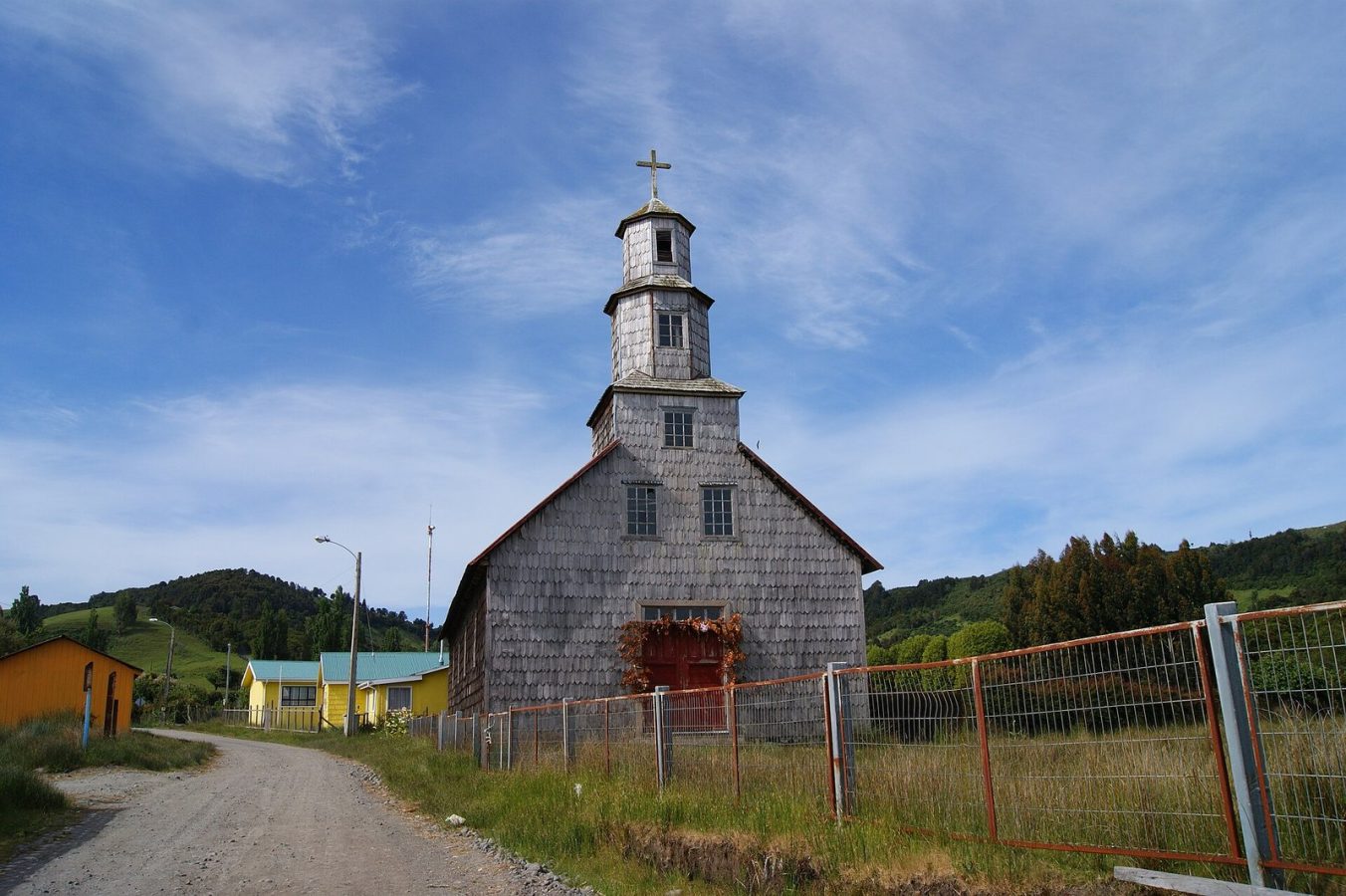
Photo: E10ddie, CC BY-SA 4.0
At a glance
| Getting there | Car ferry from Pargua to Chacao in about 30 min, frequent; flights to Mocopulli near Castro |
|---|---|
| Gateway | Puerto Montt or Puerto Varas (Pargua ferry) |
| Travel time | 30 min by ferry; 2 to 4 h by road to Ancud or Castro |
| Days | 3 to 5 nights |
| Best months | Dec–Mar, driest and warmest; rain all year, wettest May–Aug |
| Getting around | Rent a car for the churches and the west coast; buses link Ancud, Castro and Quellon |
| Booking | Rooms in Castro ahead for Jan–Feb; penguin boats on the day at Punihuil |
| Cost | Mid-range for Chile; seafood is good value |
| Beaches | Wild Pacific beaches at Cucao and Punihuil, cold and rough; few places to swim |
| Sea | Pacific Ocean |
| Archipelago | Chiloe Archipelago |
| Area | 8,394 km² |
| Population | 150,000 |
| Highest point | 491 m |
| Ferry | 30 min from Puerto Montt or Puerto Varas (Pargua ferry) |
| Airport | Yes, scheduled flights |
| Car-free | No |
| UNESCO | Churches of Chiloe |
| Checked | October 2026 |
Tours and day trips: what to book
Most tours for Chiloe start on the mainland, and the main question is whether to see it in a day or stay.
The best-selling product is the full-day tour from Puerto Varas or Puerto Montt. A minibus crosses on the ferry, stops in Ancud for the fort and the waterfront, continues to Dalcahue for the church and craft market and ends in Castro for the stilt houses and the cathedral, returning late in the evening. Transport, ferry and guide are included; lunch, often curanto, is usually extra. It covers a lot, but means eight hours or more on the road.
On the island, tours from Castro or Ancud go to the penguin colony at Punihuil, where small boats leave from the beach and approach the rocks, combined with the Spanish fort; others follow the sheltered inner coast by road and sea, visiting Quinchao and its churches. Multi-day packages from Puerto Varas add nights in Castro.
If you can, skip the long day trip and spend two or three nights on the island with a hired car, booking the Punihuil boat on the spot. If you have only one day, the tour from Puerto Varas is the efficient choice.
What to see and do on Chiloe
Castro and the palafitos
The island capital sits on a fjord-like inlet halfway down the east coast. Its rows of palafitos, wooden houses on stilts painted in bright colours, stand over the water at Gamboa and Pedro Montt; several now hold cafes and guesthouses. On the main square, the yellow and purple church of San Francisco, clad in timber, is the largest of the World Heritage churches.
Dalcahue and Quinchao
Twenty minutes north-east of Castro, Dalcahue has a heritage church with a porticoed front and a waterfront market of woollens, baskets and seafood stalls, busiest at weekends. A short ferry crosses to Quinchao island, where the church of Achao, built in the 18th century without nails, is among the oldest in Chile.
Punihuil penguin colony
On the Pacific coast south-west of Ancud, three small islets shelter both Humboldt and Magellanic penguins from about September to March. Local fishermen take visitors out in small boats launched from the beach, which pass close to the colony for about half an hour. Sea otters and other seabirds are often seen, and whales offshore in some summers.
Ancud and Fort San Antonio
The northern port town, an hour's drive from the ferry, was the last Spanish stronghold in South America, and the cannons of Fort San Antonio still overlook the bay. The regional museum explains the churches and the island's legends, and the market serves curanto, a mix of shellfish, meat and potato dumplings cooked over hot stones.
Chiloe National Park and Cucao
On the wild western coast, about an hour from Castro, the park protects evergreen rainforest, dunes and a long Pacific beach at Cucao. Boardwalk trails lead through the forest, and nearby the Muelle de las Almas, a sculpture of a pier ending in mid-air over the cliffs, draws walkers. The sea is too rough for swimming.
Chiloe tours: which one for you
Our pick for each kind of trip, with live dates and prices. Free cancellation on most.
Best for: First visit, a day from Puerto Varas
A long day with transport and guide that crosses on the ferry and reaches Ancud, Dalcahue and Castro, the quickest way to see the essentials without driving.
- Penguins and history: Castro penguins in chiloe and fort san antonio day tour Combines the penguin colony at Punihuil, seen from small boats, with the old Spanish fort at Ancud, ideal for wildlife lovers and families.
- Already on the island, based in Castro: Essential chiloe dalcahue and castro in one day Focuses on Castro and Dalcahue, with the painted churches, the stilt houses and the craft market, at a gentler pace than the day trips from the mainland.
How to get to Chiloe
Car ferries cross the Chacao Channel between Pargua on the mainland and Chacao on the island in about 30 minutes. Several companies run them throughout the day and much of the night without booking, so queues are the only delay, mainly in summer. Pargua is about an hour south-west of Puerto Montt.
Long-distance buses from Puerto Montt, and from Santiago overnight, cross on the ferry and continue to Ancud in around two and a half hours and Castro in about four. Mocopulli airport, between Castro and Dalcahue, has flights from Santiago and Puerto Montt. Puerto Montt's airport is the busier alternative.
From Quellon in the south, ferries continue to Chaiten and the Carretera Austral in Patagonia, a useful route for road trips.
Getting around
Chiloe is about 180 km from north to south, and Ancud to Castro takes around an hour and a half by car. The main highway along the east is good, but side roads to churches and the west coast are often gravel and muddy after rain. A rental car, picked up in Puerto Montt and taken on the ferry, is the best way to visit the churches. Buses run frequently between Ancud, Castro and Quellon, with local minibuses to the villages, and small ferries serve the islands of the inner sea.
When to go
December to March is the best time. The weather is mildest, with days around 18 to 22 degrees Celsius and more sunshine, the penguins are present at Punihuil, and Chilean summer holidays fill Castro in January and February. Festivals of traditional food and music take place in many villages in summer, and February is the busiest month.
Rain falls in every month, and the west coast is wetter than the east, so pack waterproofs whatever the season. From May to August it is cold, windy and very wet, with short days; penguin boats stop and some guesthouses close, though the churches and markets remain open and prices drop. Spring and autumn are quieter, with changeable weather. Three to five nights allow Castro, the churches, the penguins and the national park.
Where to stay
Castro is the best base: central, with the most guesthouses, restaurants and bus connections, and stilt-house rooms over the water. Ancud suits a short visit focused on the north, the fort and the penguins, and is closest to the ferry. Dalcahue is a small, quieter alternative near Castro, and Cucao, on the west coast, has cabins and campsites for the national park. Rural homestays and farm stays across the island offer a taste of local life.
History and character
The Huilliche and the seafaring Chono lived on Chiloe before the Spanish arrived in the 16th century. From the early 17th century Jesuit missionaries travelled between the islands, and local carpenters, skilled in boatbuilding, developed the wooden church style now on the World Heritage List. Chiloe stayed loyal to Spain longer than anywhere else in South America and joined Chile only in 1826. Isolation preserved a distinct culture of shingled houses, communal work parties that once moved whole houses across land and sea, and legends of ghost ships, sea spirits and forest creatures.
Combine it with
Puerto Varas and the lakes and volcanoes around Lake Llanquihue are two to three hours away and make the natural partner, with Osorno volcano and the Petrohue falls. From Quellon, ferries reach Chaiten for the Carretera Austral. Many travellers fly on from Puerto Montt to Patagonia, Torres del Paine or Punta Arenas.
Frequently asked questions
How do I get to Chiloe?
Car ferry from Pargua to Chacao in about 30 min, frequent; flights to Mocopulli near Castro.
How long does it take to get to Chiloe from Puerto Montt or Puerto Varas (Pargua ferry)?
From Puerto Montt or Puerto Varas (Pargua ferry): 30 min by ferry; 2 to 4 h by road to Ancud or Castro.
How many days do you need on Chiloe?
3 to 5 nights.
When is the best time to visit Chiloe?
Dec–Mar, driest and warmest; rain all year, wettest May–Aug.
Do I need a car on Chiloe?
Rent a car for the churches and the west coast; buses link Ancud, Castro and Quellon.
Is Chiloe worth a day trip?
Go if you want wooden churches, fishing villages on stilts, penguins and a distinct island culture with good seafood. Skip it if you need sunshine and beaches, or have only a day; the weather is wet and the distances longer than they look. With about 30 min each way from Puerto Montt or Puerto Varas (Pargua ferry), a day trip is easy to do.
Is Chiloe expensive?
Mid-range for Chile; seafood is good value.
What are the beaches like on Chiloe?
Wild Pacific beaches at Cucao and Punihuil, cold and rough; few places to swim.
What should I book ahead for Chiloe?
Rooms in Castro ahead for Jan–Feb; penguin boats on the day at Punihuil.
Can I book tours and day trips to Chiloe online?
Yes. Boat trips, guided tours and day trips for Chiloe can be booked online; live prices and free cancellation on most are shown on this page.