San Blas Islands
Panama
The San Blas Islands are a chain of about 365 low coral islands off Panama's Caribbean coast, of which only 49 are…
49 tours & trips
Panama · Pacific Ocean · Nature & wildlife island
Coiba is the largest island in Central America, 494 square kilometres of rainforest off the Pacific coast of Panama, and the heart of a national park listed by UNESCO. A feared prison kept it empty for most of the 20th century, so today its reefs, sharks, dolphins and forest are among the least disturbed on the Pacific coast.
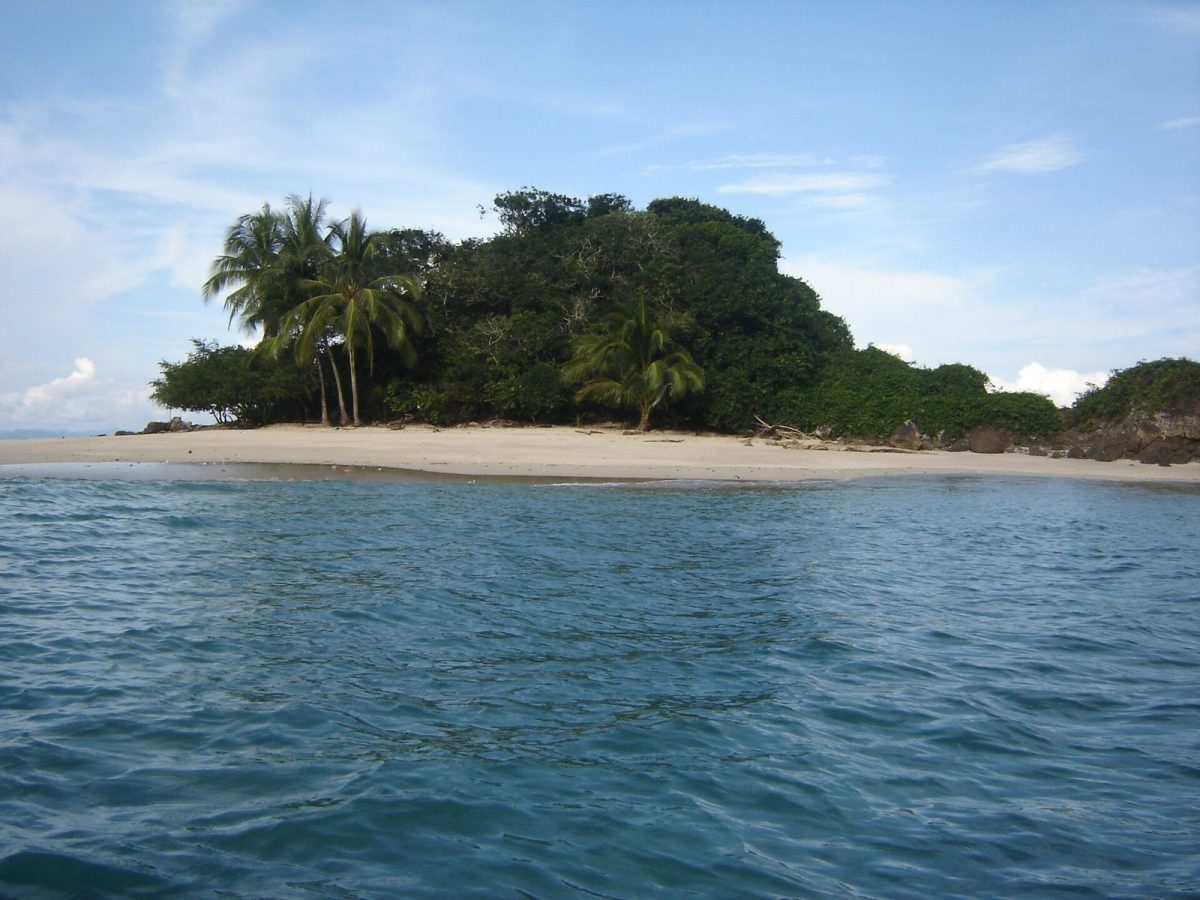
Photo: Seibert, CC BY-SA 4.0
| Getting there | Boat from Santa Catalina in about 1 to 1.5 h, on a day trip or a dive tour; no public ferry |
|---|---|
| Gateway | Santa Catalina (boat) |
| Travel time | About 1 to 1.5 h by fast boat |
| Days | A day trip; 2 to 3 nights for diving |
| Best months | Dec–Apr in the dry season; May–Nov wetter, with humpbacks Jul–Oct |
| Getting around | Only by boat; short marked trails near the ranger station |
| Booking | Trips a day or two ahead in Santa Catalina; dive packages and park cabins earlier |
| Cost | Mid-range for Panama; the boat is the main expense |
| Beaches | Empty white-sand beaches on Coiba and the islets around it, used for lunch and snorkel stops |
| Sea | Pacific Ocean |
| Area | 494 km² |
| Population | Uninhabited |
| Airport | No |
| UNESCO | Coiba National Park and its Special Zone of Marine Protection |
| Checked | October 2026 |
Coiba is visited only on organised boat trips, and almost all start in Santa Catalina, a small surf village on the mainland. One national-park day trip from there appears online, and the dive shops and tour desks along the village street sell the same thing.
The standard snorkel day leaves early in a fast open boat, stops at two or three reefs, usually including the tiny islet of Granito de Oro, and lands at the ranger station on Coiba for lunch and a short walk. The boat, a guide, snorkel gear, water and a picnic lunch are normally included; the national park entrance fee is almost always paid separately, in cash, so carry it.
Divers book a two-tank day with the same shops, and multi-day packages add nights in the basic park cabins or a few days of diving from Santa Catalina. A few liveaboard boats also cruise the park for a week, aimed at experienced divers.
For most visitors one snorkel or dive day is right; serious divers should plan three days from Santa Catalina, because the conditions and the marine life change from site to site and day to day.
A rock with a patch of sand and a few palms, off the east coast of Coiba, and the classic snorkel stop of the park. In shallow water around it you swim with reef fish in huge numbers, turtles, moray eels and often white-tip reef sharks resting on the bottom. It is the first or second stop on most trips.
Divers come for the open-ocean life: schools of jacks and snappers, eagle and devil rays, white-tip and sometimes hammerhead sharks, and the occasional whale shark. Sites on rocky pinnacles and seamounts suit confident divers, as currents can be strong. Visibility varies a lot, from clear blue to green and plankton-rich.
Boats land at the ranger station on a calm bay of the north-east coast, where you pay or show the park fee. Short trails lead into the forest and along mangroves, with good chances of seeing scarlet macaws, agoutis and the island's own subspecies of howler monkey. Crocodiles live in the creek nearby, so keep to the paths.
Lunch on most trips is on a white-sand beach, often on the small island of Rancheria opposite the station, with calm water and coral just offshore. There is no shop or bar anywhere in the park, so bring sunscreen, water and something to eat beyond what the boat provides.
The open water between the mainland and Coiba is part of the trip. Bottlenose and spotted dolphins often ride the bow, and from about July to October humpback whales arrive from the south to breed and calve, sometimes surfacing close to the boats. The ride can be wet and bumpy, so pack a dry bag.
Live dates and prices. Free cancellation on most tours.
There is no public ferry and no airport, so you arrive with a tour or dive boat. Santa Catalina, on the coast of Veraguas province, is the usual departure point; the crossing in a fast open boat takes about an hour to an hour and a half, depending on the sea and the first stop.
To reach Santa Catalina from Panama City, drive west along the Pan-American Highway to Santiago, then south via Sona, about five to six hours in total. Buses follow the same route with changes in Santiago and Sona and take longer. Shuttle vans from Panama City and Boquete also run to the village.
A few operators start from other villages on the coast or from the Gulf of Chiriqui to the west, and some liveaboards sail from Panama City.
There are no roads or vehicles on Coiba, and visitors are not free to roam. Movement is by the tour boat between reefs, beaches and the ranger station, where a few short marked trails cross the forest and mangroves; a guide is required. Most of the island, including the ruins of the old prison camps, is closed or reachable only on special trips. In Santa Catalina everything is within walking distance or a short taxi ride.
The dry season from December to April brings sun, calmer mornings and easier crossings, and is the busiest time in Santa Catalina; book ahead around Christmas, New Year and Easter. The sea stays warm all year, at around 27 to 29 degrees.
From May to November rain falls most afternoons, sometimes heavily, but mornings are often fine and the boats keep running. This is when humpback whales visit, roughly July to October, and when prices and crowds are lowest. Visibility underwater changes with plankton and runoff and is hard to predict in any month.
Trips are cancelled when the sea is too rough, so allow a spare day in Santa Catalina. One day suits snorkellers; divers should plan two or three days of diving.
Nearly everyone stays in Santa Catalina, a laid-back village of surf camps, hostels, small lodges and dive shops along a sandy road and the beach at Playa Estero. Stay near the village centre to walk to the boats at dawn, or by the beach for the surf. Basic cabins at the ranger station on Coiba can be booked through the dive shops or the park, and allow a night in the forest and an early dive the next day.
Coiba split from the mainland when sea levels rose at the end of the last ice age, and its animals have since developed into distinct island forms, including a howler monkey and a small bird, the Coiba spinetail. In 1919 Panama opened a penal colony here, and under the military governments of Torrijos and Noriega it became notorious for torture and killings of prisoners. Fear kept people away and the forest intact. The prison closed in 2004, after the national park had been declared, and UNESCO listed the park in 2005.
Santa Catalina makes a natural stop between Panama City, five to six hours east, and Boquete or Boca Chica in the west. Santa Fe, a mountain village with cloud forest and waterfalls, is about three hours away. Many travellers combine Coiba with the Azuero peninsula for beaches and old towns, or with Bocas del Toro on the Caribbean side.
Boat from Santa Catalina in about 1 to 1.5 h, on a day trip or a dive tour; no public ferry.
From Santa Catalina (boat): about 1 to 1.5 h by fast boat.
A day trip; 2 to 3 nights for diving.
Dec–Apr in the dry season; May–Nov wetter, with humpbacks Jul–Oct.
Only by boat; short marked trails near the ranger station.
Go if you want world-class snorkelling and diving with sharks, turtles and big fish shoals on a long boat day. Skip it or choose Bocas del Toro or the San Blas islands if you want beach hotels, nightlife or an easy trip without early starts and rough crossings.
Mid-range for Panama; the boat is the main expense.
Empty white-sand beaches on Coiba and the islets around it, used for lunch and snorkel stops.
Trips a day or two ahead in Santa Catalina; dive packages and park cabins earlier.
Yes. Boat trips, guided tours and day trips for Coiba can be booked online; live prices and free cancellation on most are shown on this page.
Panama
The San Blas Islands are a chain of about 365 low coral islands off Panama's Caribbean coast, of which only 49 are…
49 tours & trips
Bocas del Toro Archipelago, Panama
Isla Colon is the main island of the Bocas del Toro archipelago on Panama's Caribbean coast near the Costa Rican…
11 tours & trips
Panama
The Pearl Islands are an archipelago of more than 200 islands and islets in the Gulf of Panama, about 48 km off the…
10 tours & trips
Panama
Taboga is a small volcanic island in the Gulf of Panama, about 20 km from Panama City, known as the Island of Flowers…
6 tours & trips