Faroe Islands · Atlantic Ocean · Nature & wildlife island
Faroe Islands
The Faroe Islands are a self-governing archipelago of 18 steep, treeless islands in the North Atlantic, halfway between Iceland and Norway and part of the Kingdom of Denmark. Grass-roofed villages, sea cliffs alive with puffins, waterfalls dropping into the ocean and a population of about 55,000 make it one of Europe's most dramatic places to hike and drive.
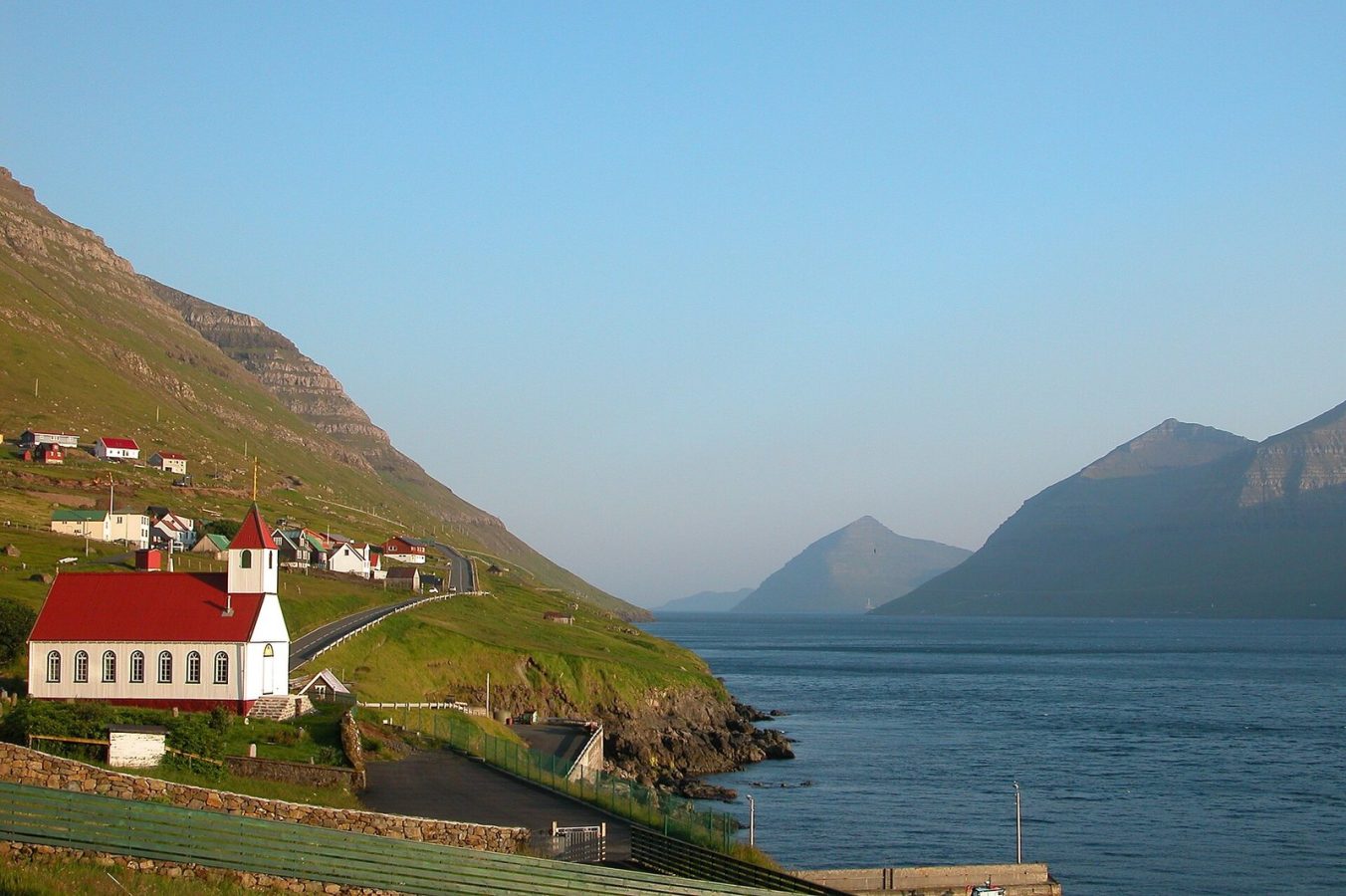
Photo: Erik Christensen, Porkeri (Contact at the Danish Wikipedia), CC BY-SA 3.0
At a glance
| Getting there | Flights to Vagar from Copenhagen in about 2 h and from Iceland, Scotland and Norway; car ferry from Denmark |
|---|---|
| Gateway | Vagar Airport; car ferry from Hirtshals, Denmark |
| Travel time | About 2 h by air from Copenhagen |
| Days | 3 to 5 nights |
| Best months | Jun–Aug for long days and puffins; May and Sep quieter; changeable all year |
| Getting around | Rent a car: tunnels and bridges link the main islands; buses, ferries and helicopters for the rest |
| Booking | Rental cars, rooms and Mykines boats months ahead for summer; some hikes need paid permits |
| Cost | Expensive, at Scandinavian price levels |
| Beaches | Few beaches: black-sand coves at Tjornuvik and Saksun; the sea stays cold all year |
| Sea | Atlantic Ocean |
| Area | 1,393 km² |
| Population | 55,466 (2026) |
| Highest point | 880 m (Slaettaratindur) |
| Airport | Yes, scheduled flights |
| Car-free | No |
| Checked | October 2026 |
Tours and day trips: what to book
Most people explore the Faroes on their own with a rental car, but the small range of tours fills useful gaps.
The most popular product is a guided day of the highlights, by minibus or with a private driver. Typical routes cover the waterfall at Gasadalur, the lake above the sea on Vagar, the village of Saksun, the grass-roofed church at Kirkjubour and the cliffs of Eysturoy. These suit visitors who do not want to drive on narrow roads in poor weather; the private version adapts to the forecast.
Boat trips are the second category: summer cruises from Sorvagur under the seabird cliffs and sea stacks of western Vagar, RIB rides into sea caves and along the coast near Torshavn, and the ferry to Mykines for the puffin colony, which needs booking far in advance.
Guided hikes are the third. Many trails cross private farmland and charge a fee, some require a guide, and local guides add safety on exposed cliffs in fog. Fishing trips from the shore or by boat, photography tours and village food experiences in farmhouses round out the offer.
For a first visit, rent a car, book one boat trip and one guided hike, and keep a spare day for bad weather.
What to see and do in Faroe Islands
Torshavn and Tinganes
The small capital spreads around its harbour on Streymoy. On the rocky headland of Tinganes, red-painted wooden buildings with grass roofs house the government, on a site where the Norse assembly met over a thousand years ago. Walk the old lanes of Reyni behind it, visit the Nordic House and the National Museum, and eat fresh fish by the harbour.
Gasadalur and Mulafossur
On the west coast of Vagar, about 20 minutes' drive from the airport, a waterfall drops straight off the cliff into the sea below the tiny village of Gasadalur, with the island of Mykines on the horizon. The viewpoint is a short walk from the parking area. Until a tunnel opened in 2004, the village could be reached only on foot over the mountain.
The lake above the ocean
Sorvagsvatn, the largest lake in the islands, ends at a cliff high above the sea, and from the right angle it appears to float above the ocean. A trail of about three hours return from near Midvagur leads along the lake to the cliffs of Traelanipa and the Bosdalafossur waterfall. The land is privately owned, and a fee is charged.
Mykines and the puffins
The westernmost island is home to tens of thousands of puffins from May to August, nesting on grassy slopes beside the trail to the lighthouse on the islet of Mykinesholmur. A small ferry from Sorvagur takes about 45 minutes and is often cancelled by swell; there is also a subsidised helicopter on some days. Book well ahead, pay the hiking fee and allow a full day.
Saksun and Tjornuvik
In northern Streymoy, Saksun is a scattering of turf-roofed farmhouses and a white church above a tidal lagoon, reached by a narrow road; at low tide you can walk the sand to the sea. Over the mountain, Tjornuvik has a black-sand beach facing two famous sea stacks, and surfers when the swell is right.
Gjogv and Slaettaratindur
On the north tip of Eysturoy, the village of Gjogv takes its name from a deep sea gorge used as a natural harbour, with walking paths along the cliffs. On the way, a trail climbs Slaettaratindur, at 880 metres the highest point in the islands, a steep two to three hours return with views over most of the archipelago on a clear day.
Faroe Islands tours: which one for you
Our pick for each kind of trip, with live dates and prices. Free cancellation on most.
Best for: First visit, the highlights by car
A private driver-guide takes you to the famous waterfalls, villages and viewpoints, handling the roads and tunnels and adapting the route to the weather.
- Seabirds and puffins by boat: Sorvagur faroe islands puffin boat tour A summer boat trip from Sorvagur under the cliffs of the western islands, where puffins, guillemots and gannets nest by the thousand.
- A guided cliff hike: Faroe islands vagar island guided cliffside hike Walk with a local guide along the cliff edges of Vagar, safer in fog and wind and with stories of the land and the farms.
How to get to Faroe Islands
Vagar Airport, the only airport, is linked by Atlantic Airways and other carriers to Copenhagen in about two hours all year, and to Billund, Reykjavik, Edinburgh, Bergen and other European cities, some seasonally. It lies about 45 minutes' drive from Torshavn through a subsea tunnel, and buses meet flights.
The alternative is the Smyril Line car ferry from Hirtshals in northern Denmark to Torshavn, which takes around 30 to 40 hours depending on the route and runs about weekly to twice weekly; in summer it continues to Seydisfjordur in Iceland. Bringing your own car this way makes sense for a long stay. Some cruise ships call at Torshavn and Klaksvik in summer.
Getting around
A rental car gives the most freedom. Subsea tunnels and bridges now connect the main islands, including Vagar, Streymoy, Eysturoy, Bordoy and Sandoy; the long subsea tunnels charge a toll. Roads are good but narrow in places, with sheep, single-lane tunnels and sudden fog. Blue buses link most villages, and car ferries serve Suduroy, Kalsoy and the small islands, while subsidised helicopters fly to remote islands on set days.
When to go
The climate is mild and wet all year, kept above freezing in most winters by the Gulf Stream and rarely above 15 degrees in summer. June to August brings the longest days, with light almost around the clock in June, the best hiking conditions and the puffins on Mykines. This is also the busy season, when cars and rooms are scarce. National Day on 29 July, with the Olavsoka festival in Torshavn, brings rowing races, chain dancing and crowds.
May and September are quieter and often good, with fewer visitors and still reasonable daylight. From October to March days are short, storms are frequent, many hiking trails and boat trips close, and ferries may be cancelled, though the light can be extraordinary. Weather changes by the hour all year: pack waterproofs and keep plans flexible. Three to five nights allow for a lost day or two.
Where to stay
Torshavn is the most practical base, with the widest choice of hotels, guesthouses and restaurants, and the main islands within an hour's drive. Staying on Vagar near the airport suits those focused on the western sights and Mykines. Villages such as Gjogv or Gota on Eysturoy offer guesthouses and holiday homes in quieter settings, good for walkers. Klaksvik suits the northern islands. Book early for summer, as beds are limited.
History and character
Irish monks may have lived here before the Norse arrived around the 9th century, bringing sheep, farming and the assembly that met at Tinganes. The islands passed from Norway to Denmark and were held under a royal trade monopoly until the 19th century. During the Second World War British forces occupied them and built the airport on Vagar. Home rule followed in 1948, and fishing became the backbone of the economy. Faroese, close to Old Norse, remains the everyday language.
Combine it with
Iceland is the classic pairing, a short flight from Vagar or reached on the summer ferry to Seydisfjordur. Copenhagen is the usual gateway and worth a few days. Flights to Edinburgh link the Faroes with Scotland, and from there Shetland and Orkney, similar landscapes with a shared Norse past, are within reach.
Frequently asked questions
How do I get to Faroe Islands?
Flights to Vagar from Copenhagen in about 2 h and from Iceland, Scotland and Norway; car ferry from Denmark.
How long does it take to get to Faroe Islands from Vagar Airport; car ferry from Hirtshals, Denmark?
From Vagar Airport; car ferry from Hirtshals, Denmark: about 2 h by air from Copenhagen.
How many days do you need in Faroe Islands?
3 to 5 nights.
When is the best time to visit Faroe Islands?
Jun–Aug for long days and puffins; May and Sep quieter; changeable all year.
Do I need a car in Faroe Islands?
Rent a car: tunnels and bridges link the main islands; buses, ferries and helicopters for the rest.
Is Faroe Islands worth a day trip?
Go if you want dramatic cliff walks, seabirds, empty roads through fjords and moody weather you can dress for. Skip it or choose the Canaries or Madeira if you need sunshine, beaches, warm swimming or a modest budget.
Is Faroe Islands expensive?
Expensive, at Scandinavian price levels.
What are the beaches like in Faroe Islands?
Few beaches: black-sand coves at Tjornuvik and Saksun; the sea stays cold all year.
What should I book ahead for Faroe Islands?
Rental cars, rooms and Mykines boats months ahead for summer; some hikes need paid permits.
Can I book tours and day trips to Faroe Islands online?
Yes. Boat trips, guided tours and day trips for Faroe Islands can be booked online; live prices and free cancellation on most are shown on this page.