Lesbos
113 km away
Lesbos is Greece's third largest island, a big, green slice of the north-east Aegean only a few kilometres off the…
5 tours & trips
Turkey · Aegean Sea · Beach island
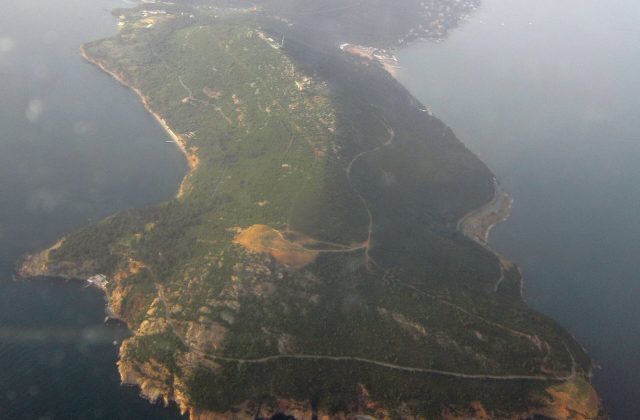
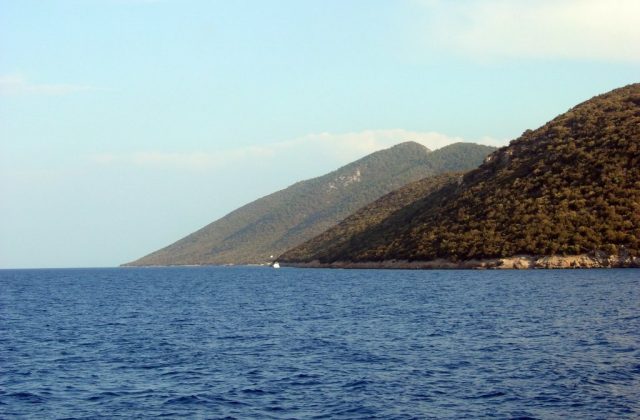
Gökçeada, the old Imbros, is Turkey's largest island, about 280 square kilometres of hills, olive groves and empty bays at the mouth of the Gulf of Saros in the northern Aegean. Its half-abandoned Greek stone villages, windy beaches for kitesurfing and slow pace make it one of the least developed resort islands in the country.
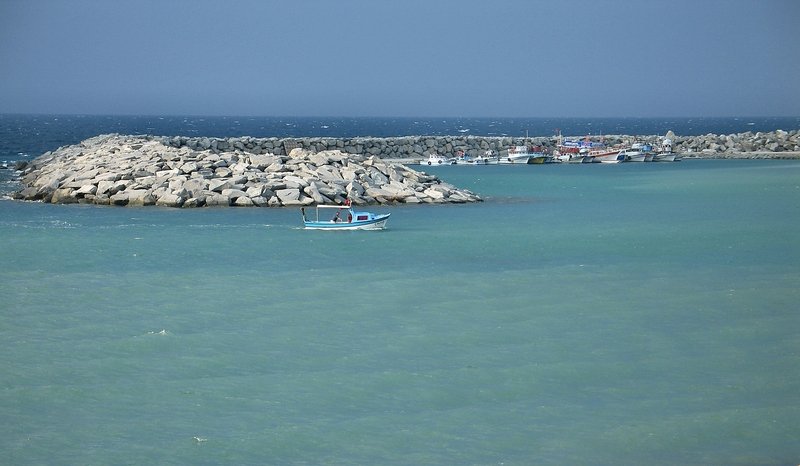
Photo: Mehmet Ergun, CC BY-SA 2.5
| Getting there | Car ferry from Kabatepe on the Gallipoli peninsula in about 1.5 h; some summer boats from Canakkale |
|---|---|
| Gateway | Canakkale (Kabatepe ferry port) |
| Travel time | About 1.5 h by car ferry from Kabatepe |
| Days | 3 to 5 nights |
| Best months | Jun–Sep; windy Jul–Aug suits kitesurfing; many places shut Nov–Apr |
| Getting around | Rent a car or scooter; summer minibuses link the town, Kaleköy and some beaches |
| Booking | Car places on summer weekend ferries and rooms in July–August and mid-August |
| Cost | Cheap by Turkish resort standards |
| Beaches | Long sandy Aydıncık for kitesurfing; Kapıkaya, Laz Koyu and Yıldız Koyu for calm, clear water |
| Sea | Aegean Sea |
| Area | 279 km² |
| Population | 10,721 (2023) |
| Highest point | 672 m |
| Car-free | No |
| Checked | October 2026 |
Nothing is sold online for Gökçeada alone. Most visitors arrive independently on the car ferry, often with their own vehicle, and arrange everything else on the island.
The activity with the most organisation is kitesurfing. Schools on the long beach at Aydıncık, in the south-east, rent equipment and teach beginners from June to September, when a steady northerly wind blows; lessons are sold by the hour or in multi-day courses, with gear included. Windsurfing is offered on the same beach.
Diving is the second draw. The bays around Yıldız Koyu, on the north-east coast, form an underwater park, and a small number of local centres run boat dives and introductory courses in summer. Some boats also run day trips around the coast with swimming stops and lunch, leaving from Kaleköy harbour.
Otherwise the island rewards a car and curiosity: a loop of the Greek villages of the interior, coffee in Zeytinli, an afternoon on a south-coast beach and fish in Kaleköy at sunset. Guided Gallipoli battlefield tours from Canakkale are a separate trip on the mainland and fit well before or after the ferry.
Recommendation: bring or rent a car, plan three nights, and add a kite lesson or a dive if the wind or sea suits.
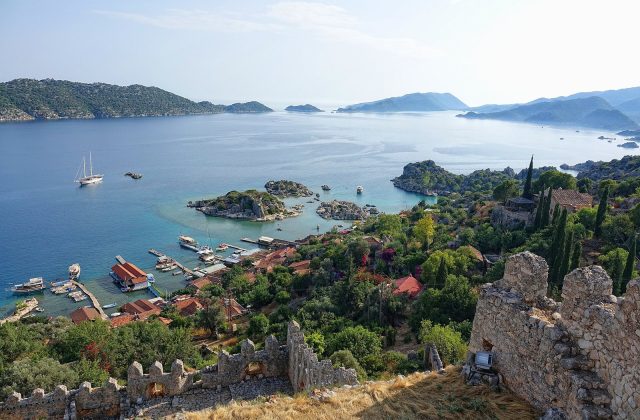
The northern village of Kaleköy climbs from a small fishing harbour to the ruins of a Byzantine and Genoese castle on the hill above, with views over the sea towards Samothrace. Upper Kaleköy is a former Greek village of stone houses; the lower harbour has fish restaurants and boat trips. It is about 5 km from the main town.
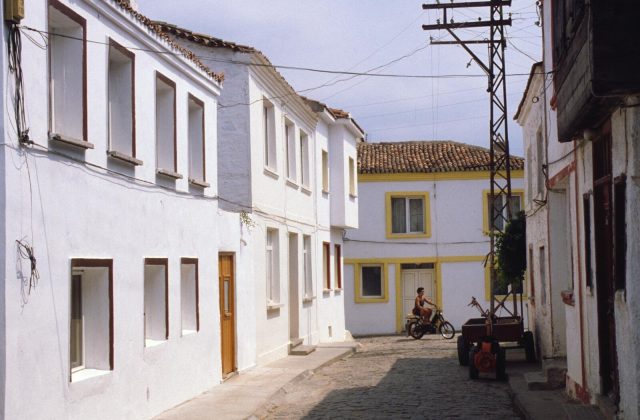
In the hills west of the town, Zeytinli, Tepeköy and Dereköy were the Greek villages of Imbros, with churches, stone houses and plane-shaded squares. Many houses stand empty, but some have been restored by returning families and turned into guesthouses and cafes. Zeytinli is known for coffee and sweet pastries; Dereköy, the largest, is the most haunting.
The long sandy beach on the south-east coast is the island's main beach and the base for kitesurfing, with shallow water and steady wind in summer. Behind it lies a salt lake whose mud locals smear on for its supposed healing properties, and where flamingos sometimes feed in spring and autumn. Allow a full afternoon here.
On the north-east coast near Kaleköy, the bay of Yıldız Koyu and the stretch of coast around it are protected as an underwater park, the first of its kind in Turkey. The water is clear and rocky, with octopus, groupers and sponges; snorkel from the small beach or join a boat dive. The sea here is cooler than in the south.
A rough road runs along the wild south-west coast to bays such as Kapıkaya and Laz Koyu, with few or no facilities and very clear water; Uğurlu has a small village and fish tavernas. Inland near Dereköy, a short path leads to the Marmaros waterfall in a wooded valley. The westernmost point of Turkey, Cape İncirburnu, lies at the island's far end.
The main route is the car ferry from Kabatepe, on the western side of the Gallipoli peninsula, to Kuzu Limanı, the port on the island's east coast, a crossing of about an hour and a half. In summer there are several sailings a day, fewer in winter, when strong winds sometimes cancel them. Kabatepe is about 15 minutes by road from Eceabat, which is linked to Canakkale by frequent ferries across the Dardanelles, and about five hours by car from Istanbul.
In summer some ferries also sail directly from Canakkale itself. Tickets are sold at the port; on Friday and holiday sailings in July and August car places fill, so arrive early or check advance sales. Canakkale airport has flights from Istanbul and Ankara. Foot passengers can take a minibus from Kuzu Limanı to the main town, about 6 km away.
A car or scooter makes the island easy. Distances are modest: the main town is about 6 km from the port and 15 km from Aydıncık, and most villages are within half an hour's drive. Roads are good between the main points but narrow and rough towards the south-west bays. Summer minibuses run from the town to Kaleköy, the port, Aydıncık and some villages, though not often. Rental cars and scooters are available in town, and taxis are fine for short trips.
June to September is the season. The sea is warm enough for swimming from late June to late September, at about 22 to 24 degrees, cooler than the southern Aegean. July and August bring the strongest and steadiest northerly winds, good for kitesurfing and windsurfing, but sometimes too blustery for sunbathing on the exposed beaches; sheltered bays on the north coast are then calmer. Turkish holidaymakers fill the island in July and August, especially at weekends.
Mid-August is the island's busiest week, when Greek Imbriots return for the Feast of the Assumption on 15 August and the village churches hold festivals. May and October are pleasant for walking and the villages, though many hotels and restaurants close from November to April and ferries are fewer. Three to five nights suits the island well.
The main town, Gökçeada Merkez, has the most hotels, shops and restaurants and is central for exploring by car, though it is not on the sea. Kaleköy suits those who want a harbour, fish dinners and the castle views, with small hotels on the hill. Zeytinli and the other Greek villages offer stone guesthouses with character and cool nights. Kitesurfers stay in the camps and simple hotels behind Aydıncık beach.
Imbros was a Greek island from antiquity until the twentieth century, and before that was sacred to the gods of the Samothracian mysteries. In 1915 it served as the Allied headquarters for the Gallipoli campaign. The Treaty of Lausanne in 1923 gave it to Turkey with promises of local autonomy for its Greek population, which were not kept: from the 1960s Greek schools were closed, land was taken for an open prison and state farms, and settlers were brought from the mainland. Most Greeks emigrated, the island was renamed in 1970, and today only a few hundred remain.
Gökçeada pairs naturally with the Gallipoli battlefields and Canakkale on the mainland, both on the way to the ferry, and with the ruins of Troy, about 30 minutes south of Canakkale. Bozcaada, the other Turkish island in the area, is reached by ferry from Geyikli, about an hour's drive south of Canakkale, so a week can cover both islands.
113 km away
Lesbos is Greece's third largest island, a big, green slice of the north-east Aegean only a few kilometres off the…
5 tours & trips
115 km away
Thasos is the northernmost large Greek island, a round, green mountain of marble and pine forest just off the coast of…
17 tours & trips
163 km away
Ammouliani is the only inhabited island of Halkidiki, a low, sandy island of about 4.5 square kilometres in the gulf…
17 tours & trips
Car ferry from Kabatepe on the Gallipoli peninsula in about 1.5 h; some summer boats from Canakkale.
From Canakkale (Kabatepe ferry port): about 1.5 h by car ferry from Kabatepe.
3 to 5 nights.
Jun–Sep; windy Jul–Aug suits kitesurfing; many places shut Nov–Apr.
Rent a car or scooter; summer minibuses link the town, Kaleköy and some beaches.
Go if you want quiet beaches, kitesurfing, stone villages and local food far from Turkish mass tourism. Skip it or choose Bozcaada if you want a compact island with wineries, a pretty harbour town and easier access without a car.
Cheap by Turkish resort standards.
Long sandy Aydıncık for kitesurfing; Kapıkaya, Laz Koyu and Yıldız Koyu for calm, clear water.
Car places on summer weekend ferries and rooms in July–August and mid-August.
Turkey
Kekova is a long, bare, uninhabited island off the Lycian coast of southern Turkey, between Kas and Demre.
57 tours & trips
Princes' Islands, Turkey
Büyükada is the largest of the Princes' Islands in the Sea of Marmara, a car-free island of wooden mansions, pine…
3 tours & trips
Turkey
Kara Ada, the Black Island, is a steep, uninhabited island at the mouth of Bodrum bay on Turkey's Aegean coast, a…
1 tour
Turkey
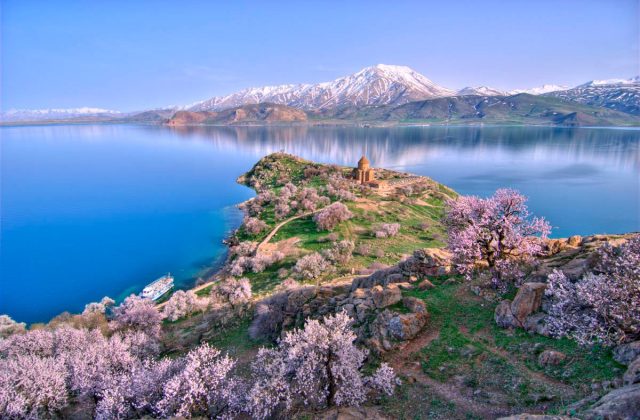
Akdamar is a small rocky island about 3 km off the southern shore of Lake Van in eastern Turkey, home to the Armenian…
No tours listed
Turkey
Bozcaada, the ancient Tenedos, is a small windswept island in the north-eastern Aegean, just off the Turkish coast near…
No tours listed
Turkey
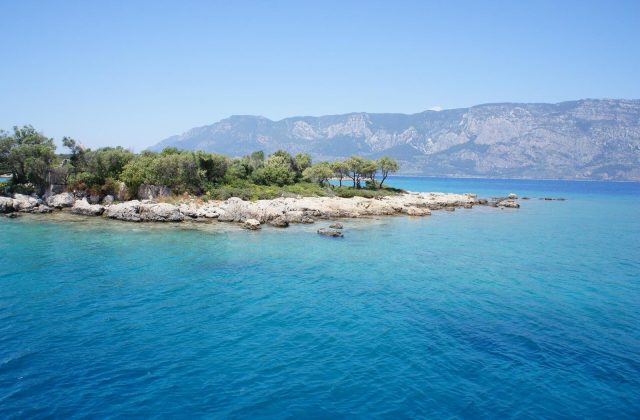
Sedir Island, known to most visitors as Cleopatra Island, is a small uninhabited island in the Gulf of Gokova on…
No tours listed