Ireland · Atlantic Ocean · Historic island
Great Blasket
The Great Blasket is a long, grassy ridge in the Atlantic, about 2 km off the tip of the Dingle peninsula in County Kerry, rising to 346 metres. Its Irish-speaking village was abandoned in 1953, and today visitors walk among the roofless houses, watch seals on the white beach and look out over the westernmost islands of Ireland.
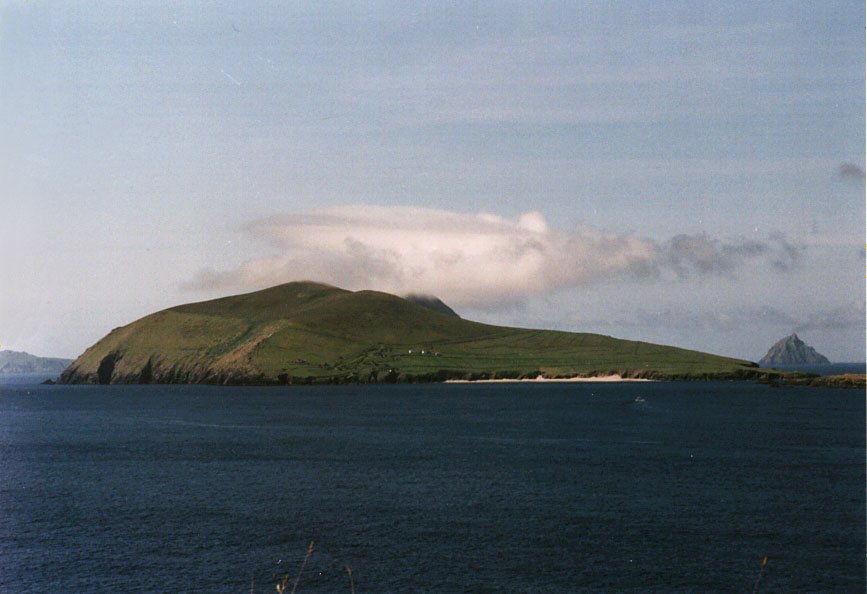
Photo: CC BY-SA 2.0 de
At a glance
| Getting there | Summer boat from Dunquin pier in about 20 min, or longer trips from Dingle and Ventry; weather permitting |
|---|---|
| Gateway | Dunquin or Dingle |
| Travel time | About 20 min by boat from Dunquin |
| Days | A day trip is enough |
| Best months | Apr–Sep, with calmer seas in Jun–Aug; boats are weather-dependent |
| Getting around | On foot only; grassy paths and tracks, steep in places |
| Booking | Boats a day or two ahead in July–August; confirm on the morning, as trips often cancel |
| Cost | Mid-range for Ireland |
| Beaches | One sandy beach, the White Strand below the village, where grey seals haul out |
| Sea | Atlantic Ocean |
| Archipelago | Blasket Islands |
| Area | 4.3 km² |
| Population | Uninhabited |
| Highest point | 346 m (An Cró Mór) |
| Airport | No |
| Car-free | Yes |
| Checked | October 2026 |
Tours and day trips: what to book
There are two ways to reach the island, and the one sold online is a wildlife boat trip from Dingle harbour with a landing on the Great Blasket. These tours take most of a day, follow the coast of the peninsula, often meet dolphins, seals and seabirds on the way, and give a few hours ashore; the boat and a commentary are included, food and wet-weather gear are not.
The other way is the short ferry from Dunquin pier, at the end of the peninsula. It is cheaper and gives you more time on the island, often five or six hours, but you organise the day yourself and bring a picnic. From Ventry, a few boats run longer eco tours that circle the outer islands and land on the Great Blasket.
In every case landings depend on the swell at the slipway, and boats may sail but not land. Before or after, visit the Blasket Centre in Dunquin, which tells the story of the islanders and their books.
The plain recommendation: with a car, take the ferry from Dunquin and spend the day walking; without one, book the Dingle tour with a landing.
What to see and do on Great Blasket
The abandoned village
On the sheltered eastern slope above the landing, the stone ruins of the village climb the hillside, with lanes, field walls and a few restored houses. Look for the house of Tomás Ó Criomhthain, the author of The Islandman, and imagine a community that numbered about 150 people in the 1840s.
The White Strand and its seals
Below the village, An Trá Bhán is a curve of pale sand where grey seals haul out and swim close to the shore, often dozens at a time. Watch from above or sit quietly on the beach. The water is clear but very cold, and only the bravest swim; there are no lifeguards.
The ridge walk to An Cró Mór
A grassy track leads west from the village along the spine of the island to the highest point, 346 metres, about two hours each way at a steady pace. Views open to the outer Blaskets, Inishtooskert and Tearaght, the most westerly point of Ireland. Turn back in time for your boat and keep away from the cliff edges.
Wildlife on the crossing
The sound between the mainland and the island has strong tides and plenty of life. Gannets dive for fish, and dolphins, porpoises and, in late summer, minke whales and basking sharks are seen on some trips. Puffins nest on the outer islands in early summer, best seen on the longer tours from Dingle or Ventry.
The Blasket Centre in Dunquin
On the mainland cliff facing the island, this visitor centre covers the islanders' life, language, music and remarkable writing, with photographs and recordings. Allow an hour. Its cafe windows frame the island, and it is the best place to wait when boats are delayed by weather.
Tours and day trips for Great Blasket
Live dates and prices. Free cancellation on most tours.
How to get to Great Blasket
From roughly April to September, small passenger boats cross from Dunquin pier, below the cliffs at the end of the peninsula, in about 20 minutes. There are several sailings a day in good weather, but there is no timetable you can count on: the swell at the island's slipway decides, and visitors transfer to a small inflatable or step ashore carefully. Longer trips start in Dingle and Ventry.
Dingle is the nearest town, about 20 minutes' drive from Dunquin along the Slea Head road. Buses from Tralee, which has a railway station, reach Dingle, and buses to Dunquin run only on some days in summer, so a car or bike is far easier. The nearest airport is Kerry, about an hour and a quarter from Dingle. Nothing runs in winter.
Getting around
Walking is the only way to get about. From the landing, paths climb through the village, and a clear grassy track continues along the ridge to the far end of the island. Ground can be boggy and slippery, and the slopes are steep, so wear walking boots and bring waterproofs. There are no shops, toilets are limited and there is no shelter beyond the ruins, so carry food and water.
When to go
The boats run from about April to September, and the best chance of calm landings is from June to August. Even then, westerly winds and Atlantic swell cancel trips on many days, so build flexibility into your Kerry plans and check on the morning. Summer days are long, mild and changeable, rarely above 20 degrees, with showers at any time.
July and August are the busiest months on the Dingle peninsula, with full boats and higher prices for rooms in Dingle, so book ahead. May and June bring wildflowers, nesting seabirds and quieter roads, and September is calmer for walking, though the season winds down. From October to March there are no boats.
A single day on the island is enough, ideally as part of three or four days on the peninsula.
Where to stay
Almost everyone stays on the mainland. Dingle is the best base, a lively harbour town with pubs, traditional music and restaurants, and the start of the longer boat trips. Dunquin and Ballyferriter, at the western end of the peninsula, are quieter Irish-speaking villages close to the pier, with guesthouses, a hostel and self-catering cottages. Overnight stays on the island itself are rarely possible.
History and character
The Blaskets were lived on for centuries by families who fished, farmed small fields and caught seabirds. Isolated and Irish-speaking, the islanders drew scholars in the early 20th century, who encouraged them to write. The result was a remarkable shelf of books, including The Islandman by Tomás Ó Criomhthain and the memoirs of Peig Sayers and Muiris Ó Súilleabháin. Emigration and storms emptied the village, and the government evacuated the last residents in 1953. The state later bought most of the island and protects it as a historic park.
Combine it with
The Great Blasket fits into a drive of the Slea Head loop, which passes beehive huts, the Gallarus Oratory and wide beaches such as Coumeenoole. Dingle is 50 minutes from Tralee and Killarney about an hour and a half away, so the island combines well with the Ring of Kerry and the Skellig Islands further south.
Frequently asked questions
How do I get to Great Blasket?
Summer boat from Dunquin pier in about 20 min, or longer trips from Dingle and Ventry; weather permitting.
How long does it take to get to Great Blasket from Dunquin or Dingle?
From Dunquin or Dingle: about 20 min by boat from Dunquin.
How many days do you need on Great Blasket?
A day trip is enough.
When is the best time to visit Great Blasket?
Apr–Sep, with calmer seas in Jun–Aug; boats are weather-dependent.
Do I need a car on Great Blasket?
No. Great Blasket is car-free. On foot only; grassy paths and tracks, steep in places.
Is Great Blasket worth a day trip?
Go if you want a wild Atlantic island with empty walks, seals and the moving story of its writers and lost village. Skip it or choose Inishmore in the Aran Islands if you want pubs, places to stay and reliable year-round ferries.
Is Great Blasket expensive?
Mid-range for Ireland.
What are the beaches like on Great Blasket?
One sandy beach, the White Strand below the village, where grey seals haul out.
What should I book ahead for Great Blasket?
Boats a day or two ahead in July–August; confirm on the morning, as trips often cancel.
Can I book tours and day trips to Great Blasket online?
Yes. Boat trips, guided tours and day trips for Great Blasket can be booked online; live prices and free cancellation on most are shown on this page.