Greenland · Polar seas · Remote island
Greenland
Greenland is the world's largest island, an autonomous territory of the Kingdom of Denmark where an ice sheet covers about four-fifths of the land and some 56,000 people live along the coast. Visitors come for icebergs the size of towns, whales, Inuit culture, hiking in the midnight sun and dog sledding under the northern lights.
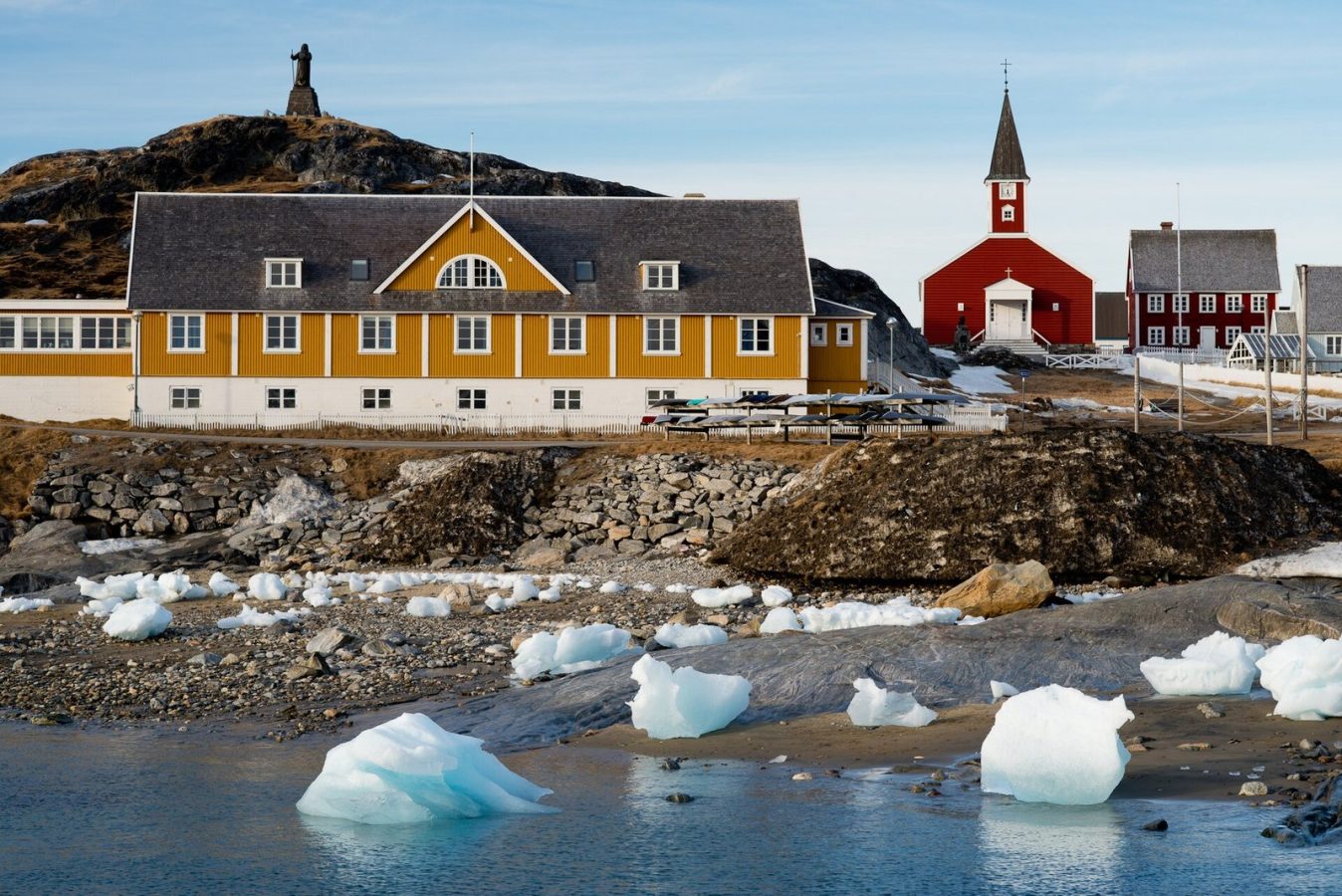
Photo: Thomas Leth-Olsen, CC BY-SA 2.0
At a glance
| Getting there | Flights from Copenhagen to Nuuk in about 4.5 to 5 h; from Reykjavik to Nuuk, Ilulissat and Kulusuk |
|---|---|
| Gateway | Copenhagen or Reykjavik (flights) |
| Travel time | About 4.5 h from Copenhagen, 2 to 3 h from Reykjavik |
| Days | A week or more |
| Best months | Jun–Sep for hiking, icebergs and whales; Feb–Apr for dog sledding |
| Getting around | No roads between towns: domestic flights, helicopters, coastal boats and ferries |
| Booking | Flights, rooms and boat trips months ahead for summer; weather delays are common |
| Cost | Very expensive, on Scandinavian levels or higher |
| Beaches | No swimming beaches; icy water and rocky shores; warm swims only at Uunartoq hot springs |
| Sea | Polar seas |
| Area | 2,166,086 km² |
| Population | 56,542 (2025) |
| Highest point | 3,694 m (Gunnbjørn Fjeld) |
| Airport | Yes, scheduled flights |
| Car-free | No |
| UNESCO | Ilulissat Icefjord; Kujataa; Aasivissuit–Nipisat |
| Checked | October 2026 |
Tours and day trips: what to book
Almost everything in Greenland is sold locally, town by town, and much of it is booked through local outfitters before you arrive. Because there are no roads between towns, most trips are short outings from a base, or multi-day packages that include flights.
In Ilulissat, boat trips among the icebergs of Disko Bay are the classic, with midnight sun versions in June and July, and whale-watching trips from June to September. Sightseeing flights over the icefjord and hikes to the edge of the fjord are also sold. In Nuuk, fjord boat tours, whale watching and city walks are the main products, and in Kangerlussuaq, the standard trip drives to the edge of the ice sheet for a walk on the ice, with musk-ox safaris on the tundra.
Active options include guided treks such as the Arctic Circle Trail, sea kayaking in the fjords and, in late winter, dog sledding north of the Arctic Circle with Inuit mushers. Expedition cruises cover several towns and remote coasts in one trip, with landings by inflatable boat.
Prices are high and usually include the guide, boat and safety gear; meals, flights and transfers are extra unless the package says otherwise.
The plain recommendation: for a first week, fly to Ilulissat, book an iceberg boat and a whale trip, and add Kangerlussuaq for the ice sheet.
What to see and do in Greenland
Ilulissat and the icefjord
The country's third town sits beside a fjord choked with icebergs calved from one of the fastest-moving glaciers on earth. Walk the boardwalk to the ruins of the old settlement of Sermermiut and the hills above, take an evening boat among the icebergs, and listen for the cracking ice. Allow at least three days.
Nuuk
The capital, home to about a third of Greenland's people, mixes the colonial harbour, a red wooden church and the statue of the missionary Hans Egede with modern apartment blocks. The National Museum displays mummies from a 15th-century grave, and the surrounding fjord system offers boat trips, whales and hiking on Sermitsiaq.
Kangerlussuaq and the ice sheet
A former air base at the head of a long fjord, Kangerlussuaq lies only about 25 km from the edge of the ice sheet, reached by a rough gravel road. Tours drive out to walk on the ice itself. On the tundra around, look for musk oxen, reindeer and Arctic foxes, especially in late summer.
The Arctic Circle Trail
A route of about 160 km between Kangerlussuaq and the coastal town of Sisimiut, crossing lakes, tundra and valleys with simple huts along the way. It takes about a week to ten days, requires carrying all food and some navigation skills, and is best walked from mid-June to September. Expect mosquitoes in July.
South Greenland and the Norse ruins
Around Narsarsuaq and Qaqortoq, green valleys hold sheep farms and the ruins of the Norse settlement founded by Erik the Red, including the stone church at Hvalsey. Icebergs float in the fjords, and boats reach the hot springs on the island of Uunartoq. It is the mildest region, best from June to September.
East Greenland and Tasiilaq
Reached by plane from Reykjavik via Kulusuk, the east coast is wilder and more traditional, with brightly painted houses below jagged peaks. Tasiilaq is the base for hikes into the Valley of Flowers, boat trips among sea ice and, in late winter, dog sledding. Ice can block the coast until July.
Greenland tours: which one for you
Our pick for each kind of trip, with live dates and prices. Free cancellation on most.
Best for: First day in Nuuk
A guided walk through the capital, from the colonial harbour and old church to the modern centre, with an introduction to Inuit and Danish history, ideal on arrival.
- Hiking the Arctic Circle Trail: Greenland arctic circle trail guided hiking tour A guided, supported trek on the famous route across the tundra between the ice sheet and the coast, for fit walkers who want the logistics handled.
How to get to Greenland
All visitors arrive by air or on a cruise ship. Air Greenland flies from Copenhagen to Nuuk, which opened a longer international runway in 2024, in about four and a half to five hours, and on some schedules to Kangerlussuaq, the former main hub. From Reykjavik, flights of two to three hours reach Nuuk, Ilulissat and Kulusuk for the east coast.
Onward travel depends on domestic flights and, in some areas, helicopters, which are often delayed by fog, wind or snow; leave a spare day before any international connection. Expedition cruises from Iceland, Canada and Norway visit the west and east coasts in summer, landing at towns and remote fjords.
Citizens of the Schengen area and many other countries can visit without a visa, but Greenland is outside the European Union and Schengen, so carry a passport. You cannot drive there, and cars cannot leave the towns.
Getting around
There are no roads between towns. Within towns, distances are walkable and taxis and local buses operate in Nuuk and a few others. Between towns, Air Greenland's network of small planes and helicopters links the coast, at high prices. In summer a coastal passenger ship sails along the west coast roughly weekly, and smaller ferries and water taxis serve villages in Disko Bay and the south. In winter, snowmobiles and dog sleds are the local way across the sea ice.
When to go
Summer, from June to September, is the main season. Temperatures on the coast range from about 5 to 15 degrees, the midnight sun shines north of the Arctic Circle from late May to late July, icebergs are everywhere and whales feed in the fjords. July and August are best for hiking, though mosquitoes can be fierce in the interior. September brings autumn colour on the tundra, the first northern lights and fewer visitors.
From late February to April, days lengthen, the sea ice is firm and dog sledding, snowmobiling and northern lights trips run in Ilulissat, Sisimiut and the east. Mid-winter is dark and very cold, with few tourist services.
The national day on 21 June is celebrated with music and food in every town. Plan at least a week, and two to cover more than one region.
Where to stay
Pick one or two bases and stay several nights in each, because travel between them is slow and costly. Ilulissat has the widest choice of hotels and guesthouses and the best iceberg scenery. Nuuk suits those interested in culture, food and city comforts. Kangerlussuaq is convenient for the ice sheet and connections. In the south, Narsarsuaq and Qaqortoq are bases for farms and hiking, and Tasiilaq for the east coast. Rooms are limited, so book early.
History and character
People have lived on Greenland's coasts for more than 4,000 years, in successive Arctic cultures; today's Inuit descend from the Thule people who arrived from Canada around the 13th century. Norse settlers led by Erik the Red farmed the south from 986 until the 15th century, when their colony vanished. The missionary Hans Egede founded what became Nuuk in 1728, beginning Danish colonial rule. American bases arrived during the Second World War, home rule came in 1979 and broader self-government in 2009.
Combine it with
Most trips combine Greenland with Iceland or Denmark. From Reykjavik, short flights reach Kulusuk for day trips to the east coast, so Iceland and East Greenland fit into one holiday. Copenhagen is the usual stopover for the west. Within the country, a week can link Nuuk, Ilulissat and Kangerlussuaq by air.
Frequently asked questions
How do I get to Greenland?
Flights from Copenhagen to Nuuk in about 4.5 to 5 h; from Reykjavik to Nuuk, Ilulissat and Kulusuk.
How long does it take to get to Greenland from Copenhagen or Reykjavik (flights)?
From Copenhagen or Reykjavik (flights): about 4.5 h from Copenhagen, 2 to 3 h from Reykjavik.
How many days do you need in Greenland?
A week or more.
When is the best time to visit Greenland?
Jun–Sep for hiking, icebergs and whales; Feb–Apr for dog sledding.
Do I need a car in Greenland?
No roads between towns: domestic flights, helicopters, coastal boats and ferries.
Is Greenland worth a day trip?
Go if you want icebergs, glaciers, whales and Arctic hiking in one of the least crowded places on earth. Skip it or choose Iceland or Svalbard if you need road trips, a smaller budget or a few days instead of a week.
Is Greenland expensive?
Very expensive, on Scandinavian levels or higher.
What are the beaches like in Greenland?
No swimming beaches; icy water and rocky shores; warm swims only at Uunartoq hot springs.
What should I book ahead for Greenland?
Flights, rooms and boat trips months ahead for summer; weather delays are common.
Can I book tours and day trips to Greenland online?
Yes. Boat trips, guided tours and day trips for Greenland can be booked online; live prices and free cancellation on most are shown on this page.