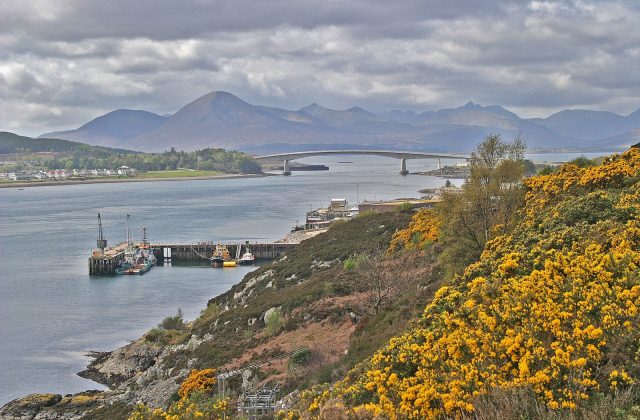
Isle of Skye
Inner Hebrides, United Kingdom
The Isle of Skye is the largest island of the Inner Hebrides, 1,656 square kilometres of sea lochs, moorland and jagged…
62 tours & trips
United Kingdom · North Sea & Channel · Historic island
Iona is a small Hebridean island off the south-west tip of Mull, where Saint Columba founded a monastery in 563 that spread Christianity across Scotland and northern England. Just 5 km long, with a restored medieval abbey, white shell-sand beaches and fewer than 200 residents, it is a place for a quiet day or a slow retreat.
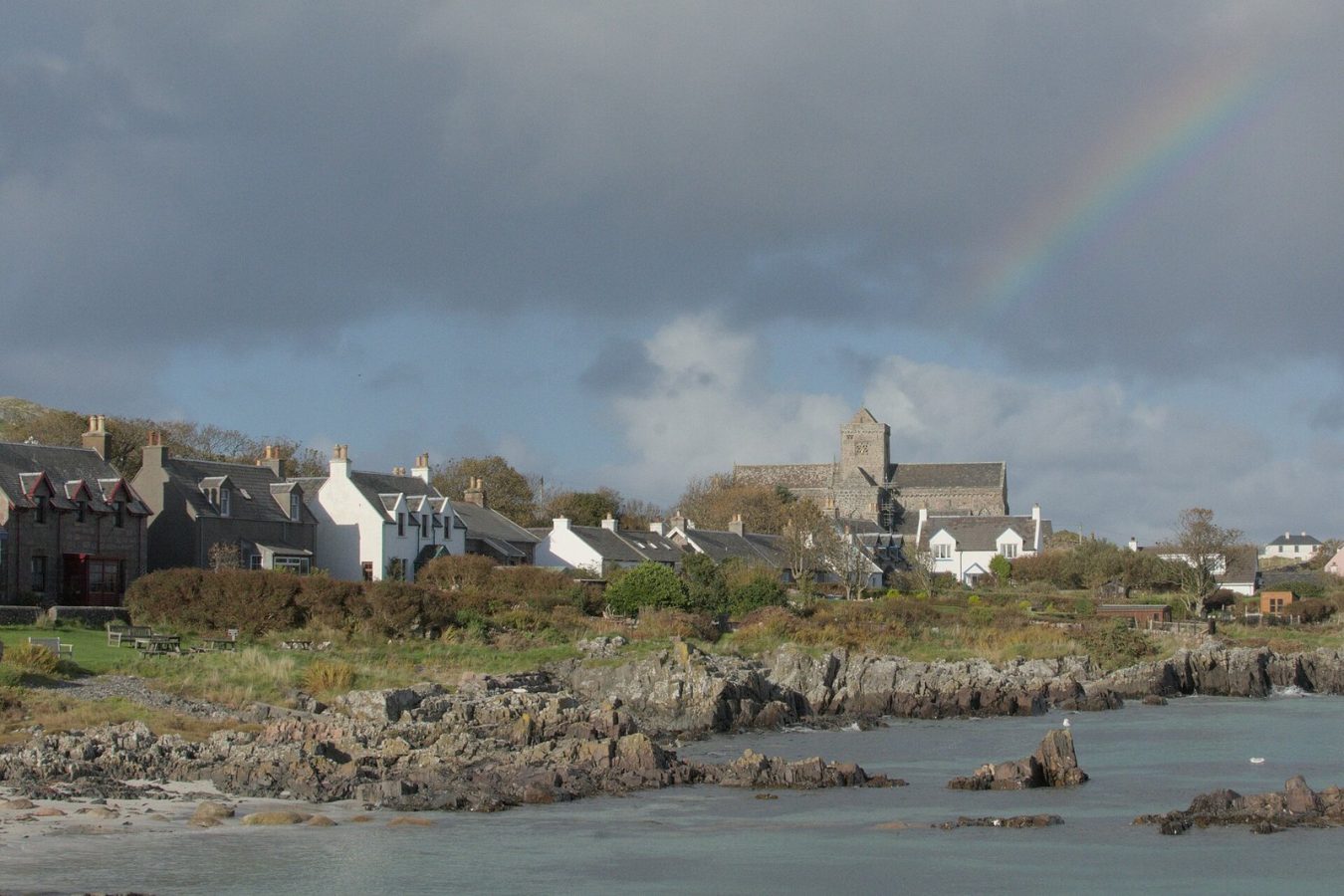
Photo: Andrew Gray, CC BY-SA 4.0
| Getting there | Ferry Oban to Craignure on Mull, 1 h 15 min across Mull by road, then a 10-min ferry from Fionnphort |
|---|---|
| Gateway | Oban (via Mull and Fionnphort) |
| Travel time | About 3 h from Oban with two ferries |
| Days | A day trip, or one or two quiet nights |
| Best months | May–Sep; long light in Jun–Jul; puffin boats to Staffa May–early Aug |
| Getting around | Car-free for visitors: walk everywhere, or hire a bike at the jetty |
| Booking | Island rooms months ahead for summer; Oban–Craignure car space in Jul–Aug |
| Cost | Mid-range for Scotland; few rooms, so they cost more |
| Beaches | White shell sand and clear water; north-end strands and the Bay at the Back of the Ocean |
| Sea | North Sea & Channel |
| Archipelago | Inner Hebrides |
| Area | 8.8 km² |
| Population | 177 (2011) |
| Highest point | 101 m (Dun I) |
| Airport | No |
| Car-free | Yes |
| Checked | November 2026 |
Iona is easy to visit independently by public transport, but the logistics are long: a ferry to Mull, a single-track road across it and a second ferry, all of which must connect. That is the problem tours solve.
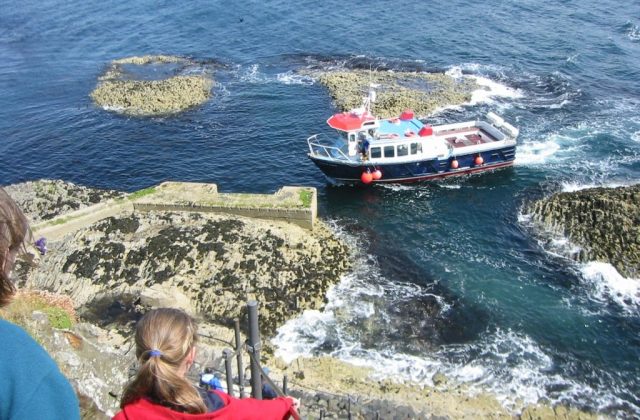
The most popular option is a full day from Oban. A coach meets the ferry at Craignure, drives the length of Mull with commentary and leaves you two to three hours on Iona before the return, usually with ferry fares included but abbey entry extra. The ferry company sells a similar day, and in summer a version that adds a boat to Staffa and Fingal's Cave.
Multi-day small-group tours from Edinburgh or Glasgow cover the west Highlands, stay two or three nights on Mull or in Oban and give a day to Iona. They include transport, a driver-guide and accommodation, with meals mostly extra. Longer trips add Skye and Glencoe.
On the island, boat trips to Staffa and the Treshnish Isles leave from the jetty, and the abbey offers guided introductions.
If you are driving, go alone and stay a night on Mull. Without a car, the Oban day tour is the simplest choice.
The restored Benedictine abbey stands on the site of Columba's monastery, a ten-minute walk north of the jetty. Inside are the church, the cloister with carved modern capitals and a museum of early carved stones. In front stand St Martin's Cross, carved in the 8th century and still on its original base, and a replica of St John's Cross.
Beside the abbey, the old burial ground around little St Oran's Chapel is said to hold early Scottish kings, Macbeth among them, along with Norwegian and Irish rulers. On the way up from the jetty you pass the pink granite ruins of the medieval Augustinian nunnery, with a small garden in its walls, one of the best-preserved in Britain.
The island's highest point is only 101 metres, a short climb on a grassy path behind the abbey taking about 20 minutes. From the cairn on top you see the whole island, the white beaches, the Ross of Mull, and on clear days Staffa, the Treshnish Isles, Coll, Tiree and even the hills of Rum. Near the summit is a small well with a legend about youth.
Follow the road north past the abbey for about 30 minutes and the island ends in a run of white shell-sand beaches with water the colour of the Caribbean and the temperature of the North Atlantic. They face Mull and the small islands to the north, and on a calm day they are the best place on Iona for a picnic.
A road crosses the island's middle to the west coast, where a wide sandy bay faces the open Atlantic beside the island's golf course of grazed machair. It is about 30 minutes on foot from the village. In early summer the machair grassland flowers, and you may hear the rasping call of the corncrake, a rare bird that breeds here.
At the southern tip, a walk of about an hour over rough moorland from the village leads to the pebble cove where Columba is said to have landed from Ireland. Pilgrims pick up small green stones of Iona marble on the beach. On the way, the path passes the remains of the old marble quarry and its rusting machinery.
Our pick for each kind of trip, with live dates and prices. Free cancellation on most.
Best for: First visit, a day from Oban
Handles the double ferry and the long drive across Mull for you, leaving enough time at the abbey and the village before the last boats back.
Iona is reached through Mull. Car ferries cross from Oban to Craignure many times a day all year, taking about 45 minutes; book car space in summer. From Craignure a single-track road runs about 35 miles to Fionnphort, a drive or bus ride of about 1 hour 15 minutes, and buses are timed to meet the main ferries.
At Fionnphort a small passenger ferry makes the ten-minute crossing to Iona roughly every half hour to hour in summer, less often in winter and on Sundays, and it is cancelled in strong winds. Visitors cannot take cars to Iona: leave yours in the car park at Fionnphort. Oban itself is about three hours by train or coach from Glasgow. With an early start, you can make Iona a day trip from Oban without a car.
Iona is about 5 km long and 2 km wide, and almost everything is within walking distance of the jetty: the village, the nunnery and the abbey are a ten-minute stroll. Only residents may bring vehicles, so the single road is nearly empty. Walking to the north beaches or the west coast takes about half an hour each; the southern bays need sturdy shoes and an hour each way over boggy ground. Bikes can be hired near the jetty, and a few local taxis run on request.
Iona is best from May to September, when the ferries run most often, the cafes and the abbey shop are open and the days are long; in June it stays light until nearly midnight. May and June are often the driest months, with flowering machair and the chance to hear corncrakes. Puffins nest on Staffa and the Treshnish Isles from May to early August, so book the boat trip in that window. July and August are busiest, with day tours arriving by late morning, and midges bite on still evenings.
From October to April the weather is wet, windy and changeable, the Fionnphort ferry can be cancelled at short notice and many places close, but the island is quiet and the abbey stays open. Easter brings pilgrims and services. A day trip shows you the abbey and the village; a night on the island lets you have it almost to yourself in the evening.
The island has two small hotels, a hostel at the north end, a few B and Bs and self-catering cottages, all close to the jetty, and they fill early for summer. Staying on Iona gives you quiet evenings, sunsets and the abbey's services. The Iona Community also runs residential weeks in the abbey. For more choice, base yourself on the Ross of Mull at Fionnphort or Bunessan, or at Tobermory for a longer stay on Mull.
Columba sailed from Ireland in 563 and founded a monastery on Iona that sent missionaries across Pictish Scotland and to Lindisfarne in Northumbria. Its scholars produced richly illustrated manuscripts, and the Book of Kells may have been started here. Viking raids from 795 killed many monks, and Columba's relics were taken to Ireland. The Benedictine abbey and nunnery followed in about 1200. Ruined after the Reformation, the abbey church was restored around 1900, and from 1938 the Iona Community rebuilt the monastic buildings, now in the care of Historic Environment Scotland.
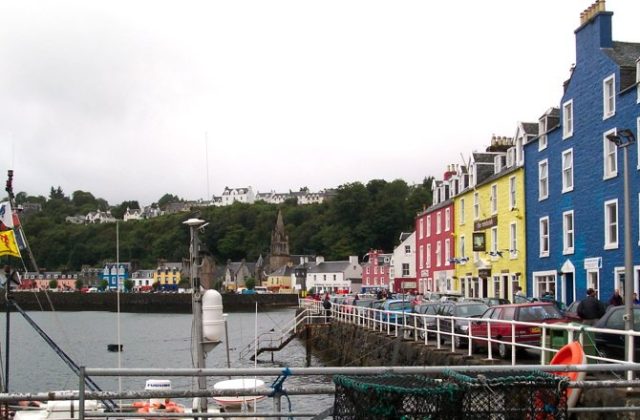
Iona pairs naturally with Mull: Tobermory's coloured harbour, the eagle and otter tours, and Calgary beach. Staffa, with Fingal's Cave and its puffins, is about 45 minutes by boat from Iona or Fionnphort. Oban is the hub for other ferries, to Kerrera, Lismore, Coll, Tiree and the Outer Hebrides, and Glencoe is about an hour's drive from Oban.
Ferry Oban to Craignure on Mull, 1 h 15 min across Mull by road, then a 10-min ferry from Fionnphort.
From Oban (via Mull and Fionnphort): about 3 h from Oban with two ferries.
A day trip, or one or two quiet nights.
May–Sep; long light in Jun–Jul; puffin boats to Staffa May–early Aug.
No. Iona is car-free. Car-free for visitors: walk everywhere, or hire a bike at the jetty.
Go if you want early Christian history, an ancient abbey and turquoise water on a peaceful island you explore on foot. Skip it or choose Mull and Staffa if you want wildlife boat trips, dramatic mountains or more than a day of things to do.
Mid-range for Scotland; few rooms, so they cost more.
White shell sand and clear water; north-end strands and the Bay at the Back of the Ocean.
Island rooms months ahead for summer; Oban–Craignure car space in Jul–Aug.
Yes. Boat trips, guided tours and day trips for Iona can be booked online; live prices and free cancellation on most are shown on this page.
Inner Hebrides, United Kingdom
The Isle of Skye is the largest island of the Inner Hebrides, 1,656 square kilometres of sea lochs, moorland and jagged…
62 tours & trips
Inner Hebrides, United Kingdom
Mull is the second-largest island of the Inner Hebrides, a 45-minute ferry crossing from Oban on the west coast of…
8 tours & trips
Inner Hebrides, United Kingdom
Islay is the southernmost island of the Inner Hebrides, about 620 square kilometres of peat moor, sandy bays and…
7 tours & trips
Inner Hebrides, United Kingdom
Staffa is a tiny uninhabited island of basalt columns off the west coast of Mull, only 33 hectares and 42 metres high.
1 tour
Inner Hebrides, United Kingdom
Jura is a wild island in the Inner Hebrides, next to Islay, with about 250 people, several thousand red deer and one…
No tours listed