Grande Terre (New Caledonia)
244 km away
Grande Terre is the main island of New Caledonia, a French territory in the South Pacific, about 350 km long with a…
23 tours & trips
New Caledonia · Pacific Ocean · Beach island
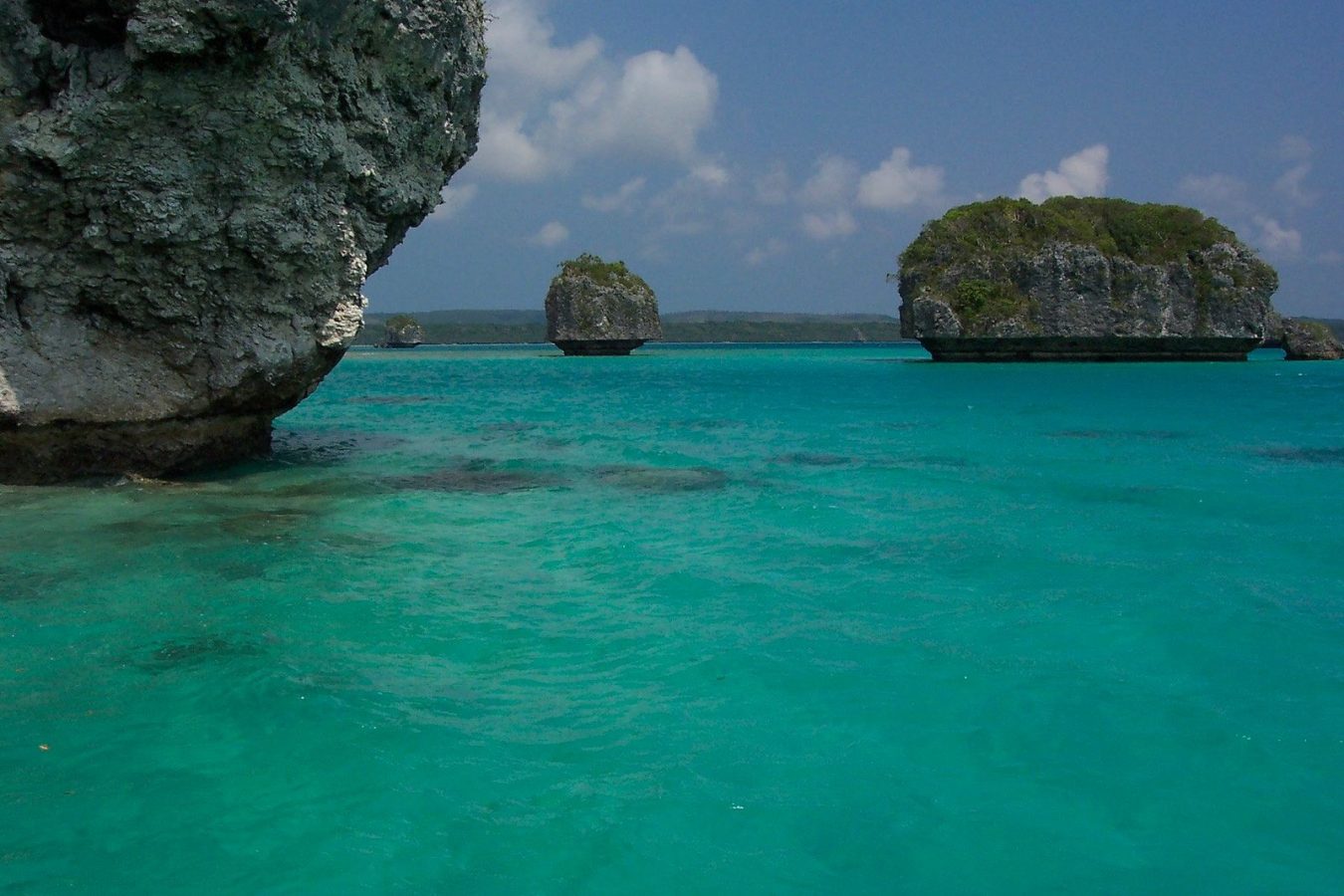
The Isle of Pines lies about 100 km south-east of Noumea in New Caledonia, a raised coral island of 15 by 13 km ringed by white sand and lagoons and lined with tall, narrow columnar pines. It is the quintessential lagoon escape of the French Pacific, with Kanak villages, a natural swimming pool and outrigger canoe trips.
| Getting there | About 2.5 h by fast ferry from Noumea, a few times a week, or a 20-min domestic flight |
|---|---|
| Gateway | Noumea (ferry or flight) |
| Travel time | 20 min by air or about 2.5 h by ferry |
| Days | 1 to 2 nights |
| Best months | Sep–Dec dry and warm; Jan–Mar hot with cyclone risk; Jun–Aug cool |
| Getting around | Hire a car or use hotel transfers; a ring road links Kuto, Vao and the bays |
| Booking | Flights or ferry seats and rooms weeks ahead; canoe trips and transfers through your hotel |
| Cost | Expensive, even by New Caledonian standards |
| Beaches | Fine white coral sand; Kuto and Kanumera for swimming, the natural pool at Oro for snorkelling |
| Sea | Pacific Ocean |
| Area | 130 km² |
| Population | 1,969 |
| Highest point | 262 m (Pic N'Ga) |
| Airport | Yes, scheduled flights |
| Car-free | No |
| Checked | November 2026 |
Nothing is sold online for the Isle of Pines alone. Visitors usually arrive by the ferry or a domestic flight from Noumea and arrange everything else locally, through their hotel or the small operators who meet the boat and the plane.
The best-known excursion is the trip by traditional outrigger sailing canoe across Upi Bay, run by local families from Saint-Joseph near Vao. You sail among limestone islets, land and walk through the forest to Oro Bay and its natural pool, where a transfer brings you back. Bring reef shoes and water; the walk is wet in places.
Other common outings are boat trips to the islets and sandbars of the Nokanhui area for snorkelling and lunch, dive trips to the caves and reefs off the coast, and minibus loops that stop at the penal colony ruins, the caves and the church at Vao. Cruise passengers often join half-day versions of these.
Many visitors come on a day trip by plane from Noumea or as a short package with flights and a night in a lodge. Book transport and rooms from Noumea ahead, then settle the canoe trip with your hotel as soon as you arrive, since it depends on wind and numbers.
Two bays back to back on the south-west coast, separated by a narrow wooded peninsula. Kuto is a long curve of soft white sand where cruise ships anchor offshore; Kanumera, on the other side, is smaller, with a rock islet you can snorkel around. Both are shallow, calm and easy for children, and a footpath crosses between them in a few minutes.
On the north-east coast, a lagoon walled off from the open sea by a rocky barrier forms a natural swimming pool of clear, still water full of reef fish, reached by wading along a channel lined with columnar pines. Come early before the canoe trips and day visitors arrive, bring a mask, and do not stand on the coral. It is about 25 minutes by car from Kuto.
The traditional sailing canoes leave Saint-Joseph beach in the morning and glide between mushroom-shaped limestone islets across the shallow bay, with the sail and a pole in the hands of a local skipper. The trip takes about an hour and a half on the water, followed by a forest walk to Oro. Wind decides the schedule, so book through your hotel.
The main village, on the south coast, grew around the mission founded by Marist priests in the 1840s. The white church dominates a square ringed by carved wooden totem posts. On the hill above stands a small chapel with views across the south of the island. Vao has the post office, a few shops and a small market.
The highest point is just 262 metres, reached by a marked path from near Kuto in about an hour each way. From the top you see the whole island, the colours of the lagoon around it and, on a clear day, the reefs stretching away. Start early, before the heat, and wear proper shoes as the red earth is slippery after rain.
Near Ouro, crumbling stone walls in the forest mark the prison where France held thousands of political deportees after the Paris Commune of 1871. A small cemetery keeps the graves of those who died. Nearby, a water tower and the remains of other prison buildings stand among the trees. Few visitors stop, and there is little signage, so take a guide.
Domestic flights leave Noumea's Magenta airport, close to the city centre, for the island's small airfield in about 20 minutes, usually once or twice a day; the international airport at La Tontouta is a separate trip about 50 km north of Noumea, so allow time when connecting.
The alternative is a fast passenger ferry from the port in Noumea, which takes about two and a half hours and runs a few times a week, more around weekends and holidays; the crossing can be rough when the trade winds blow. It arrives at Kuto, within walking distance of several lodges. Cruise ships from Australia call regularly and send passengers ashore by tender to Kuto beach. You cannot easily bring a rental car from Noumea, so arrange transport on the island before you arrive.
A single road loops around the island, linking the airport, Kuto, Vao, Saint-Joseph and Oro, with short side roads to the bays; distances are small, about 20 to 30 minutes by car from one side to the other. There are a few car rental outlets, which must be booked ahead, and lodges arrange airport and ferry transfers and trips to Oro. Taxis are scarce and there is no regular bus. Cycling works on the flat parts, though the heat is tiring at midday.
The most pleasant season is September to December, when it is dry, sunny and warm, the trade winds are light and the lagoon is at its clearest. January to March is the hot, humid and wettest season, with a real risk of cyclones that can cancel flights and the ferry. April and May are a good transition, with fewer visitors.
June to August is the southern winter: days are around 22 degrees and nights cool, the sea is fresh at about 22 to 23 degrees, and strong winds can make the ferry crossing rough. School holidays in New Caledonia, around Christmas and in mid-year, and long weekends bring Noumea residents to the island, and rooms fill. Check cruise schedules too, since Kuto gets busy on ship days. One night lets you do the canoe trip and Oro; two nights add a boat outing and time to rest.
Most visitors stay around Kuto and Kanumera, close to the ferry pier and the best swimming beaches, with a choice of bungalows and campsites. The north-east coast near Oro Bay has the most upmarket lodges, quiet and right by the natural pool, but far from everything else. A few family-run gites and campsites in Vao and along the east coast offer simple rooms and meals with Kanak hosts, the cheapest option.
The island has been home to the Kunie people, part of the Kanak population of New Caledonia, for thousands of years, and the land is still held under customary chiefdoms. Captain Cook sighted it in 1774 and named it after the columnar pines. Marist missionaries arrived in the 1840s, and France took New Caledonia in 1853. After 1871, thousands of deportees from the Paris Commune were held on the island in a penal settlement whose ruins remain. Tourism grew in the 20th century, but villages and customs remain firmly Kanak.
The Isle of Pines is usually a side trip from Noumea, the capital, with its museums and lagoon beaches. Further afield, the Loyalty Islands of Ouvea, Lifou and Mare are reached by domestic flights from Noumea, each about 40 minutes away, and Grande Terre's south, with its red earth and Blue River park, is a drive from the city.
244 km away
Grande Terre is the main island of New Caledonia, a French territory in the South Pacific, about 350 km long with a…
23 tours & trips
397 km away
Tanna is a volcanic island in southern Vanuatu, 40 km long, best known for Mount Yasur, one of the most accessible…
8 tours & trips
About 2.5 h by fast ferry from Noumea, a few times a week, or a 20-min domestic flight.
From Noumea (ferry or flight): 20 min by air or about 2.5 h by ferry.
1 to 2 nights.
Sep–Dec dry and warm; Jan–Mar hot with cyclone risk; Jun–Aug cool.
Hire a car or use hotel transfers; a ring road links Kuto, Vao and the bays.
Go if you want calm turquoise lagoons, snorkelling in a natural pool and quiet Melanesian village life for a night or two. Skip it or choose Ouvea or the Loyalty Islands if you want lower prices, a longer stay or real remoteness.
Expensive, even by New Caledonian standards.
Fine white coral sand; Kuto and Kanumera for swimming, the natural pool at Oro for snorkelling.
Flights or ferry seats and rooms weeks ahead; canoe trips and transfers through your hotel.
New Caledonia
Grande Terre is the main island of New Caledonia, a French territory in the South Pacific, about 350 km long with a…
23 tours & trips