Langkawi
Malaysia
Langkawi is an archipelago of 99 islands in the Andaman Sea, about 30 km off north-western Malaysia and close to the…
172 tours & trips
Malaysia · South China Sea · Beach island
Pulau Kapas is a small car-free island of about 2.5 by 1.5 km off the Terengganu coast of eastern Peninsular Malaysia, 15 minutes by boat from Marang. Its name means cotton island, after its white sand, and it is a quiet, inexpensive place for snorkelling, kayaking and doing very little.
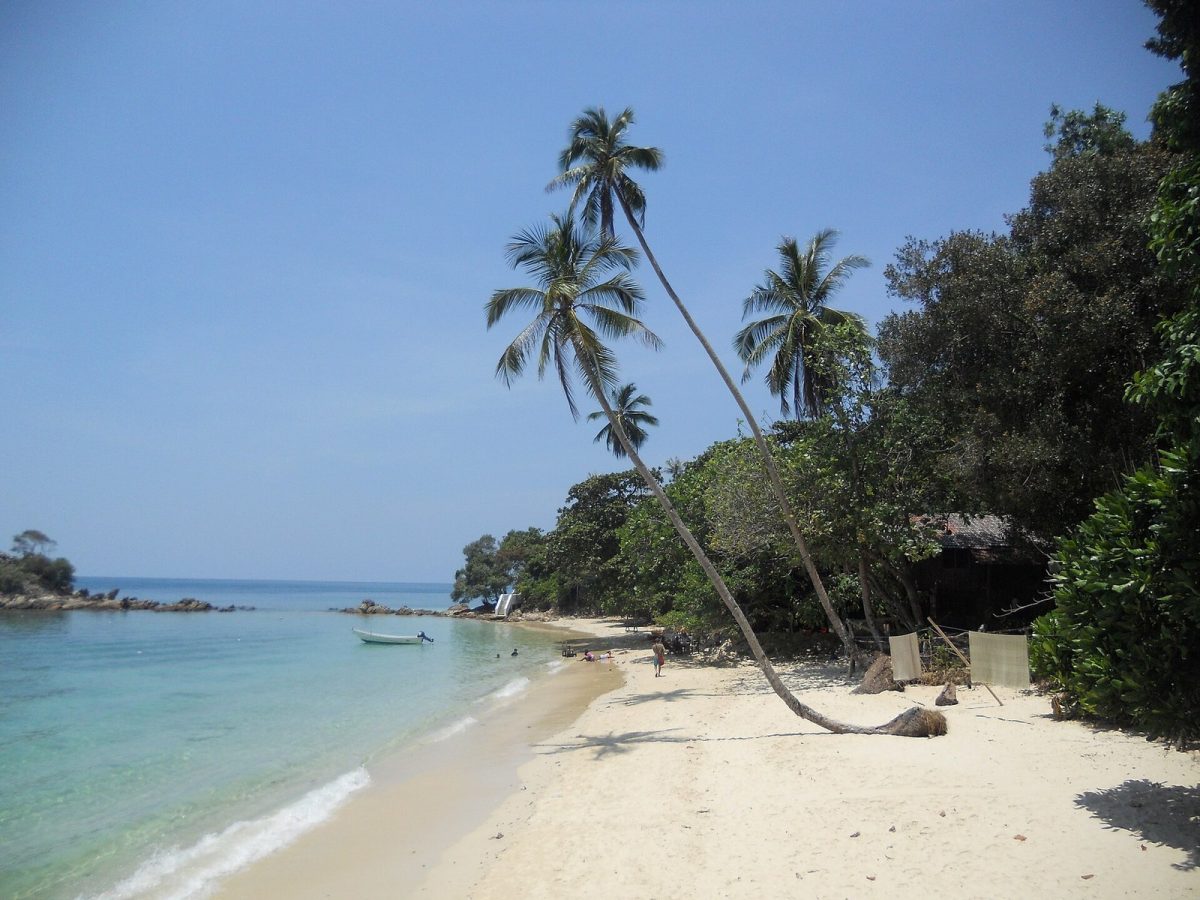
Photo: WorldTravleerAndPhotoTaker, CC BY-SA 4.0
| Getting there | Boat from Marang jetty in about 15 min; Marang is 30 min by road from Kuala Terengganu airport |
|---|---|
| Gateway | Marang (Terengganu) |
| Travel time | 15 min by boat |
| Days | 1 to 2 nights |
| Best months | Mar–Oct; Nov–Feb monsoon, rough seas and most resorts closed |
| Getting around | Car-free: walk along the beaches or kayak; a jungle path crosses the island |
| Booking | Rooms ahead for Malaysian holidays and weekends; boats are arranged on the day at Marang |
| Cost | Cheap, even by Malaysian standards |
| Beaches | White sand along the west coast facing the mainland; coral close to shore for snorkelling |
| Sea | South China Sea |
| Ferry | 15 min from Marang (Terengganu) |
| Airport | No |
| Car-free | Yes |
| Checked | November 2026 |
Very little is sold online for Pulau Kapas itself. The one product is a two-day package with a guide and meals. That reflects how people really visit: independently, booking a room directly and buying a boat ticket at the Marang jetty on arrival.
Once on the island, everything is arranged through your resort or the dive and snorkel huts on the beach. The standard outing is a half-day snorkelling boat trip that circles Kapas and stops at coral gardens off the northern rocks and at neighbouring Gemia, usually with masks and fins included. Kayaks can be hired by the hour for a paddle along the shore, and a couple of operators offer introductory scuba dives and courses. Day visitors from Marang come across for a few hours of swimming, often on a return boat that includes snorkelling gear.
For most visitors the best plan is one or two nights in a beach chalet, a snorkelling trip booked locally on the first afternoon, and the rest of the time on the beach. Bring enough cash, as card payments and cash machines are not reliable on the island.
Almost all of the island's chalets and cafes line a string of white beaches on the western side, facing the mainland across calm water. The sand shelves gently and the water is clear in the dry season, good for swimming and watching the sunset over the coast. Walk from one end to the other at low tide in about 30 minutes.
Coral and reef fish start a few metres from shore, and the rockier northern end and the waters off Gemia have the best gardens, with turtles seen regularly. A boat trip of three hours or so reaches several spots; you can also snorkel straight off the beach. Visibility drops after rain or rough weather.
The small island of Gemia lies just north of Kapas and is occupied by a private resort, but the reef and rocks around it are open to snorkellers and kayakers. Paddling across from the northern beaches takes about 20 minutes in calm conditions. Go in the morning, before the afternoon breeze picks up.
A rough path climbs over the forested hill in the middle of the island to the wilder eastern coast, which faces the open South China Sea. The walk takes around 30 to 45 minutes each way, needs proper shoes and water, and passes monitor lizards and birds. The east-side beaches are empty but less safe for swimming.
Small dive operators on the beach run introductory dives and courses on the shallow reefs around Kapas and Gemia, where the depths suit beginners. Experienced divers can join trips to deeper sites offshore. It is cheaper than the better-known islands to the north, though the reefs are smaller and the visibility less reliable.
Live dates and prices. Free cancellation on most tours.
Boats leave from the jetty at Marang, a small fishing town on the coast road south of Kuala Terengganu. Several operators share the route, and the crossing of about 6 km takes around 15 minutes by speedboat. Boats go regularly in the morning and as they fill during the day, and return at agreed times; buy a return ticket at the jetty and confirm the pickup time with the boatman.
The nearest airport is Kuala Terengganu, with flights from Kuala Lumpur of about an hour, and a taxi or ride-hail car to Marang takes roughly 30 minutes. Long-distance buses from Kuala Lumpur to Kuala Terengganu take around six to seven hours, and some stop in Marang. Cars can be left in guarded parking near the jetty. From November to February the sea is often too rough and the service largely stops.
There are no roads or vehicles on Kapas. You walk along the beaches, which are linked by short paths and rocks you scramble over at high tide, or hire a kayak. Resorts collect luggage from the boat landing on their own stretch of beach, so tell the boatman where you are staying. Bring a torch for the paths after dark, as there is little lighting.
The season runs from March to October, when the sea is calm and clear and the weather hot, around 30 degrees Celsius, with occasional afternoon showers. April to August usually has the best visibility for snorkelling. Weekends and Malaysian school holidays bring families from the mainland and the island's small number of rooms can fill, so arrive on a weekday if you can.
From November to February the north-east monsoon brings heavy rain and big seas to the whole east coast; most resorts and boat operators close, and the island is effectively shut. Early March and late October can be unsettled. Ramadan, whose dates move each year, means quieter cafes during the day. One or two nights is enough, with a third if you want to dive.
All accommodation is on the island's western beaches, ranging from simple wooden chalets with fans to a few comfortable bungalow resorts with air conditioning and restaurants. The central beaches near the main boat landing have the most cafes and dive shops, while the northern end is quieter and closer to the best snorkelling. Choices are limited and standards basic, so book directly before arriving, especially at weekends.
Kapas has never had a village of its own. Fishermen from Marang used its sheltered west coast for generations, and the island was named for its sand, white as cotton. Small chalet resorts began to appear from the 1980s as Malaysians discovered the east coast, and the island has stayed low-key, with no roads or large hotels. It is also known to scientists: most research on Amphidromus tree snails, unusual because left- and right-coiling shells live side by side, has been carried out here. Protection of the surrounding reefs extends one nautical mile from shore.
Kapas fits easily into an east coast trip. Kuala Terengganu, 30 minutes north of Marang, has a lively central market, the Crystal Mosque and old Chinatown. The Perhentian Islands and Redang, with richer reefs, are reached from ports further north in about two hours by road plus a boat. Cherating's surf beaches are a few hours south.
Boat from Marang jetty in about 15 min; Marang is 30 min by road from Kuala Terengganu airport.
From Marang (Terengganu): 15 min by boat.
1 to 2 nights.
Mar–Oct; Nov–Feb monsoon, rough seas and most resorts closed.
No. Pulau Kapas is car-free. Car-free: walk along the beaches or kayak; a jungle path crosses the island.
Go if you want a cheap, easy beach and snorkelling escape with a few simple resorts and no roads. Skip it or choose the Perhentian Islands or Redang if you want more coral, dive schools, nightlife or a wider choice of places to stay. With about 15 min each way from Marang (Terengganu), a day trip is easy to do.
Cheap, even by Malaysian standards.
White sand along the west coast facing the mainland; coral close to shore for snorkelling.
Rooms ahead for Malaysian holidays and weekends; boats are arranged on the day at Marang.
Yes. Boat trips, guided tours and day trips for Pulau Kapas can be booked online; live prices and free cancellation on most are shown on this page.
Malaysia
Langkawi is an archipelago of 99 islands in the Andaman Sea, about 30 km off north-western Malaysia and close to the…
172 tours & trips
Malaysia
Penang Island lies off the north-west coast of Peninsular Malaysia, about 295 square kilometres of forested hills with…
34 tours & trips
Malaysia
Mabul is a tiny, flat island of about 0.2 square kilometres off the south-east coast of Sabah in Malaysian Borneo,…
4 tours & trips
Malaysia
The Perhentian Islands are two small jungle-covered islands off the north-east coast of Peninsular Malaysia, about 20…
1 tour
Malaysia
Redang is a hilly island of about 24 square kilometres off the coast of Terengganu in north-eastern Peninsular…
1 tour
Malaysia
Sipadan is a tiny coral island off the east coast of Sabah, the only oceanic island in Malaysia, rising about 600…
1 tour