United States · Pacific Ocean · Nature & wildlife island
Kodiak Island
Kodiak Island, off the south coast of Alaska, is the second-largest island in the United States, covering about 9,300 square kilometres of mountains, fjords and green tundra. Most visitors come for the Kodiak brown bears, salmon fishing and wild coastline, and stay in the fishing town of Kodiak, which also preserves Alaska's Russian and Alutiiq past.
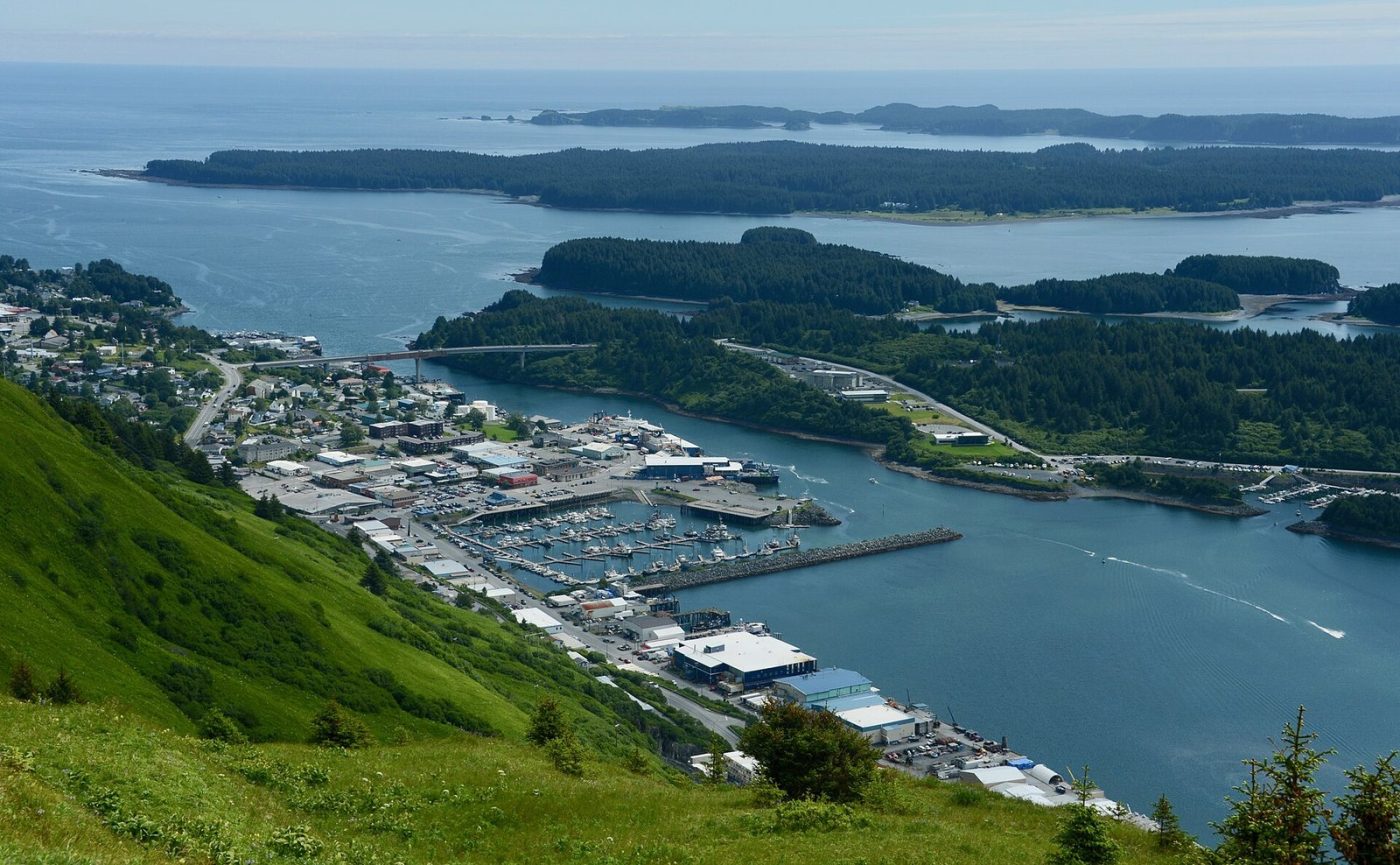
Photo: James Brooks from Juneau, Alaska, CC BY 2.0
At a glance
| Getting there | 1-h flight from Anchorage; Alaska Marine Highway ferry from Homer in about 10 h |
|---|---|
| Gateway | Anchorage (flights); Homer (ferry) |
| Travel time | About 1 h by air or 10 h by ferry |
| Days | 3 to 5 nights |
| Best months | Jun–Sep; bear viewing best Jul–Aug; long dark winters |
| Getting around | Rent a car for the road system around Kodiak town; floatplanes or boats beyond it |
| Booking | Bear-viewing flights and remote lodges months ahead; rental car and rooms for summer |
| Cost | Expensive, even for Alaska |
| Beaches | Wild beaches of dark sand and pebbles, too cold for swimming; Pasagshak and Fossil Beach |
| Sea | Pacific Ocean |
| Archipelago | Kodiak Archipelago |
| Area | 9,311 km² |
| Population | 13,592 (2010) |
| Highest point | 1,363 m (Koniag Peak) |
| Airport | Yes, scheduled flights |
| Car-free | No |
| Checked | October 2026 |
Tours and day trips: what to book
Kodiak is a place where the main experiences are expensive and booked well ahead, while the town itself can be explored independently.
The big purchase is bear viewing. Small floatplanes fly from Kodiak town into the Kodiak National Wildlife Refuge, landing on lakes or bays where brown bears gather to catch salmon, mostly from July to early September. A day trip includes the flight, a guide trained in bear safety, waders and usually a packed lunch; the price is high and the weather can delay flights. Multi-day stays at remote lodges add fishing and kayaking.
Fishing charters are the other major business, from half-day halibut and salmon trips out of the harbour to river fishing by floatplane. Licences are extra.
On a smaller budget, a few guided options start in town: a tour of the harbour and the history of the island, covering Russian and Alutiiq heritage and commercial fishing, and naturalist-led hikes in the coastal rainforest. Wildlife cruises for whales, sea otters and puffins run in summer.
Recommendation: if you come this far, budget for one bear-viewing flight booked months ahead, then add a guided walk or harbour tour and explore the road system by rental car.
What to see and do on Kodiak Island
Bear viewing in the wildlife refuge
The Kodiak brown bear is one of the largest bears on earth, and about two thirds of the island is protected as a national wildlife refuge. Floatplanes take small groups to salmon streams where bears fish a short distance away, watched from the bank with a guide. Flights last about an hour each way, with several hours on the ground.
Kodiak town and the harbour
Kodiak is one of the busiest fishing ports in the United States, and the boat harbour full of seiners and crabbers is the place to start. Nearby, the Baranov Museum occupies a Russian warehouse from the early nineteenth century, the Alutiiq Museum tells the story of the native people, and the blue-domed Orthodox church recalls Russian rule.
Fort Abercrombie State Park
A few kilometres north of town, this park combines Sitka spruce forest, a lake, sea cliffs and the concrete bunkers and gun emplacements of a Second World War coastal defence post. Short trails lead to viewpoints where you may spot sea otters, whales and seabirds. A small military museum opens in summer, and there are campsites.
Pillar Mountain and the hiking trails
A road climbs Pillar Mountain behind town to wind turbines and a view over the harbour, the islands and the mountains. Further out, local trails lead up peaks such as Barometer Mountain, a steep climb of several hours. Carry bear spray, make noise, check weather forecasts and tell someone where you are going.
The road to Pasagshak and Chiniak
Kodiak has a road system of roughly 160 km around the north-east of the island, much of it gravel. Drive south past cattle ranches to Pasagshak Bay, with a long beach and good salmon fishing, or east to Chiniak for wild cliffs and wildlife. Allow a full day and a full tank, as there are no services along the way.
Kodiak Island tours: which one for you
Our pick for each kind of trip, with live dates and prices. Free cancellation on most.
Best for: First day in Kodiak town
A guided introduction to the harbour, the Russian and Alutiiq history and the fishing industry that still drives the town, a good start before heading out on your own.
- A guided walk in the forest: Kodiak rainforest hike with naturalist guide A hike through the mossy spruce forest near town with a naturalist who explains plants, birds and bear safety, useful for anyone unsure about walking alone here.
How to get to Kodiak Island
Almost all visitors fly. Several daily jet flights connect Anchorage with Kodiak in about an hour, and Anchorage has connections to the rest of the United States. Smaller airlines and air taxis link Kodiak with the villages of the archipelago. The airport is about 8 km south of town; car rental desks are there.
The Alaska Marine Highway ferry sails from Homer on the Kenai Peninsula, taking around ten hours across the open Gulf of Alaska, which can be rough. Departures are only a few times a week in summer and less often in winter, but the ferry carries cars and offers cabins, and it is an adventure in itself. Book flights and ferry space early for the summer, especially in July and August. Cruise ships also call at Kodiak for a day.
Getting around
Kodiak town is compact enough to walk, but everything else needs a vehicle. Rental cars are limited in number, so book ahead for summer. The road system covers only a small part of the island, mostly gravel beyond the town, and there is no public transport to speak of; taxis serve the town and airport. Floatplanes, air taxis and boats are the only way into the refuge and to remote lodges and villages.
When to go
The visitor season runs from June to September. June brings the longest days and wild flowers but few bears at the streams; July and August are the peak for bear viewing, salmon fishing and whale watching, and also the busiest and most expensive. September is quieter, with autumn colours, silver salmon and bears still fishing, though storms become more frequent.
The climate is maritime: cool summers, typically around 13 to 18 C by day, frequent rain and fog that can ground planes for a day or more, and mild but long, dark, stormy winters. Pack waterproofs and layers whatever the month. Allow at least three nights so that one bad-weather day does not cancel your bear flight; five nights let you add fishing or a lodge stay.
Where to stay
Kodiak town is where nearly all visitors stay, in a few hotels, motels, bed and breakfasts and cabins, close to the harbour, the restaurants and the floatplane bases on the lakes nearby. Staying here makes it easy to reschedule weather-delayed flights. For a deeper experience, remote wilderness lodges in the refuge and on the outer bays offer all-inclusive stays with fishing and bear viewing, reached only by floatplane or boat and often booked a year ahead.
History and character
The Alutiiq people have lived on Kodiak for thousands of years, hunting sea mammals from skin boats. Russian fur traders arrived in 1784, and Kodiak was briefly the capital of Russian America before the seat moved to Sitka; the Orthodox church and the old warehouse remain. The United States bought Alaska in 1867. Ash from the Novarupta eruption of 1912 buried the town, the Second World War brought bases, and the 1964 earthquake and tsunami destroyed the waterfront. Fishing and a large Coast Guard station now sustain it.
Combine it with
Kodiak combines well with the Kenai Peninsula: take the ferry from Homer and fly back to Anchorage, or the reverse, adding Seward, Kenai Fjords National Park and the glaciers along the way. From Kodiak, flights also reach Katmai National Park, famous for bears at Brooks Falls, so a bear-focused week in south-west Alaska can cover both.
Frequently asked questions
How do I get to Kodiak Island?
1-h flight from Anchorage; Alaska Marine Highway ferry from Homer in about 10 h.
How long does it take to get to Kodiak Island from Anchorage (flights); Homer (ferry)?
From Anchorage (flights); Homer (ferry): about 1 h by air or 10 h by ferry.
How many days do you need on Kodiak Island?
3 to 5 nights.
When is the best time to visit Kodiak Island?
Jun–Sep; bear viewing best Jul–Aug; long dark winters.
Do I need a car on Kodiak Island?
Rent a car for the road system around Kodiak town; floatplanes or boats beyond it.
Is Kodiak Island worth a day trip?
Go if you want huge brown bears, fishing, hiking and a working Alaskan port far from the cruise crowds. Skip it or choose the Kenai Peninsula if you want easy road trips, glaciers and lower costs.
Is Kodiak Island expensive?
Expensive, even for Alaska.
What are the beaches like on Kodiak Island?
Wild beaches of dark sand and pebbles, too cold for swimming; Pasagshak and Fossil Beach.
What should I book ahead for Kodiak Island?
Bear-viewing flights and remote lodges months ahead; rental car and rooms for summer.
Can I book tours and day trips to Kodiak Island online?
Yes. Boat trips, guided tours and day trips for Kodiak Island can be booked online; live prices and free cancellation on most are shown on this page.