Mahe
Seychelles
Mahe is the largest island of the Seychelles, 157 square kilometres of granite mountains rising to 905 metres at Morne…
95 tours & trips
Seychelles · Indian Ocean · Beach island
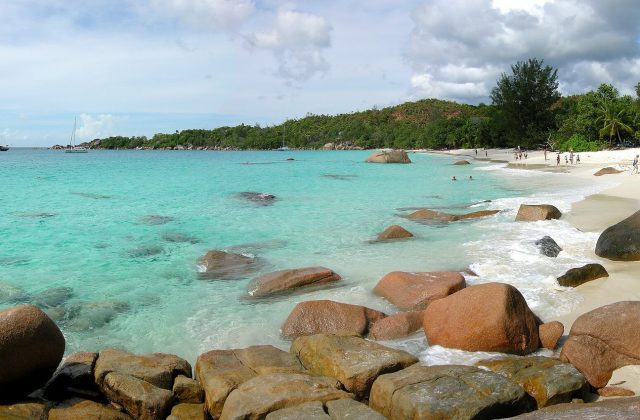
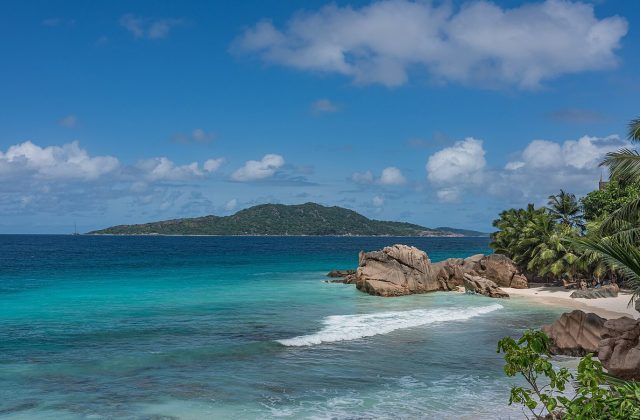
La Digue is a granite island of about 10 square kilometres in the Seychelles, 15 minutes by ferry from Praslin, where bicycles outnumber cars. It is known for Anse Source d'Argent, the beach of pink-grey boulders and shallow turquoise water that appears on countless posters, and for a slow village life that most visitors fall for.
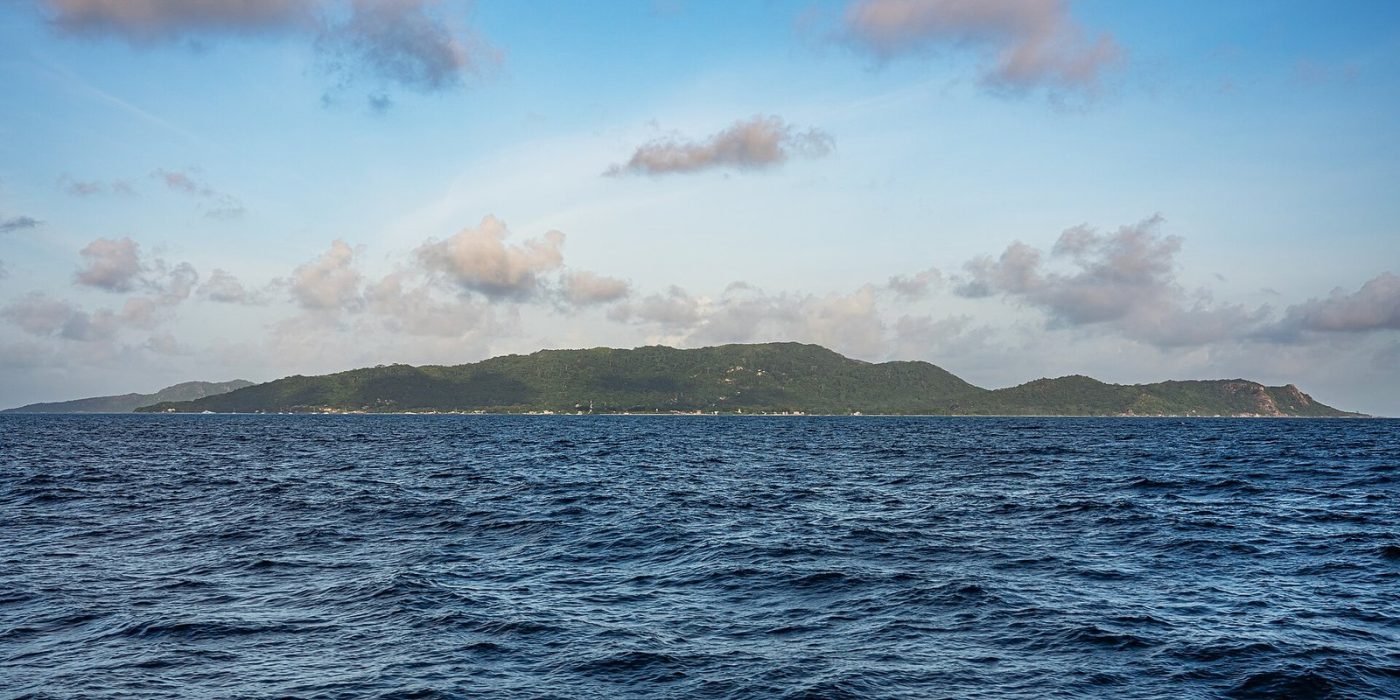
Photo: A.Savin, FAL
| Getting there | Ferry from Praslin in 15 min, or catamaran from Mahé (Victoria) via Praslin in about 1.5 h |
|---|---|
| Gateway | Praslin (Baie Ste Anne), or Mahé (Victoria) |
| Travel time | 15 min from Praslin; about 1.5 h from Mahé |
| Days | 2 to 3 nights |
| Best months | Apr–May and Oct–Nov for calm seas; Jun–Sep windy, Dec–Mar humid and wetter |
| Getting around | Rent a bicycle at the jetty; electric buggies and a few taxis for longer runs |
| Booking | Guesthouses and ferries weeks ahead for Christmas, Easter and August |
| Cost | Expensive, but guesthouses cheaper than Mahé resorts |
| Beaches | Granite-boulder coves: Anse Source d'Argent, Grand Anse, Anse Cocos, Anse Patates |
| Sea | Indian Ocean |
| Area | 10 km² |
| Population | 2,200 |
| Highest point | 333 m (Nid d'Aigle (Eagle's Nest)) |
| Ferry | 15 min from Praslin (Baie Ste Anne), or Mahé (Victoria) |
| Airport | No |
| Checked | October 2026 |
What is sold for La Digue falls into three groups.
The first is the day trip from Praslin or Mahé. From Praslin, the simplest package bundles the ferry with a bicycle, or with a guide who leads a small group by bike to L'Union Estate and Anse Source d'Argent. From Mahé, longer island-hopping days cover Praslin and La Digue together, with lunch, transfers and sometimes the Vallée de Mai on Praslin; they are tiring and leave little time on each island.
The second is boat trips. Catamarans and speedboats from La Digue and Praslin visit Coco Island, Félicité and the Sisters, small granite islets with the best snorkelling in the area, usually with a grilled lunch on a beach; masks and fins are included, while the marine park fee may be extra.
The third is land tours on La Digue itself: guided electric buggy rides for those who do not cycle, and guided hikes to Anse Marron, a wild southern beach you should not attempt alone.
The best plan is to sleep at least one night on La Digue, rent a bike locally and book one snorkelling boat trip.
Inside L'Union Estate on the west coast, a string of small coves is framed by huge weathered granite boulders and fringed by a shallow reef. Pay the estate entry fee and go early or at low light for photographs. At low tide the water is too shallow to swim properly; at mid tide it is calm and clear.
The old plantation on the way to the beach keeps a colonial house, a copra mill, a vanilla plantation, a boatyard and a pen of giant Aldabra tortoises. The same ticket covers it, and it gives a sense of the island before tourism. It is a ten-minute ride south of the La Passe jetty.
On the south-east coast these three wide beaches face the open ocean. Cycle across the island to Grand Anse, then walk a path over the rocks to Petite Anse and on to Anse Cocos, about 40 minutes in all. Waves and currents are strong, especially from May to September; swim only in the sheltered corner at Anse Cocos.
A flat road from La Passe runs north and round the tip of the island past Anse Sévère and Anse Patates, small beaches with good snorkelling on calm days. Beyond them the road continues to Anse Banane and ends at Anse Fourmis. It is the easiest ride on the island and quietest in the afternoon.
Just inland of La Passe, a small forest reserve protects the black paradise flycatcher, called veuve locally, which is found almost nowhere else. Fit walkers can continue up the steep track to Nid d'Aigle, the highest point at 333 metres, for a view over Praslin and the outer islands. Allow two hours return.
Our pick for each kind of trip, with live dates and prices. Free cancellation on most.
Best for: First visit, a day from Praslin
Takes care of the return ferry and a bicycle, then leaves you free to ride to the beaches at your own pace, which is exactly how the island is best seen.
La Digue has no airport, so everyone arrives by sea at the jetty in La Passe. International flights land at Mahé, near Victoria. From Victoria the inter-island catamaran runs to Praslin in about an hour and continues to La Digue, about 1.5 hours in total; there are several sailings a day. From Baie Ste Anne on Praslin the short crossing takes about 15 minutes and runs many times daily. Seas can be rough in the south-east trade wind season, so take seasickness tablets if needed. Book ferries ahead in high season.
You can also fly from Mahé to Praslin in about 15 minutes and take the boat on, or charter a helicopter direct, at a high price. Rental cars cannot be brought over, and buggy taxis meet the boats.
The bicycle is the way to get around La Digue. Bike rental stands wait at the jetty and most guesthouses hire them, usually with a lock and basket. The west coast and the north road are flat, while the cross-island road to Grand Anse has a steady climb. Traffic is light, but watch for the electric buggies and occasional trucks. For those who do not cycle, electric buggy taxis and a few vehicles can be called, and walking covers La Passe and La Réunion.
La Digue is warm all year, around 27 to 31 degrees, with sea temperatures of 27 to 29. The best months are April to May and October to November, the calm periods between the two trade winds, when the sea is flat, clear and best for snorkelling and boat trips.
From June to September the south-east trade wind blows steadily, which keeps the heat down but brings rough seas, seaweed on some beaches and choppy crossings; Grand Anse and Anse Cocos become dangerous for swimming. From December to March the north-west monsoon brings heavier showers and humidity, though the rain usually comes in short bursts.
Christmas, New Year, Easter and European summer holidays are the busiest and priciest times. Two or three nights let you see the beaches at the quiet early and late hours, after the day-trippers leave.
Most accommodation is in La Passe, near the jetty, shops and restaurants, and along the flat west coast road to La Réunion and L'Union Estate, which is handy for Anse Source d'Argent. This is where the guesthouses, Creole villas and small hotels are, and where you can walk to dinner. The north coast around Anse Sévère and Anse Patates is quieter, with sea views and better snorkelling. The south-east is almost empty.
La Digue takes its name from a ship in the French expedition of Marion du Fresne that called in 1768. The first settlers came in 1789, French colonists with enslaved Africans, and some families today still carry their names. For two centuries the island lived from coconuts for copra, vanilla and fishing, with ox carts on the sandy roads; the plantation at L'Union shows how this worked. Tourism came late and stayed small in scale, so the island has kept its Creole village feel, its bicycles and very few cars.
La Digue pairs naturally with Praslin, 15 minutes away, for the Vallée de Mai and the long beaches of Anse Lazio and Côte d'Or. A typical Seychelles trip is three nights on Mahé, three on Praslin and two or three on La Digue. Boat trips from either reach Coco Island, Félicité, Curieuse and the bird island of Cousin.
Ferry from Praslin in 15 min, or catamaran from Mahé (Victoria) via Praslin in about 1.5 h.
From Praslin (Baie Ste Anne), or Mahé (Victoria): 15 min from Praslin; about 1.5 h from Mahé.
2 to 3 nights.
Apr–May and Oct–Nov for calm seas; Jun–Sep windy, Dec–Mar humid and wetter.
Rent a bicycle at the jetty; electric buggies and a few taxis for longer runs.
Go if you want sculpted granite beaches, cycling everywhere and a quieter, more local Seychelles than Mahé. Skip it or choose Praslin if you want big resorts, an airport and long beaches you can swim off all year. With about 15 min each way from Praslin (Baie Ste Anne), or Mahé (Victoria), a day trip is easy to do.
Expensive, but guesthouses cheaper than Mahé resorts.
Granite-boulder coves: Anse Source d'Argent, Grand Anse, Anse Cocos, Anse Patates.
Guesthouses and ferries weeks ahead for Christmas, Easter and August.
Yes. Boat trips, guided tours and day trips for La Digue can be booked online; live prices and free cancellation on most are shown on this page.
Seychelles
Mahe is the largest island of the Seychelles, 157 square kilometres of granite mountains rising to 905 metres at Morne…
95 tours & trips
Seychelles
Praslin is the second-largest island of the Seychelles, about 38 square kilometres of granite hills and palm forest…
36 tours & trips
Seychelles
The Seychelles are an island nation of 115 islands in the Indian Ocean, about 1,500 km east of mainland Africa, known…
33 tours & trips
Seychelles
Curieuse is a small, uninhabited granite island just off the north coast of Praslin in the Seychelles, protected as a…
14 tours & trips
Inner Islands, Seychelles
St Pierre is a tiny uninhabited islet of fluted granite boulders and coconut palms off Côte d'Or, on the…
13 tours & trips