Italy · Mediterranean Sea · Beach island
Lampedusa
Lampedusa is the largest of Italy's Pelagian Islands and the southernmost point of the country, a flat limestone island of 20 square kilometres that lies closer to Tunisia than to Sicily. Its south coast has some of the clearest water in the Mediterranean, coves reached by boat and Rabbit Beach, where loggerhead turtles nest.
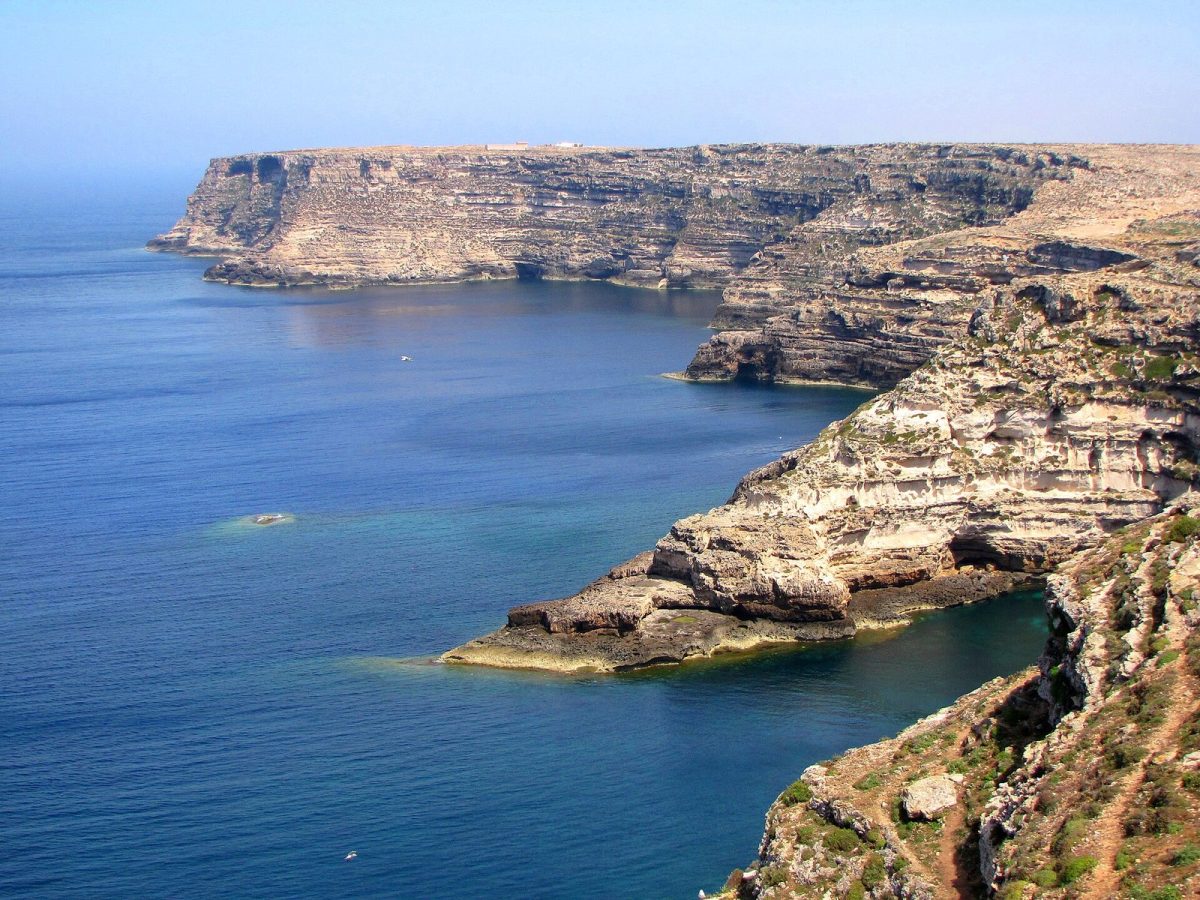
Photo: Jeffrey Sciberras, CC BY 3.0
At a glance
| Getting there | 1-h flights from Palermo or Catania, more from Rome and Milan in summer; overnight ferry from Porto Empedocle |
|---|---|
| Gateway | Palermo or Catania (flights); Porto Empedocle (ferry) |
| Travel time | About 1 h by air or 9 h by ferry |
| Days | 3 to 5 nights |
| Best months | June and Sep–Oct; August very busy and hot |
| Getting around | Rent a scooter or small car; a summer bus runs from the town to the main beaches |
| Booking | Flights and rooms months ahead for August; boat trips a day or two ahead |
| Cost | Mid-range for Italy, expensive in August |
| Beaches | White sand and rocky coves; Rabbit Beach and Cala Pulcino in the south; Guitgia next to the town |
| Sea | Mediterranean Sea |
| Archipelago | Pelagian Islands |
| Area | 20 km² |
| Population | 6,299 (2015) |
| Highest point | 133 m (Albero Sole) |
| Airport | Yes, scheduled flights |
| Car-free | No |
| Checked | October 2026 |
Tours and day trips: what to book
Lampedusa is best seen from the sea, and the harbour is lined with boats offering day trips. The classic is the round-the-island cruise on a wooden boat or gulet, which leaves the port in the morning, follows the cliffs of the south and west coast and stops at four or five coves such as Tabaccara, Cala Pulcino and the bay off Rabbit Beach. Lunch, usually pasta and fish cooked on board, and drinks are generally included; masks are often provided. You are back by late afternoon.
Smaller boats, catamarans and yachts sell the same route with fewer people, and some offer half-day trips along the south coast only. Sunset trips go out in the evening with an aperitif or dinner, often looking for the bottlenose dolphins that live around the island.
Day trips to Linosa, the volcanic sister island to the north, use either a tour boat or the regular hydrofoil. On land there are guided walks on the Tabaccara headland, and diving centres take divers to the reefs and underwater caves.
Our advice: book the island cruise for your second day, when you know which coves you want to see again by scooter.
What to see and do on Lampedusa
Rabbit Beach and Isola dei Conigli
A bay of fine white sand and shallow turquoise water faces a small islet that you can wade to. It is part of a nature reserve and one of the few places in Italy where loggerhead turtles nest. Leave your car at the top and walk down the path for about 15 minutes; in summer numbers are controlled.
Tabaccara and the south coast coves
East of Rabbit Beach, the bay of Tabaccara is famous for water so clear that boats seem to float in the air. It is reached by sea, as are Cala Pulcino and other coves along the cliffs. Swim from the boat, bring a mask and expect plenty of company in August.
Lampedusa town and Via Roma
The only town spreads around the harbour. In the evening everyone walks along Via Roma, a pedestrian street of bars, gelato shops and fish restaurants. Look for the Sanctuary of the Madonna of Porto Salvo in a green valley north of the centre, the island's oldest place of worship.
Porta d'Europa
On a rise at the southern edge of town stands a tall ceramic and metal gate facing the sea towards Africa, a monument to the migrants who died crossing the Mediterranean. It is a 20-minute walk from the harbour and a quiet place to reflect on the island's recent role as Europe's southern border.
The turtle rescue centre
Near the harbour a rescue centre treats loggerhead turtles injured by fishing nets, hooks and boat propellers, then releases them. Volunteers explain the work and show the animals in their tanks. Visits are short and a donation helps. In summer, releases at sea sometimes take place and visitors may watch.
Cala Pulcino and Albero Sole
Drive west across the bare plateau to the cliffs around Albero Sole, the highest point at 133 metres, for wide views at sunset. Below, Cala Pulcino is a pebble and sand cove reached by a steep path, quieter than Rabbit Beach and good for snorkelling over seagrass.
Lampedusa tours: which one for you
Our pick for each kind of trip, with live dates and prices. Free cancellation on most.
Best for: First visit, round the island by boat
A full day on a wooden boat along the south and west coast, stopping at several coves to swim, with a pasta lunch cooked on board.
- A day on Linosa: Lampedusa boat tour of the authentic linosa and sunset in lampedusa A boat crossing to volcanic Linosa for its black rocks and coloured houses, coming back to Lampedusa in time for the sunset at sea.
- Sunset and dolphins: Lampedusa sunset gulet trip with aperitif dinner and dolphin watching An evening on a gulet with an aperitif and dinner, heading out to where dolphins often feed before returning after dark.
How to get to Lampedusa
Most visitors fly. Lampedusa airport sits at the edge of the town and has flights of about an hour from Palermo and Catania all year. From late spring to early autumn there are also direct flights from Rome, Milan and other Italian cities, which sell out early for August.
By sea, a conventional ferry runs from Porto Empedocle, near Agrigento in Sicily, usually overnight, taking about nine hours and calling at Linosa. In summer a hydrofoil service on the same route roughly halves the journey. You can bring a car on the ferry, but the island is so small that renting one locally is usually simpler.
Rough seas, especially in winter, can cancel crossings, so allow a spare day.
Getting around
Lampedusa is about 10 km long, and the main beaches are 5 to 10 km from town. A scooter is the most popular way to get around and is easy to rent near the port; small cars and electric buggies are also available. In summer a bus runs from the town along the south coast to Rabbit Beach and back several times a day. Roads are quiet outside August, and parking at the popular beaches is limited.
When to go
June and September are the best months: the sea is warm, the beaches are calmer and prices are lower than in August. September often brings the warmest water of the year, around 26 degrees. July is busy, and August, when Italians take their holidays, is crowded, hot and expensive, with full flights and boats.
May and October are pleasant for walking and diving, though the sea is cooler and some boats have not started or have stopped their trips. From November to March the island is quiet, many hotels and restaurants close, and wind can disrupt ferries.
Loggerhead turtles lay their eggs on Rabbit Beach from June to August, and the hatchlings emerge in late summer; parts of the beach may be fenced at night. Three to five nights lets you combine a boat day, Rabbit Beach and a trip to Linosa.
Where to stay
Almost everything is in or near Lampedusa town: hotels, guesthouses and apartments within walking distance of Via Roma and the harbour, so you can reach the boats in the morning and the restaurants at night. A few resorts and holiday villages lie on the coast west of town, quieter and closer to the beaches but needing a scooter. Book well ahead for August, when the island fills with Italian families.
History and character
Lampedusa has been used by Phoenicians, Romans and Arabs, but for long periods it was empty, a stop for passing sailors and a refuge for pirates. In the eighteenth century the Tomasi family held the title of princes of Lampedusa, a name later made famous by the author of The Leopard. Real settlement began in 1843, when the Bourbon kingdom of Naples sent colonists. Fishing and sponge diving shaped the town until tourism arrived, and since the 2000s the island has been a first landfall for migrants from North Africa.
Combine it with
Linosa, a small volcanic island 42 km to the north, is about an hour by hydrofoil and worth a day or a night for its black lava coast and painted houses. Lampedusa is far from everywhere else, so most people pair it with a few days in Palermo, Agrigento and the Valley of the Temples, or Catania and Mount Etna, before or after the flight.
Frequently asked questions
How do I get to Lampedusa?
1-h flights from Palermo or Catania, more from Rome and Milan in summer; overnight ferry from Porto Empedocle.
How long does it take to get to Lampedusa from Palermo or Catania (flights); Porto Empedocle (ferry)?
From Palermo or Catania (flights); Porto Empedocle (ferry): about 1 h by air or 9 h by ferry.
How many days do you need on Lampedusa?
3 to 5 nights.
When is the best time to visit Lampedusa?
June and Sep–Oct; August very busy and hot.
Do I need a car on Lampedusa?
Rent a scooter or small car; a summer bus runs from the town to the main beaches.
Is Lampedusa worth a day trip?
Go if you want turquoise coves, boat days with swimming stops and turtles on a remote Italian island in late summer. Skip it or choose Favignana or Pantelleria if you want green landscapes, historic towns or an easy ferry from Sicily.
Is Lampedusa expensive?
Mid-range for Italy, expensive in August.
What are the beaches like on Lampedusa?
White sand and rocky coves; Rabbit Beach and Cala Pulcino in the south; Guitgia next to the town.
What should I book ahead for Lampedusa?
Flights and rooms months ahead for August; boat trips a day or two ahead.
Can I book tours and day trips to Lampedusa online?
Yes. Boat trips, guided tours and day trips for Lampedusa can be booked online; live prices and free cancellation on most are shown on this page.