Italy · Mediterranean Sea · Volcanic island
Linosa
Linosa is a tiny volcanic island of about 5 square kilometres in the Strait of Sicily, 43 km north of Lampedusa and far closer to Africa than to mainland Italy. It has one brightly painted village, black lava coasts, three extinct craters, superb diving and a beach where loggerhead turtles nest, with very few visitors.
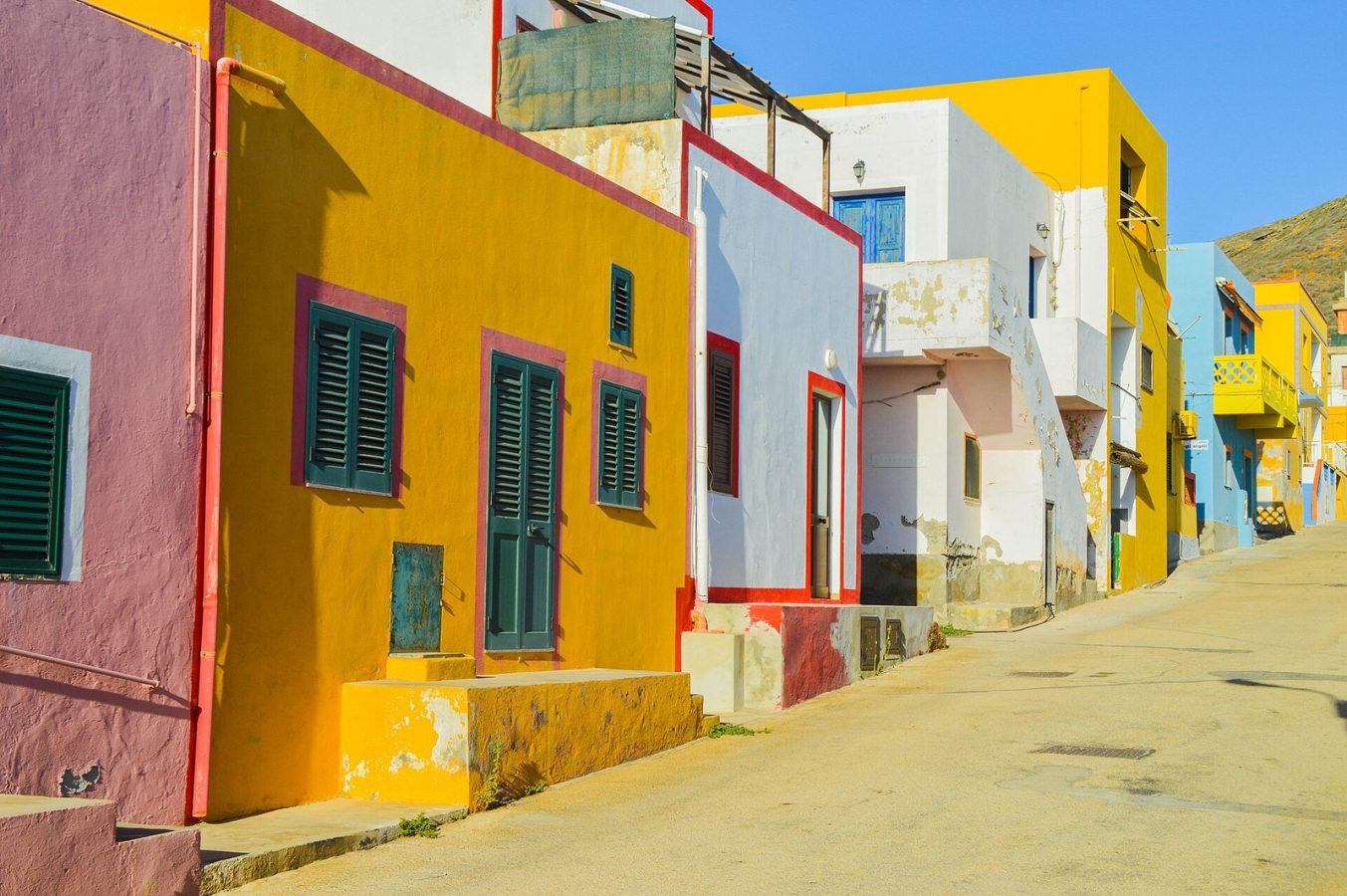
Photo: Giulia Raciti, CC BY 2.0
At a glance
| Getting there | Hydrofoil or ferry from Lampedusa, about 1 h by hydrofoil; ferries and hydrofoils from Porto Empedocle in Sicily |
|---|---|
| Gateway | Lampedusa or Porto Empedocle (Sicily) |
| Travel time | About 1 h by hydrofoil from Lampedusa |
| Days | A day trip or 1 to 2 nights |
| Best months | Jun–Sep; Jul–Aug warmest sea; very quiet and few services Oct–May |
| Getting around | Walk, cycle or hire a scooter; one road loops round the island |
| Booking | Rooms and boats weeks ahead for July and August; dives a few days ahead |
| Cost | Mid-range for Italy |
| Beaches | Black volcanic rock and one small dark-sand beach, Pozzolana di Ponente; swim from lava ledges |
| Sea | Mediterranean Sea |
| Archipelago | Pelagie Islands |
| Area | 5.5 km² |
| Population | 430 (2007) |
| Highest point | 195 m (Monte Vulcano) |
| Airport | No |
| Car-free | No |
| Checked | October 2026 |
Tours and day trips: what to book
Linosa is usually visited from Lampedusa, and that is reflected in what is sold. The main choice is between a crossing on your own and an organised day out.
The simplest option is a ticket on the scheduled hydrofoil or ferry between the two islands, which you can combine with a night or two on Linosa. You then walk or rent a scooter, swim from the lava rocks and arrange dives locally.
The alternative is a boat excursion from Lampedusa town. A day boat crosses in the morning, circles Linosa to look at its lava cliffs, caves and the coves of its coast, stops for swimming and snorkelling and gives a few hours ashore in the village, before returning in the evening, sometimes with a sunset on the way back. Lunch and drinks are often included, and the trip depends on calm seas, since the crossing is long.
Divers book directly with the small dive centres on Linosa, which visit underwater lava formations, walls and shoals with groupers, barracuda and amberjacks. Snorkelling gear can be hired, and the turtle rescue centre welcomes visitors.
Recommendation: if you have time, take the scheduled boat and stay one night; if you only have a day, the excursion from Lampedusa covers the essentials.
What to see and do on Linosa
The painted village
Linosa's only village spreads around the small harbour, with low cube houses painted in bright pinks, yellows and blues and decorated with contrasting window frames. Wander the lanes, sit in the square by the church and watch the fishing boats come in. Everything is within a 10-minute walk, and the few bars and restaurants serve fresh fish and capers.
Swimming from the lava coast
Instead of sandy beaches, Linosa has black lava ledges dropping into deep, intensely blue water. Cala Pozzolana di Ponente is a small black-sand beach in a crater bay, while Scalo Vecchio and Mannarazza have natural lava pools and flat rocks for swimming and snorkelling. Bring water shoes, a mask and plenty of shade, as there are few facilities.
Monte Vulcano and the craters
Three extinct volcanoes shape the island: Monte Vulcano, the highest at 195 metres, Monte Rosso with its red slopes, and Monte Nero. Paths climb to the crater rims in under an hour, with views over the whole island, the sea and Lampedusa on the horizon. Walk early or late in the day, as there is no shade.
The turtle rescue centre
Loggerhead turtles nest on the beach of Pozzolana di Ponente in summer, one of the few regular nesting sites in Italy. The small rescue centre near the village treats turtles injured by fishing gear and boats, and volunteers explain their work. Visits are free or by donation; check opening hours locally and respect closed areas on the beach.
Diving around the island
Linosa is one of the best diving spots in the Mediterranean, thanks to clear water and lava formations: arches, caves and walls covered in sponges and gorgonians. Groupers, barracuda and amberjacks are common, and dolphins and turtles are sometimes seen. Dive centres operate from late spring to autumn and offer courses for beginners.
Linosa tours: which one for you
Our pick for each kind of trip, with live dates and prices. Free cancellation on most.
Best for: A day from Lampedusa
A boat excursion that crosses from Lampedusa to explore Linosa's village and lava coast, then returns in time for sunset back on Lampedusa.
- Staying overnight on Linosa: Pelagie islands boat ticket between lampedusa and linosa A simple boat ticket between the two Pelagie islands, which lets you choose your own dates and spend a night or two on Linosa at your own pace.
How to get to Linosa
There is no airport on Linosa, so most visitors fly to Lampedusa, which has flights from Palermo and Catania all year and from several mainland Italian cities in summer, and continue by sea. Hydrofoils between Lampedusa and Linosa take about an hour and run daily in season, while the slower ferry takes longer.
From Sicily, ferries and hydrofoils leave Porto Empedocle, near Agrigento, and call at Linosa on their way to Lampedusa. The ferry runs overnight and carries vehicles, but bringing a car to an island this small makes little sense. The sea crossing is long and exposed, and in strong winds boats can be cancelled for a day or more, so do not plan a tight connection with your flight home. Book tickets online or at the port offices, especially for August.
Getting around
Linosa is tiny, with one road of roughly 10 km looping round the island and a few tracks into the craters. You can walk almost everywhere: the village, the harbour and the nearest swimming spots are within a short stroll, and the farthest coves are about an hour on foot. Scooters, bicycles and electric bikes can be hired in the village. There is little traffic and no real public transport.
When to go
June to September is the season, with hot, dry weather and sea temperatures that reach about 26 C in August. July and August are the busiest months, when Italian families come for the diving and the quiet, and the few rooms fill up. June and September are calmer and still warm, and the turtle nesting season runs through the summer, with hatchlings emerging in late summer.
From October to May most visitors disappear, many services close, boats run less often and winter storms can cut the island off for days, though the climate stays mild. Spring brings wild flowers and is good for walking and birdwatching. A day trip shows the village and a swim, but one or two nights let you climb the craters, dive and enjoy the silence after the day boats leave.
Where to stay
All accommodation is in or around the village: a few small hotels, guesthouses, rooms in local houses and holiday apartments. Staying in the village puts you close to the harbour, the restaurants and the dive centres, and the walking distances are short. There are no resorts or large hotels, and choice is limited, so book well ahead for July and August. Alternatively, base yourself on Lampedusa and visit Linosa for the day.
History and character
Linosa was known to ancient geographers and occasionally used by Romans and pirates, but it was mostly uninhabited until 1845, when the Bourbon king of Naples sent settlers from Sicily and Ischia to farm its volcanic soil. They built the village and terraced fields, growing lentils, capers and vines. In the twentieth century it also served as a place of enforced residence. Fishing and farming remained the main activities until diving and quiet summer tourism arrived. Today the craters, the terraces and the colourful houses of the first settlers still define the island.
Combine it with
Linosa pairs naturally with Lampedusa, an hour away by hydrofoil, which has the famous sandy beach of Rabbit Island, more hotels and the airport. Together they make a week in the Pelagie Islands. From Porto Empedocle, the departure port in Sicily, you can visit the Valley of the Temples at Agrigento, about 15 minutes away by road.
Frequently asked questions
How do I get to Linosa?
Hydrofoil or ferry from Lampedusa, about 1 h by hydrofoil; ferries and hydrofoils from Porto Empedocle in Sicily.
How long does it take to get to Linosa from Lampedusa or Porto Empedocle (Sicily)?
From Lampedusa or Porto Empedocle (Sicily): about 1 h by hydrofoil from Lampedusa.
How many days do you need on Linosa?
A day trip or 1 to 2 nights.
When is the best time to visit Linosa?
Jun–Sep; Jul–Aug warmest sea; very quiet and few services Oct–May.
Do I need a car on Linosa?
Walk, cycle or hire a scooter; one road loops round the island.
Is Linosa worth a day trip?
Go if you want a quiet volcanic island for snorkelling, diving and walking with almost no tourism. Skip it or choose Lampedusa if you want sandy beaches, many restaurants and easy flights.
Is Linosa expensive?
Mid-range for Italy.
What are the beaches like on Linosa?
Black volcanic rock and one small dark-sand beach, Pozzolana di Ponente; swim from lava ledges.
What should I book ahead for Linosa?
Rooms and boats weeks ahead for July and August; dives a few days ahead.
Can I book tours and day trips to Linosa online?
Yes. Boat trips, guided tours and day trips for Linosa can be booked online; live prices and free cancellation on most are shown on this page.