Niue · Pacific Ocean · Nature & wildlife island
Niue
Niue is a self-governing island nation in the South Pacific, one of the largest raised coral islands in the world, with about 1,700 people on 261 square kilometres. There are no sandy resort beaches; instead the limestone coast is cut by chasms, caves and rock pools with some of the clearest water in the Pacific.
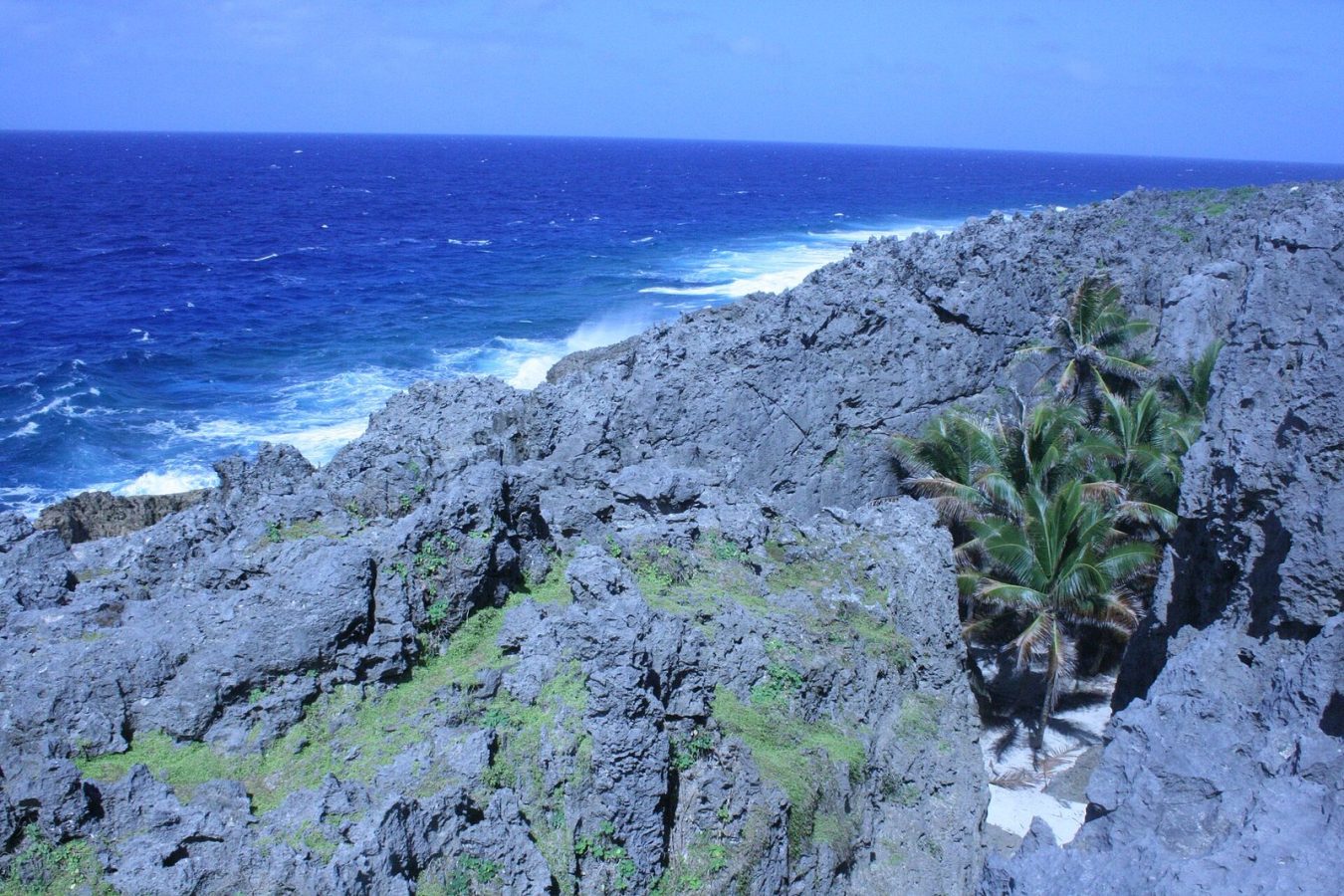
Photo: Pia Andrews from Australia, CC BY 2.0
At a glance
| Getting there | Flights from Auckland of about 3.5 h, usually twice a week; no passenger ferries |
|---|---|
| Gateway | Auckland (flights) |
| Travel time | About 3.5 h by air |
| Days | A week, set by the flights |
| Best months | May–Oct dry and cooler; whales Jul–Oct; cyclone season Dec–Apr |
| Getting around | Rent a car or scooter; one ring road of about 64 km; no public buses |
| Booking | Flights and rooms months ahead; whale swims and cave tours a few days ahead |
| Cost | Expensive; most food is imported |
| Beaches | Few beaches; swim in reef pools and chasms such as Limu, Matapa and Utuko |
| Sea | Pacific Ocean |
| Area | 261 km² |
| Population | 1,689 (2022) |
| Highest point | 68 m (Niue Highest Point) |
| Airport | Yes, scheduled flights |
| Car-free | No |
| Checked | October 2026 |
Tours and day trips: what to book
Nothing is sold online for Niue as a ready-made tour. Visitors usually book flights and accommodation from New Zealand, often as a package, and arrange activities once they arrive, through their lodging or the tourist information centre in Alofi.
The island's few operators offer a short list of things. In the whale season, licensed boats take small groups out to swim with or watch humpback whales, and spinner dolphins are seen most of the year. Dive operators run trips to caves and walls just off the reef, where the visibility is exceptional and the harmless-looking sea kraits are common. Guided cave walks, fishing charters, village tours and cultural evenings complete the menu, along with hired snorkel gear, kayaks and bikes.
Prices include the boat or guide and equipment; meals and transport to the departure point usually do not. Many of the best sites, the sea tracks down to chasms and pools, are free and signposted, and you reach them in a rental car.
Our advice: rent a car for the whole stay, book a whale trip early in the week so you have spare days if the sea is rough, and plan the rock-pool swims around low tide.
What to see and do in Niue
Limu Pools
On the north-west coast, about 15 minutes' drive from Alofi, two sheltered lagoons behind the reef are the island's favourite snorkelling spot. Fresh water seeping from the limestone mixes with the sea and blurs the view in places, while corals and tropical fish fill the clear channels. Come at low or mid tide, when the pools are calm.
Matapa Chasm and Talava Arches
Close to Limu, a sea track leads to Matapa, a narrow gorge where the old kings once bathed, with cool, very clear water for a swim. A longer and rougher path continues to Talava, where huge natural arches and caves open onto the ocean. Allow two hours for both, and wear reef shoes on the sharp coral.
Togo Chasm
On the wilder east coast, a forest path of about 20 minutes crosses a field of jagged coral pinnacles, then a ladder drops into a hidden gorge with a small patch of sand and palm trees at the bottom. It is one of the strangest landscapes in the Pacific. The walk is not hard, but sturdy shoes are essential.
Whales from the shore
From July to October humpback whales come close to Niue to calve, and because the reef drops steeply into deep water, they can be seen from cliffs and even from the sea tracks. Licensed boats from Alofi take swimmers out to meet them under strict rules. Spinner dolphins often follow the boats in the mornings.
Alofi and the villages
The small capital on the west coast has the main wharf, a market, a few cafes and the island museum. Around the ring road, villages such as Avatele and Hakupu have churches, family graves by the road and, often, a coconut crab or two crossing at night. The island's night sky is protected and very dark.
How to get to Niue
Niue is reached by air from Auckland, with flights usually about twice a week taking around three and a half hours. Because Niue lies just east of the date line, you arrive on the calendar day before you left, and the return crosses the date back. The small airport at Hanan, near Alofi, is a few minutes' drive from most accommodation, and hosts usually meet guests.
Book flights early, as seats are limited and the timetable shapes the whole trip; a week is the normal stay. There are no regular passenger ferries. Yachts call in the cruising season and use moorings off Alofi, landing at the wharf, where small boats are lifted out of the water by crane. Travellers from other Pacific islands generally connect through Auckland.
Getting around
You need your own transport. A sealed ring road of about 64 km circles the island, with roads across the middle, and traffic is light; drive on the left. Rental cars and scooters are arranged through your accommodation or in Alofi, and you should check the local licence rules when you collect them. There are no public buses and few taxis. Cycling is possible, though distances and heat make it tiring. Sea tracks to the coast can be steep.
When to go
Niue has a warm tropical climate all year. May to October is the dry and cooler season, with air temperatures in the mid-twenties, lower humidity and calmer seas; it is also when the humpback whales visit, from July to October, so these are the most popular months. November to April is hotter, wetter and humid, and it is cyclone season; a severe cyclone in 2004 caused heavy damage, and storms can close sea tracks and cancel boat trips.
The sea stays warm enough to swim year round. Sunday is a day of rest on Niue: shops close, church attendance is high, and boating and fishing are generally avoided, so plan quiet activities. Visitor numbers are small even in the high season, and a week gives time to see the island at an easy pace.
Where to stay
Most accommodation is on the west coast, in or near Alofi, close to the airport, the shops, the wharf and the whale boats; this is the most convenient base, with sunset views over the sea. A few lodges and guesthouses lie along the coast to the north and south, quieter and closer to Limu or Avatele. The east coast is wild and almost empty. Choose a place with a kitchen, as restaurants are few and some close on Sundays.
History and character
Niue was settled by Polynesians from Samoa and Tonga, and its people developed their own language, still spoken today. James Cook tried to land in 1774, was turned away and named it Savage Island. Missionaries arrived in the nineteenth century and converted the island, and in 1901 it came under New Zealand. Niue became self-governing in 1974 in free association with New Zealand, whose citizenship its people hold; many more Niueans now live in New Zealand than on the island itself.
Combine it with
Niue's only regular flights go to Auckland, so it is usually combined with a stay in New Zealand, either before or after the week on the island. Visiting other Pacific nations such as the Cook Islands, Tonga or Samoa means returning to Auckland and flying out again; Rarotonga is about four hours from Auckland.
Frequently asked questions
How do I get to Niue?
Flights from Auckland of about 3.5 h, usually twice a week; no passenger ferries.
How long does it take to get to Niue from Auckland (flights)?
From Auckland (flights): about 3.5 h by air.
How many days do you need in Niue?
A week, set by the flights.
When is the best time to visit Niue?
May–Oct dry and cooler; whales Jul–Oct; cyclone season Dec–Apr.
Do I need a car in Niue?
Rent a car or scooter; one ring road of about 64 km; no public buses.
Is Niue worth a day trip?
Go if you want to snorkel in clear rock pools, swim near humpback whales and explore caves on an island with almost no tourists. Skip it or choose Rarotonga if you want white-sand beaches, nightlife or more than two flights a week.
Is Niue expensive?
Expensive; most food is imported.
What are the beaches like in Niue?
Few beaches; swim in reef pools and chasms such as Limu, Matapa and Utuko.
What should I book ahead for Niue?
Flights and rooms months ahead; whale swims and cave tours a few days ahead.