French Polynesia · Pacific Ocean · Remote island
Nuku Hiva
Nuku Hiva is the largest of the Marquesas Islands in French Polynesia, a 339-square-kilometre block of volcanic cliffs and deep green valleys about 1,400 km north-east of Tahiti. It suits travellers who come for hiking, waterfalls, carved stone tiki and Marquesan culture rather than lagoons.
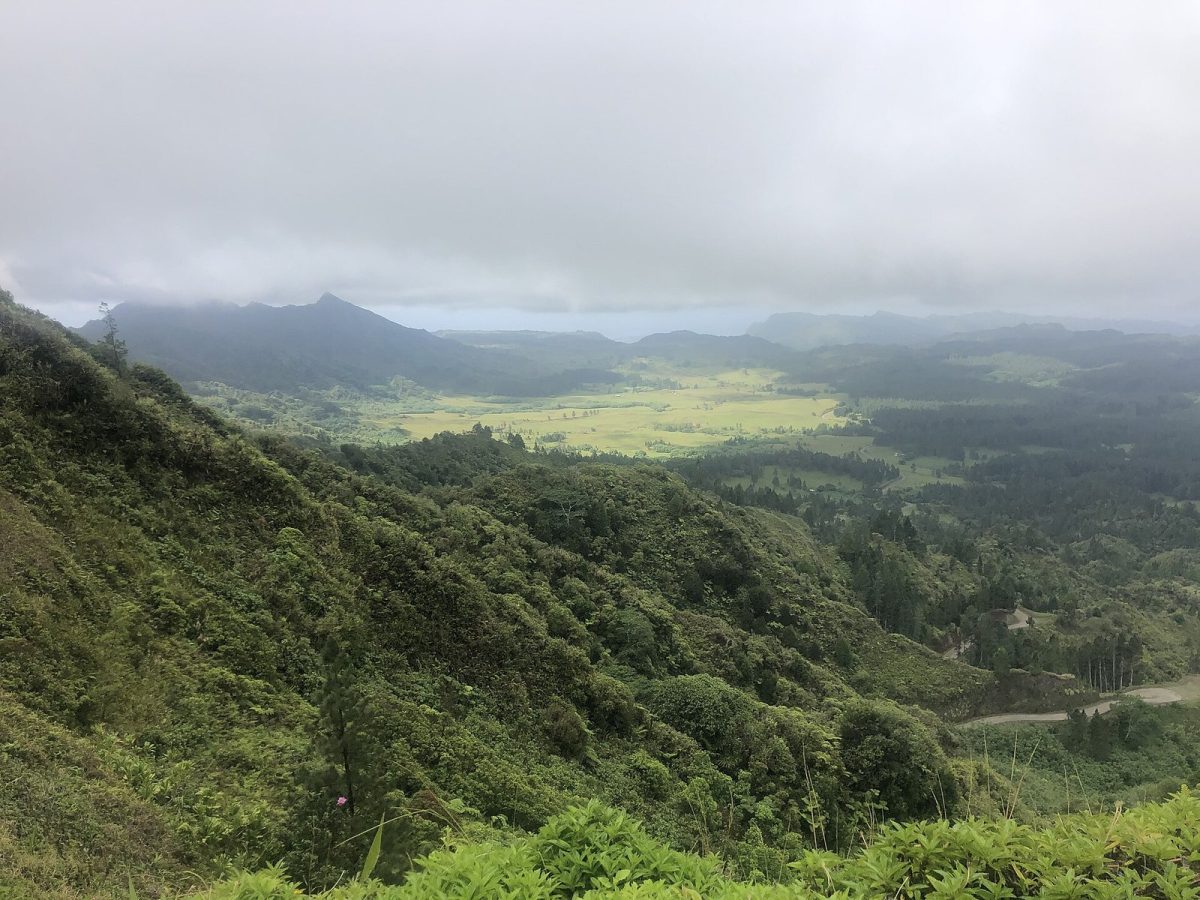
Photo: Laurent Seignobos, CC BY-SA 4.0
At a glance
| Getting there | Flights from Papeete about 3.5 h, often via another island; or as a stop on the Aranui freighter cruise |
|---|---|
| Gateway | Papeete, Tahiti |
| Travel time | About 3.5 h by air from Papeete |
| Days | A week or more |
| Best months | Year-round; drier and less humid from about Aug–Nov |
| Getting around | 4x4 with driver or rented 4x4; boat taxis to the roadless bays |
| Booking | Flights from Tahiti and guesthouses well ahead; guides and 4x4 tours a few days ahead |
| Cost | Expensive, even by French Polynesian standards |
| Beaches | Dark sand and strong surf; Anaho is the calm sandy bay behind a reef, but sand flies bite |
| Sea | Pacific Ocean |
| Archipelago | Marquesas Islands |
| Area | 339 km² |
| Population | 2,660 (2007) |
| Highest point | 1,224 m (Tekao) |
| Airport | Yes, scheduled flights |
| Car-free | No |
| UNESCO | Te Henua Enata – The Marquesas Islands |
| Checked | October 2026 |
Tours and day trips: what to book
Tours on Nuku Hiva are small, local and few. What can be booked ahead falls into three types, all run by island guides with 4x4 vehicles or boats.
The most useful is the full-day valley tour from Taiohae. A driver takes you over the mountain road to Taipivai, Hatiheu and Aakapa, with stops at the restored ceremonial platforms and tiki, a local lunch and viewpoints over the bays. A second type covers the beaches of the north and east, combining the walk or boat ride to Anaho with the dunes of Haatuatua. The third is the waterfall day: a boat from Taiohae to Hakaui valley and a guided hike to the foot of the Vaipo falls, which is long and muddy but the island's great walk.
Tours usually include the vehicle or boat, the guide and often lunch; transfers from the airport are separate and long. Many guests also arrive by the Aranui freighter, which runs its own shore excursions. Horse riding, diving with manta rays and dolphins, and carving workshops are arranged locally through guesthouses.
Our advice: book the valley tour first, then add the waterfall if you are fit.
What to see and do on Nuku Hiva
Taiohae and its bay
The main village curves around a deep southern bay that is the crater of an old volcano. Visit the Notre-Dame cathedral, filled with carvings in local wood and stone, the restored ceremonial ground of Koueva, and the waterfront craft market. Yachts anchor here after crossing the Pacific, and the seafront has the island's shops and few restaurants.
Hakaui valley and Vaipo falls
West of Taiohae, reached by boat in about 20 minutes, a narrow valley between tall basalt walls leads to the Vaipo waterfall, among the highest in French Polynesia. The walk follows an ancient paved path past house platforms and takes two to three hours each way. The falls are thinner in dry spells. Nearby Hakatea bay has a small beach.
Hatiheu and the Kamuihei site
On the north coast, about an hour by road from Taiohae, Hatiheu sits under spiky peaks with a white statue of the Virgin on one of them. Robert Louis Stevenson anchored here in 1888. Inland, the Kamuihei and Hikokua sites have huge banyan trees, stone platforms, petroglyphs and tiki in the forest.
Taipivai valley
The broad valley that Herman Melville made famous in Typee lies east of Taiohae, at the head of Controller Bay. Today a quiet village spreads along the river among breadfruit and coconut, and the Paeke site holds large carved tiki on a stone platform. Stop at the pass above for the view down the valley.
Anaho bay
East of Hatiheu, reachable only by a walk of about an hour over a ridge or by boat, Anaho has the island's best beach: pale sand behind a coral reef, with calm water for swimming and snorkelling. A few families live here growing fruit. Bring repellent against the tiny sand flies, and plenty of water for the climb back.
Nuku Hiva tours: which one for you
Our pick for each kind of trip, with live dates and prices. Free cancellation on most.
Best for: First visit, the three valleys
A full day by 4x4 over the mountains from Taiohae to the northern and eastern valleys, with stops at stone tiki sites, villages and viewpoints you would struggle to find alone.
- Beaches of the north and east: Nuku hiva tour to the wonderful beaches of anaho and ha atu atua Combines the remote sandy bay of Anaho, reached on foot or by boat, with the wild dune beach at Haatuatua, which is otherwise hard to reach without a local driver.
- Hikers, the Vaipo waterfall: Nuku hiva tour to the top of vaipo waterfall A boat ride to Hakaui valley and a guided walk along the old paved trail to the foot of one of the highest waterfalls in French Polynesia.
How to get to Nuku Hiva
Nuku Hiva's airport lies on the dry north-west plateau, far from the main village. Flights from Papeete on Tahiti take about three and a half hours, sometimes with a stop on another island such as Hiva Oa, and run several times a week. Seats are limited and should be booked early, ideally with your international flight. From the airport the drive to Taiohae over the mountains takes about an hour and a half; guesthouses arrange the transfer.
The other classic way to arrive is on the Aranui, a passenger-carrying freighter that sails from Papeete on a cruise of about two weeks around the Marquesas and calls at Nuku Hiva. Visiting yachts anchor in Taiohae bay. There is no bridge or car ferry from Tahiti.
Getting around
A car is needed to see more than Taiohae, but roads cross steep mountains and some sections are rough, so most visitors hire a 4x4 with a driver for the day. Self-drive 4x4 rental exists in Taiohae, in small numbers. There is no public bus. Boat taxis serve Hakaui and other bays without roads. Taiohae itself is walkable along the seafront, and horses can be hired for mountain trails.
When to go
Nuku Hiva is warm all year, close to the equator, with daytime temperatures around the high 20s and warm sea. There is no strong dry season, and showers can fall in any month, often heavy and short. The months from about August to November tend to be a little drier, which helps on muddy trails such as Hakaui, while wetter spells make the waterfalls stronger. The ocean swell can be rough at any time, so boat trips may be cancelled.
Crowds are never an issue; the limit is flight seats and the handful of guesthouses, which fill during French holidays and when the Marquesas Arts Festival is held. Give the island at least four or five days to cover the valleys and the waterfall, and a week or more if you combine it with Ua Pou or Hiva Oa.
Where to stay
Taiohae is the practical base, with most of the guesthouses, the small hotel, shops, the bank and the boats to Hakaui. Staying in Hatiheu on the north coast puts you close to the archaeological sites and the walk to Anaho, in a quieter village setting. Simple family guesthouses in Taipivai and Anaho itself suit travellers who want to slow down and eat with local families.
History and character
Polynesian voyagers settled the Marquesas roughly a thousand years ago, and Nuku Hiva's valleys held rival clans who built stone house platforms, ceremonial grounds and tiki, and developed elaborate tattooing. European ships arrived in the late eighteenth century; an American naval force built a fort at Taiohae in 1813, and France annexed the islands in 1842. Disease cut the population drastically. Since the 1980s Marquesans have revived their language, dance, carving and tattoo, and the islands joined the UNESCO World Heritage list in 2024.
Combine it with
Ua Pou, with its spire-shaped peaks visible from Nuku Hiva, is a short flight or boat ride south. Hiva Oa in the southern Marquesas, where Paul Gauguin and Jacques Brel are buried, is about an hour by air. Most trips start and end on Tahiti, and many add Moorea or Bora Bora for lagoons on the way home.
Frequently asked questions
How do I get to Nuku Hiva?
Flights from Papeete about 3.5 h, often via another island; or as a stop on the Aranui freighter cruise.
How long does it take to get to Nuku Hiva from Papeete, Tahiti?
From Papeete, Tahiti: about 3.5 h by air from Papeete.
How many days do you need on Nuku Hiva?
A week or more.
When is the best time to visit Nuku Hiva?
Year-round; drier and less humid from about Aug–Nov.
Do I need a car on Nuku Hiva?
4x4 with driver or rented 4x4; boat taxis to the roadless bays.
Is Nuku Hiva worth a day trip?
Go if you want remote mountain hiking, ancient ceremonial sites and a living Polynesian culture far from resort lagoons. Skip it or choose Bora Bora or Moorea if you want white beaches, calm lagoons and easy travel.
Is Nuku Hiva expensive?
Expensive, even by French Polynesian standards.
What are the beaches like on Nuku Hiva?
Dark sand and strong surf; Anaho is the calm sandy bay behind a reef, but sand flies bite.
What should I book ahead for Nuku Hiva?
Flights from Tahiti and guesthouses well ahead; guides and 4x4 tours a few days ahead.
Can I book tours and day trips to Nuku Hiva online?
Yes. Boat trips, guided tours and day trips for Nuku Hiva can be booked online; live prices and free cancellation on most are shown on this page.