Nicaragua · Lakes & rivers · Volcanic island
Ometepe
Ometepe is the largest island in Lake Nicaragua, two volcanoes joined by a low isthmus of farmland and beaches, about 31 km long. Concepcion rises to 1,610 metres and still smokes, while forested Maderas hides a crater lake, so the island is a base for hiking, kayaking, swimming and slow, cheap days.
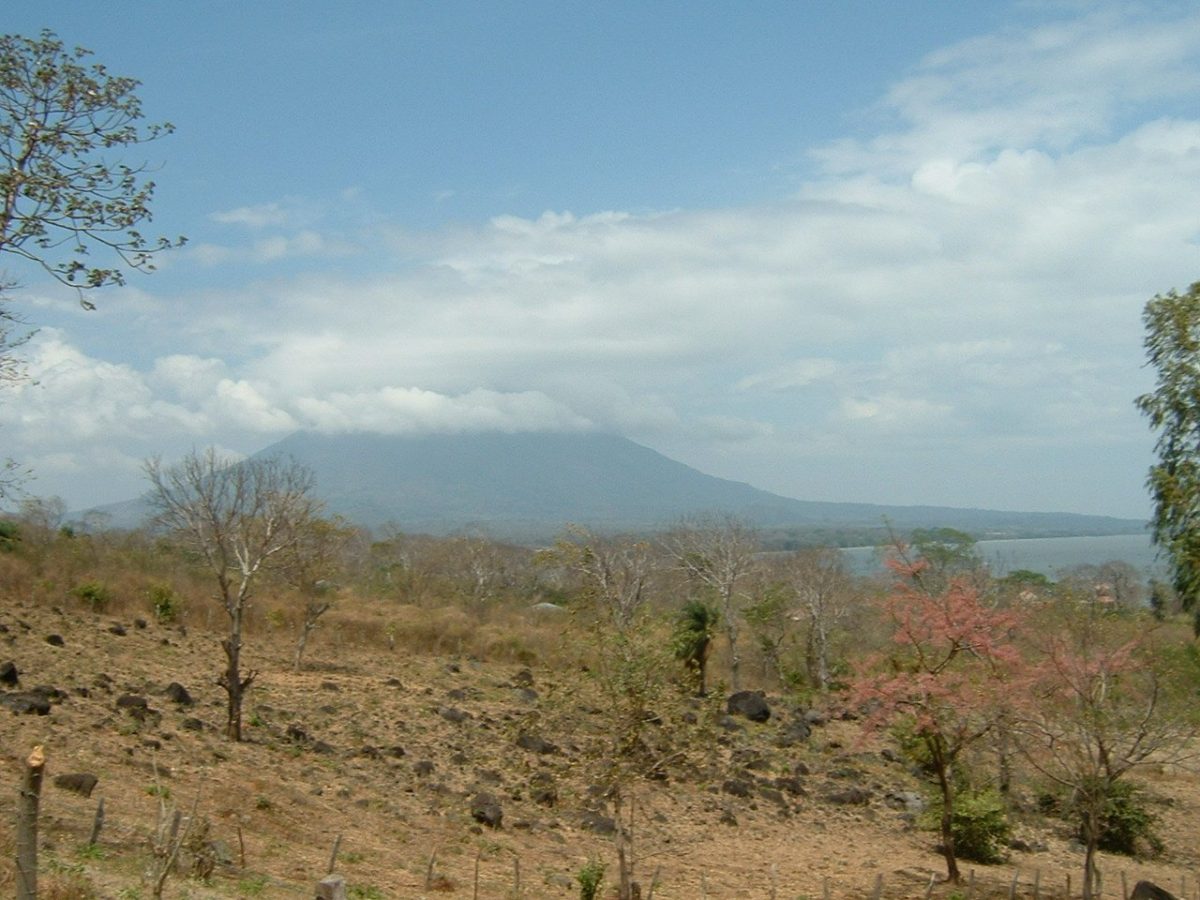
Photo: Josef87, CC BY-SA 3.0
At a glance
| Getting there | Ferry or launch from San Jorge near Rivas to Moyogalpa in about 1 h; San Jorge is 2.5 h by road from Managua |
|---|---|
| Gateway | San Jorge (Rivas) |
| Travel time | About 1 h by ferry |
| Days | 3 to 5 nights |
| Best months | Dec–Apr dry season; Mar–Apr hottest; green season May–Nov, wettest Sep–Oct |
| Getting around | Scooter, bicycle or local bus round the paved ring; taxis and trucks for the dirt tracks |
| Booking | Car places on the ferry at holidays; volcano guides a day ahead; rooms at Easter |
| Cost | Cheap, even by Nicaraguan standards |
| Beaches | Grey lake sand; Santo Domingo on the isthmus and Punta Jesus Maria spit; no salt water or surf |
| Sea | Lakes & rivers |
| Area | 276 km² |
| Population | 34,090 (2023) |
| Highest point | 1,610 m (Concepcion volcano) |
| Ferry | 1 h from San Jorge (Rivas) |
| Car-free | No |
| Checked | October 2026 |
Tours and day trips: what to book
What is sold for Ometepe falls into four kinds, and most can be booked on the island itself a day ahead.
Volcano hikes are the main reason people come. Guides are required on both volcanoes, and a guided climb normally includes the guide, sometimes transport to the trailhead, but not food or water. Concepcion is a long, steep climb over loose rock to an exposed summit; Maderas is shorter, muddier and shaded by cloud forest, ending at a crater lagoon.
Kayak trips on the Istian river and the mangroves of the isthmus are half-day outings for birds and caimans, with an evening version timed for sunset on the lake.
Full-day tours by minibus or with a private driver link the island's main stops: the spring pool, the sand spit, the petroglyphs and the waterfall. They suit people with only one or two days.
Day trips from Managua, Granada or San Juan del Sur include road transport, the ferry crossing and a guide, but they spend half the day travelling. Ometepe rewards staying at least three nights: book a hike and a kayak trip locally and spend the rest of the time on a scooter.
What to see and do on Ometepe
Concepcion volcano
The near-perfect cone that dominates the northern half is an active volcano that still puffs ash. The climb from Moyogalpa or Altagracia takes eight to ten hours return, through forest and then over steep loose scree to a windy, often cloudy rim. Go only with a guide, start before dawn and skip it after recent eruption warnings.
Maderas and the crater lagoon
The southern volcano, at about 1,394 metres, is dormant and wrapped in cloud forest full of howler monkeys. Trails from Balgue, Merida or Santo Domingo climb through coffee farms and slippery mud to a cool lagoon inside the crater. Allow seven to eight hours with a guide, wear old shoes and expect to get filthy.
Ojo de Agua and Santo Domingo
On the isthmus, a short ride from the beach of Santo Domingo, Ojo de Agua is a spring-fed pool shaded by trees, with clear cool water and a small entry fee. Combine it with a swim and a long lunch on Santo Domingo's grey sand beach, the island's best stretch, where both volcanoes rise behind you.
Punta Jesus Maria
West of Moyogalpa, a narrow sand spit runs out into the lake, longer in the dry season when the water is low. It is the classic sunset spot, with Concepcion behind and the lake open to the horizon. There is a simple bar at the start; walk to the tip for the view.
San Ramon waterfall
On the southern flank of Maderas, a trail from the village of San Ramon climbs about two hours through forest to a tall, thin waterfall falling down a mossy cliff. It is best in the green season, when the flow is strong; in March and April it can be a trickle. Pay the small fee at the trailhead.
Petroglyphs and Altagracia
The northern slopes of Maderas are scattered with rocks carved with spirals and figures, centuries before the Spanish arrived; farms around Balgue and Magdalena show them. In Altagracia, on the Concepcion side, the church square keeps basalt statues and a small museum explains the island's early people.
Ometepe tours: which one for you
Our pick for each kind of trip, with live dates and prices. Free cancellation on most.
Best for: First visit, one full day on the island
A guided day by vehicle that covers the main stops in one go, with pickup, so you do not have to juggle buses, scooters and dirt roads.
- Climbing a volcano with a guide: Ometepe concepcion or maderas volcano guided hike You choose the bare cone of Concepcion or the cloud forest of Maderas, with a local guide who knows the trail; set off at dawn and bring plenty of water.
- Wildlife by kayak: Ometepe island mangrove kayak tour with wildlife spotting A paddle through the mangrove channels of the isthmus at a gentle pace, with good chances of caimans, turtles, herons and kingfishers close to the boat.
How to get to Ometepe
Most visitors come from San Jorge, the lake port next to Rivas, about 2.5 hours by road from Managua, 1.5 hours from Granada and under an hour from San Juan del Sur. Larger ferries and smaller wooden launches cross to Moyogalpa in about an hour, many times a day from early morning to late afternoon; buy your ticket at the dock. The bigger ferries are steadier when the dry-season trade winds whip up the lake, and they carry cars, though few visitors bring one. Some boats also run from San Jorge to San Jose del Sur. A slow boat between Granada and San Carlos calls at Altagracia a couple of times a week, a long but scenic crossing. Taxis and buses meet the boats at San Jorge.
Getting around
A paved road loops around Concepcion and runs across the isthmus towards Balgue and Merida; the rest of Maderas is ringed by rough dirt tracks. Scooters, quads and bicycles are rented in Moyogalpa and Santo Domingo, and a scooter is the easiest way to see the island in a few days. Old buses link the villages a few times a day, slowly. Taxis and pickup trucks can be hired for trailheads. Ride carefully: watch for cattle, potholes and loose gravel.
When to go
The dry season from December to April is the best time to hike, with clear mornings and firm trails. December to February is greenest and coolest, but strong trade winds can make the ferry crossing rough. March and April are hot and dusty, the waterfall shrinks and haze sometimes hides the volcanoes; Easter week brings Nicaraguan families to the beaches and fills rooms.
The green season from May to November is cheaper and lush, with sunny mornings and heavy afternoon storms. September and October are the wettest months, when the Maderas trail turns to deep mud and some small lodges close. Lake water is warm all year. Plan three to five nights: one day for each volcano with a rest day between, plus time for the beaches and a kayak trip.
Where to stay
Moyogalpa, the port town, is practical for an early ferry and has the most rentals, but little charm. Santo Domingo on the isthmus has the best beach and puts you between both volcanoes. Balgue and Merida, on the Maderas side, are rural and quiet, with farm stays, yoga lodges and hostels close to the trailheads. Altagracia suits a Concepcion climb from the north and has local life but few visitors.
History and character
The name means two mountains in Nahuatl, and people lived between them for thousands of years. Early farmers and later Chorotega and Nicarao groups carved the petroglyphs and basalt statues still seen on the island. After the Spanish conquest, pirates raiding up the San Juan river pushed islanders inland. Concepcion has erupted many times, and ash still falls on the northern villages. Plantains, cattle and small farms have long supported life here, and tourism grew from the 1990s around hostels and hiking.
Combine it with
Ometepe fits a loop of southern Nicaragua: Granada, 1.5 hours away by road, for colonial streets and the lake islets, and San Juan del Sur on the Pacific coast, under an hour from San Jorge, for surf. The Costa Rican border at Penas Blancas is about 40 minutes from Rivas, so the island also works as a first or last stop.
Frequently asked questions
How do I get to Ometepe?
Ferry or launch from San Jorge near Rivas to Moyogalpa in about 1 h; San Jorge is 2.5 h by road from Managua.
How long does it take to get to Ometepe from San Jorge (Rivas)?
From San Jorge (Rivas): about 1 h by ferry.
How many days do you need on Ometepe?
3 to 5 nights.
When is the best time to visit Ometepe?
Dec–Apr dry season; Mar–Apr hottest; green season May–Nov, wettest Sep–Oct.
Do I need a car on Ometepe?
Scooter, bicycle or local bus round the paved ring; taxis and trucks for the dirt tracks.
Is Ometepe worth a day trip?
Go if you want two volcano climbs, wildlife and quiet lake beaches on a low daily budget. Skip it or choose Corn Islands or the coast at San Juan del Sur if you want the sea, nightlife or paved roads everywhere. With about 1 h each way from San Jorge (Rivas), a day trip is easy to do.
Is Ometepe expensive?
Cheap, even by Nicaraguan standards.
What are the beaches like on Ometepe?
Grey lake sand; Santo Domingo on the isthmus and Punta Jesus Maria spit; no salt water or surf.
What should I book ahead for Ometepe?
Car places on the ferry at holidays; volcano guides a day ahead; rooms at Easter.
Can I book tours and day trips to Ometepe online?
Yes. Boat trips, guided tours and day trips for Ometepe can be booked online; live prices and free cancellation on most are shown on this page.