Palau · Pacific Ocean · Nature & wildlife island
Palau
Palau is a small Pacific nation of about 340 islands in western Micronesia, with a land area of only 466 square kilometres and around 20,000 people. It is one of the world's top diving destinations: the Rock Islands Southern Lagoon is a UNESCO site, and the reefs at Blue Corner and German Channel draw sharks and manta rays.
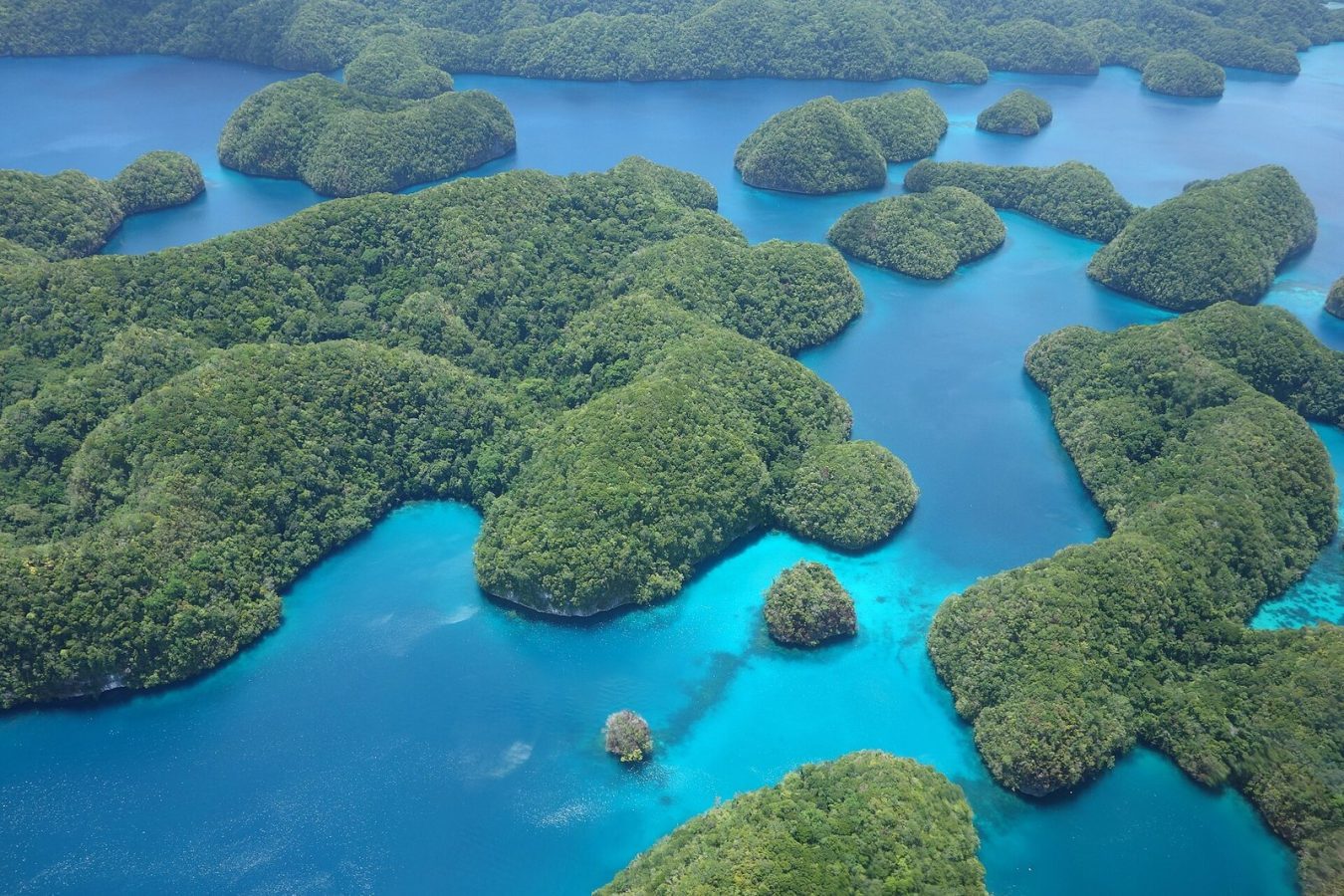
Photo: Luka Peternel, CC BY-SA 4.0
At a glance
| Getting there | Flights to Palau International Airport via Guam or Taipei; no ferries from abroad |
|---|---|
| Gateway | Koror (Palau International Airport) |
| Travel time | About 2 h by air from Guam, 3 h from Taipei |
| Days | A week or more |
| Best months | Nov–Apr drier and calmer; May–Oct wetter with rougher seas |
| Getting around | Taxis or a rental car on Koror and Babeldaob; dive boats to the Rock Islands |
| Booking | Flights and dive packages months ahead; Rock Islands permit with your first trip |
| Cost | Expensive; diving and permits add up |
| Beaches | Small sandy coves on the Rock Islands, reached by boat; few beaches on Koror itself |
| Sea | Pacific Ocean |
| Archipelago | Caroline Islands |
| Area | 466 km² |
| Population | 21,729 (2017) |
| Highest point | 242 m (Mount Ngerchelchuus) |
| Airport | Yes, scheduled flights |
| Car-free | No |
| UNESCO | Rock Islands Southern Lagoon |
| Checked | November 2026 |
Tours and day trips: what to book
Very little for Palau is sold online for the islands alone, apart from a kayak trip through the Rock Islands to a hidden marine lake. Palau has about 340 islands. In practice almost everything here is arranged with dive shops and tour operators in Koror, either before you fly or on arrival.
The main product is the boat day: a two- or three-tank dive day, or a snorkelling day, leaving Koror's docks in the morning and spending six or seven hours in the Rock Islands, with a picnic lunch on a beach. Snorkel days usually include Jellyfish Lake, the Milky Way lagoon of white mud and a reef stop. Pickup from your hotel, a guide and lunch are standard; the Rock Islands permit and the separate Jellyfish Lake permit are paid on top.
Other options are guided kayak tours through the islets, liveaboard dive cruises for a week, day trips to the wartime island of Peleliu, and land tours of Babeldaob.
Book a multi-day dive or snorkel package with one Koror operator; it is simpler and cheaper than paying day by day.
What to see and do in Palau
The Rock Islands
Hundreds of mushroom-shaped limestone islets covered in jungle rise from a turquoise lagoon south of Koror, undercut at the waterline by waves and grazing sea life. Boats weave between them for 30 to 60 minutes to the dive and snorkel sites, beaches and caves. Kayaking is the quietest way to explore them; sea turtles and reef sharks are common.
Blue Corner and German Channel
Blue Corner, about an hour by boat from Koror, is a reef point swept by currents where divers hook onto the wall and watch grey reef sharks, barracuda and turtles. Nearby, German Channel is a cleaning station for manta rays, best on incoming tides. Both are for experienced divers; snorkellers see a good share from the surface.
Jellyfish Lake
A marine lake on Eil Malk where millions of golden jellyfish, with very weak sting, follow the sun across the water. Snorkelling only is permitted, as scuba bubbles harm them, and sunscreen should be avoided. Numbers have fallen in drought years and the lake has closed temporarily, so check its status before paying the separate permit.
Milky Way
A sheltered cove in the Rock Islands with a floor of fine white limestone mud. Boat crews dive down for buckets of it, and visitors smear it on their skin before rinsing off in the pale blue water. It is a standard stop on snorkel days, short and fun, and a good place to photograph the islets.
Peleliu
This southern island saw one of the bloodiest battles of the Pacific war in late 1944. A guided tour by boat from Koror, about an hour away, visits rusting tanks, Japanese bunkers, caves and memorials in the jungle. Divers can combine it with Peleliu Wall and Peleliu Corner, known for strong currents and big fish.
Babeldaob
The largest island, linked to Koror by a bridge, is rugged and green, with rivers, waterfalls and villages. Visit the Ngardmau waterfall on a forest walk, the stone monoliths of Badrulchau at the northern tip, traditional bai meeting houses, and the oversized capitol building at Ngerulmud. Rent a car for a day; roads are good and quiet.
Tours and day trips for Palau
Live dates and prices. Free cancellation on most tours.
How to get to Palau
Palau International Airport is on Babeldaob, about 20 to 30 minutes by road from Koror over the bridge. There are few routes: United flies from Guam, about two hours, which connects with Hawaii and Asia; China Airlines flies from Taipei, and seasonal charters come from Japan and Korea. Many flights arrive late at night, so book a hotel pickup.
There is no passenger ferry from abroad. Liveaboard dive boats and occasional cruise ships call at Koror. On arrival every visitor signs the Palau Pledge, a promise to act responsibly towards the environment, stamped into the passport. The currency is the US dollar, and entry rules for most visitors are simple, but check the departure fee and the environmental fee included in your ticket.
Getting around
Koror is small but spread out and hot; taxis are the usual way to get around and are cheap for short hops, while some hotels run shuttles. Rental cars are available for exploring Babeldaob, with good paved roads circling the island; traffic drives on the right. There are no regular public buses. The Rock Islands and Peleliu are reached by tour boat, and dive shops collect guests from their hotels.
When to go
Palau is warm all year, around 27 to 31 degrees, with the sea near 28 to 30 degrees. The drier season runs from about November to April, with calmer seas, better visibility and the most visitors, especially at Christmas, New Year and Chinese New Year, when Asian flights fill.
From May to October rain is more frequent, often in heavy bursts, and southwest winds can make some outer dive sites rough, though there is usually a sheltered option. Palau lies south of the main typhoon belt, but storms passing to the north can still bring days of wind and rain. Prices change little through the year.
Manta rays are seen year-round in German Channel, and some fish spawning events follow the moon. Because flights are long and few, plan at least a week: five days of diving or snorkelling, a day for Peleliu or Babeldaob, and a rest day before flying.
Where to stay
Almost everyone stays in Koror, which has most of the hotels, restaurants, dive shops and docks, and suits divers who need early pickups. Resorts on the edges of Koror and on Malakal and Arakabesang islands offer sea views and quieter evenings within a short drive. Babeldaob has a few lodges and resorts for those wanting nature and space. Simple guesthouses on Peleliu, Angaur and Kayangel suit independent travellers with extra time.
History and character
People reached Palau about 3,000 years ago from the west and built terraced hills and stone monuments that still mark Babeldaob. Village chiefs and clans governed through bai meeting houses decorated with painted story boards. Spain claimed the islands, sold them to Germany in 1899, and Japan ruled from 1914, making Koror a busy colonial town. After the battles of 1944, the United States administered Palau until independence in 1994. Its pioneering shark sanctuary and marine reserves reflect a long tradition of protecting fishing grounds.
Combine it with
Palau is a long way from anywhere, so most visitors come for the islands alone. Flights via Guam allow a stop there or a continuation to Yap and Chuuk, the wreck capital of Micronesia, on the island-hopper route. Flights via Taipei make it easy to add a few days in Taiwan on the way.
Frequently asked questions
How do I get to Palau?
Flights to Palau International Airport via Guam or Taipei; no ferries from abroad.
How long does it take to get to Palau from Koror (Palau International Airport)?
From Koror (Palau International Airport): about 2 h by air from Guam, 3 h from Taipei.
How many days do you need in Palau?
A week or more.
When is the best time to visit Palau?
Nov–Apr drier and calmer; May–Oct wetter with rougher seas.
Do I need a car in Palau?
Taxis or a rental car on Koror and Babeldaob; dive boats to the Rock Islands.
Is Palau worth a day trip?
Go if you are a diver or keen snorkeller who wants sharks, mantas, wrecks and jungle-topped limestone islets in clear warm water. Skip it or choose the Philippines or Indonesia if you want cheaper diving, lively beach towns or a short, simple trip.
Is Palau expensive?
Expensive; diving and permits add up.
What are the beaches like in Palau?
Small sandy coves on the Rock Islands, reached by boat; few beaches on Koror itself.
What should I book ahead for Palau?
Flights and dive packages months ahead; Rock Islands permit with your first trip.
Can I book tours and day trips to Palau online?
Yes. Boat trips, guided tours and day trips for Palau can be booked online; live prices and free cancellation on most are shown on this page.