Saint Kitts and Nevis · Caribbean Sea · Beach island
St Kitts
St Kitts is the larger half of the Caribbean federation of Saint Kitts and Nevis, a green volcanic island about 29 km long rising to Mount Liamuiga at 1,156 metres. It combines the UNESCO-listed Brimstone Hill Fortress, old sugar estates, rainforest walks and beaches on its southeast peninsula, with Nevis just across a 3-km channel.
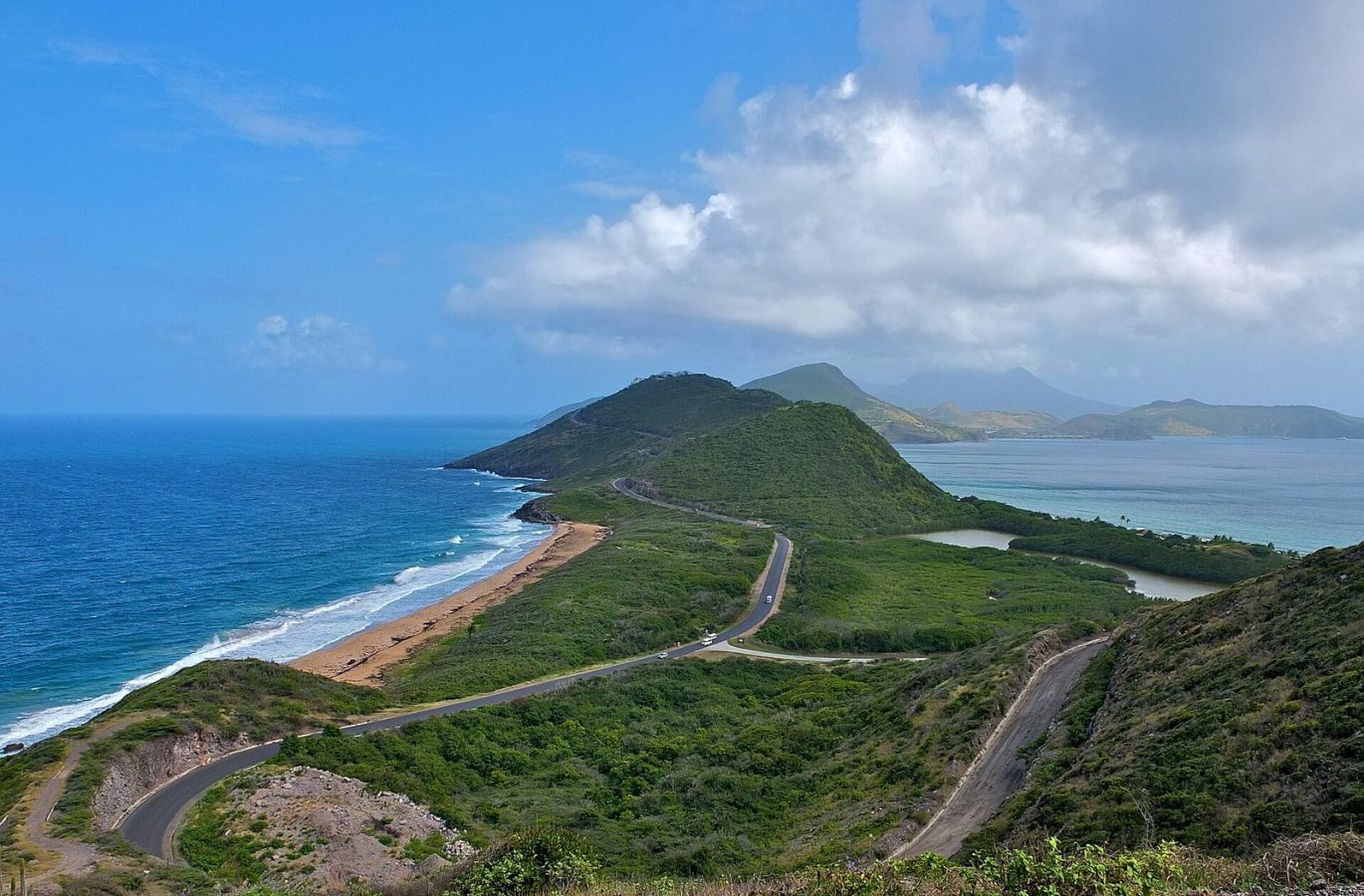
Photo: Fred Hsu on en.wikipedia, CC BY-SA 3.0
At a glance
| Getting there | Fly to Basseterre from Miami, New York and other US cities, or connect via Antigua; many arrive by cruise ship |
|---|---|
| Gateway | Basseterre (airport and cruise port) |
| Travel time | About 3.5 h by air from Miami |
| Days | 3 to 5 nights |
| Best months | Dec–Apr dry season; May–Jun quieter; Aug–Oct hurricane risk |
| Getting around | Rent a car (local permit, drive on the left) or use minibuses and taxis |
| Booking | Flights and hotels for Dec–Apr months ahead; tours a few days ahead on cruise days |
| Cost | Mid-range to expensive by Caribbean standards |
| Beaches | Golden sand in the southeast: Cockleshell, South Friar's and Frigate Bay; dark sand in the north |
| Sea | Caribbean Sea |
| Archipelago | Leeward Islands |
| Area | 168 km² |
| Population | 34,918 (2011) |
| Highest point | 1,156 m (Mount Liamuiga) |
| Airport | Yes, scheduled flights |
| Car-free | No |
| UNESCO | Brimstone Hill Fortress National Park |
| Checked | October 2026 |
Tours and day trips: what to book
Much of what is sold on St Kitts is built around cruise ship days and fits into a few hours.
The best-known option is the scenic railway, a narrow-gauge line built to carry sugar cane that now takes visitors on a three-hour loop along the north and east coasts in double-decker carriages, with commentary and drinks. Pickup from the cruise port or hotels is usually included. Land tours by minibus combine Brimstone Hill Fortress, Romney Manor with its batik workshop and gardens, and the viewpoint over the southeast peninsula.
On the water, catamaran trips sail down the Caribbean coast to snorkel off the southeast peninsula, often with an open bar and sometimes a beach stop on the way back; some cross to Nevis for the day. Private boats cover sunset cruises, coastline trips and sport fishing charters, priced per boat rather than per person.
Guided hikes up Mount Liamuiga or through the rainforest are arranged locally and need a guide; zip lines and horse riding on the beach are other options. Our advice: take the train or a land tour once, then spend a day on a snorkelling catamaran and another on the beaches of the peninsula.
What to see and do in St Kitts
Brimstone Hill Fortress
On a volcanic hill above the west coast, about 30 minutes' drive from Basseterre, the British built one of the largest fortresses in the Caribbean. The citadel, barracks and bastions are well restored, with a small museum. On clear days you can see Sint Eustatius and Saba. Allow two hours, and bring water and a hat.
The southeast peninsula
A road built in the 1980s opened this dry, hilly tail of the island, with the calmest beaches. Stop at the Timothy Hill viewpoint over the Atlantic and Caribbean coasts, then swim at South Friar's Bay or Cockleshell Bay, which faces Nevis across the Narrows. Beach bars rent loungers, and vervet monkeys roam the scrub.
Basseterre
The small capital has kept a colonial core: the Circus, a roundabout modelled on London's Piccadilly Circus with a Victorian memorial clock, Independence Square, once the slave market, and the Georgian Anglican and Catholic churches. Cruise passengers land at Port Zante on the waterfront. An hour on foot is enough, best in the morning before the heat.
Romney Manor and Wingfield Estate
On the leeward coast, the gardens of this old sugar estate surround a giant saman tree said to be more than 350 years old, and a workshop where batik fabrics are made and sold. Below it lie the ruins of a 17th-century rum distillery and rocks carved with Kalinago petroglyphs. It is a short drive from Brimstone Hill.
Mount Liamuiga
The dormant volcano dominates the north of the island. A guided hike from the village of Belmont climbs through rainforest to the crater rim, often in cloud; the trail is steep, muddy and slippery, and the round trip takes five to six hours. Start early, wear boots, and expect to get wet.
Frigate Bay and the Strip
This narrow isthmus close to the airport has a calm Caribbean beach on one side and a rougher Atlantic beach with the large resorts on the other. The Caribbean side, known as the Strip, has a row of simple beach bars that come alive in the evening, with grilled fish and music on most nights in season.
St Kitts tours: which one for you
Our pick for each kind of trip, with live dates and prices. Free cancellation on most.
Best for: First visit, the island by train
The old narrow-gauge sugar railway circles much of the island with commentary, a relaxed way to see the coast, villages and estates in one morning.
- Snorkelling from a catamaran: Saint kitts nevis snorkel tour with open bar A sail to the reefs off the southeast coast with gear and drinks included, the easiest way to get into the water for those without a car.
- Sunset with a private group: Saint kitts nevis private sunset cruise A private evening cruise along the Caribbean coast, with views across the Narrows to Nevis, good for couples or a small family group.
How to get to St Kitts
Robert L. Bradshaw International Airport lies just outside Basseterre. There are direct flights from Miami, New York, Charlotte and Atlanta, mostly more frequent in winter, and seasonal flights from Toronto and London, some via Antigua. Regional airlines link St Kitts with Antigua, St Maarten and Puerto Rico, which offer more connections.
Many visitors arrive by cruise ship at Port Zante in central Basseterre, from where taxis and tour operators are waiting on the pier; on busy days several ships may be in port.
Passenger ferries cross from Basseterre to Charlestown on Nevis in about 45 minutes several times a day, and a car ferry sails from Majors Bay on the southeast peninsula. Water taxis also cross the Narrows from the peninsula beaches to Nevis in around 15 minutes.
Getting around
A single main road circles the island, about 50 km, with branches to the southeast peninsula. Renting a car is the most flexible option; you need a local driving permit, issued by the rental company or police, and you drive on the left. Privately run minibuses with green or H plates cover the main road cheaply but stop early in the evening and do not go down the peninsula. Taxis use fixed rates; agree the fare before setting off.
When to go
The dry season, December to April, brings sunshine, steady trade winds and temperatures around 27 to 30 degrees, with the sea at about 26 to 27 degrees. It is also the busiest and most expensive period, with the most cruise ships; Christmas and New Year fill quickly, and the Carnival known as Sugar Mas runs from late November into early January.
May and June are quieter and good value, with warmer sea and only occasional showers. The St Kitts Music Festival, held in late June, fills hotels for a few days. From July to November humidity rises and short downpours are common; the risk of hurricanes is highest from August to October, and some hotels and restaurants close in September.
Three to five nights let you see the island and add a day on Nevis.
Where to stay
Frigate Bay, between the airport and the peninsula, has the largest resorts, a golf course and the beach bars of the Strip, and is the most convenient base. The southeast peninsula offers a few upmarket resorts and villas on quieter beaches but is a drive from everything else. Basseterre has simple hotels for business travellers. Along the north and west coasts, former sugar plantation houses have been turned into small country inns, peaceful but needing a car.
History and character
The Kalinago called the island Liamuiga, fertile land. In the 1620s it became the first English and French colony in the Caribbean, the two nations sharing it after massacring the Kalinago at Bloody Point in 1626. Sugar grown by enslaved Africans made it rich, and the British built Brimstone Hill to defend it; the French captured the fortress in 1782 before the island returned to Britain. St Kitts and Nevis became independent in 1983, and the state sugar industry closed in 2005; the railway and the ruined mills remain.
Combine it with
Nevis, 45 minutes by ferry or 15 minutes by water taxi, is quieter and more rural and easily makes a day trip or a few nights. Antigua is a short flight away, with many more beaches. St Maarten, a 25-minute flight, is the regional hub for island hopping to Anguilla, St Barts and Saba, which can be seen from Brimstone Hill.
Frequently asked questions
How do I get to St Kitts?
Fly to Basseterre from Miami, New York and other US cities, or connect via Antigua; many arrive by cruise ship.
How long does it take to get to St Kitts from Basseterre (airport and cruise port)?
From Basseterre (airport and cruise port): about 3.5 h by air from Miami.
How many days do you need in St Kitts?
3 to 5 nights.
When is the best time to visit St Kitts?
Dec–Apr dry season; May–Jun quieter; Aug–Oct hurricane risk.
Do I need a car in St Kitts?
Rent a car (local permit, drive on the left) or use minibuses and taxis.
Is St Kitts worth a day trip?
Go if you want Caribbean history, a volcano hike, rainforest and calm Caribbean beaches on a compact island. Skip it or choose Antigua or Anguilla if you want dozens of white-sand beaches and lively beach towns to fill a week.
Is St Kitts expensive?
Mid-range to expensive by Caribbean standards.
What are the beaches like in St Kitts?
Golden sand in the southeast: Cockleshell, South Friar's and Frigate Bay; dark sand in the north.
What should I book ahead for St Kitts?
Flights and hotels for Dec–Apr months ahead; tours a few days ahead on cruise days.
Can I book tours and day trips to St Kitts online?
Yes. Boat trips, guided tours and day trips for St Kitts can be booked online; live prices and free cancellation on most are shown on this page.