Saint Pierre and Miquelon · Atlantic Ocean · Historic island
Saint-Pierre
Saint-Pierre is the main island of Saint Pierre and Miquelon, the last piece of France in North America, lying 25 km off the Burin Peninsula of Newfoundland. Its single town of colourful wooden houses has French bakeries, euros and a strong maritime history of cod fishing and Prohibition-era rum-running.
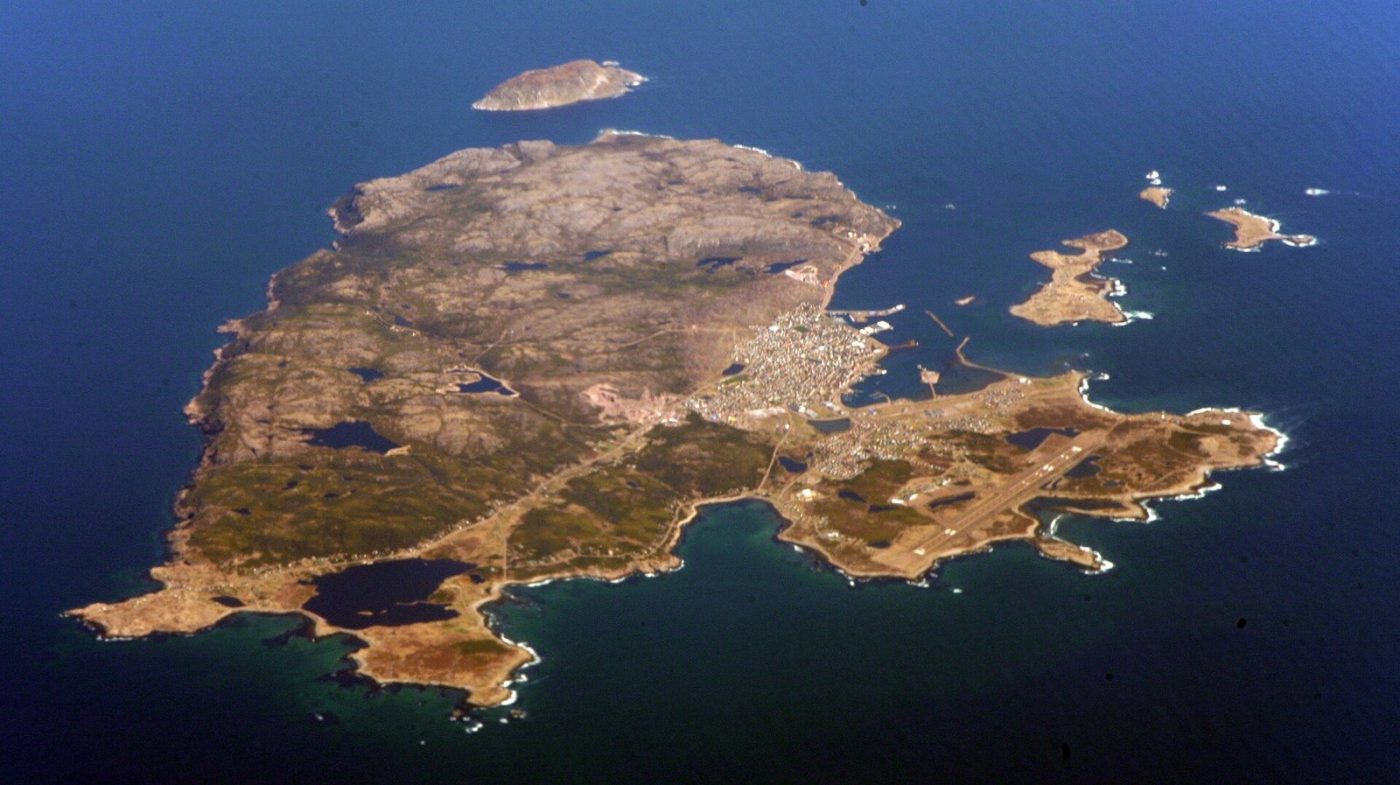
Photo: Doc Searls from Santa Barbara, USA, CC BY 2.0
At a glance
| Getting there | Ferry from Fortune, Newfoundland, in about 1.5 h, or flights from St. John's, Halifax and Montreal |
|---|---|
| Gateway | Fortune, Newfoundland (ferry); flights St. John's |
| Travel time | About 1.5 h by ferry or 1 h by air from St. John's |
| Days | 1 to 2 nights |
| Best months | Jun–Sep; foggy springs, cold and windy winters |
| Getting around | Walk in town; taxis and rental cars for the rest of the island |
| Booking | Ferry and rooms ahead for July, August and the Basque festival |
| Cost | Expensive; prices in euros, higher than in Newfoundland |
| Beaches | No swimming beaches to speak of; rocky coves and the cold North Atlantic |
| Sea | Atlantic Ocean |
| Area | 2,511 km² |
| Population | 5,223 (2022) |
| Highest point | 207 m |
| Ferry | 1 h 30 min from Fortune, Newfoundland (ferry); flights St. John's |
| Airport | Yes, scheduled flights |
| Car-free | No |
| Checked | October 2026 |
Tours and day trips: what to book
Very little is sold online for Saint-Pierre: one guided walking tour of the town with a local guide, which covers the harbour, the cathedral, the old wooden houses and the stories of fishing and smuggling in about two hours. It is the easiest way to understand the town on a short visit and suits day trippers off the morning ferry.
Most other activities are arranged locally through the tourist office near the ferry terminal. The short boat ride to Ile aux Marins, the abandoned fishing village across the harbour, often comes with a guided visit of its houses, school and church. In summer, operators run boat trips along the coast to see seabirds, seals and sometimes whales, and minibus tours of the island's lakes, hills and lighthouses. The ferry to Miquelon-Langlade allows a day on the larger, emptier island, with wild horses and seals.
Packages from Newfoundland bundle the ferry, a hotel night and a tour and are good value in season. Remember to bring a passport, as you are entering France. For most visitors the best plan is one or two nights: a walking tour on arrival, Ile aux Marins the next morning, and an evening of French food.
What to see and do on Saint-Pierre
The town of Saint-Pierre
The town climbs from the harbour in rows of brightly painted wooden houses, with French street signs, bakeries and cafes. Start at the Place du General de Gaulle by the waterfront, walk past the stone Cathedral of Saint-Pierre and the Basque pelota court, and end at the quayside where the fishing boats tie up.
Ile aux Marins
A boat of about 10 minutes crosses the harbour to this small island, once a fishing village of several hundred people and now empty except in summer. Walk among the restored houses, the school turned museum, the wooden church and the cemetery, then follow the shore to the rusting wreck of a ship stranded on the rocks. Allow half a day.
L'Arche museum
The modern museum near the harbour tells the history of the islands, from the Basque and Breton fishermen to the cod trade, the wars between France and Britain and the Prohibition years. Its most famous exhibit is the guillotine brought from Martinique in the 19th century and used here once. Allow an hour or two.
Prohibition and the rum-runners
In the 1920s, while alcohol was banned in the United States, Saint-Pierre became a huge depot for whisky and rum smuggled south by boat. Warehouses lined the harbour, and crates were even used to build houses. Look for the old warehouses near the port, and ask a guide about the tales of gangsters who supposedly visited the town.
Coastal walks and lighthouses
Trails leave the town towards the rocky north and west of the island, crossing heathland, small lakes and peat bogs to cliffs and coves. The walk to Anse a Henry or Cap a l'Aigle takes a few hours return, with views of Langlade and Newfoundland on clear days. Weather changes fast, so bring waterproofs and stay on the paths in fog.
Tours and day trips for Saint-Pierre
Live dates and prices. Free cancellation on most tours.
How to get to Saint-Pierre
A passenger and car ferry links Fortune, at the tip of Newfoundland's Burin Peninsula, with the port of Saint-Pierre in about an hour and a half. It runs daily or nearly daily in summer and less often in spring and autumn; book ahead in July and August, especially with a car. Fortune is about four hours' drive from St. John's, and some travellers leave their car in Fortune and travel on foot.
The small airport just south of the town has flights from St. John's, Halifax and Montreal, the shortest taking about an hour, with occasional summer flights to France. Because you are entering France, a passport is required, and Canadian and other visitors should check entry rules in advance. The islands are half an hour ahead of Newfoundland time.
Getting around
The town is compact and easy to explore on foot, with everything within a 15-minute walk of the harbour. To reach the hiking trails, the lighthouse at Pointe aux Canons or the far side of the island, use a taxi or rent a car or bicycle; roads are few and quiet. Boats run to Ile aux Marins in summer, and a ferry links Saint-Pierre with Miquelon and Langlade.
When to go
The season runs from June to September, when ferries and boat trips run most often, the town is lively and temperatures reach about 15 to 20 degrees on good days. July and August are warmest and busiest. The Basque festival in August brings pelota matches, music and traditional sports, and Bastille Day on 14 July is celebrated with parades and fireworks, as anywhere in France.
Fog is common, especially in late spring and early summer, and can last for days, so allow some flexibility. Autumn brings clearer days and colourful heath but fewer services. Winters are long, windy and snowy, and many visitor services close. One night allows the town and Ile aux Marins; two nights add a walk or a day on Miquelon-Langlade.
Where to stay
All hotels and guesthouses are in the town of Saint-Pierre, close to the harbour, restaurants and the ferry, which makes it easy to stay without a car. Choose between a few small hotels and family-run bed and breakfasts, some in old wooden houses, which often include a French breakfast. A night on Miquelon is possible for those who want silence, but options there are very limited.
History and character
French, Basque and Breton fishermen used the islands from the 16th century as a base for the rich cod grounds of the Grand Banks. Fought over by France and Britain, they changed hands several times before France kept them for good in 1816, its last foothold after the loss of New France. Fishing shaped the town for two centuries, and Prohibition brought a short boom from smuggling. The collapse of cod stocks and fishing limits in the 1990s ended the old economy, but the French language, cuisine and the Basque heritage remain.
Combine it with
Saint-Pierre combines naturally with a road trip in Newfoundland: drive from St. John's to Fortune in about four hours, spend a night or two on the island, then continue round the Burin Peninsula or towards the Bonavista coast. Miquelon-Langlade, the larger island of the group, makes a day trip by ferry for horses, seals and the dunes of the isthmus.
Frequently asked questions
How do I get to Saint-Pierre?
Ferry from Fortune, Newfoundland, in about 1.5 h, or flights from St. John's, Halifax and Montreal.
How long does it take to get to Saint-Pierre from Fortune, Newfoundland (ferry); flights St. John's?
From Fortune, Newfoundland (ferry); flights St. John's: about 1.5 h by ferry or 1 h by air from St. John's.
How many days do you need on Saint-Pierre?
1 to 2 nights.
When is the best time to visit Saint-Pierre?
Jun–Sep; foggy springs, cold and windy winters.
Do I need a car on Saint-Pierre?
Walk in town; taxis and rental cars for the rest of the island.
Is Saint-Pierre worth a day trip?
Go if you want a taste of France in the North Atlantic, with good food, fishing history and coastal walks, in an easy hop from Newfoundland. Skip it if you want warm weather or many sights; two days is plenty, and the fog can hide everything. With about 1 h 30 min each way from Fortune, Newfoundland (ferry); flights St. John's, a day trip is easy to do.
Is Saint-Pierre expensive?
Expensive; prices in euros, higher than in Newfoundland.
What are the beaches like on Saint-Pierre?
No swimming beaches to speak of; rocky coves and the cold North Atlantic.
What should I book ahead for Saint-Pierre?
Ferry and rooms ahead for July, August and the Basque festival.
Can I book tours and day trips to Saint-Pierre online?
Yes. Boat trips, guided tours and day trips for Saint-Pierre can be booked online; live prices and free cancellation on most are shown on this page.