Samoa
Samoan Islands, Samoa
Samoa is a Polynesian island nation of two large volcanic islands, Upolu and Savai'i, and a few small ones, about…
12 tours & trips
Samoa · Pacific Ocean · Nature & wildlife island
Savai'i is the largest and highest island of Samoa, a broad volcanic shield of 1,694 square kilometres rising to Mount Silisili at 1,858 metres. It is far bigger than Upolu yet has only about 44,000 people, living in traditional villages along the coast, and it is the place to see lava fields, blowholes, rainforest and beach fales without resorts.
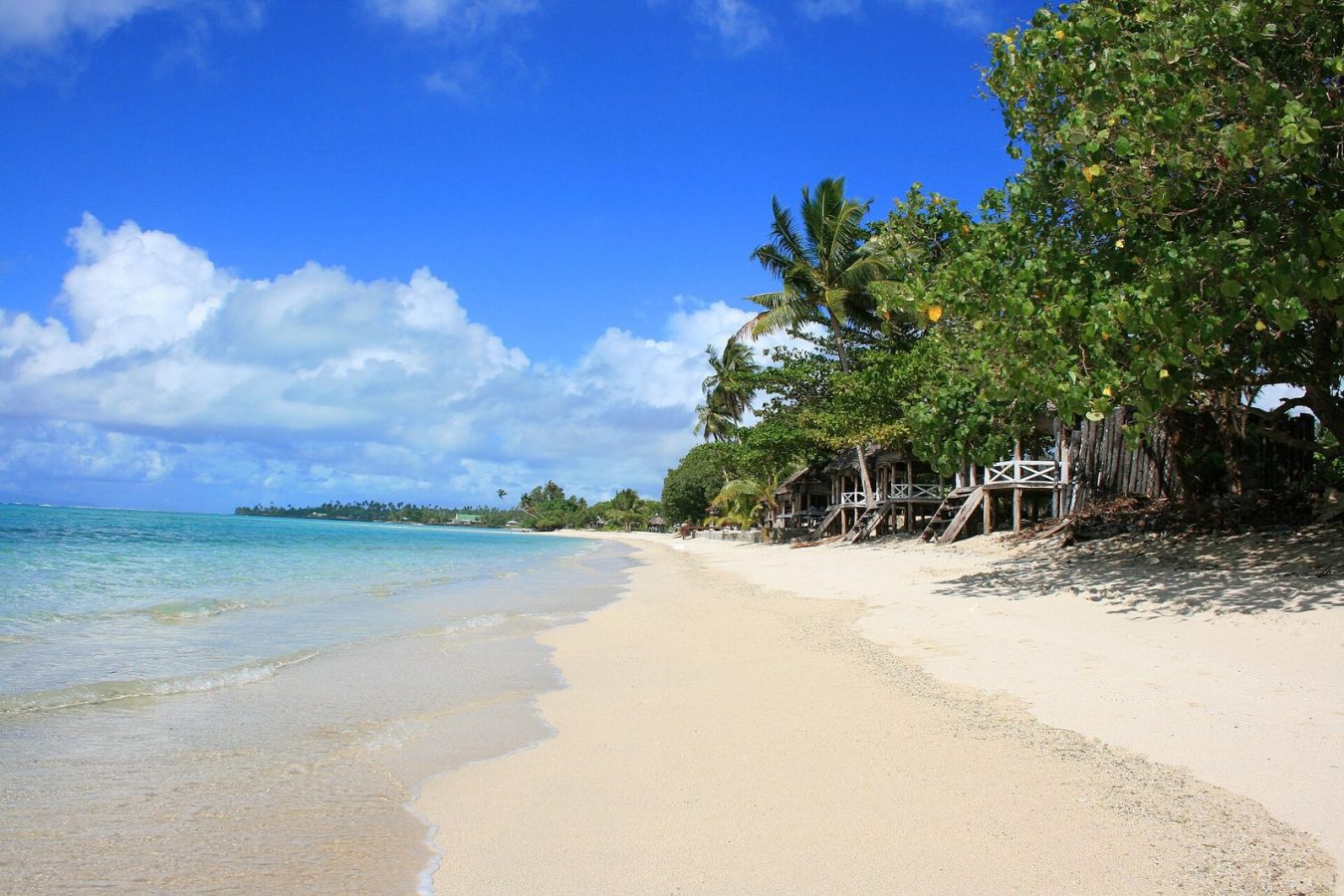
Photo: Neil, CC BY 2.0
| Getting there | Car ferry from Mulifanua Wharf on Upolu to Salelologa in about 1 h, several sailings a day |
|---|---|
| Gateway | Upolu (Mulifanua Wharf), from Apia |
| Travel time | About 1 h by ferry, plus 1 h by road from Apia |
| Days | 3 to 5 nights |
| Best months | May–Oct dry season; Nov–Apr wet, humid, cyclone risk |
| Getting around | Rent a car on Upolu and bring it over, or use the slow village buses and taxis |
| Booking | Car space on the ferry and beach fales in July and around holidays; tours locally |
| Cost | Cheap, even by Samoan standards |
| Beaches | White sand and lagoons on the north coast at Manase and Lano; rocky lava shores in the south |
| Sea | Pacific Ocean |
| Archipelago | Samoan Islands |
| Area | 1,694 km² |
| Population | 43,958 (2016) |
| Highest point | 1,858 m (Mount Silisili) |
| Ferry | 1 h from Upolu (Mulifanua Wharf), from Apia |
| Car-free | No |
| Checked | October 2026 |
Very little is sold online for Savai'i. The one product offered is a full-day island tour from the Upolu side: transport to the wharf, the ferry crossing and a driver-guide who takes you to the blowholes, a waterfall swim and a village stop, usually with lunch. It suits people with only one free day in Samoa, but it is a long day of about twelve hours with two hours on the boat and most of the rest in a minibus.
Most visitors come on their own and stay several nights, which is how the island works best. Villages charge a small custom fee at each sight, such as the blowholes, the canopy walkway or the lava church, so carry small notes in tala. Beach fale operators often arrange snorkelling trips, turtle swims and guided walks up Mount Matavanu, and some hotels on the north coast run their own lagoon excursions and fishing trips. Taxi drivers in Salelologa will do a day loop of the island for an agreed price.
The plain recommendation: take your own car across, or book a fale that collects you from the wharf, and give the island at least three nights rather than a single rushed day trip.
On the south-west coast, waves drive through lava tubes and blast spouts of seawater tens of metres into the air. Come at high tide with a good swell for the biggest show. Village guides throw coconuts into the vents to be fired skywards, for a small tip. Stay well back from the edge and keep to the paths marked across the black rock.
The eruptions of Mount Matavanu between 1905 and 1911 sent lava across the north-east coast, burying villages. At Saleaula the walls of a mission church still stand with the black flow around and inside them, and a nearby grave was spared by the lava. It is an hour's drive from the wharf and easy to combine with the beaches at Lano and Manase.
Above Saleaula a rough track climbs through plantations and forest to the rim of the crater that caused the eruption. Local guides lead the walk, which takes a few hours return, and in clear weather you look over the old flows to the coast. A four-wheel-drive gets you closer to the start; go early, before the heat and the afternoon cloud.
A short drive inland from the south coast road near Vailoa, this waterfall drops into a deep, clear pool shaded by forest. It is the best freshwater swim on the island and is usually quiet on weekdays. Pay the family who look after the site at the gate, bring reef shoes for the rocks and avoid it after very heavy rain.
At the far western tip, a rainforest reserve has a rope-and-plank walkway slung between trees high above the ground, with a giant banyan at one end. Nearby Cape Mulinu'u is held in Samoan tradition to be the gateway of departing souls. The quiet beaches here face the sunset, and the drive from Salelologa takes about two hours.
Live dates and prices. Free cancellation on most tours.
There is no regular flight to Savai'i, so almost everyone arrives by sea. Car ferries leave Mulifanua Wharf at the western tip of Upolu, close to Faleolo International Airport and about an hour by road from Apia, and cross the Apolima Strait to Salelologa in about an hour. There are several sailings a day, fewer on Sundays, and the strait can be rough in a strong trade wind. Foot passengers buy tickets at the wharf; vehicles should be booked ahead in busy periods, and drivers must arrive early to queue. Many travellers fly into Faleolo, go straight to the wharf and reach Savai'i the same day, which saves a night in Apia. If you rent a car on Upolu, check that the agreement allows it on the ferry, and remember that Samoa drives on the left and requires a temporary local licence.
A sealed road runs most of the way round the coast, with lighter traffic than on Upolu, so a car gives you complete freedom; allow a full day for the loop with stops. Colourful wooden buses link the wharf with the villages, but they keep no real timetable and stop running early, especially on Sundays. Taxis wait at Salelologa and can be hired by the day. Watch for pigs, dogs and children on the road, and drive slowly through villages.
The dry season from May to October is the best time: less rain, lower humidity and steady trade winds, with days around 29 degrees and sea temperatures warm all year. July and August are the busiest months, when Samoans from New Zealand and Australia come home and fales on the north coast fill up, along with the Teuila Festival in Apia in early September.
From November to April the weather is hotter and wetter, with heavy downpours and the risk of a tropical cyclone, mostly from January to March. Prices change little through the year, and most places stay open. Sunday is a day of church and rest: shops close, buses barely run and swimming near villages may be frowned upon, so plan a quiet day. Three nights cover the main sights; five let you settle into village life.
The north coast from Saleaula to Manase is the most popular base, with sheltered lagoons, white sand and a row of simple beach fales that include dinner and breakfast. Salelologa, by the wharf, is practical for a late arrival and has the only bank, market and supermarket of any size. The south and west coasts are wilder and quieter, with a few small resorts and fales near Satuiatua and Falealupo, ideal for surfing or the sunset.
Savai'i is a young volcanic island still in the making, and Samoans regard it as an ancestral homeland of the Polynesians, the Hawaiki of legend. Its six traditional districts are run by village chiefs, the matai, and land is still held by families under custom, which is why there are few resorts and most visits are arranged with villages. The eruption of Mount Matavanu early in the twentieth century forced whole villages to move, and its lava fields remain bare today. The island also gave leaders to the Mau movement for Samoan independence.
Savai'i pairs naturally with Upolu: spend a few days in Apia and on the beaches of the south coast at Lalomanu, then take the ferry across. Tiny Manono and Apolima sit in the strait between the two islands and can be visited by boat from western Upolu. Fiji and Tonga are each a short flight from Faleolo.
Car ferry from Mulifanua Wharf on Upolu to Salelologa in about 1 h, several sailings a day.
From Upolu (Mulifanua Wharf), from Apia: about 1 h by ferry, plus 1 h by road from Apia.
3 to 5 nights.
May–Oct dry season; Nov–Apr wet, humid, cyclone risk.
Rent a car on Upolu and bring it over, or use the slow village buses and taxis.
Go if you want slow village Samoa, lava fields, blowholes and nights in an open beach fale. Skip it or stay on Upolu if you want restaurants, nightlife, a choice of resorts or a short trip with no driving. With about 1 h each way from Upolu (Mulifanua Wharf), from Apia, a day trip is easy to do.
Cheap, even by Samoan standards.
White sand and lagoons on the north coast at Manase and Lano; rocky lava shores in the south.
Car space on the ferry and beach fales in July and around holidays; tours locally.
Yes. Boat trips, guided tours and day trips for Savai’i can be booked online; live prices and free cancellation on most are shown on this page.
Samoan Islands, Samoa
Samoa is a Polynesian island nation of two large volcanic islands, Upolu and Savai'i, and a few small ones, about…
12 tours & trips
Samoan Islands, Samoa
Upolu is the main island of Samoa, a 75-km-long volcanic island home to the capital Apia, the international airport and…
6 tours & trips