Yemen · Indian Ocean · Remote island
Socotra
Socotra is a remote island in the Arabian Sea, part of Yemen but closer to the Horn of Africa, known for dragon's blood trees and plants found nowhere else. About 132 km long, it is a UNESCO World Heritage Site where a third of the plant species are endemic, and it is visited only on organised camping trips.
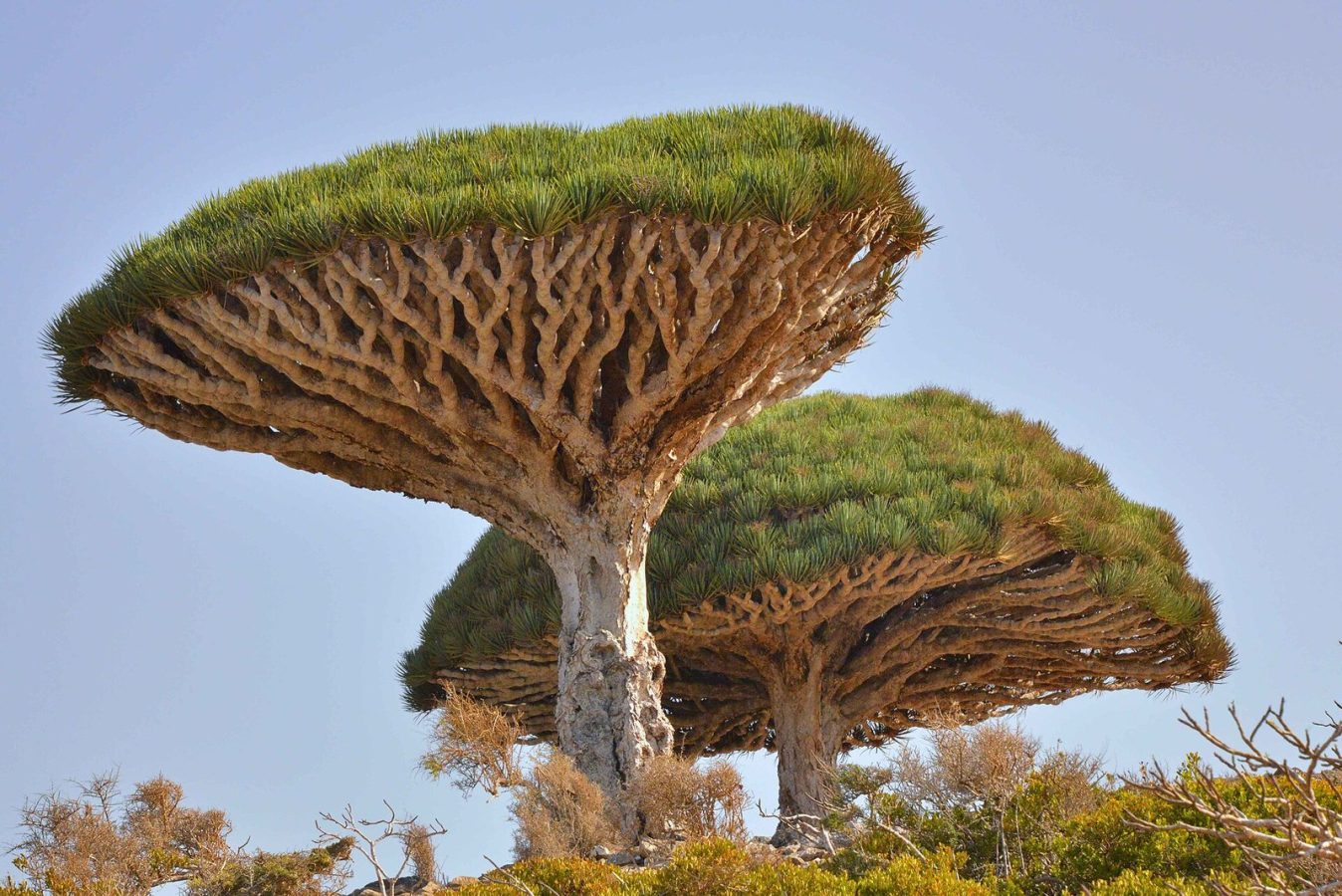
Photo: Rod Waddington from Kergunyah, Australia, CC BY-SA 2.0
At a glance
| Getting there | Weekly flights from Abu Dhabi; visa and permit arranged through a licensed local tour operator |
|---|---|
| Gateway | Abu Dhabi (weekly flights) |
| Travel time | A few hours by air, usually once a week |
| Days | A week or more |
| Best months | Oct–Apr calm and dry; Jun–Sep monsoon winds cut access |
| Getting around | Four-wheel drive with a driver and guide, booked as part of a tour |
| Booking | Book the tour, visa and flights together, several months ahead for Oct–Apr |
| Cost | Expensive, as everything is packaged |
| Beaches | Long empty white beaches and dunes; Detwah Lagoon, Arher and Shuab among the best |
| Sea | Indian Ocean |
| Archipelago | Socotra Archipelago |
| Area | 3,796 km² |
| Population | 42,842 (2005) |
| Highest point | 1,503 m (Hajhir Mountains) |
| Airport | Yes, scheduled flights |
| Car-free | No |
| UNESCO | Socotra Archipelago |
| Checked | October 2026 |
Tours and day trips: what to book
Independent travel on Socotra is effectively impossible: visitors need a licensed local operator, which arranges the entry permit and visa, meets you at the airport and provides a four-wheel-drive vehicle, driver, guide, camping gear and cook. So what is sold is the whole trip.
The standard product is a week-long expedition timed to the weekly flight, moving between camps at the main sites: the dragon's blood forests of the Dixam plateau, the Homhil protected area, Detwah Lagoon, the Arher dunes and the beaches of the south coast. Tents, mattresses, meals and water are included; flights, the visa fee, tips and travel insurance are usually extra, so read the inclusions carefully.
Variations include hiking-focused trips that cross the Hajhir Mountains and canyons on foot, shorter five-day circuits when flight schedules allow, and trips that add snorkelling, a boat to Shuab beach and a visit to Hoq cave.
Group departures are cheaper; private trips cost more but let you choose the pace. Choose an operator with recent reviews and clear arrangements for flights, and pick a classic one-week circuit for a first visit.
What to see and do on Socotra
Dixam plateau and the dragon trees
High in the interior, the Dixam plateau and the Firmihin forest hold the largest stands of dragon's blood trees, umbrella-shaped trees whose red resin has been traded since antiquity. Camp among them and watch the sunrise. Nearby, the Dirhur canyon cuts a deep green gorge with pools for swimming.
Detwah Lagoon
At the western end, near the fishing village of Qalansiya, a shallow lagoon of brilliant turquoise water is enclosed by white sand and cliffs. It is a protected area and a favourite camp. Wade through the shallows, watch for rays and crabs, and climb the headland for a view over the lagoon at sunset.
Homhil
A protected plateau in the northeast, where dragon's blood trees, bottle trees and frankincense grow among limestone boulders. A walk leads to a natural infinity pool on the edge of the escarpment, with a view down to the sea. It is one of the best places to see the island's endemic plants close up.
The Arher dunes
On the northeast coast, wind has piled white sand dunes against the granite mountains, ending at a beach where a freshwater stream meets the sea. Climb the dunes in the late afternoon for the view and swim in the stream. Camps here are on the sand, so expect wind at night.
Hoq cave
A large limestone cave above the north coast, reached by a steep climb of about two hours, with spectacular stalactites and stalagmites. Ancient sailors left inscriptions and drawings inside, showing that ships stopped here two thousand years ago. Bring a torch and good shoes.
Shuab beach by boat
West of Qalansiya, a long white beach backed by cliffs is reached only by boat. On the way, spinner dolphins often swim alongside, and the water is clear enough for snorkelling. The boat trip takes around half a day and is usually included or offered as an option.
Socotra tours: which one for you
Our pick for each kind of trip, with live dates and prices. Free cancellation on most.
Best for: First visit, the classic circuit
A camping expedition round the island's main sights, from the dragon's blood forests to the lagoon and dunes, with transport, guide and meals arranged.
- Walkers who want the mountains: Socotra 8 day guided hiking tour with meals camping Eight days of guided hiking across plateaus and canyons, sleeping in camps with meals cooked by the crew, for fit travellers who want to walk.
- A shorter trip: Socotra 5 day like you ve never seen it before A five-day itinerary for those with less time, still covering the main landscapes, though the weekly flights often decide the length for you.
How to get to Socotra
The only practical way in is by air. Flights from Abu Dhabi land at Socotra airport near Hadibu, the main town, usually once a week, so the flight schedule decides the length of your stay. Seats are often sold through the tour operators themselves. Other routes via mainland Yemen exist on paper but are irregular and not recommended.
Before travelling you need a visa or entry permit, which your local operator arranges; you cannot get it alone. Many governments, including the British and American, advise against all travel to Yemen, which includes Socotra, so standard travel insurance may not cover you; look for a specialist policy. There are no passenger ferries for visitors. From June to September monsoon winds can halt flights.
Getting around
You will travel in a four-wheel-drive vehicle with a local driver and guide, arranged by your operator. A main road links Hadibu with the airport, the west and the east, but many sites are reached by rough tracks, and long drives are part of the trip. Boats from Qalansiya reach Shuab beach and some coastal sites. There is no public transport for visitors, and renting a car alone is not an option. Walking is the way to see the plateaus and canyons.
When to go
The travel season runs from October to April, when the weather is warm and dry, the sea calm and flights regular. November to March is the most comfortable, with days around 25 to 30 degrees and cool nights on the plateaus. March and April grow hotter, and the sea is warm, around 26 to 28 degrees.
From June to September the southwest monsoon brings violent winds and rough seas. Camping becomes very difficult, boats stop and flights may be suspended, so tourism almost stops; May is a transition month. Because there are few seats on each flight, departures in December, January and around the New Year fill first.
A week is the usual length, set by the weekly flight; two weeks suit hikers who want to cross the mountains.
Where to stay
Most nights are spent camping at the sites, in tents provided by the operator, with simple shelters or toilets at some protected areas. Hadibu, the main town on the north coast, has a few basic hotels and guesthouses, often used for the first and last night. Camps rotate between the western lagoon, the central plateaus, the northeast and the south coast, so the operator decides where you sleep. Bring a warm layer for the plateaus and wet wipes, as showers are rare.
History and character
Socotra broke away from Africa millions of years ago, and its isolation produced plants and animals found nowhere else, which led to its UNESCO listing in 2008. In antiquity it was a stop on the sea routes between India, Arabia and Africa, known for dragon's blood resin and aloe. Its people speak Soqotri, an ancient Semitic language quite distinct from Arabic, and many herd goats in the mountains or fish the coast. The island belonged to the sultanate of Mahra until 1967 and then joined South Yemen. Since Yemen's civil war it has been under the influence of outside powers.
Combine it with
Socotra is usually combined with a stay in Abu Dhabi or Dubai before or after the weekly flight. Travellers interested in similar landscapes can add Oman, with frankincense trees in Dhofar, a short flight from the Emirates. Travel to mainland Yemen is not advisable.
Frequently asked questions
How do I get to Socotra?
Weekly flights from Abu Dhabi; visa and permit arranged through a licensed local tour operator.
How long does it take to get to Socotra from Abu Dhabi (weekly flights)?
From Abu Dhabi (weekly flights): a few hours by air, usually once a week.
How many days do you need on Socotra?
A week or more.
When is the best time to visit Socotra?
Oct–Apr calm and dry; Jun–Sep monsoon winds cut access.
Do I need a car on Socotra?
Four-wheel drive with a driver and guide, booked as part of a tour.
Is Socotra worth a day trip?
Go if you want one of the strangest landscapes on Earth, with camping on empty beaches and in mountain plateaus. Skip it or choose Oman or the Seychelles if you need comfortable hotels, easy logistics or official travel advice in your favour.
Is Socotra expensive?
Expensive, as everything is packaged.
What are the beaches like on Socotra?
Long empty white beaches and dunes; Detwah Lagoon, Arher and Shuab among the best.
What should I book ahead for Socotra?
Book the tour, visa and flights together, several months ahead for Oct–Apr.
Can I book tours and day trips to Socotra online?
Yes. Boat trips, guided tours and day trips for Socotra can be booked online; live prices and free cancellation on most are shown on this page.