Bora Bora
Society Islands, French Polynesia
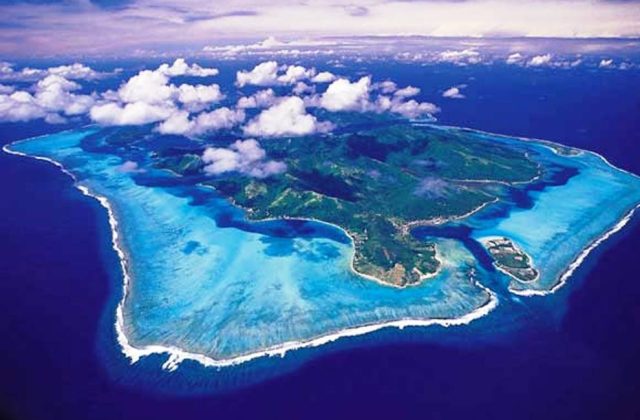
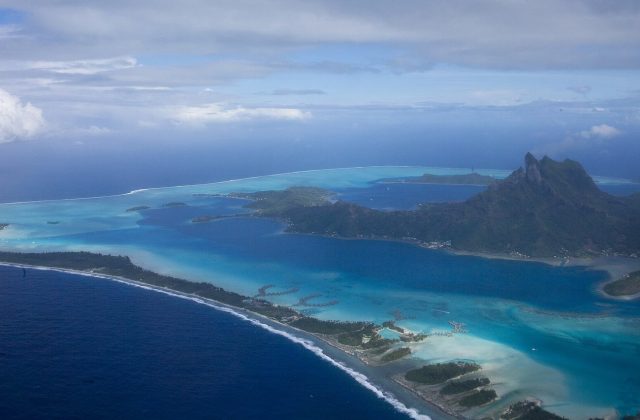
Bora Bora is a small volcanic island in French Polynesia, about 230 km north-west of Tahiti, ringed by a turquoise…
67 tours & trips
French Polynesia · Pacific Ocean · Nature & wildlife island
Tahiti is the largest island of French Polynesia, 1,042 square kilometres of jagged green volcanic peaks rising to 2,241 metres at Mont Orohena, shaped like a figure of eight. Most visitors pass through its capital Papeete on the way to Moorea or Bora Bora, but its waterfalls, black-sand beaches and the Teahupo'o wave reward a few days.
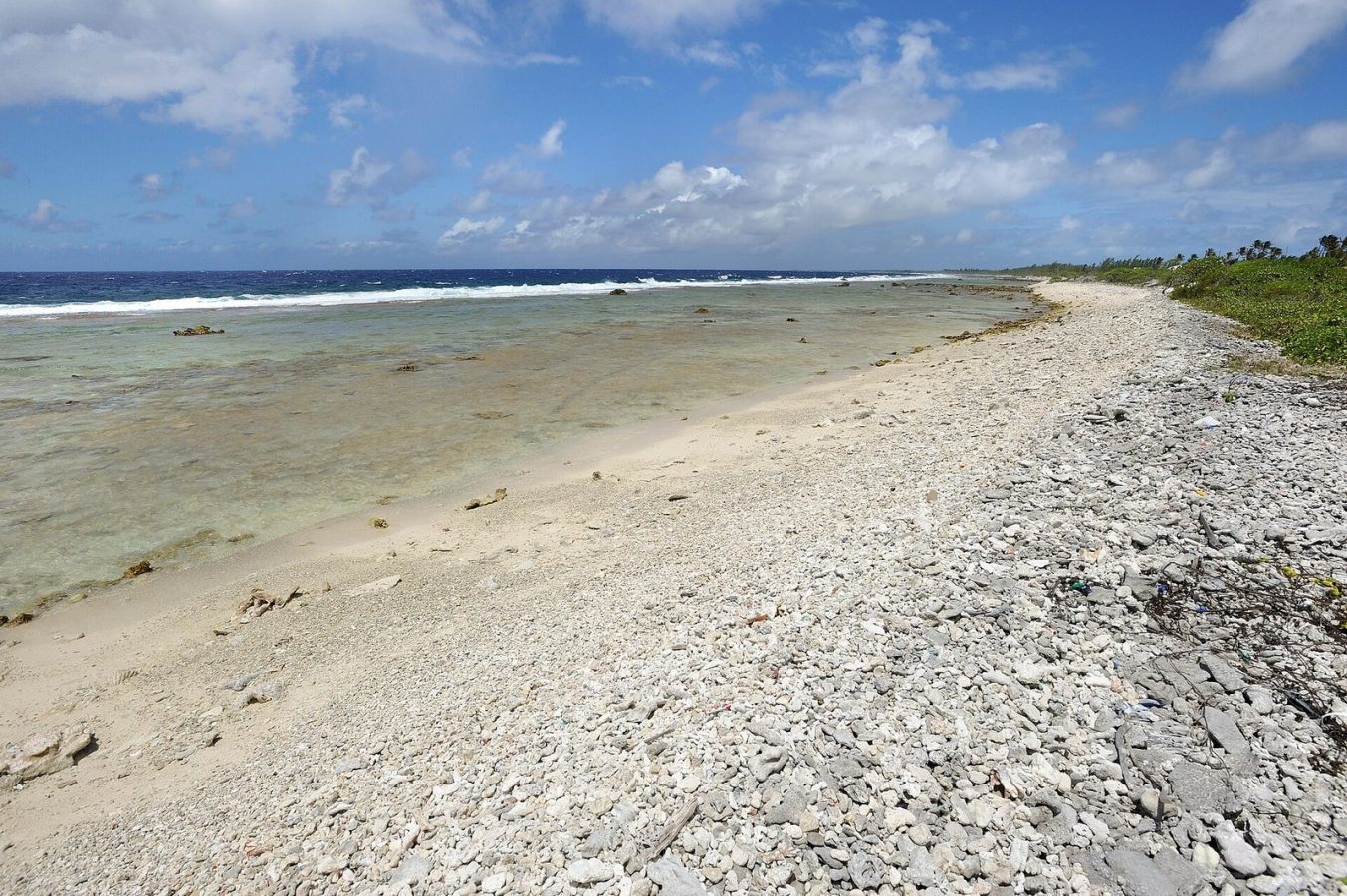
Photo: Olivier Dugornay (IFREMER, Pôle Images, Centre Bretagne - ZI, CC BY 4.0
| Getting there | Long-haul flights to Faa'a airport from Los Angeles, San Francisco, Paris, Auckland or Tokyo |
|---|---|
| Gateway | Papeete (Faa'a airport) |
| Travel time | About 8 h by air from Los Angeles, 5 h from Auckland |
| Days | 1 to 2 nights |
| Best months | May–Oct dry and cooler; Nov–Apr hot, humid and rainy; whales Aug–Oct |
| Getting around | Rent a car for the coast road; Le Truck buses and taxis around Papeete |
| Booking | Flights and rooms months ahead for July and August; tours a few days ahead |
| Cost | Very expensive, though cheaper than Bora Bora |
| Beaches | Black volcanic sand on the east and north; white sand at Plage de Maui and Punaauia |
| Sea | Pacific Ocean |
| Archipelago | Society Islands |
| Area | 1,042 km² |
| Population | 191,779 (2022) |
| Highest point | 2,241 m (Mont Orohena) |
| Airport | Yes, scheduled flights |
| Car-free | No |
| Checked | October 2026 |
Tahiti tours fall into land tours, lagoon trips and mountain adventures, and most include hotel pickup in the Papeete area.
The circle-island tour is the classic first booking: a half or full day by minibus or with a private guide along the coast road, stopping at Point Venus, the Arahoho blowhole, the Faarumai waterfalls, the Vaipahi water gardens and the viewpoint at Taravao, sometimes continuing to Tahiti Iti for a picnic. Entry fees are minimal, and lunch is included only in some full-day versions.
On the water, half-day snorkelling trips on the west coast lagoon visit turtles, coral gardens and sunken wrecks near the airport, and dive centres offer beginner dives and courses. From about August to October whale watching sells out early. Sunset cruises and a full-day catamaran sail to the atoll of Tetiaroa are also offered.
Inland, 4x4 safaris drive up the Papenoo valley to waterfalls and the crater lake, and guided hikes, e-bike tours and quad rides explore the mountains. Boat trips to watch the Teahupo'o wave are popular with surf fans.
With one or two days, book the circle-island tour and a lagoon or 4x4 trip.
The covered market in the centre of Papeete is liveliest early in the morning, with fish, fruit, vanilla, flowers and pareos; Sunday mornings are busiest. In the evening the food trucks at Place Vaiete on the waterfront serve raw fish in coconut milk, Chinese dishes and crepes at the most affordable prices on the island.
Heading east from Papeete, the coast road reaches Point Venus, a black-sand beach with a lighthouse where Captain Cook observed the transit of Venus, then the Arahoho blowhole and, a short walk inland, the three Faarumai waterfalls. Continue to the Vaipahi water gardens and the isthmus of Taravao. Allow a full day for the loop.
The smaller peninsula of Tahiti Iti is wilder and quieter. The road ends at Teahupo'o, home of one of the world's heaviest waves and the surfing venue of the 2024 Olympics; boats take spectators out to the channel beside the break. Plage de Maui on the south coast has rare white sand and a calm lagoon.
The largest valley on Tahiti cuts into the old crater from the north coast. A rough track, best driven on a 4x4 tour, follows the river past waterfalls and ancient marae temple platforms to Lake Vaihiria and over the mountains to the south coast. Bring swimwear for the pools and insect repellent for the forest.
On the west coast at Punaauia, about 15 minutes from Papeete, this museum is the best introduction to Polynesian history and culture, with canoes, tools, tapa cloth and carvings from all five archipelagos. The renovated displays explain navigation, settlement and the colonial period. Afterwards, swim at the public beach nearby and watch the sunset over Moorea.
The west coast has the island's best snorkelling and sunsets. Near the airport the Aquarium, a shallow spot with sunken wrecks and planes, is visited by boat, and turtles feed in the lagoon off Punaauia. The public beach at PK 18 is the closest good white-sand beach to Papeete.
Our pick for each kind of trip, with live dates and prices. Free cancellation on most.
Best for: First visit, around the island
A full-day guided drive of the coast road with waterfalls, the blowhole, Point Venus, gardens and viewpoints, without the stress of finding them yourself.
Faa'a international airport lies about 5 km west of Papeete and is the arrival point for almost every visitor to French Polynesia. Air Tahiti Nui, Air France, United and French Bee fly from Los Angeles and San Francisco, about eight hours, with onward connections to Paris; Air New Zealand flies from Auckland, about five hours, and there are flights from Tokyo.
From Papeete's ferry terminal, fast ferries cross to Moorea in about 30 to 45 minutes several times a day. Domestic Air Tahiti flights link Tahiti with Bora Bora, Huahine, Raiatea and the more distant archipelagos. Many international flights land at night, and hotels near the airport are handy. Cruise ships dock in central Papeete. The currency is the CFP franc, and euros are not widely accepted.
A coast road of about 115 km circles Tahiti Nui, with branches along both sides of Tahiti Iti, and a rental car from the airport is the easiest way to explore at your own pace. Traffic around Papeete is heavy at rush hours. The Le Truck and modern bus network serves the coast but thins out in the evening and on Sundays. Taxis are expensive. Distances are counted in PK markers from Papeete.
The dry season from May to October is the best time: cooler, around 24 to 28 degrees, with lower humidity and less rain. It is also the main season, busiest in July and August with French holidays and the Heiva festival of dance and sport in July. Humpback whales are seen off the coast from about August to October, and big southern swells bring Teahupo'o to life.
The wet season from November to April is hot and humid, with heavy downpours and occasional cyclones, more often in the outer archipelagos than on Tahiti itself. Waterfalls are at their fullest, and rates fall outside the Christmas holidays.
The sea stays around 26 to 29 degrees all year. One or two nights cover the circle-island drive and a lagoon trip before flying or sailing on; give it three if you want a hike or a 4x4 day.
Papeete is convenient for the ferry, the market and food trucks, but it is busy and urban. The west coast at Faa'a and Punaauia has resort hotels near the airport, lagoon views and sunsets over Moorea, the best choice for a short stay. The quieter east coast suits people who want guesthouses, mountains and black-sand beaches. Tahiti Iti has small family-run lodges and surf camps for those wanting nature and space.
Polynesian navigators settled Tahiti about a thousand years ago, building marae temple platforms and a society ruled by chiefs. European visitors arrived in the 1760s, Wallis, Bougainville and then Cook, whose reports created the European image of the South Seas, and in 1789 the Bounty mutiny followed a long stay here. The Pomare dynasty united the island with missionary support, but France made it a protectorate in 1842 and a colony later. Gauguin painted here from 1891, and nuclear testing on distant atolls from 1966 transformed Papeete's economy.
Moorea, half an hour by ferry from Papeete, is the obvious first add-on. Air Tahiti flights reach Bora Bora in about 50 minutes, and the Leeward Islands of Huahine and Raiatea are similar. Many visitors do Tahiti, Moorea and Bora Bora in ten days, or add the atolls of Rangiroa or Fakarava for diving.
Long-haul flights to Faa'a airport from Los Angeles, San Francisco, Paris, Auckland or Tokyo.
From Papeete (Faa'a airport): about 8 h by air from Los Angeles, 5 h from Auckland.
1 to 2 nights.
May–Oct dry and cooler; Nov–Apr hot, humid and rainy; whales Aug–Oct.
Rent a car for the coast road; Le Truck buses and taxis around Papeete.
Go if you want waterfalls, deep green valleys, surf, food trucks and Polynesian culture before moving on to the lagoon islands. Skip it or head straight to Moorea or Bora Bora if you want white-sand beaches and a resort lagoon at your door.
Very expensive, though cheaper than Bora Bora.
Black volcanic sand on the east and north; white sand at Plage de Maui and Punaauia.
Flights and rooms months ahead for July and August; tours a few days ahead.
Yes. Boat trips, guided tours and day trips for Tahiti can be booked online; live prices and free cancellation on most are shown on this page.
Society Islands, French Polynesia
Bora Bora is a small volcanic island in French Polynesia, about 230 km north-west of Tahiti, ringed by a turquoise…
67 tours & trips
Society Islands, French Polynesia
Moorea is a jagged volcanic island in French Polynesia, just 17 km north-west of Tahiti and half an hour away by ferry.
54 tours & trips
Society Islands, French Polynesia
Raiatea is the second largest of the Society Islands in French Polynesia, a mountainous island that shares one lagoon…
17 tours & trips
Society Islands, French Polynesia
Taha'a is a quiet, flower-shaped island in the Leeward group of the Society Islands, sharing one lagoon and…
6 tours & trips
Society Islands, French Polynesia
Tetiaroa is a small atoll of 12 low islets around a turquoise lagoon, 53 km north of Tahiti, once a retreat of the…
3 tours & trips
Society Islands, French Polynesia
Huahine is a pair of green volcanic islands in French Polynesia's Society group, about 175 km north-west of…
1 tour