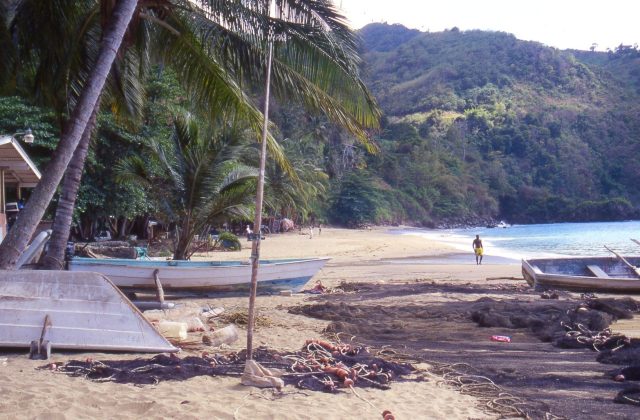
Tobago
Lesser Antilles, Trinidad and Tobago
Tobago is the smaller, quieter partner of Trinidad, an island of about 300 square kilometres 35 km north-east of it,…
36 tours & trips
Trinidad and Tobago · Caribbean Sea · Nature & wildlife island
Trinidad is the larger island of Trinidad and Tobago, the southernmost island in the Caribbean, lying just 11 kilometres off the coast of Venezuela. It is less a beach resort than a lively, multicultural country with the region's biggest Carnival, rainforest full of birds, scarlet ibis in the mangroves and some of the best street food in the Caribbean.
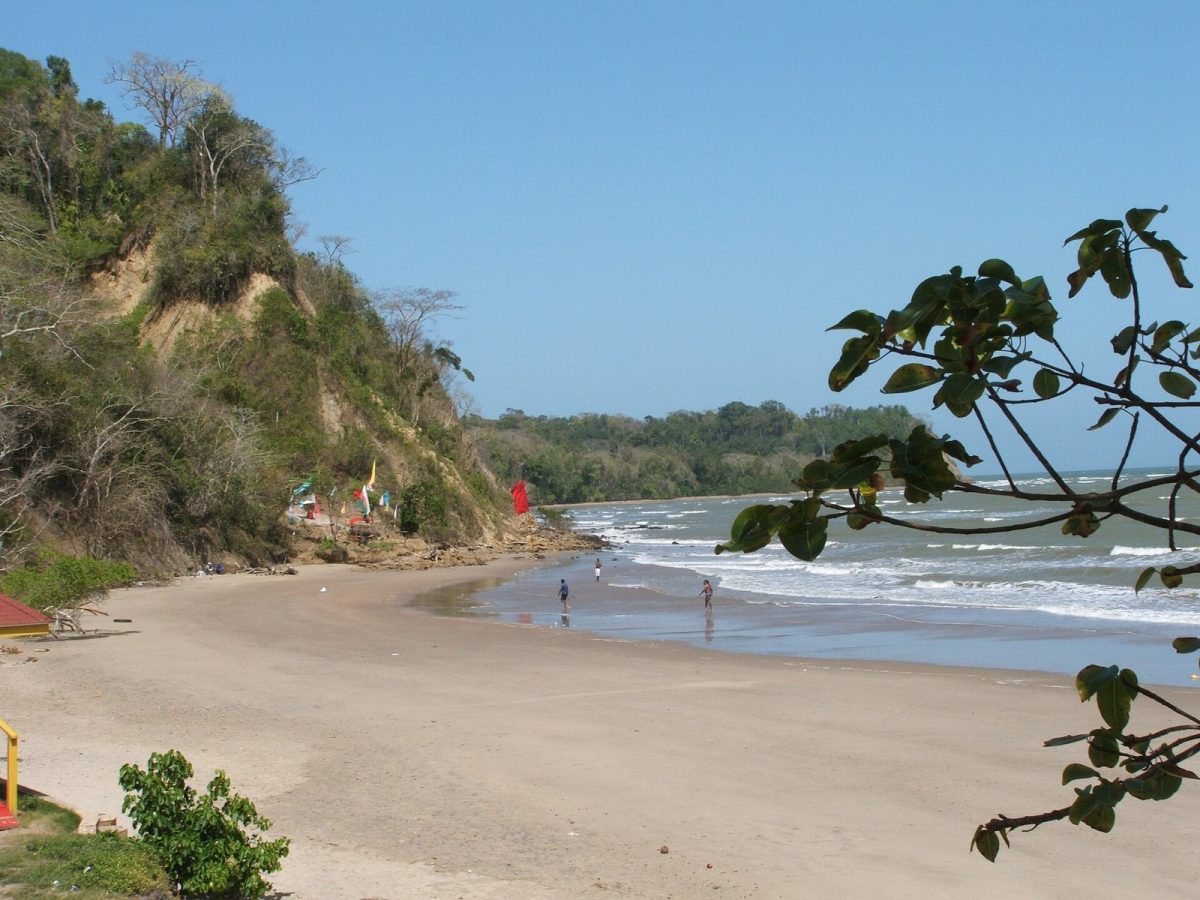
Photo: Kalamazadkhan, CC BY-SA 3.0
| Getting there | Flights to Piarco airport near Port of Spain from Miami, New York, Toronto and London; ferry or flight to Tobago |
|---|---|
| Gateway | Port of Spain (Piarco airport) |
| Travel time | About 4 h by air from Miami |
| Days | 3 to 5 nights |
| Best months | Jan–May (dry season); Carnival in February or early March |
| Getting around | Rent a car or hire a driver; shared maxi taxis and route taxis are cheap but confusing |
| Booking | Flights and rooms for Carnival months ahead; tours a few days ahead |
| Cost | Mid-range for the Caribbean |
| Beaches | Golden sand at Maracas and Las Cuevas on the north coast; long, wild Atlantic beaches in the east |
| Sea | Caribbean Sea |
| Archipelago | Lesser Antilles |
| Area | 4,768 km² |
| Population | 1.3 million (2011) |
| Highest point | 940 m (El Cerro del Aripo) |
| Airport | Yes, scheduled flights |
| Car-free | No |
| Checked | November 2026 |
Trinidad has no big tourist industry, so tours are run by small local operators, mostly from Port of Spain, with hotel pickup included.
The most popular is the island highlights day or half day: a drive round the city's Queen's Park Savannah and colonial mansions, up to a viewpoint and over the Northern Range to Maracas Bay for a swim. Some combine this with the evening boat trip into the Caroni Swamp to see the scarlet ibis, the national bird, flying in to roost. The swamp trip alone takes about two and a half hours and is the single thing most visitors should not miss.
Nature tours are the second group: birding days in the Arima valley, rainforest hikes to waterfalls such as Avocat and Rio Seco, and trips to watch leatherback turtles nesting on the north-east beaches in season. In the south, tours visit the Pitch Lake and the mud volcanoes, often with food stops. In the evening there are street food tastings in Port of Spain.
Our advice: book the Caroni boat and one nature day; take a driver rather than driving yourself on your first visit.
Half an hour south of Port of Spain, flat boats wind through mangrove channels where you may see tree boas, herons and caimans. The goal is the late afternoon, when thousands of scarlet ibis fly in and settle on an island of trees, turning it red. Trips leave around 4 pm; bring insect repellent.
The island's favourite beach lies 40 minutes from the capital along the twisting North Coast Road, with a lookout over the bay on the way. The curve of golden sand is backed by green hills, the water is good for swimming most days, and the stalls sell bake and shark, a fried fish sandwich with sauces.
The capital is busy and not pretty, but worth a day. Walk around the Queen's Park Savannah past the Magnificent Seven, a row of eccentric colonial mansions, visit the National Museum and the Botanic Gardens, and in the evening join the locals at the food stalls on Ariapita Avenue. Take taxis after dark.
In the forested hills above Arima, an hour east of the capital, a former cocoa and coffee estate is now a nature centre famous for birdwatching. Around the lodge you can watch hummingbirds, honeycreepers and toucans at the feeders, and guided walks lead to a cave of oilbirds. Book ahead and allow half a day.
In La Brea on the south-west coast, about two hours from Port of Spain, lies the largest natural deposit of asphalt in the world, a grey crust you can walk on with a local guide. Pools of warm water collect in its folds, and the guides explain how the pitch was used to pave roads worldwide.
On the remote north-east coast, about three hours' drive from the capital, Grande Riviere is one of the most important nesting beaches for leatherback turtles. From March to August the huge females come ashore at night; access to the beach after dark is controlled and you must go with a licensed guide. Stay overnight.
Our pick for each kind of trip, with live dates and prices. Free cancellation on most.
Best for: First visit, the island in a day
A guided drive around Port of Spain and over the mountains to Maracas Bay, with time for a swim and a fried shark sandwich at the beach.
Piarco International Airport is about 30 km east of Port of Spain, a 30 to 60-minute drive depending on traffic. It has direct flights from Miami, Fort Lauderdale, New York, Toronto and London, and regional flights to Barbados, Grenada and other Caribbean islands.
Tobago is 20 minutes away by plane, with frequent flights during the day, or about two and a half to three hours by the inter-island ferry from Port of Spain; book the ferry ahead at weekends and on holidays. Ferries to Venezuela run only irregularly and are not a practical route for most travellers.
Some Caribbean cruises call at Port of Spain, mostly in winter. Arrange an airport taxi in advance if you land at night.
There are no trains, and public transport relies on maxi taxis, minibuses colour-coded by route, and shared route taxis with plates beginning with H. They are cheap but hard to work out for a visitor. Renting a car gives freedom, but traffic around Port of Spain is heavy, driving is on the left and roads in the hills are narrow and winding. Many visitors hire a driver or join tours instead.
The dry season runs from January to May and is the best time to visit, with sunshine, lower humidity and good conditions for hiking and the beaches. Carnival, on the Monday and Tuesday before Ash Wednesday in February or early March, is the climax of the year; the weeks before it are filled with steelpan competitions and parties, and prices double.
The wet season from June to December brings heavy afternoon showers, but rarely ruins a whole day, and the forest is greenest then. Trinidad lies south of the main hurricane belt, so storms are much rarer than further north.
Leatherback turtles nest from March to August, and Divali and the Hindu festivals in October or November are worth seeing. Three to five nights covers the main sights; add a few days on Tobago for beaches.
Port of Spain and the suburbs around the Queen's Park Savannah, such as Woodbrook and St Clair, have most of the hotels and guesthouses and are the practical base for tours, food and nightlife. For nature, the lodges of the Arima valley put you among the birds. On the north-east coast, small guesthouses at Grande Riviere are the place for turtle season. Few people stay at the beaches.
Arawak and Carib peoples called the island Iere before Columbus arrived in 1498. Spain held it lightly until the 1780s, when French planters settled with enslaved Africans; Britain took it in 1797. After slavery ended, tens of thousands of indentured workers came from India, and today people of Indian and African descent each make up around a third of the population. Oil and gas made the country rich from the twentieth century. Independence came in 1962, and steelpan, calypso and soca were born here.
Tobago, the quieter sister island, is a 20-minute flight or about three hours by ferry and offers the calm beaches and reefs Trinidad lacks; many visitors split a week between the two. Grenada and Barbados are short flights away, and Trinidad is a common start or end point for a southern Caribbean trip.
Flights to Piarco airport near Port of Spain from Miami, New York, Toronto and London; ferry or flight to Tobago.
From Port of Spain (Piarco airport): about 4 h by air from Miami.
3 to 5 nights.
Jan–May (dry season); Carnival in February or early March.
Rent a car or hire a driver; shared maxi taxis and route taxis are cheap but confusing.
Go if you want Carnival, steelpan, birdwatching, street food and a Caribbean island where tourism is a sideline. Skip it or head to Tobago or Barbados if you mainly want calm turquoise beaches and a resort holiday.
Mid-range for the Caribbean.
Golden sand at Maracas and Las Cuevas on the north coast; long, wild Atlantic beaches in the east.
Flights and rooms for Carnival months ahead; tours a few days ahead.
Yes. Boat trips, guided tours and day trips for Trinidad can be booked online; live prices and free cancellation on most are shown on this page.
Lesser Antilles, Trinidad and Tobago
Tobago is the smaller, quieter partner of Trinidad, an island of about 300 square kilometres 35 km north-east of it,…
36 tours & trips