Poland · Baltic Sea · Beach island
Usedom
Usedom is a 445-square-kilometre island on the Baltic coast, divided between Germany and Poland, with about 40 km of continuous sandy beach on its seaward side. Its imperial spa resorts of Ahlbeck, Heringsdorf and Bansin, lined with white villas and long piers, have drawn holidaymakers since the 19th century, and it is one of the sunniest places in either country.
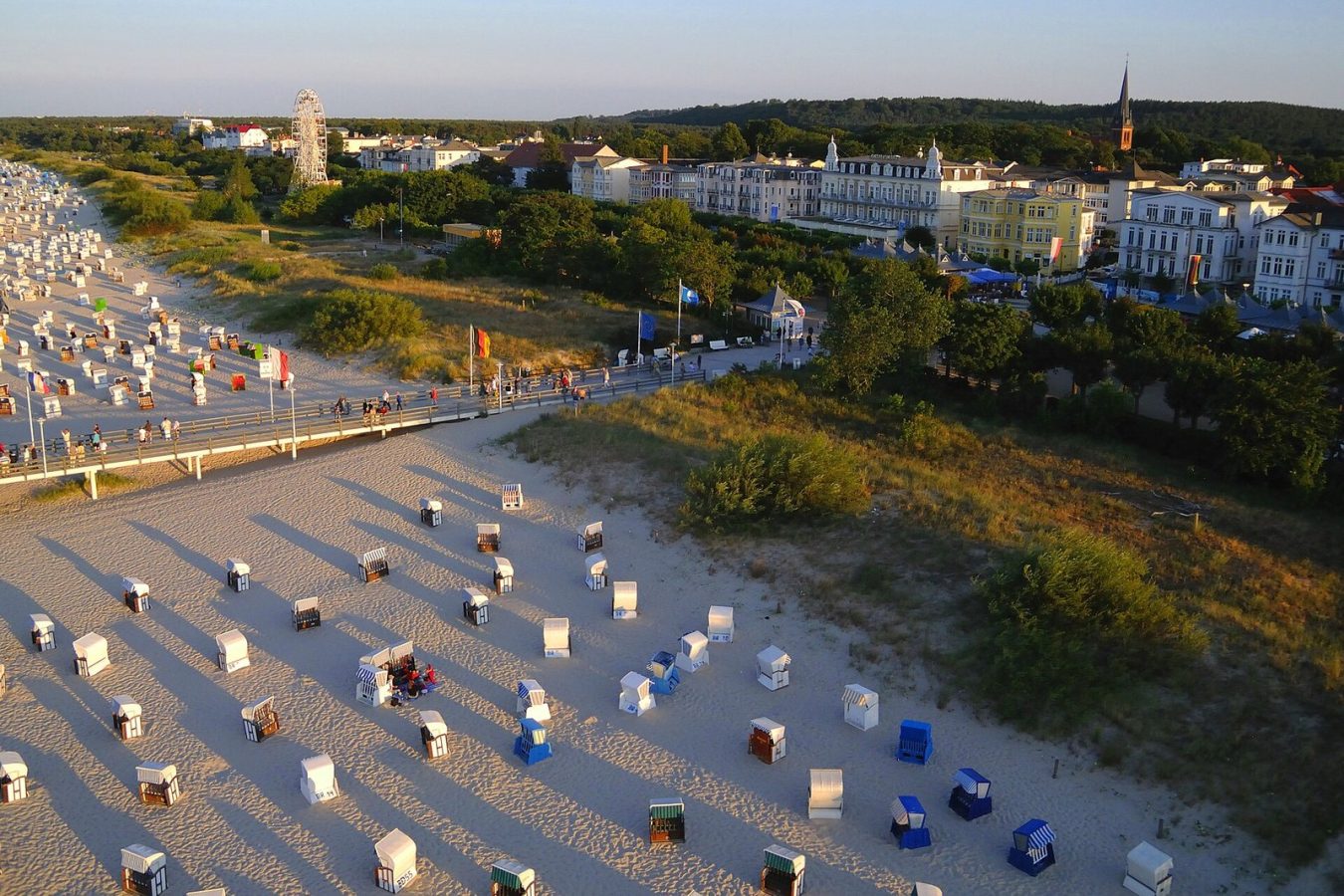
Photo: Zeppelubil / Th. Haft, from Torgau / Elbe, Germany, CC BY-SA 3.0
At a glance
| Getting there | Drive over the bridges at Wolgast or Zecherin, or take the island railway; seasonal flights to Heringsdorf |
|---|---|
| Gateway | Wolgast or Anklam (bridges); Świnoujście in Poland |
| Travel time | About 3 h from Berlin by car or train |
| Days | 3 to 5 nights |
| Best months | Jun–Sep for swimming; May and Sep quieter; cold and windy Nov–Mar |
| Getting around | Island railway links the resorts; bikes along the coast path; car useful inland |
| Booking | Rooms months ahead for July–August and German school holidays |
| Cost | Mid-range for Germany; cheaper on the Polish side |
| Beaches | Fine white sand along the whole Baltic shore; Ahlbeck, Heringsdorf, Bansin and Zinnowitz |
| Sea | Baltic Sea |
| Area | 445 km² |
| Population | 76,500 |
| Highest point | 69 m (Golm) |
| Airport | Yes, scheduled flights |
| Car-free | No |
| Bridge | Road bridge or causeway to the mainland |
| Checked | October 2026 |
Tours and day trips: what to book
Usedom is mostly a do-it-yourself island, so the products sold are small additions to a beach holiday rather than essential tours.
Guided island tours by bus or minibus give a good first overview, linking the spa towns with the lagoon villages and inland lakes in a few hours. There are also seasonal guided walks in the spa towns that explain the villa architecture, and themed winter outings by bus.
On the water you can join a harbour tour from Świnoujście, a sail on a traditional ship across the Achterwasser lagoon, or a longer boat trip to the offshore islets of Ruden and Greifswalder Oie to see grey seals. Water sports schools offer wing-foiling, kitesurfing and sailing courses on the sheltered lagoon side.
On land, tickets sell for the treetop walk near Heringsdorf, the swimwear museum and the Peenemünde museum. Tours usually include a guide and transport, rarely meals, and most run only from spring to autumn, so check dates if you travel in winter.
The best plan is to rent bikes, use the island railway and book one boat trip; families should add the treetop walk.
What to see and do on Usedom
The imperial spa towns
Ahlbeck, Heringsdorf and Bansin form a continuous strip of white resort villas from the late 19th century, linked by a beach promenade that runs about 12 km and continues into Poland. Walk the Ahlbeck pier with its 1898 restaurant pavilion and the long modern pier at Heringsdorf, then cycle on to Bansin.
The beach
The whole seaward coast is fine, pale sand backed by dunes and pine woods, with lifeguards and wicker beach chairs to rent in the resorts. The sea is shallow and calm, good for children, and usually reaches 18 to 20 degrees in midsummer. For more space, walk away from the piers or try Ückeritz and Koserow.
Peenemünde
At the northern tip, the former German army research site where the V2 rocket was developed during the Second World War is now a large museum in the old power station. It tells the history of the rockets and the forced labour behind them. Allow half a day; it is about an hour by train or car from the spa towns.
Świnoujście
Across the border, reached on foot along the promenade from Ahlbeck, the Polish port has a busy beach, a long breakwater with a windmill-shaped beacon and the tallest lighthouse on the Polish coast. Prices are lower, and free city ferries cross the river Świna to the rest of the town and the ferries to Sweden.
The lagoon side and Lieper Winkel
Behind the beach resorts, the shore of the Achterwasser and the Lieper Winkel peninsula are a world of reed beds, fishing villages and thatched farmhouses. Cycle the quiet lanes, eat smoked fish at a harbour and watch cranes and sea eagles. The small town of Usedom, which gave the island its name, lies on the southern shore.
Streckelsberg and the Golm
The coast rises at the Streckelsberg cliff near Koserow, with a viewpoint over the beach. In the south-east the wooded Golm, the highest point at 69 metres, holds a memorial cemetery for victims of the 1945 bombing of Swinemünde. Both make good walks from the beach towns.
Usedom tours: which one for you
Our pick for each kind of trip, with live dates and prices. Free cancellation on most.
Best for: First visit, an island overview
A guided round of the island that covers the spa towns and inland villages in one day, useful if you arrive without a car.
- Grey seals by boat: Usedom boat tour to greifswalder oie ruden island gray seals A boat trip out to the small offshore islands of Greifswalder Oie and Ruden, where grey seals haul out on the rocks and sandbanks.
- With children: Usedom treetop walk adventure on usedom island The raised walkway through the beech forest near Heringsdorf, with play stations and a tower, an easy half-day on a cloudy day.
How to get to Usedom
Two road bridges cross the narrow Peenestrom channel from the German mainland: at Wolgast in the north and at Zecherin near Anklam in the south. Both are lifting bridges that open at set times for boats, causing queues on summer weekends. From Berlin the drive takes about three hours.
By train, regional services run to Züssow, where the island railway continues over the Wolgast bridge to Zinnowitz, the spa towns and Świnoujście, with a branch to Peenemünde; through trains from Berlin run in summer.
From Poland, Świnoujście is linked to Szczecin by rail and road, with a tunnel or ferry across the Świna, and has car ferries to Ystad and Trelleborg in Sweden. Heringsdorf airport receives seasonal flights from German cities.
Getting around
The island railway is the backbone, running roughly every half hour in summer along the coast from Wolgast and Peenemünde to Świnoujście. Buses fill the gaps to the lagoon villages. Cycling is the best way to explore: the island is flat, bike hire is everywhere, and paths run along the coast, through the forests and around the Achterwasser. A car helps for the Lieper Winkel and the south, but parking in the spa towns is scarce and paid in summer.
When to go
The beach season is June to September, with July and August the warmest and busiest months, when air temperatures reach the mid 20s and the sea 18 to 20 degrees. German school holidays fill every room and the trains, and prices are at their highest. June and early September are the best compromise: long days, quieter beaches and lower rates. Usedom has more hours of sunshine than almost anywhere else in Germany.
May and October are good for cycling and walking but too cold for most swimmers. From November to March the island is cold, grey and windy; many hotels run spa offers and some cafés close, but the villas and empty beaches have their own winter charm. Three to five nights suit a beach stay; a weekend is enough to see the spa towns.
Where to stay
Most visitors stay in the three spa towns. Heringsdorf is the grandest and has the most hotels and restaurants, Ahlbeck is close to the Polish border and its cheaper shops, and Bansin is the quietest of the three. Zinnowitz and Koserow in the middle of the island suit families with apartments near the beach. For calm and lower prices, choose a farm stay on the lagoon side or in the Lieper Winkel; on the Polish side, Świnoujście has large spa hotels.
History and character
Usedom was Slavic land before passing to the dukes of Pomerania, then to Sweden after the Thirty Years' War and to Prussia in the 18th century. From the 1820s sea bathing came into fashion, and after the railway arrived, wealthy Berliners built the villas of the spa towns. During the Second World War Peenemünde was the centre of German rocket research. In 1945 the new border gave the eastern tip to Poland. Under East Germany the resorts became state holiday homes, and after 1990 the villas were restored.
Combine it with
Usedom pairs well with Rügen, about 90 minutes by car to the north-west, for its chalk cliffs and Baroque resorts, and with the Hanseatic towns of Greifswald and Stralsund. Berlin is about three hours away. On the Polish side, Świnoujście leads on to the neighbouring island of Wolin and its national park, and to Szczecin.
Frequently asked questions
How do I get to Usedom?
Drive over the bridges at Wolgast or Zecherin, or take the island railway; seasonal flights to Heringsdorf.
How long does it take to get to Usedom from Wolgast or Anklam (bridges); Świnoujście in Poland?
From Wolgast or Anklam (bridges); Świnoujście in Poland: about 3 h from Berlin by car or train.
How many days do you need on Usedom?
3 to 5 nights.
When is the best time to visit Usedom?
Jun–Sep for swimming; May and Sep quieter; cold and windy Nov–Mar.
Do I need a car on Usedom?
Island railway links the resorts; bikes along the coast path; car useful inland.
Is Usedom worth a day trip?
Go if you want a long sandy beach, cycling, historic seaside architecture and easy access from Berlin. Skip it or choose Rügen if you want chalk cliffs and wilder scenery, or go south for reliably warm sea.
Is Usedom expensive?
Mid-range for Germany; cheaper on the Polish side.
What are the beaches like on Usedom?
Fine white sand along the whole Baltic shore; Ahlbeck, Heringsdorf, Bansin and Zinnowitz.
What should I book ahead for Usedom?
Rooms months ahead for July–August and German school holidays.
Can I book tours and day trips to Usedom online?
Yes. Boat trips, guided tours and day trips for Usedom can be booked online; live prices and free cancellation on most are shown on this page.