Cres
51 km away
Cres is a long, wild island in the Kvarner Gulf of northern Croatia, about 406 square kilometres in size yet home to…
13 tours & trips
Croatia · Adriatic Sea · Nature & wildlife island
Veli Brijun is the largest island of the Brijuni National Park, 2 km off the Istrian town of Fazana and a short drive from Pula. Once the summer residence of Tito, it mixes Roman ruins, a safari park of animals given by world leaders, dinosaur footprints and parkland in under 6 square kilometres.
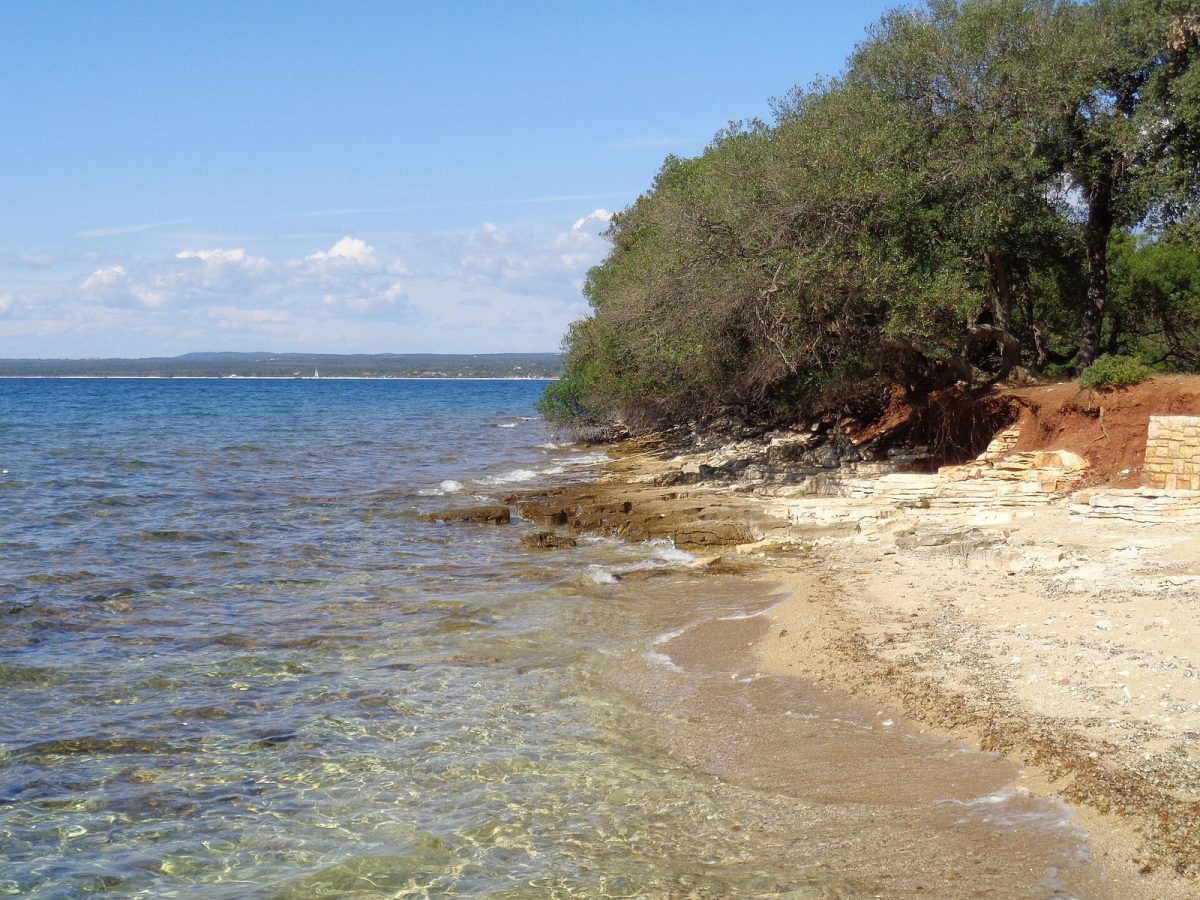
Photo: Silverije, CC BY-SA 4.0
| Getting there | National park boat from Fazana, about 15 min, with a guided tour of the island included |
|---|---|
| Gateway | Fazana (near Pula) |
| Travel time | 15 min by boat; Fazana is 15 min from Pula by road |
| Days | A half-day or day trip is enough |
| Best months | May–Oct; Jun–Sep for swimming; Apr and Oct quiet and mild |
| Getting around | Car-free: a guided tourist train, rental bikes and electric carts, or walk |
| Booking | Park tickets a few days ahead in July and August; a week ahead for groups |
| Cost | Mid-range; the park ticket covers boat, train and guide |
| Beaches | Rocky shores and a few small pebble coves near the hotels; swimming at set spots only |
| Sea | Adriatic Sea |
| Archipelago | Brijuni Islands |
| Area | 5.7 km² |
| Ferry | 15 min from Fazana (near Pula) |
| Airport | No |
| Car-free | Yes |
| Checked | October 2026 |
Visits to Veli Brijun are run by the national park, and nothing is sold online for the island by outside companies that includes landing. The standard product is the park's own excursion from Fazana: the return boat, a guided ride on a small tourist train around the island, the safari park, the archaeological sites and the museum, usually four hours in all. Tickets are bought from the park office in Fazana or reserved in advance, which is wise in summer when the boats fill. Lunch is not included, but there are restaurants by the harbour on the island. Rental bikes and electric carts are available on the island at extra cost for those who want to explore further after the tour.
The second option, offered by private boats from Fazana and Pula, is a cruise round the archipelago without landing, often with a swim stop and a fish lunch. These are cheaper and relaxed but you see the islands only from the water; read the description carefully before you pay.
Guests at the two hotels on Veli Brijun have the island to themselves in the evenings, with access to bike paths and quiet coves.
The plain recommendation is the national park excursion, booked a few days ahead, taking the earliest boat in summer to avoid the heat.
The animals given to Tito by heads of state, or their descendants, roam a fenced park in the north of the island: zebras, llamas, ostriches, antelopes and other exotic species. The tourist train stops for photographs. Nearby, sheep, donkeys and native Istrian cattle graze, and fallow deer and peacocks wander freely among the lawns and pines.
On the shore of a sheltered bay on the east side lie the remains of a large Roman villa from the 1st century, with temples, baths, a harbour and terraces built around the water. The foundations are clearly laid out and labelled. It shows why wealthy Romans from nearby Pula chose the island for their summer retreats.
Near the harbour, a museum shows photographs of the famous guests who visited Tito here, from film stars to presidents, and a collection of stuffed animals. The highlight for many is his 1953 Cadillac, which visitors can sometimes ride in for an extra charge. Allow about half an hour; the exhibition explains why the island mattered in the Cold War.
On the west coast, the ruins of a fortified settlement span more than a thousand years, from the late Roman period to the Middle Ages, with houses, churches and olive presses. The small church of St Germain, nearby, houses copies of medieval frescoes and Glagolitic inscriptions. It is a quiet walk through olive groves away from the train route.
Along the rocky coast, footprints left by dinosaurs around 100 million years ago are pressed into the limestone slabs; ask the guide where to look. Inland, an ancient olive tree, said to be about 1,600 years old, still bears fruit. Rent a bike after the tour to reach the quieter shores and the island's old golf course.
Boats to Veli Brijun leave only from the national park's quay in Fazana, a small fishing town on the Istrian coast, and take about 15 minutes. Excursions run several times a day from spring to autumn and less often in winter, at fixed times; buy tickets at the park office on the waterfront or reserve them in advance by phone or through the park. Private boats may not land visitors on the island. Fazana is about 15 minutes by car or local bus from Pula, which has an airport with flights from many European cities in summer, a bus station with connections to Zagreb and Rovinj, and a railway line through Istria. Park in the paid car parks above the Fazana waterfront; spaces are tight in July and August. Sailors must have a permit to moor in the park.
No private cars are allowed on the island. The guided tour uses a small tourist train that links the main sights and gives commentary. After the tour you can explore on foot along the paths, or rent bicycles, electric bikes or electric carts near the harbour; the island is small and flat, so cycling is easy. Many areas, including the safari park, can only be seen from the train or designated paths. Wear a hat, as some stretches have little shade.
The park is open all year, but the best time is May to October, when boats run most often and the gardens and meadows are green. June to September is warm enough for swimming, with sea temperatures around 23 to 25 degrees in July and August, but the midday heat on the open lawns is strong, so take a morning or late afternoon boat. July and August are the busiest months, when tickets may sell out a few days ahead.
April and October are quiet and mild, ideal for cycling, though excursions run less often and some services are reduced. In winter there are only a few boats a week, and the bora wind can cancel crossings. Summer concerts and theatre are staged in the ruins of a fort on the neighbouring island of Mali Brijun, a memorable evening if you are in Istria in July or August. A half-day is enough for the guided visit; stay overnight on the island for a slower day.
There are two hotels and some villas on Veli Brijun, run by the national park, which let you enjoy the island when the day visitors have left; they are calm rather than luxurious and book up early for summer. Most visitors stay on the mainland. Fazana, beside the boat quay, is a relaxed fishing town with apartments and seafood restaurants. Pula, 15 minutes away, has the most hotels, the Roman amphitheatre and nightlife, and Rovinj, about 40 minutes north, suits those who want a picturesque old town.
People have lived on Brijuni since the Bronze Age; Illyrian hill forts gave way to Roman villas, then a Byzantine fortified settlement. Later, Venice quarried its stone and malaria emptied the islands. In 1893 the Austrian industrialist Paul Kupelwieser bought them, invited the scientist Robert Koch to eradicate malaria, and built hotels, a harbour and a golf course for a fashionable resort. After 1945 Tito made Veli Brijun his summer residence and received world leaders here. In 1983 it became a national park.
Combine Brijuni with Pula, 15 minutes away, for its Roman amphitheatre and the old town. Rovinj, about 40 minutes north, has the prettiest harbour in Istria, and the hill towns of inland Istria such as Motovun and Groznjan are about an hour away. The Kamenjak peninsula, south of Pula, offers wild coves for swimming.
51 km away
Cres is a long, wild island in the Kvarner Gulf of northern Croatia, about 406 square kilometres in size yet home to…
13 tours & trips
63 km away
Lošinj is a long, narrow island of about 74 square kilometres in the Kvarner Gulf of northern Croatia, joined to its…
2 tours & trips
68 km away
Krk is one of the two largest islands in the Adriatic, 406 square kilometres of rocky coast, vineyards and stone towns…
18 tours & trips
National park boat from Fazana, about 15 min, with a guided tour of the island included.
From Fazana (near Pula): 15 min by boat; Fazana is 15 min from Pula by road.
A half-day or day trip is enough.
May–Oct; Jun–Sep for swimming; Apr and Oct quiet and mild.
No. Brijuni (Veli Brijun) is car-free. Car-free: a guided tourist train, rental bikes and electric carts, or walk.
Go if you want an easy, well-organised half-day of Roman ruins, Cold War history, exotic animals and Adriatic parkland near Pula. Skip it if you want freedom to roam and swim where you like, as visits run on a fixed national-park schedule. With about 15 min each way from Fazana (near Pula), a day trip is easy to do.
Mid-range; the park ticket covers boat, train and guide.
Rocky shores and a few small pebble coves near the hotels; swimming at set spots only.
Park tickets a few days ahead in July and August; a week ahead for groups.