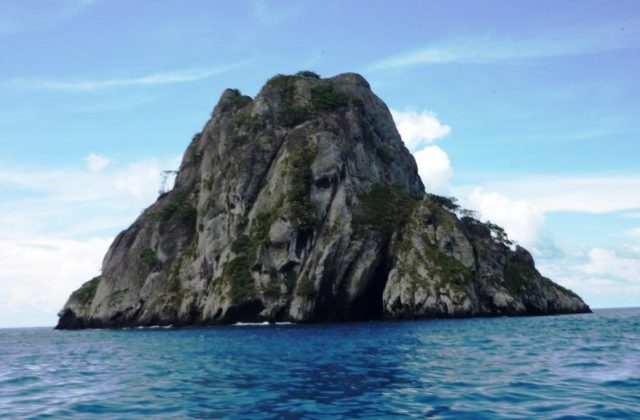
Cocos Island
Costa Rica
Cocos Island is a remote, rain-soaked volcanic island in the Pacific, about 550 km south-west of mainland Costa Rica,…
No tours listed
Costa Rica · Pacific Ocean · Nature & wildlife island
Isla del Cano is a small forested island and biological reserve about 16 km off the Osa peninsula on Costa Rica's southern Pacific coast. Its protected reefs are among the best snorkelling and diving in the country, with turtles, reef sharks, rays and big schools of fish, and humpback whales are often seen on the boat ride out.
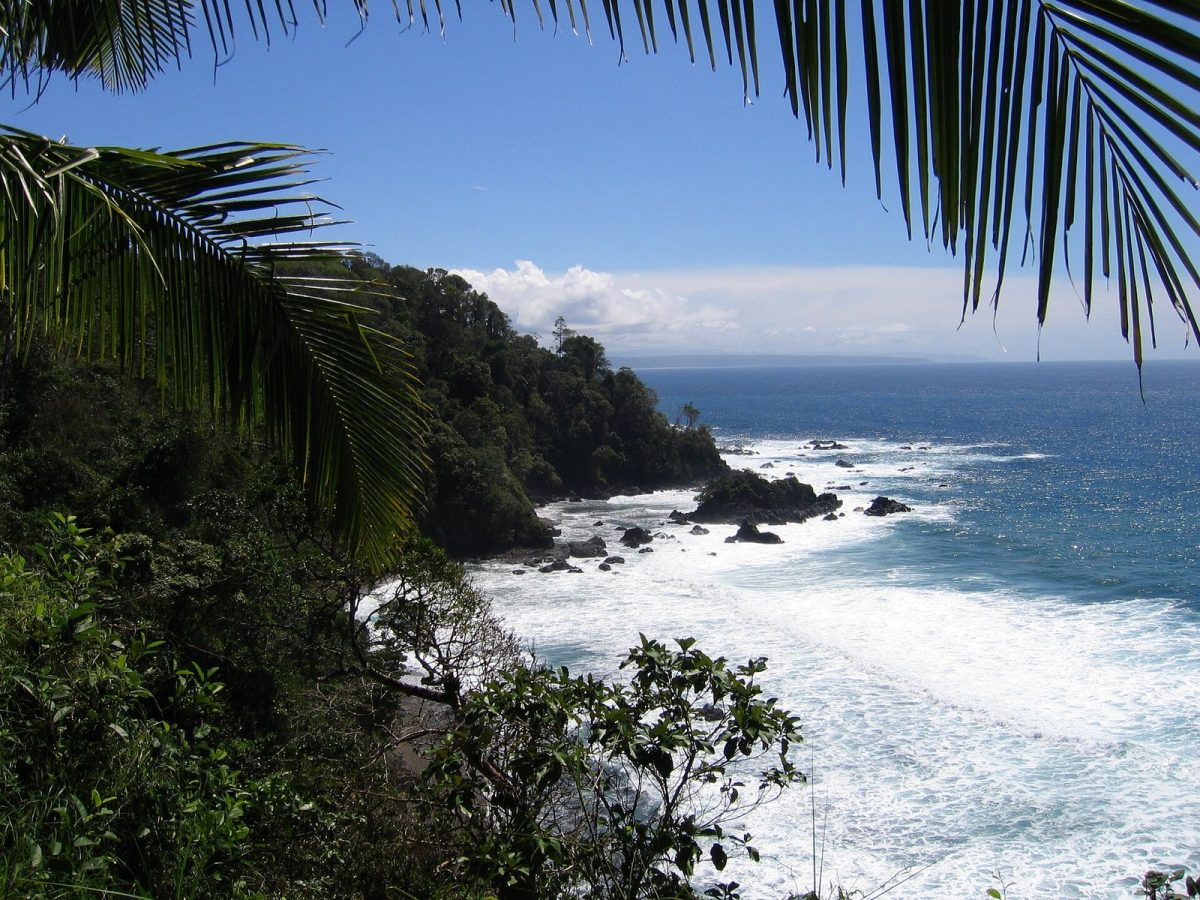
Photo: Peter Andersen, CC BY-SA 3.0
| Getting there | Boat tours from Drake Bay in about 1 h, or from Uvita and Sierpe in 1.5 to 2 h |
|---|---|
| Gateway | Uvita, Drake Bay or Sierpe (boat tours) |
| Travel time | 1 h by boat from Drake Bay; 1.5 to 2 h from Uvita |
| Days | A day trip is enough |
| Best months | Dec–Apr dry, calmer sea; humpback whales Jul–Oct and Dec–Mar; Sep–Oct wettest |
| Getting around | No roads or transport; visitors stay on the landing beach with their guide |
| Booking | Book a few days ahead, as daily visitor numbers are capped; weeks ahead at Christmas |
| Cost | Mid-range for Costa Rica; diving costs more |
| Beaches | One landing beach of pale sand by the ranger station; swimming and snorkelling offshore |
| Sea | Pacific Ocean |
| Area | 3 km² |
| Population | Uninhabited |
| Highest point | 109 m |
| Airport | No |
| Car-free | Yes |
| Checked | October 2026 |
Isla del Cano is a protected reserve, so it can only be visited on a licensed tour, and the number of visitors each day is limited.
The standard product is a full-day snorkelling trip. Boats leave in the early morning from Drake Bay, Uvita or Sierpe, stop at two reef sites near the island with a guide in the water, land at the beach by the ranger station for a rest and lunch, and watch for dolphins and whales on the way. The price usually includes the boat, the guide, masks and fins, park fees, fruit and a packed lunch; wetsuits and pickup from more distant hotels may cost extra.
Certified divers can book two-tank dive trips to sites such as Bajo del Diablo, a deep pinnacle known for schools of jacks and snappers, white-tip sharks and rays. Divers must be certified and conditions can be strong.
Private boats from Sierpe or Uvita suit families or groups, and some tours combine the island with a whale-watching stop in Marino Ballena National Park or with a visit to Corcovado on another day.
For most people the shared snorkelling day from Drake Bay is best: the crossing is shortest and the boats spend longest at the island.
The island's coral platforms lie in clear, warm water a short swim from the boats. Guides choose the site by the current, and you can expect green and hawksbill turtles, white-tip reef sharks resting on the sand, moray eels, parrotfish and shoals of jacks. Visibility can exceed 15 metres in the dry season, and less after heavy rain.
The crossing is part of the attraction. Spotted and bottlenose dolphins often ride the bow, and in season humpback whales from both hemispheres pass the coast, sometimes with calves. From Uvita and Sierpe the route follows the shore of the Osa peninsula. Sit at the back if the sea is lumpy, and bring a windproof layer.
Boats land on a pale sand beach beside the ranger station on the north side of the island, the only place visitors may go ashore. There is shade under the trees, toilets and space to eat lunch, and the swimming is calm. Hermit crabs and frigatebirds are common. Take all rubbish back to the boat, as nothing can be left.
For certified divers, this rocky pinnacle off the island is the reserve's best-known site, with dense schools of fish, eagle rays, turtles and sometimes larger sharks and mantas. Currents can be strong, so it suits divers with some experience. Dive centres in Drake Bay and Uvita run two-tank trips, combining it with shallower reef sites nearby.
The village of Drake Bay, the closest base to the island, sits at the edge of the Osa rainforest and can only be reached by boat or a rough road. From here boats also run to Corcovado National Park, where guided walks show scarlet macaws, monkeys, tapirs and anteaters. Plan at least two nights to fit in both trips.
Our pick for each kind of trip, with live dates and prices. Free cancellation on most.
Best for: First visit, a day from Uvita
A full-day boat trip from the beach at Uvita with two snorkelling stops on the island's reefs, a break on the landing beach and lunch included.
There is no ferry; every visit is on an organised boat. From Drake Bay the crossing takes about an hour. From Uvita, boats are launched from the beach inside Marino Ballena National Park and take about an hour and a half. From Sierpe, boats run down the river through the mangroves and out to sea, a journey of around two hours.
Uvita is about four hours by road from San Jose on the coastal highway, with buses from the capital. Drake Bay is reached by boat from Sierpe, about 90 minutes, by a rough road needing a four-wheel drive, or by small plane from San Jose.
If you drive, leave the car at your hotel in Uvita or at guarded parking in Sierpe.
There is nothing to get around on the island: no roads, no shops, and the forest of the interior is generally closed to visitors to protect it. Visitors stay on the landing beach with their guide, and the rest of the day is spent on the boat. On the mainland, Uvita is easy with a car or taxis, while Drake Bay is small enough to walk, with boats to Corcovado.
The dry season from December to April brings the calmest seas, sunny days and the best visibility, and it is the busiest time, especially at Christmas, New Year and Easter, when Costa Rican families travel. Book ahead then.
From May to November the rainy season brings afternoon storms, but mornings are often fine and the boats go out early. Visibility can fall after heavy rain, and September and October are the wettest months, when some lodges in Drake Bay close and trips may be cancelled.
Humpback whales from the southern hemisphere visit from about July to October and those from the north from December to March, so whales are possible for much of the year. The water is warm all year, around 27 to 29 C. A single day covers the island; add a day for Corcovado.
Drake Bay is the most convenient base for the island and for Corcovado, with eco-lodges, guesthouses and dive centres in the forest above the bay; it suits nature lovers happy with simple comforts. Uvita, Ojochal and Dominical on the mainland coast are easier to reach by road, with more restaurants, beaches and a range of hotels. Sierpe is a small river town, mostly a departure point.
Long before the Spanish arrived, the people of the Diquis region of southern Costa Rica used the island, perhaps as a cemetery, and left pottery, tombs and several of the perfectly round stone spheres for which the culture is famous. Later the island was a landmark for sailors along the coast. Costa Rica declared it a biological reserve in 1976, protecting the forest and over 50 square kilometres of the sea around it, and rangers now live on the island.
The trip pairs naturally with the rest of the southern Pacific coast. From Uvita, Marino Ballena National Park and its whale-tail sandbar are next door, and Manuel Antonio is about an hour and a half north. From Drake Bay, Corcovado National Park is the obvious partner. Many visitors arrive from San Jose and continue to the Osa peninsula or the beaches of Dominical.
Boat tours from Drake Bay in about 1 h, or from Uvita and Sierpe in 1.5 to 2 h.
From Uvita, Drake Bay or Sierpe (boat tours): 1 h by boat from Drake Bay; 1.5 to 2 h from Uvita.
A day trip is enough.
Dec–Apr dry, calmer sea; humpback whales Jul–Oct and Dec–Mar; Sep–Oct wettest.
No. Isla del Cano is car-free. No roads or transport; visitors stay on the landing beach with their guide.
Go if you want Costa Rica's clearest water for snorkelling or diving, with dolphins and whales on the way. Skip it if you get seasick easily or expect to explore the island on foot, as landing is limited to one beach.
Mid-range for Costa Rica; diving costs more.
One landing beach of pale sand by the ranger station; swimming and snorkelling offshore.
Book a few days ahead, as daily visitor numbers are capped; weeks ahead at Christmas.
Yes. Boat trips, guided tours and day trips for Isla del Cano can be booked online; live prices and free cancellation on most are shown on this page.
Costa Rica
Cocos Island is a remote, rain-soaked volcanic island in the Pacific, about 550 km south-west of mainland Costa Rica,…
No tours listed