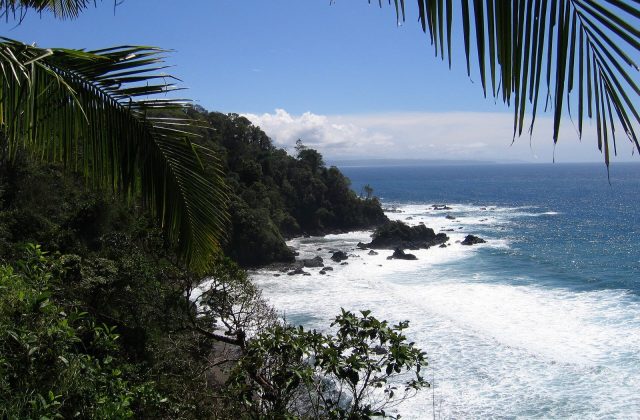
Isla del Cano
Costa Rica
Isla del Cano is a small forested island and biological reserve about 16 km off the Osa peninsula on Costa Rica's…
15 tours & trips
Costa Rica · Pacific Ocean · Remote island
Cocos Island is a remote, rain-soaked volcanic island in the Pacific, about 550 km south-west of mainland Costa Rica, uninhabited apart from park rangers. A national park and UNESCO World Heritage site, it is reached only by liveaboard dive boat and is famous among experienced divers for large schools of hammerhead sharks.
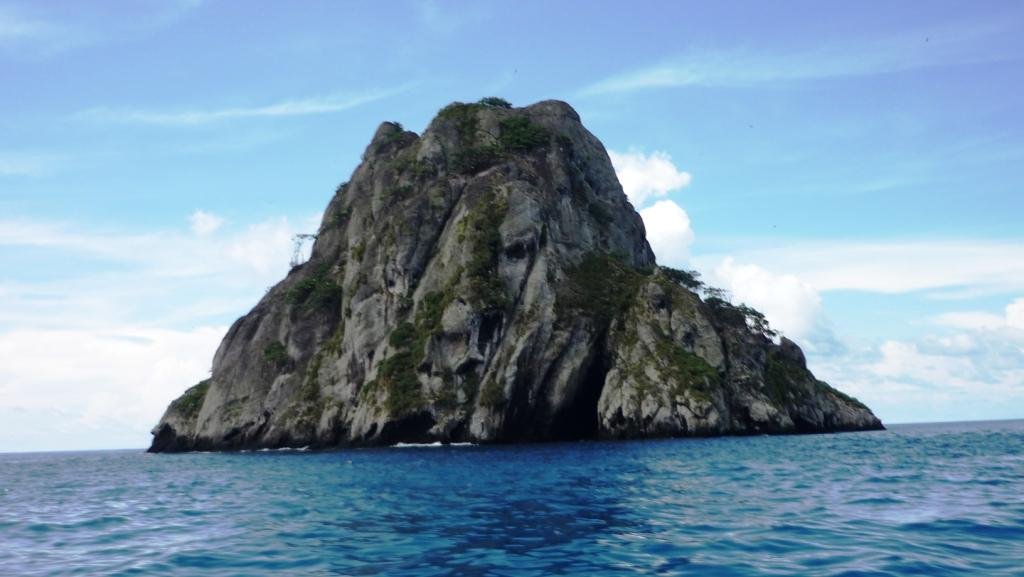
Photo: Axxis10, CC BY-SA 3.0
| Getting there | Only by liveaboard dive boat from Puntarenas, about 30 to 36 h each way across open ocean |
|---|---|
| Gateway | Puntarenas, near San Jose |
| Travel time | About 30 to 36 h by liveaboard boat |
| Days | About 10 days on a liveaboard |
| Best months | Jun–Nov for most hammerheads, rougher seas; Dec–May calmer, clearer water |
| Getting around | No roads: small boats from the liveaboard to dive sites; landings only with rangers |
| Booking | Liveaboard trips 6 to 12 months ahead; dive insurance essential |
| Cost | Very expensive; liveaboard fares plus daily park fees |
| Beaches | No beaches for visitors; boulder and sand coves at Chatham and Wafer bays |
| Sea | Pacific Ocean |
| Area | 24 km² |
| Population | Uninhabited |
| Highest point | 283 m |
| Airport | No |
| Car-free | Yes |
| UNESCO | Cocos Island National Park |
| Checked | October 2026 |
Nothing is sold online for Cocos Island in short-trip form, and no day trips or ferries exist. The only way to visit is a liveaboard dive cruise from Puntarenas on Costa Rica's Pacific coast, run by a handful of specialist boats with permits from the national park.
A typical trip lasts about ten days: a day and a half crossing out, around seven days moored in Chatham or Wafer Bay with three or four dives a day from small boats, and a day and a half back. Fares cover the cabin, all meals, tanks and weights, guides and usually the transfer from San Jose; national park fees, charged per day, nitrox, equipment rental, drinks and tips are often extra. Some boats carry fewer than twenty divers, so trips sell out far ahead.
Dives are demanding, with strong currents, surge, depths around 30 metres and blue-water ascents; operators usually expect advanced certification and a good number of logged dives, plus a surface marker buoy and a dive computer. Non-divers can join but will spend long days on board.
Book directly with a specialist operator or dive travel agent once you have the experience, and add travel and diving insurance.
This submerged seamount a short boat ride from Chatham Bay is the classic Cocos dive. Divers hook onto the rocks at around 25 to 35 metres and wait as scalloped hammerheads circle in the current, sometimes in dozens or hundreds. Strong currents make it a dive for experience only, and conditions decide which days it is possible.
Off the small islet of Manuelita, near Chatham Bay, the night dive is the trip's other famous experience. In the beam of your torch, packs of whitetip reef sharks hunt among the boulders, chasing fish into crevices. During the day the same site has a sheltered coral garden with turtles, rays and moray eels, a good check-out dive.
Rocks and pinnacles around the island, such as Dirty Rock, Dos Amigos with its arch, and Punta Maria, add marbled rays, eagle rays, silky and Galapagos sharks, tuna and, at times, whale sharks and mantas. Each boat chooses sites by current and visibility. Expect cool thermoclines at depth even though the surface water is warm.
Most boats moor in Chatham Bay on the north coast. On a ranger-escorted landing you can see rocks carved by sailors and whalers with ship names and dates going back to the 18th and 19th centuries. Rivers run down to the shore, and frigatebirds and boobies circle above the anchorage.
The ranger station sits in Wafer Bay, where visitors register and, weather permitting, walk short trails into dense, dripping rainforest to waterfalls and viewpoints. The island has endemic birds, including the Cocos finch, cuckoo and flycatcher. Waterfalls also plunge straight off the cliffs into the sea, best seen from the boat after heavy rain.
There is no airport, harbour for the public or ferry service. International visitors fly to San Jose, Costa Rica's capital, and are transferred by road to Puntarenas, about two hours away on the Pacific coast, where the liveaboard boats sail from. Most trips include the transfer.
The crossing to Cocos takes about 30 to 36 hours over open ocean, depending on weather and boat, and seas can be rough, especially from June to November, so bring seasickness remedies. The return is the same.
Private yachts need advance permission from the national park authority and pay daily fees. There is no way to visit independently or for a short trip; plan around the boat's departure dates.
Once moored, you live on the boat. Divers are taken to sites by small inflatable boats, usually twice in the morning and once or twice in the afternoon. Land visits are limited to a few marked trails at Wafer and Chatham bays, only with park rangers and when the weather allows. There are no roads, vehicles, shops or accommodation ashore. Bring everything you need, including spare parts for your gear.
Cocos has two seasons, and both suit diving. From June to November, the rainy season, the sea is rougher and the crossing harder, but plankton-rich water draws the largest schools of hammerheads, and whale sharks are more likely. From December to May the sea is calmer and visibility better, with mantas more common, though hammerheads are still present.
Water at the surface stays around 25 to 28 degrees all year, with cooler thermoclines at depth, so a 5 or 7 mm suit is usual. Rain falls in every month; the island is one of the wettest places in the region, which feeds its waterfalls.
Trips run all year but fill up a year ahead for the hammerhead season. Allow ten days for the boat, plus a day either side in San Jose.
You sleep on the liveaboard for the whole trip; overnight stays on land are not allowed for visitors. Choose a boat by cabin size, number of divers, nitrox and safety equipment. Before and after, most people spend a night in San Jose or nearby Alajuela, close to the airport, or at Puntarenas on the coast, so a delayed flight does not cost them the departure.
Cocos was never permanently settled. Spanish navigators charted it in the 16th century, and whalers and pirates used it for fresh water, coconuts and wood. Legends of buried treasure, including the so-called treasure of Lima, brought hundreds of expeditions; a German adventurer, August Gissler, lived here for years in the late 19th century digging in vain. Costa Rica took possession in 1869, declared it a national park in 1978, and UNESCO listed it in 1997. Rangers now patrol against illegal fishing, the main threat to its sharks.
Before or after the trip, divers often relax on the Pacific coast at Manuel Antonio or the Nicoya peninsula, a few hours from San Jose, or visit the cloud forest of Monteverde or the Arenal volcano. Other great shark destinations of the eastern Pacific, the Galapagos and Malpelo, are separate trips by liveaboard.
Only by liveaboard dive boat from Puntarenas, about 30 to 36 h each way across open ocean.
From Puntarenas, near San Jose: about 30 to 36 h by liveaboard boat.
About 10 days on a liveaboard.
Jun–Nov for most hammerheads, rougher seas; Dec–May calmer, clearer water.
No. Cocos Island is car-free. No roads: small boats from the liveaboard to dive sites; landings only with rangers.
Go if you are an experienced diver who wants schooling hammerheads, sharks by night and true remoteness for a week. Skip it if you do not dive, get seasick easily or want land travel; choose the Galapagos or Costa Rica's coast instead.
Very expensive; liveaboard fares plus daily park fees.
No beaches for visitors; boulder and sand coves at Chatham and Wafer bays.
Liveaboard trips 6 to 12 months ahead; dive insurance essential.
Yes. Cocos Island is part of the World Heritage property Cocos Island National Park.
Costa Rica
Isla del Cano is a small forested island and biological reserve about 16 km off the Osa peninsula on Costa Rica's…
15 tours & trips