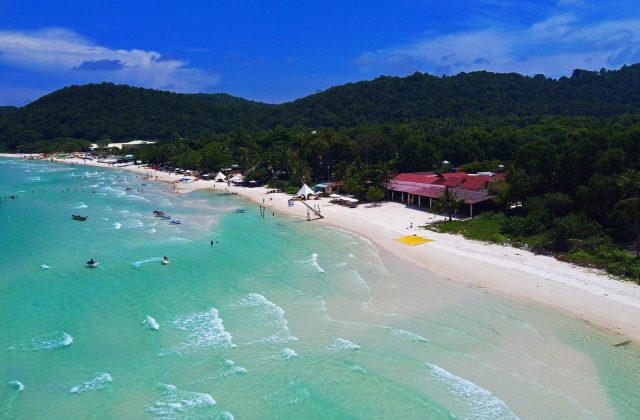
Phu Quoc
336 km away
Phu Quoc is the largest island in Vietnam, about 575 square kilometres in the Gulf of Thailand, closer to the coast of…
350 tours & trips
Vietnam · South China Sea · Nature & wildlife island
Con Son is the main island of the Con Dao archipelago, about 185 km by sea from Vung Tau in southern Vietnam, a forested, hilly island of 52 square kilometres. Once a notorious prison island, it is now a quiet national park with clean beaches, coral reefs, nesting sea turtles and a small, unhurried town.
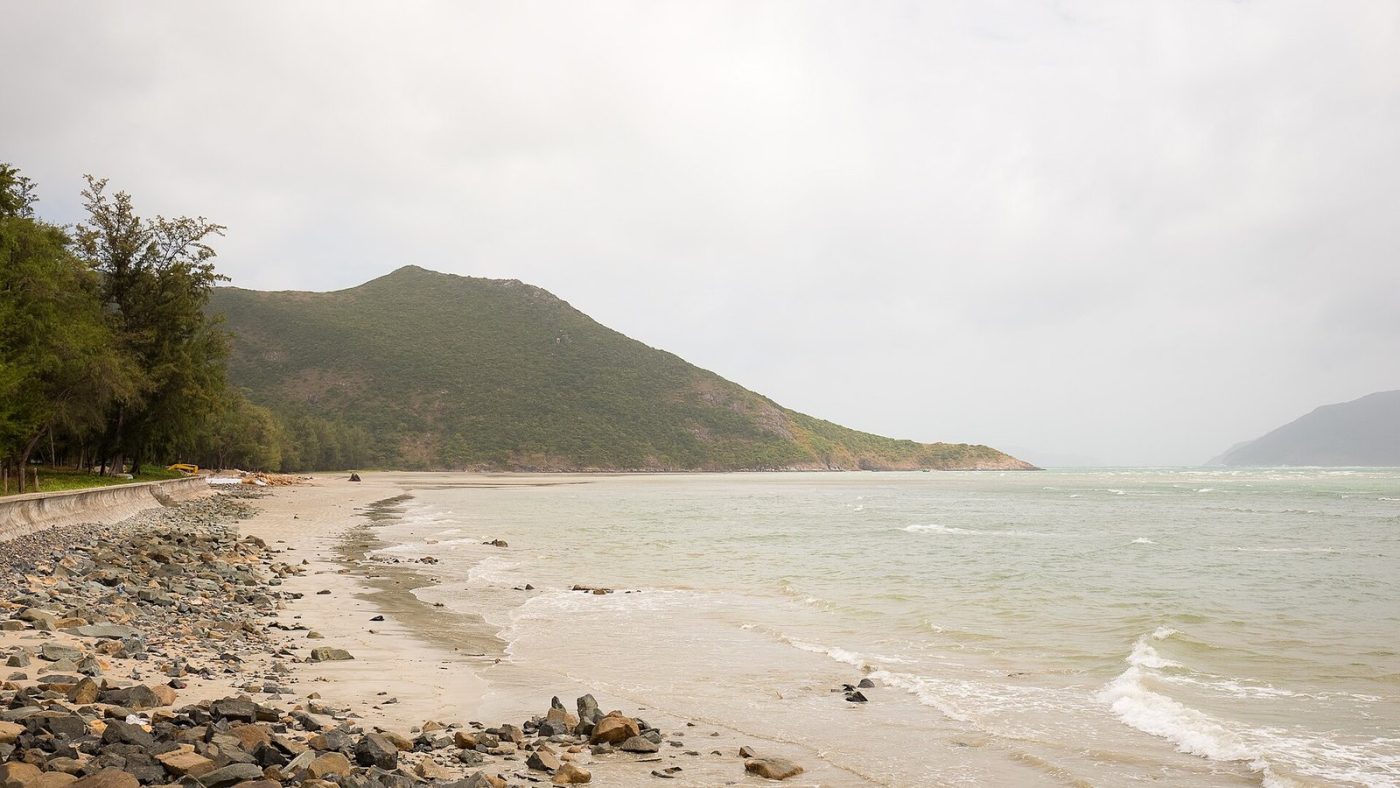
Photo: [Tycho] talk , http://shansov.net, CC BY-SA 3.0
| Getting there | Flights of about 1 h from Ho Chi Minh City; fast boats from Vung Tau or Tran De in a few hours |
|---|---|
| Gateway | Ho Chi Minh City (flight) |
| Travel time | About 1 h by air |
| Days | 3 to 5 nights |
| Best months | Mar–Sep calmer seas and diving; Nov–Feb rough north-east monsoon |
| Getting around | Rent a motorbike or bicycle; taxis and hotel cars; quiet coastal roads |
| Booking | Flights a few weeks ahead, more for Vietnamese holidays; turtle trips a day ahead |
| Cost | Mid-range; pricier than mainland Vietnam |
| Beaches | Quiet sand: Dam Trau by the airport, Lo Voi and An Hai in town, Dat Doc on the east |
| Sea | South China Sea |
| Archipelago | Con Dao Islands |
| Area | 52 km² |
| Population | 6,000 (2010) |
| Highest point | 94 m |
| Airport | Yes, scheduled flights |
| Car-free | No |
| Checked | October 2026 |
Nothing is sold online for Con Dao on its own in this catalogue. Visitors fly in independently, rent a motorbike, and book activities through their hotel, the national park office in town or the small dive shops.
The most popular outings are boat trips run with national park rangers. A day trip around the outer islands stops at coral reefs for snorkelling and at quiet beaches. The most memorable is the overnight trip to Bay Canh island during the nesting season, when you watch green turtles come ashore to lay eggs and rangers release hatchlings at dawn; it needs a permit and usually involves basic accommodation at the ranger station, with transport and meals included.
Divers can book dives with the local dive centres, which run trips to reefs and wrecks around the archipelago from about March to September. Guided jungle walks to beaches such as Ong Dung, and guided visits to the prisons, are the land options.
Several organised packages from Ho Chi Minh City combine flight, hotel and a guided tour of the historic sites, mainly for Vietnamese visitors.
The plain recommendation is to book flights and a hotel yourself, rent a motorbike, and add a ranger-led boat trip, especially to see the turtles in season.
The town is built around the prisons the French opened in the 1860s and the South Vietnamese government later expanded. Phu Hai, the largest, has rows of bare cells, and the Tiger Cages, cells with ceiling bars from which guards watched prisoners, are the starkest. One combined ticket covers several sites; allow a morning and visit the museum first.
A boat ride from Con Son, Bay Canh island has the most important turtle nesting beaches in Vietnam. From about May to October green turtles come ashore at night to lay their eggs, watched by small groups with rangers. Overnight trips must be arranged with the national park; behave quietly and use no flash photography.
At the edge of town, this large cemetery holds the graves of thousands of prisoners who died on the island. The grave of Vo Thi Sau, a young resistance fighter executed in 1952, draws Vietnamese pilgrims, many of whom visit at night with offerings of incense, flowers and fruit. Dress respectfully and visit quietly.
Near the airport in the north, a short track through the forest leads to Dam Trau, a curved bay of soft sand framed by green hills, with a few simple seafood shacks. Planes pass low overhead on approach, which some visitors enjoy. The water is calm in the right season, and there is snorkelling over rocks at either end.
Most of the island is national park, with tall forest, macaques and black giant squirrels. A marked trail of a few kilometres crosses the hills from the road to Ong Dung bay, a pebble and coral beach with good snorkelling. Another path leads to the old So Ray plantation. Start early, carry water and register with the park office.
The small town spreads along a seafront promenade with old French colonial buildings, the former governor's house and a busy morning market. In the evening, locals walk along the bay and eat seafood at simple restaurants. An Hai and Lo Voi beaches are a short walk from the centre and good for a sunset swim.
Most visitors fly. Co Ong airport, in the north of the island, has several flights a day from Ho Chi Minh City, taking about an hour, and at times from Hanoi and Can Tho. Planes are small and seats sell out around Vietnamese holidays, so book early. The airport is about 15 km from town; hotels arrange transfers and taxis meet flights.
Fast boats run from Vung Tau, about two hours by road from Ho Chi Minh City, and from Tran De port in the Mekong Delta, which offers the shortest crossing at a few hours. A slower overnight ferry also sails from Vung Tau. All boats arrive at Ben Dam port on the south of the island. Sailings are often cancelled in the rough sea of the north-east monsoon, from November to February.
The island is small enough to explore by motorbike or bicycle, and the coastal roads are quiet and in good condition. Motorbikes can be rented from hotels and shops in town; bicycles suit the flat stretch around the town. Taxis and hotel cars are available for airport runs and trips to Ben Dam port. There are no public buses for visitors. Distances are short: town to airport takes about 20 minutes. Bring a rain jacket, and watch for cattle and monkeys on the road.
The best months are March to September, when the south-west monsoon brings calmer seas on the main side of the island, good visibility for diving and the turtle nesting season, from about May to October. Temperatures sit around 27 to 32 degrees all year, and the sea is warm.
From November to February the north-east monsoon brings strong winds, rough seas and boat cancellations, though the weather is drier and slightly cooler on land. Diving is mostly limited in this period, and ferries may be suspended. Heavier rain can fall from about July to October, often in short bursts.
Vietnamese holidays, especially Tet in January or February and the long weekends in late April and early September, bring many domestic visitors and higher prices. Three to five nights is the right length: a day for the history, a day on the water, and time for the beaches and forest.
Nearly all accommodation is in or near Con Son town, along the bay. The town suits most travellers, with guesthouses, mid-range hotels, restaurants and the historic sites within a short ride. A few upmarket resorts lie on quieter beaches outside town, including on the east coast, for those who want seclusion. Budget travellers will find guesthouses in the centre, but prices are higher than on the mainland. Book ahead for holidays and the nesting season.
Sailors on the route between China and India knew the island for centuries, and the English East India Company built a short-lived trading post here in 1702. The French made it a penal colony from the 1860s, holding Vietnamese political prisoners in brutal conditions, and the South Vietnamese government continued to use the prisons until 1975. Many leaders of independent Vietnam were held here, and tens of thousands died. After the war the island became a national park and place of pilgrimage, with tourism growing slowly since.
Ho Chi Minh City is the natural pairing, a one-hour flight away, with its museums giving context to the prison history. Vung Tau, the beach town reached by the ferry, is two hours by road from the city. The Mekong Delta can be added via Tran De port or Can Tho. Phu Quoc, the larger beach island, is reached via Ho Chi Minh City.
336 km away
Phu Quoc is the largest island in Vietnam, about 575 square kilometres in the Gulf of Thailand, closer to the coast of…
350 tours & trips
Flights of about 1 h from Ho Chi Minh City; fast boats from Vung Tau or Tran De in a few hours.
From Ho Chi Minh City (flight): about 1 h by air.
3 to 5 nights.
Mar–Sep calmer seas and diving; Nov–Feb rough north-east monsoon.
Rent a motorbike or bicycle; taxis and hotel cars; quiet coastal roads.
Go if you want empty beaches, jungle walks, diving and a sobering chapter of Vietnamese history, away from mass tourism. Skip it or choose Phu Quoc if you want lively resorts, nightlife, cheaper flights and calm seas in winter.
Mid-range; pricier than mainland Vietnam.
Quiet sand: Dam Trau by the airport, Lo Voi and An Hai in town, Dat Doc on the east.
Flights a few weeks ahead, more for Vietnamese holidays; turtle trips a day ahead.