Cat Ba
Cat Ba Archipelago, Vietnam
Cat Ba is the largest of the 367 islands of the Cat Ba archipelago, on the southern edge of Ha Long Bay in northern…
238 tours & trips
Vietnam · Gulf of Thailand · Beach island
Phu Quoc is the largest island in Vietnam, about 575 square kilometres in the Gulf of Thailand, closer to the coast of Cambodia than to the Vietnamese mainland. It offers long sandy beaches, a protected forest in the north, small coral islands in the south and Vietnam's best sunsets over the sea.
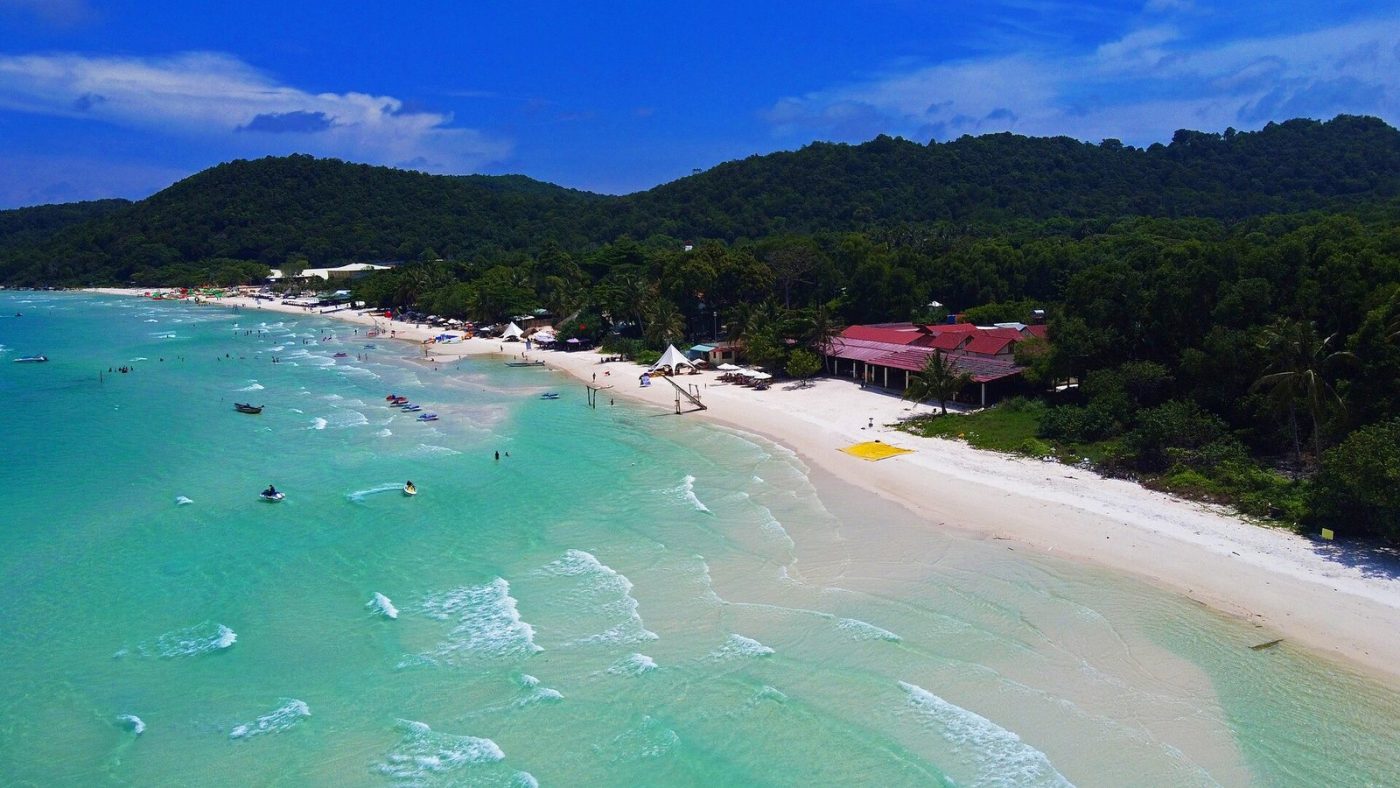
Photo: [//commons.wikimedia.org/wiki/User:Trantuonglam Trantuonglam, CC BY-SA 4.0
| Getting there | 1-h flight from Ho Chi Minh City or 2 h from Hanoi; direct flights from Asia; fast boats from Rach Gia and Ha Tien |
|---|---|
| Gateway | Ho Chi Minh City, or Rach Gia and Ha Tien by boat |
| Travel time | 1 h by air from Ho Chi Minh City; 1.5 to 2.5 h by boat |
| Days | 3 to 5 nights |
| Best months | Nov–Apr dry and calm; May–Oct rainy with rough seas on the west coast |
| Getting around | Ride-hailing cars and taxis are cheap; rent a scooter if experienced |
| Booking | Hotels for Christmas, New Year and Tet well ahead; island boat tours a day ahead |
| Cost | Mid-range, pricier than most of Vietnam |
| Beaches | Long Beach for sunsets; white Sao Beach in the south-east; quieter Ong Lang and Starfish Beach |
| Sea | Gulf of Thailand |
| Area | 575 km² |
| Population | 179,480 (2020) |
| Highest point | 603 m (Nui Chua) |
| Airport | Yes, scheduled flights |
| Car-free | No |
| Checked | October 2026 |
Almost every visitor to Phu Quoc spends one day on the water in the south, and most products are variations on that.
The standard island tour leaves An Thoi by speedboat or larger boat for two to four of the small islands of the An Thoi group, with snorkelling over coral, a seafood lunch and a beach stop; many include the cable car to Hon Thom, where a water park is sold as an extra. Smaller groups of 12 or fewer cost a little more and feel much less crowded. Snorkel gear, lunch and hotel pickup are usually included; park tickets are not always.
Evening trips combine squid fishing with dinner on the boat, or a visit to the sunset bars at the southern tip. On land there are half-day tours of the town, pepper farms, fish sauce workshops, pearl farms and the old prison, jungle walks to streams and viewpoints in the north, and tickets for the safari park and theme parks at the northern end.
For a first visit, book one southern island tour in a small group and arrange the rest yourself with ride-hailing cars or a scooter.
Off the southern tip lies a chain of small islands with clear water, coral gardens and quiet beaches. A day by boat usually stops at three or four of them for snorkelling, with fish, sea urchins and soft corals in a few metres of water. Visibility is best in the dry months from November to April, when the sea is calm.
On the south-east coast, Sao Beach is a curve of fine white sand with shallow turquoise water and a few beach restaurants, about 30 minutes by road from Duong Dong. Come in the morning before the tour groups arrive. Nearby, the long cable car crosses the sea from the south to Hon Thom island, with wide views over the fishing boats below.
The main town sits at a river mouth on the west coast. Walk to the little temple on the rock at Dinh Cau at sunset, then eat at the night market nearby, where stalls grill fresh seafood. In the morning visit the fishing harbour and a fish sauce workshop, where anchovies ferment in large wooden barrels, and a pepper farm inland.
The west coast faces the sunset, and Long Beach runs for about 20 km south of Duong Dong, lined with resorts, bars and restaurants. Swimming is easy in the dry season; from May to October the waves and currents on this side can be strong. Further north, Ong Lang has smaller, quieter bays among the trees.
Much of the northern half of the island is a protected national park of forest and hills, with streams and short walking trails. On the north-east coast, Starfish Beach has calm shallow water where starfish live; look but do not lift them. The far north-west holds the large safari park and theme parks, which are popular with families.
Our pick for each kind of trip, with live dates and prices. Free cancellation on most.
Best for: First visit, the southern islands
The classic day out: snorkelling stops among the small islands off An Thoi, lunch, and the long cable car ride over the sea to Hon Thom.
Phu Quoc International Airport, in the south-centre of the island, has flights of about an hour from Ho Chi Minh City and about two hours from Hanoi, several times a day, as well as direct flights from cities in Asia and seasonal charters. Foreign visitors flying straight to Phu Quoc have long been able to stay up to 30 days without a visa, but check the current rules before you go.
Boats arrive from the Mekong Delta. Fast boats from Rach Gia take about two and a half hours, and from Ha Tien about an hour and a half, landing at Bai Vong on the east coast; slower car ferries also run. These routes suit overland travellers coming from the Delta or from Cambodia via Ha Tien. Crossings are rougher and occasionally cancelled in the wet season, so allow a spare day.
The island is about 50 km from north to south, and the main roads are now good. Ride-hailing apps and metered taxis are the easiest way to get around and cost little by European standards. Scooters are widely rented and give the most freedom, but traffic and new roads can be confusing, and you need a valid licence. There are a few public bus routes, and many resorts run shuttles to town. Within Duong Dong, walking is fine.
Phu Quoc has a tropical climate with two seasons. The dry season, from November to April, is the time to go: sunny days, low humidity early on, calm water on the west coast and good visibility for snorkelling. December to March is the peak, with the highest prices around Christmas, New Year and the Vietnamese New Year of Tet in January or February, when domestic travellers fill the island. March and April are hot.
From May to October, the south-west monsoon brings showers and storms, often short but heavy, and rough seas on the western beaches; some boat trips are cancelled. The east coast and Sao Beach are more sheltered. Prices drop and the island is quiet. The sea stays around 28 degrees all year. Three to five nights are enough for beaches, one island trip and the town.
Long Beach south of Duong Dong is the most popular area, with resorts of every price, sunset views and easy access to town and the airport. Duong Dong itself is cheapest and best for food, but has no great beach. Ong Lang, further north, is quieter and greener with smaller hotels. The southern end around An Thoi is close to the boats and Sao Beach. The far north suits families heading to the theme parks.
For centuries Phu Quoc was a remote island of fishermen and pepper farmers, claimed at times by both Khmer and Vietnamese rulers. In the late 18th century the future emperor Gia Long took refuge here during the wars that preceded his rise. The French built a prison on the island, and during the Vietnam War a large camp held tens of thousands of prisoners; part of it is now a museum. The island's fish sauce has long been prized. Since the 2010s, an international airport, cable car and large resorts have transformed it.
Ho Chi Minh City is an hour's flight away and makes the natural start or finish. Overland travellers can take the boat to Ha Tien or Rach Gia and continue into the Mekong Delta around Can Tho. From Ha Tien the border crossing leads to Kep and Kampot in Cambodia, so Phu Quoc fits a route between the two countries.
1-h flight from Ho Chi Minh City or 2 h from Hanoi; direct flights from Asia; fast boats from Rach Gia and Ha Tien.
From Ho Chi Minh City, or Rach Gia and Ha Tien by boat: 1 h by air from Ho Chi Minh City; 1.5 to 2.5 h by boat.
3 to 5 nights.
Nov–Apr dry and calm; May–Oct rainy with rough seas on the west coast.
Ride-hailing cars and taxis are cheap; rent a scooter if experienced.
Go if you want warm sea, white-sand beaches, island snorkelling and cheap seafood in the dry season. Skip it or choose Con Dao if you want a wild, undeveloped island without theme parks, resorts and building sites.
Mid-range, pricier than most of Vietnam.
Long Beach for sunsets; white Sao Beach in the south-east; quieter Ong Lang and Starfish Beach.
Hotels for Christmas, New Year and Tet well ahead; island boat tours a day ahead.
Yes. Boat trips, guided tours and day trips for Phu Quoc can be booked online; live prices and free cancellation on most are shown on this page.
Cat Ba Archipelago, Vietnam
Cat Ba is the largest of the 367 islands of the Cat Ba archipelago, on the southern edge of Ha Long Bay in northern…
238 tours & trips
Vietnam
The Cham Islands are a group of eight small, forested granite islands about 15 km off Hoi An on the central coast of…
84 tours & trips
Con Dao Islands, Vietnam
Con Son is the main island of the Con Dao archipelago, about 185 km by sea from Vung Tau in southern Vietnam, a…
No tours listed