Andaman Islands
India
The Andaman Islands are an Indian archipelago of about 200 forested islands in the Bay of Bengal, far closer to Myanmar…
14 tours & trips
India · Indian Ocean · Historic island
Elephanta Island lies in Mumbai Harbour, about 10 kilometres from the Gateway of India, and holds a group of rock-cut cave temples dedicated to Shiva, listed by UNESCO. The great hall, carved into the hill around the sixth century, contains a six-metre three-headed bust of Shiva, one of the masterpieces of Indian sculpture.
| Getting there | Ferry from the Gateway of India in Mumbai, about 1 hour each way, from morning to early afternoon |
|---|---|
| Gateway | Mumbai (Gateway of India) |
| Travel time | About 1 h by ferry |
| Days | Half a day is enough |
| Best months | Nov–Mar dry and cooler; Apr–May hot; Jun–Sep monsoon, boats may stop |
| Getting around | On foot; a toy train from the jetty, then about 120 steps up to the caves |
| Booking | Nothing ahead; buy ferry tickets at the Gateway on the day; caves shut Mondays |
| Cost | Cheap; foreigners pay a higher entry fee |
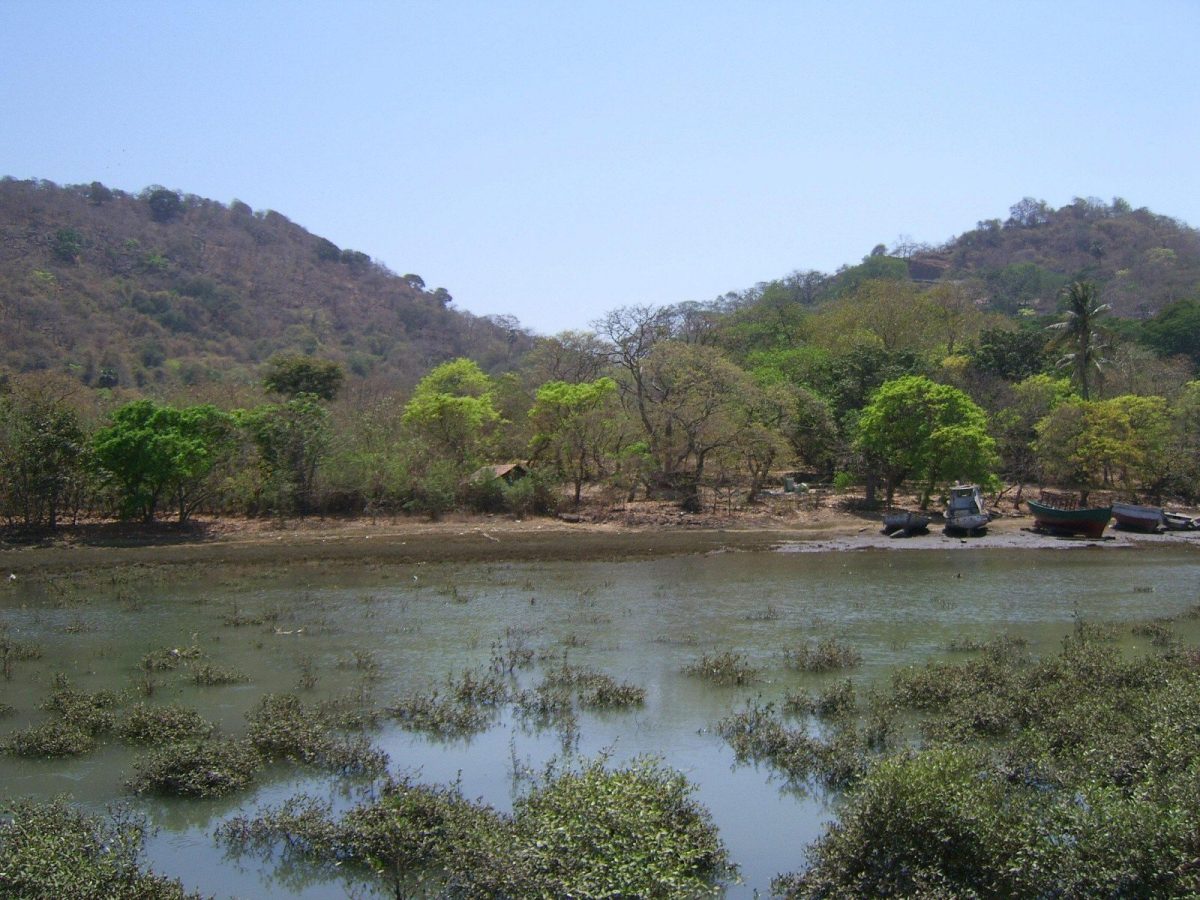
| Beaches | No beaches; muddy shore and mangroves |
| Sea | Indian Ocean |
| Area | 5 km² |
| Population | 1,200 |
| Ferry | 1 h from Mumbai (Gateway of India) |
| Airport | No |
| UNESCO | Elephanta Caves |
| Checked | October 2026 |
Elephanta is easy to visit on your own: walk to the Gateway of India, buy a ferry ticket, and follow the crowd from the jetty to the caves. Many visitors do exactly that and hire a guide at the foot of the steps or skip one altogether.
What is sold online falls into three groups. Half-day guided tours include pickup from your hotel in south Mumbai, the ferry, entry tickets and a guide who explains the sculptures; some add snacks or lunch. Full-day tours combine the caves with a city tour of Mumbai, covering the colonial buildings of the Fort area, Marine Drive, the laundry at Dhobi Ghat and sometimes Dharavi. Private tours with your own car and guide suit families and cruise passengers, who can be collected at the cruise terminal. There are also longer heritage tours that continue to the caves of Ajanta and Ellora.
Guides matter here, because the meaning of the sculptures is not obvious and there are few information panels. Entry fees are usually included in tours, while drinks and tips are not. Recommendation: take the ferry independently, start early, and either book a guided half day or hire an official guide on the island.
The main cave is a vast hall with rows of carved columns cut from the rock. At the back stands the Sadashiva, a bust about six metres high showing three faces of Shiva: the creator, the protector and the destroyer. The play of light from the entrance on the faces is best in the morning.
Around the walls of the great cave, large panels show stories of Shiva: dancing as Nataraja, half man and half woman as Ardhanarishvara, bringing the Ganges down from heaven and marrying Parvati. Many were damaged in later centuries, but their power remains. In the centre stands a square shrine with a linga.
Beyond the main cave, a path leads to several smaller caves, some unfinished, with shrines and carved doorways. They are quieter than the main hall and show how the hill was cut. On the eastern hill are the remains of a Buddhist stupa, older than the Hindu caves. Allow an extra 30 minutes.
A path of about 15 minutes climbs from the caves to the top of the hill, where two large British-era cannons point out to sea. The view takes in the harbour, the container port and the Mumbai skyline in the distance. It is quieter than the caves, but hot in the midday sun, so bring water.
The hour on the ferry is part of the trip. Leaving the Gateway of India, you pass the Taj Mahal Palace hotel, naval ships, fishing boats and tankers at anchor in one of the busiest harbours in Asia. Sit on the upper deck for the views, and watch for gulls following the boats.
Our pick for each kind of trip, with live dates and prices. Free cancellation on most.
Best for: First visit, a guided half day
Handles the ferry and the entry tickets and adds a guide who explains the sculptures in the main cave, which otherwise are hard to read without context.
Ferries leave from the jetties at the Gateway of India in Colaba, south Mumbai, and take about an hour to reach the island. They run from morning to early afternoon, with the last boats back from the island in the late afternoon. Tickets are sold at the booths near the Gateway; standard and slightly more comfortable deluxe boats are offered, and the upper deck costs a little more.
The caves are closed on Mondays, but the ferry may still run, so check before you go. In the monsoon, from June to September, rough seas can stop the boats for days. Arrive early on weekends and holidays, when queues are long. Taxis and app cabs reach the Gateway from any part of the city; from the international airport, allow an hour or more in traffic. Cruise ships dock at the Mumbai port terminal nearby.
From the jetty, a short concrete walkway or a small toy train takes you about 600 metres to the foot of the hill. From there about 120 steps climb to the caves, lined with souvenir stalls and snack stands. Porters can carry visitors up in a chair for a fee. Monkeys are bold and grab food and bags, so keep things closed. Wear comfortable shoes, and carry water and a hat.
The best time is November to March, when the weather is dry and the temperatures are more comfortable, around 20 to 30 degrees. December and January are the coolest months and the most popular, with crowds on weekends and Indian holidays.
From April to May, the heat and humidity are intense, and climbing the steps at midday is exhausting, so take the first ferry. The monsoon, from June to September, brings heavy rain and rough seas; ferries are often suspended, and the island turns very green. October is hot but drying out. The caves are closed on Mondays. Weekday mornings are the quietest time. An Elephanta festival of music and dance has been held at the caves in some years, usually in February. Half a day is enough: an hour each way on the boat and two hours on the island.
There is nowhere to stay on the island, so base yourself in Mumbai. Colaba, around the Gateway of India, is the most convenient district, with hotels at every price and many restaurants, cafes and shops within walking distance of the ferries. Fort and Churchgate, just north, have colonial buildings and good transport. Bandra and Juhu, in the north, are lively but an hour or more from the Gateway.
The caves were carved between the fifth and seventh centuries, probably in the sixth, when the island was a centre of Shiva worship under local dynasties. Earlier, Buddhists had built a stupa on the hill. The Portuguese, who took the island in the sixteenth century, named it after a large stone elephant found near the landing; the elephant is now in a Mumbai museum. Soldiers damaged many of the sculptures. The British later took control, and UNESCO listed the caves in 1987. A few villages still live on the island.
Elephanta fits into a few days in Mumbai, with the Gateway of India, the Victorian railway station, the city museum and Marine Drive all within walking distance of the ferries. The Kanheri Caves in the national park north of the city are another rock-cut site. The caves of Ajanta and Ellora are a short flight away via Aurangabad.
Ferry from the Gateway of India in Mumbai, about 1 hour each way, from morning to early afternoon.
From Mumbai (Gateway of India): about 1 h by ferry.
Half a day is enough.
Nov–Mar dry and cooler; Apr–May hot; Jun–Sep monsoon, boats may stop.
On foot; a toy train from the jetty, then about 120 steps up to the caves.
Go if you want the finest rock-cut sculpture near Mumbai and a harbour boat ride in half a day. Skip it if you are short of time in Mumbai or dislike crowds, steps and heat, and visit the city museums instead. With about 1 h each way from Mumbai (Gateway of India), a day trip is easy to do.
Cheap; foreigners pay a higher entry fee.
No beaches; muddy shore and mangroves.
Nothing ahead; buy ferry tickets at the Gateway on the day; caves shut Mondays.
Yes. Boat trips, guided tours and day trips for Elephanta Island can be booked online; live prices and free cancellation on most are shown on this page.
India
The Andaman Islands are an Indian archipelago of about 200 forested islands in the Bay of Bengal, far closer to Myanmar…
14 tours & trips
India
Majuli is a vast river island in the Brahmaputra in Assam, north-east India, home to around 167,000 people and the…
7 tours & trips
Andaman Islands, India
Havelock Island, officially Swaraj Dweep, is the best-known beach island of India's Andaman Islands, about 41 km…
No tours listed