Elephanta Island
India
Elephanta Island lies in Mumbai Harbour, about 10 kilometres from the Gateway of India, and holds a group of rock-cut…
39 tours & trips
India · Lakes & rivers · Historic island
Majuli is a vast river island in the Brahmaputra in Assam, north-east India, home to around 167,000 people and the heart of Assamese neo-Vaishnavite culture. Its satras, Hindu monasteries famed for dance, music and mask-making, Mising stilt villages and flat green landscape are reached by a ferry crossing from Jorhat.
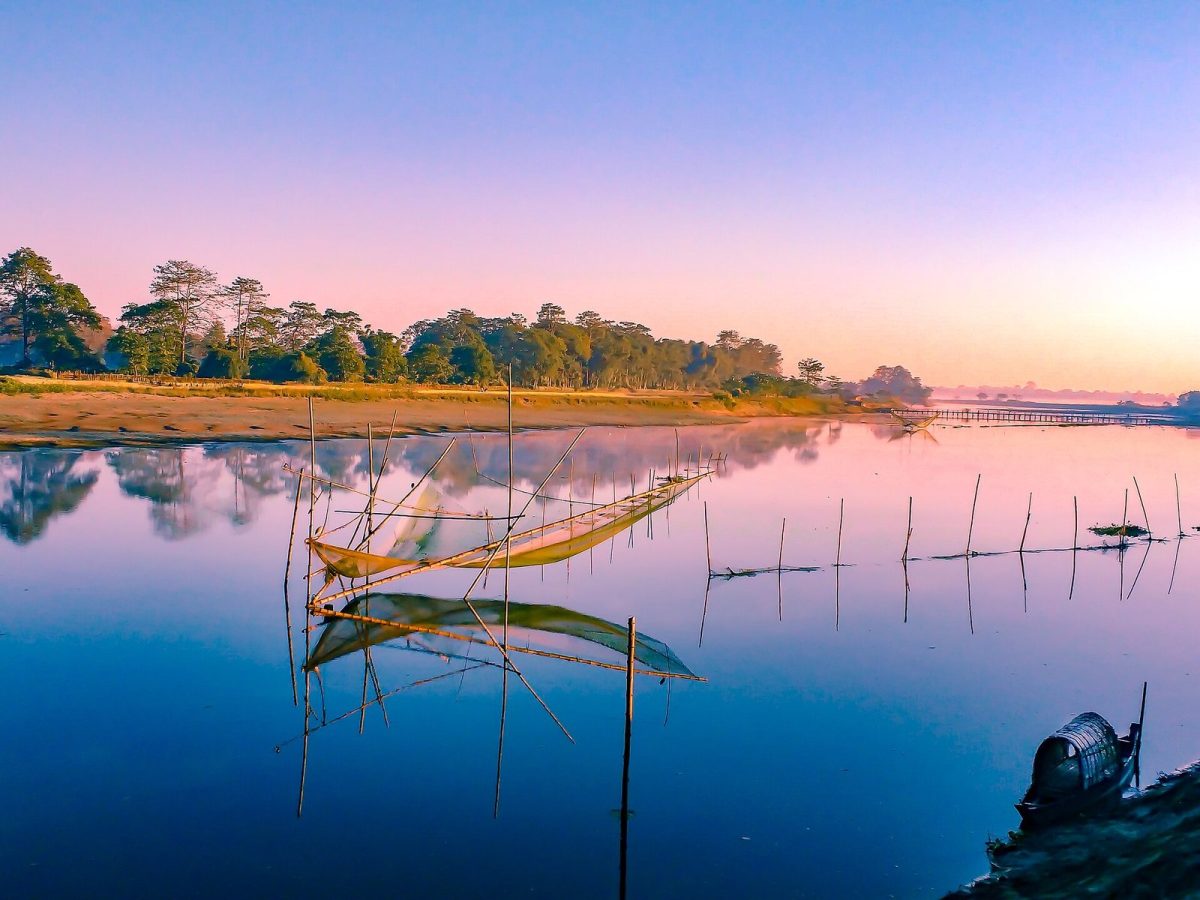
Photo: Udit Kapoor, CC BY-SA 4.0
| Getting there | Ferry from Nimati Ghat near Jorhat in about 1 to 1.5 h; Jorhat has flights and trains |
|---|---|
| Gateway | Jorhat (Nimati Ghat ferry) |
| Travel time | About 1 to 1.5 h by ferry from Nimati Ghat |
| Days | 1 to 2 nights |
| Best months | Oct–Mar dry and mild; Raas festival in Nov; Jun–Sep monsoon floods |
| Getting around | Hire a car or auto-rickshaw with driver; bicycles and scooters for short trips |
| Booking | Homestays well ahead for the November Raas festival; ferry tickets on the day |
| Cost | Cheap, even by Indian standards |
| Beaches | No beaches; river sandbanks and wetlands, with no swimming in the Brahmaputra |
| Sea | Lakes & rivers |
| Area | 422 km² |
| Population | 167,304 (2011) |
| Airport | No |
| Car-free | No |
| Checked | October 2026 |
Majuli is easy to visit on your own, but the satras and villages are spread over a large island and much of their meaning is lost without explanation, so a local guide adds a great deal.
The products offered fall into three groups. Same-day tours start early from Jorhat, cross on the morning ferry, visit two or three satras, the mask-makers of Samaguri and a Mising village, and return on an afternoon boat. Half-day versions cover less. Two-day tours add a night in a homestay or bamboo cottage on the island, time for evening prayers and devotional music at a satra, and a visit to the potters of Salmora. Most include the guide, a car on the island and ferry tickets; meals, donations at the monasteries and camera fees are usually extra.
Many tours are sold by operators across India, so check where they start: some include the drive or flight to Jorhat, others meet you at the ferry. Homestays on Majuli can also arrange guides, cars and bicycles directly.
A day trip is rushed because of the ferry times. Spend at least one night; a two-day tour, or an independent visit with a local guide hired at your homestay, is the best value.
Majuli has around 20 working satras, monasteries where celibate or married monks practise devotional music, dance and drama. Auniati, in the west, is among the most important, with a museum of old utensils, jewellery and manuscripts. Dakhinpat and Garamur are other major ones. Visit in the morning or evening, dress modestly and remove shoes in the prayer halls.
In the south-east, Samaguri Satra is famous for making masks for religious drama: giant heads of demons and gods built from bamboo, clay and cloth, then painted. The monks often demonstrate the process and sell small masks. It is about 30 minutes by car from Kamalabari, and pairs well with a nearby Mising village.
Around Kamalabari, close to the ferry landing, several satras keep alive Sattriya, a classical dance form born in these monasteries in the 15th and 16th centuries. Young monks rehearse in the halls, often in the late afternoon, and visitors may watch quietly. Ask your guide or homestay about evening performances during festivals.
The Mising people, one of the island's tribal communities, live in villages of bamboo houses on stilts, built to rise above the annual floods. Women weave colourful cloth on looms under the houses. A walk through a village with a local guide gives a sense of daily life; ask before photographing people. Some villages run homestays.
In the island's east, the village of Salmora keeps an ancient pottery tradition made without a wheel: clay is shaped by hand and beaten, then fired in open kilns. The village has lost land to river erosion over the years. Boat building is also done here. It is a short drive from Garamur and well worth an hour.
The island's marshes and seasonal lakes draw migratory birds in winter, including storks, pelicans and ducks, best seen from November to February. In the evening, head to the riverbank or a sandbank on the Brahmaputra for the sunset, when the light over the wide water is spectacular. Ask locally for the best spots, since the channels shift every year.
Our pick for each kind of trip, with live dates and prices. Free cancellation on most.
Best for: First visit, a full day on the island
A guided day that handles the ferry and visits the main satras, a mask-making workshop and Mising villages, the essentials in one go.
Majuli has no bridge to the south bank. Ferries cross from Nimati Ghat, about 13 km north of Jorhat, to the Kamalabari side of the island, taking about an hour to an hour and a half depending on the river level. Boats run several times a day, from morning until mid-afternoon, and carry cars and motorbikes as well as passengers; buy tickets at the ghat and arrive early. In the monsoon, crossings can be disrupted.
Jorhat has an airport with flights from Kolkata, Delhi and Guwahati, and a railway station; Guwahati is about seven hours away by road. From Jorhat, shared vehicles and taxis go to Nimati Ghat in about 30 minutes. If you bring a car, it can travel on the ferry, though space is limited.
Majuli is large, more than 80 km long, and the satras and villages are far apart, so most visitors hire a car or an auto-rickshaw with a driver for the day, arranged through a homestay or at the ferry. Shared vehicles link the main centres, Kamalabari and Garamur, with the ferry landing. Bicycles and scooters can be rented for short trips on the flat roads, which are narrow, sometimes rough and dark at night.
The best time to visit is October to March, when the weather is dry, sunny and mild, with cool mornings and evenings in December and January. November brings the Raas festival, when satras stage dramatic performances of the life of Krishna over several nights, drawing large crowds; book a room well in advance. Winter is also the season for migratory birds.
From June to September, the monsoon brings heavy rain and the Brahmaputra floods large parts of the island, damaging roads and making travel difficult; ferries can be suspended. April and May are hot and humid, with early storms. A day trip is possible but rushed by the ferry timetable; one or two nights allow time for evening prayers at a satra and a slower visit to the villages.
Most visitors stay around Garamur and Kamalabari, the two main centres, close to the major satras, with homestays, bamboo cottages built in the Mising style and simple guesthouses. Some satras accept guests for a donation, a rare chance to share monastic life. Rooms are basic but cheap, with home-cooked Assamese and Mising meals; book ahead for the Raas festival in November.
Majuli was formed by the shifting channels of the Brahmaputra and has been shrinking for decades due to river erosion. In the 15th and 16th centuries, the saint Srimanta Sankardeva and his disciple Madhavdeva spread a devotional form of Vaishnavism, and the island became the home of its monasteries, the satras, which shaped Assamese music, dance and drama. Many satras have moved or been lost to floods. The island is on India's tentative list for World Heritage status and became a separate district in 2016.
Majuli fits into a trip around upper Assam. Jorhat is surrounded by tea estates, some offering stays. Sivasagar, about 1.5 hours east, has the temples and palaces of the Ahom kingdom. Kaziranga National Park, famous for its one-horned rhinos, is about two hours west of Jorhat, and Guwahati is the gateway to the region.
Ferry from Nimati Ghat near Jorhat in about 1 to 1.5 h; Jorhat has flights and trains.
From Jorhat (Nimati Ghat ferry): about 1 to 1.5 h by ferry from Nimati Ghat.
1 to 2 nights.
Oct–Mar dry and mild; Raas festival in Nov; Jun–Sep monsoon floods.
Hire a car or auto-rickshaw with driver; bicycles and scooters for short trips.
Go if you want living religious culture, traditional crafts, village life and birdlife on a quiet, slow-paced river island. Skip it in the monsoon, or choose Kaziranga instead, if you want rhinos, tigers and big wildlife sightings.
Cheap, even by Indian standards.
No beaches; river sandbanks and wetlands, with no swimming in the Brahmaputra.
Homestays well ahead for the November Raas festival; ferry tickets on the day.
Yes. Boat trips, guided tours and day trips for Majuli can be booked online; live prices and free cancellation on most are shown on this page.
India
Elephanta Island lies in Mumbai Harbour, about 10 kilometres from the Gateway of India, and holds a group of rock-cut…
39 tours & trips
India
The Andaman Islands are an Indian archipelago of about 200 forested islands in the Bay of Bengal, far closer to Myanmar…
14 tours & trips
Andaman Islands, India
Havelock Island, officially Swaraj Dweep, is the best-known beach island of India's Andaman Islands, about 41 km…
No tours listed