San Giorgio Maggiore
1 km away
San Giorgio Maggiore is the small island facing St Mark's Square across the basin in Venice, occupied almost…
1 tour
Italy · Adriatic Sea · City island
Giudecca is the long, narrow island just south of central Venice, facing the Zattere and St Mark's basin across the wide Giudecca Canal. It has Palladio's Redentore church, converted factories and quiet residential lanes, and it gives the best views back towards the city, a five-minute water-bus ride away.
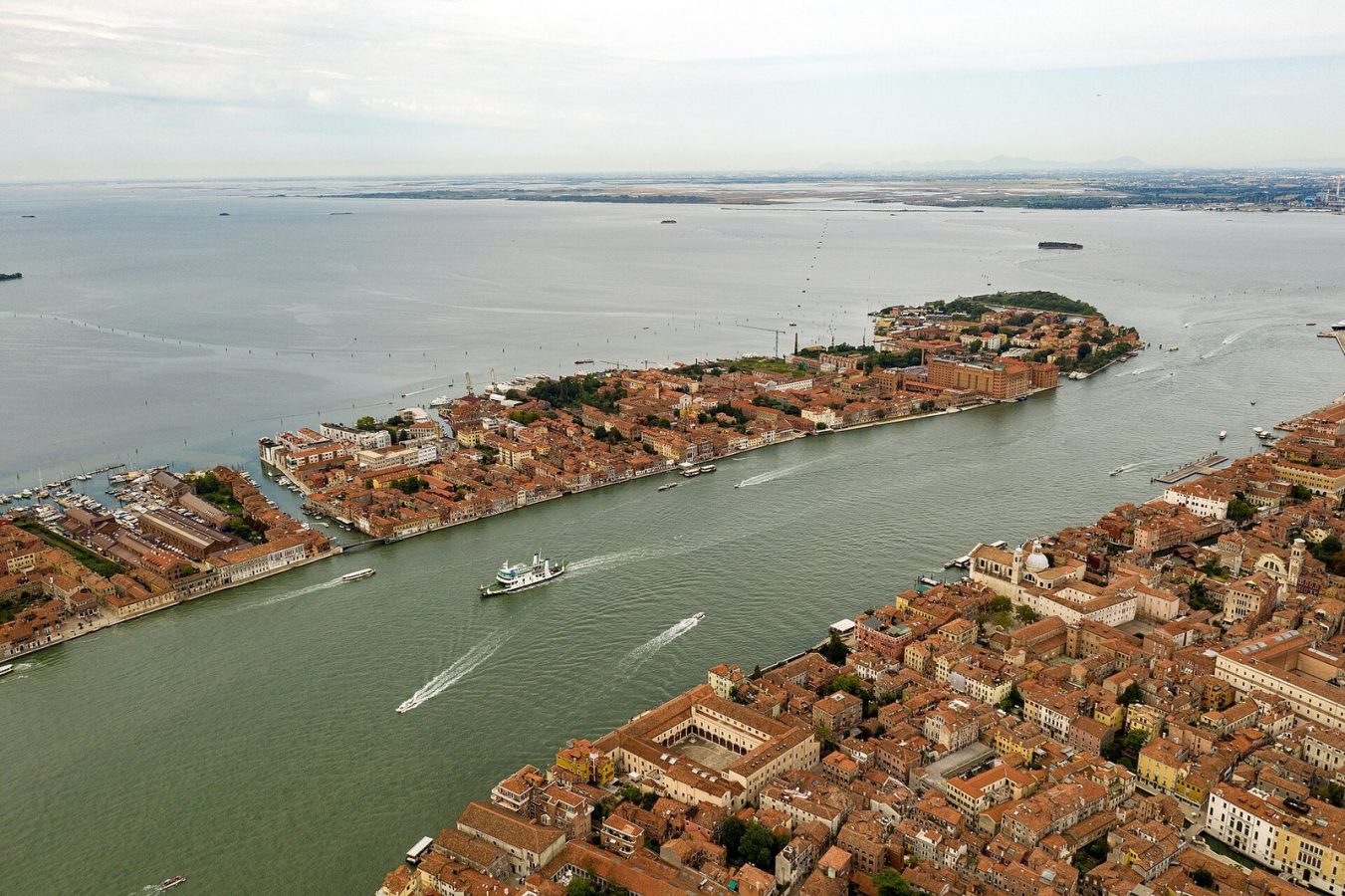
Photo: Kasa Fue, CC BY-SA 4.0
| Getting there | Water bus from the Zattere, San Zaccaria or Piazzale Roma; about 5 min across the Giudecca Canal |
|---|---|
| Gateway | Venice (Zattere or San Zaccaria) |
| Travel time | 5 min by water bus from the Zattere |
| Days | A half day, or a base for a Venice stay |
| Best months | Apr–Jun and Sep–Oct; Redentore festival in July; flood risk Nov–Jan |
| Getting around | Car-free: walk the waterfront and lanes; water buses stop at four points |
| Booking | Redentore weekend tables or boats weeks ahead; rooms ahead for Biennale and Carnival |
| Cost | Expensive, as all Venice; eating cheaper than San Marco |
| Beaches | No beaches; for swimming take the water bus to the Lido, about 20 minutes away |
| Sea | Adriatic Sea |
| Archipelago | Venetian Lagoon |
| Area | 0.6 km² |
| Population | 4,792 (2011) |
| Highest point | 1 m |
| Ferry | 5 min from Venice (Zattere or San Zaccaria) |
| Airport | No |
| Car-free | Yes |
| UNESCO | Venice and its Lagoon |
| Checked | October 2026 |
Nothing is sold online for Giudecca alone, and the island does not need a tour: it is part of Venice, reached by the ordinary water buses, and best explored on foot at your own pace.
Most visitors see it in one of three ways. The first is a self-guided walk: cross from the Zattere, wander the waterfront from the Zitelle stop to the old flour mill at the western end, step into the Redentore, and take the water bus back or onward to San Giorgio Maggiore. A water bus pass for one or several days makes this easy and saves money if you ride more than a few times.
The second is through the broader Venice tours. Lagoon boat trips and general city walks often pass along the Giudecca Canal or point out the Redentore, and some guided walks of Dorsoduro include the crossing. These normally cover the guide and boat, not church entry or drinks.
The third is as a base. Several hotels and many apartments sit on the island, cheaper than San Marco and with the view the other way.
Recommendation: give it an unhurried afternoon, ending with a drink on the waterfront at sunset, and visit San Giorgio Maggiore's bell tower on the way.
Palladio designed this white church after a plague that killed a large part of the city's population in the 1570s, and the Senate vowed to visit it every year. Its broad steps and dome face the Giudecca Canal; inside, the space is calm and luminous, with paintings by Venetian masters. It has its own water-bus stop, Redentore, right in front.
The Fondamenta runs almost the whole north side of the island, facing the Zattere and Dorsoduro across the canal. Walk it from east to west in the late afternoon, when the light falls on the city's domes and bell towers. Cafes and trattorias set tables on the quay, and prices are noticeably lower than across the water.
At the east end, the church of the Zitelle, also attributed to Palladio, was built with a hostel for poor girls who were taught lace-making. Next to it, the Casa dei Tre Oci, a neo-Gothic house with three round windows, is used for exhibitions. From the tip you look straight across to San Marco and the Doge's Palace.
The huge brick flour mill at the western end, built in a northern Gothic style at the end of the nineteenth century, closed in the 1950s and was later converted into a hotel and conference centre. Its rooftop bar has one of the highest views in Venice. Nearby, the residential island of Sacca Fisola shows ordinary local life.
Behind the waterfront, former factories, boatyards and warehouses have become housing, artists' studios and galleries. The Fortuny textile factory, opened in the 1920s, still prints its famous fabrics here and opens a showroom with a garden. Wander the narrow north-south alleys to the quieter south shore, where lanes end at the open lagoon and small gardens.
Giudecca has no bridge to the rest of Venice; the Giudecca Canal is too wide and deep. Water buses cross it constantly. Line 2 links Piazzale Roma and the railway station with the Zattere, the island's four stops (Sacca Fisola, Palanca, Redentore and Zitelle) and San Zaccaria near St Mark's, every 10 to 20 minutes for most of the day. The circular lines 4.1 and 4.2 also call. The crossing from the Zattere takes about five minutes.
Single tickets are expensive, so buy a pass for one to seven days if you will use the boats a few times. From the airport, take a water bus or the bus to Piazzale Roma and change there, or hire a water taxi straight to the island. Large cruise ships, which once passed along the canal, no longer enter it.
You walk. The island is about 2 km long and at most a few hundred metres wide, and the waterfront is level, without the bridges and steps of central Venice except for a few small canal crossings. Water buses along the north shore save your legs between the eastern and western ends. There are no cars, bicycles are not allowed in the historic city, and luggage is carried by hand or trolley from the stops.
April to June and September to October are the best months, with mild weather and long evenings on the waterfront. July and August are hot and humid, but Giudecca stays far calmer than the centre even at the height of summer. The Festa del Redentore, on the third weekend of July, is the island's big moment: a temporary pontoon bridge links it with the Zattere, and on Saturday night thousands watch fireworks over the basin from boats and quaysides.
From November to January high tides can flood low parts of Venice, although the mobile barriers at the lagoon inlets now protect the city from most of them. Winter is quiet, foggy and atmospheric, with lower hotel prices except at Carnival. The Biennale, from spring to autumn, fills rooms across the city. A half day is enough to see the island; more if you stay.
Staying on Giudecca suits repeat visitors and anyone who prefers evenings without crowds. The eastern end, near Zitelle and Redentore, is closest to San Marco and has the best views and the grandest hotels. The middle, around Palanca, has local shops, bakeries and apartments at more reasonable prices. The western end, by the old flour mill and Sacca Fisola, is quietest and residential. Everywhere, check how far the room is from a water-bus stop.
Giudecca was once called Spinalunga, the long spine, and is in fact a chain of small islands joined over centuries. Its later name may come from a Jewish community that lived here in the Middle Ages, or from a Venetian word for land granted to exiled families. Wealthy Venetians built villas and gardens on it during the Renaissance, and Palladio left two churches. In the nineteenth century it became the city's industrial district, with the flour mill, breweries and boatyards, and their conversion since the 1980s gave the island its present mix of housing, studios and hotels.
San Giorgio Maggiore, the next island east, is two minutes away by water bus and its bell tower has the finest view of Venice. Across the canal, Dorsoduro and the Accademia are a five-minute crossing. For a lagoon day, continue to Murano and Burano, about 45 minutes each way from the centre, or to the Lido for the beach.
1 km away
San Giorgio Maggiore is the small island facing St Mark's Square across the basin in Venice, occupied almost…
1 tour
3 km away
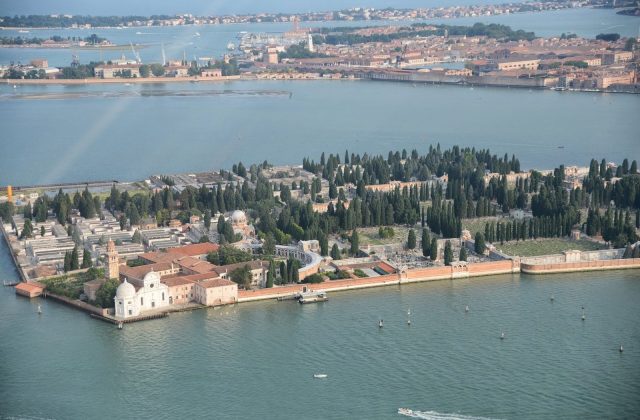
San Michele is the cemetery island of Venice, a walled square of cypresses and tombs in the lagoon a few minutes by…
1 tour
4 km away
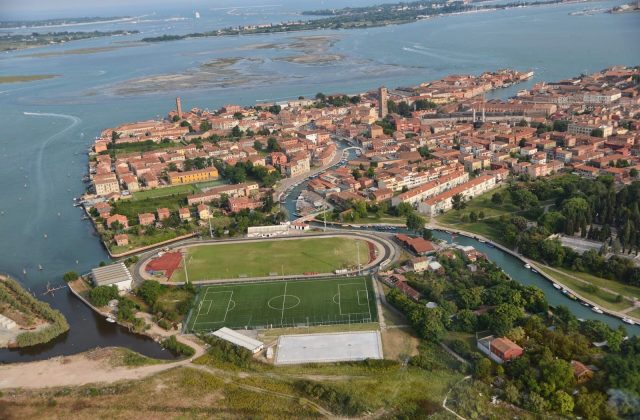
Murano is a cluster of small islands joined by bridges in the Venetian Lagoon, about 1.5 km north of Venice, and the…
120 tours & trips
Water bus from the Zattere, San Zaccaria or Piazzale Roma; about 5 min across the Giudecca Canal.
From Venice (Zattere or San Zaccaria): 5 min by water bus from the Zattere.
A half day, or a base for a Venice stay.
Apr–Jun and Sep–Oct; Redentore festival in July; flood risk Nov–Jan.
No. Giudecca is car-free. Car-free: walk the waterfront and lanes; water buses stop at four points.
Go if you want a calmer, lived-in side of Venice with Palladio churches and long waterfront views. Skip it if you have only a day in Venice and have not yet seen San Marco, the Rialto and the Accademia. With about 5 min each way from Venice (Zattere or San Zaccaria), a day trip is easy to do.
Expensive, as all Venice; eating cheaper than San Marco.
No beaches; for swimming take the water bus to the Lido, about 20 minutes away.
Redentore weekend tables or boats weeks ahead; rooms ahead for Biennale and Carnival.
Yes. Giudecca is part of the World Heritage property Venice and its Lagoon.
Venetian Lagoon, Italy
Murano is a cluster of small islands joined by bridges in the Venetian Lagoon, about 1.5 km north of Venice, and the…
120 tours & trips
Venetian Lagoon, Italy
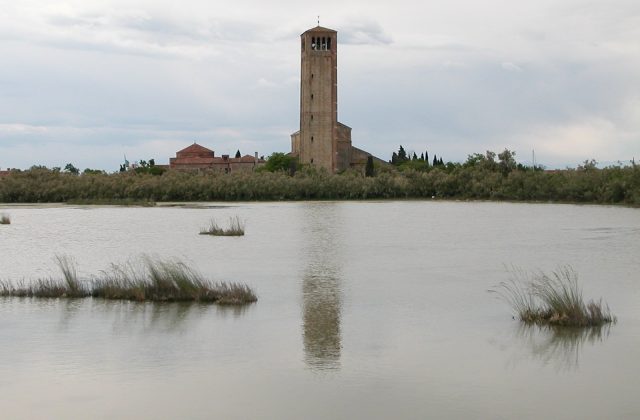
Torcello is a near-empty island in the northern Venetian Lagoon that was once a busy town and the first home of the…
25 tours & trips
Venetian Lagoon, Italy
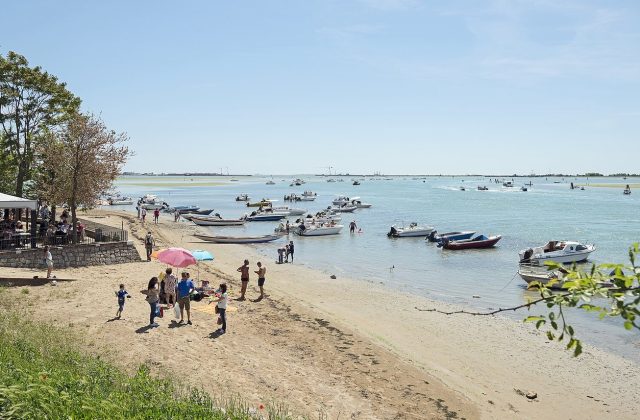
Sant'Erasmo is the vegetable garden of Venice: a flat, rural island of about 3 square kilometres in the northern…
5 tours & trips
Venetian Lagoon, Italy
The Lido is the 11-km sandbar that shelters the Venetian lagoon from the Adriatic, a 15-minute boat ride from St…
1 tour
Venetian Lagoon, Italy
San Giorgio Maggiore is the small island facing St Mark's Square across the basin in Venice, occupied almost…
1 tour
Venetian Lagoon, Italy
San Lazzaro degli Armeni is a three-hectare island in the Venetian lagoon, about 2 km south-east of St Mark's,…
No tours listed