Inhaca
Mozambique
Inhaca is a low, sandy island of about 52 square kilometres that closes off Maputo Bay from the Indian Ocean, around 35…
9 tours & trips
Mozambique · Indian Ocean · Historic island
Ilha de Moçambique is a coral island about 3 km long off northern Mozambique, joined to the mainland by a single-lane bridge. It was the capital of Portuguese East Africa until 1898 and is now a UNESCO World Heritage Site, with a stone town of churches, palaces and a huge fortress beside a living reed-roofed town.
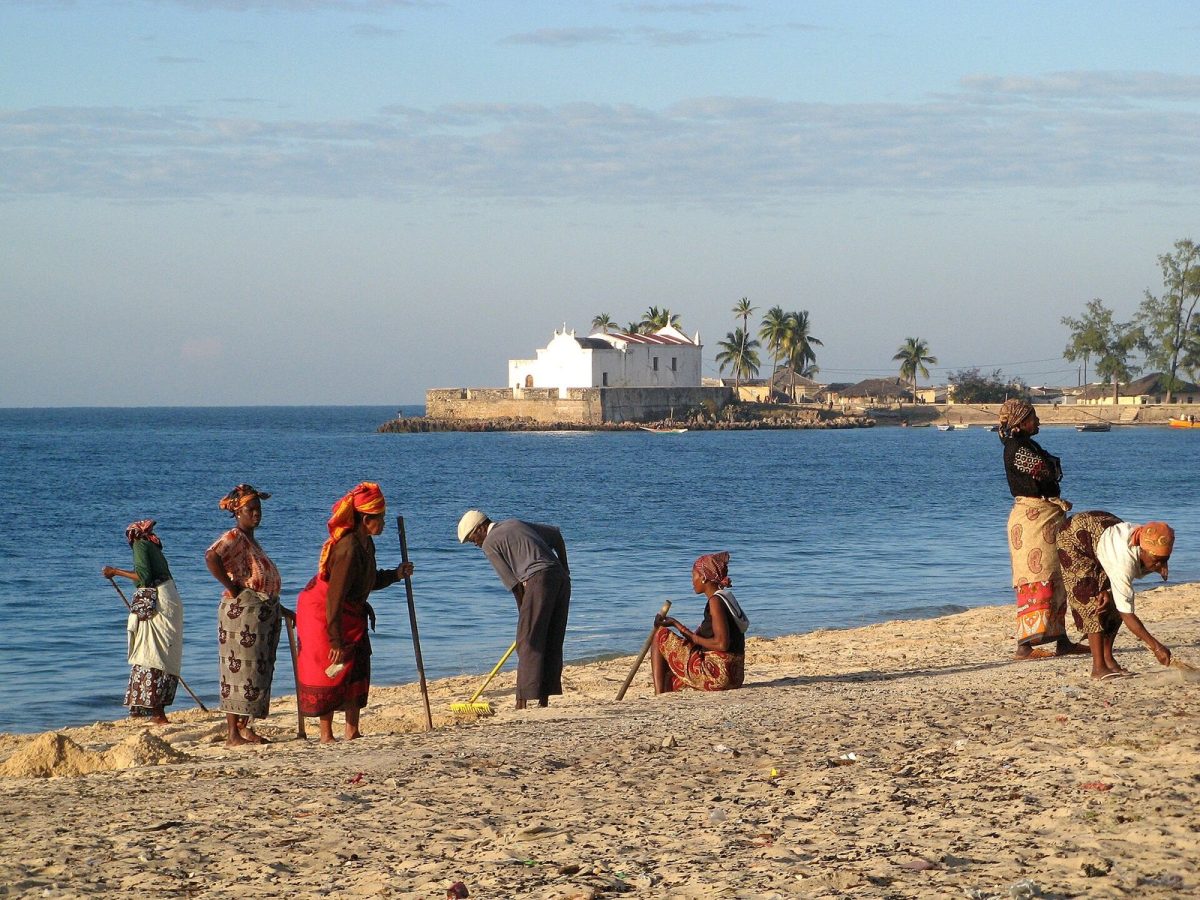
Photo: Rosino, CC BY-SA 2.0
| Getting there | Fly to Nampula, then about 3 h by road to Lumbo and over the 3.8-km bridge |
|---|---|
| Gateway | Nampula (via Lumbo and the bridge) |
| Travel time | About 3 h by road from Nampula |
| Days | 1 to 2 nights |
| Best months | May–Nov (dry season); Dec–Mar hot and humid with cyclone risk |
| Getting around | Walk everywhere; the island is small and flat, with a few tuk-tuks and bikes |
| Booking | Guesthouses ahead for holidays; dhow trips and guides arranged locally the day before |
| Cost | Cheap; budget rooms and local food at low prices |
| Beaches | Small, unremarkable town beaches; take a dhow to Goa Island or the mainland beaches across the bay |
| Sea | Indian Ocean |
| Area | 1.5 km² |
| Population | 14,000 |
| Airport | No |
| Car-free | No |
| Bridge | Road bridge or causeway to the mainland |
| UNESCO | Island of Mozambique |
| Checked | November 2026 |
Nothing is sold online specifically for Ilha de Moçambique. It lies far from the main tourist circuits of southern Mozambique. The island is served by nearby Lumbo Airport on the Nampula mainland.
Most people visit independently: they fly to Nampula, then take a shared minibus, a private transfer or a hired car with driver to the island. Some guesthouses arrange the transfer for you, which is the easiest option if you arrive by air.
Once on the island, everything is arranged locally. Licensed guides wait near the fortress and the museum and offer walking tours of the stone town, useful for the history and for getting inside buildings that are often locked. Dhow trips leave from the beach near the town for Goa Island and its lighthouse, for snorkelling over the reefs, or across the bay to the beaches at Chocas and Cabaceira on the mainland; agree the price, duration and whether lunch is included before you set off.
Our advice: book your room and transfer ahead, hire a guide for the first morning and arrange a dhow trip for the second day.
At the northern tip, a massive star-shaped fortress built by the Portuguese from the 1550s guards the channel. Walk the ramparts for views over the sea and the town, and look for the cisterns that held the garrison's water. Beside it, the tiny Chapel of Nossa Senhora do Baluarte, from 1522, is one of the oldest European buildings in the southern hemisphere.
The northern half of the island is a grid of whitewashed colonial houses, churches, a mosque and a Hindu temple, many restored and others crumbling. Walk slowly along the main streets in the early morning or late afternoon, when the light is soft and life spills out onto the doorsteps. A guide helps unlock the history.
The former governor's palace, a short walk south of the fortress, is now a museum. Its rooms keep furniture from Portugal, India and China, showing the trade networks that met here. The museum of sacred art is in the old Misericórdia church nearby, and a statue of the poet Camões, who lived on the island, stands in the square.
The southern part of the island is where most islanders live, in houses with reed or palm roofs set below the street level of the stone town, in old quarries. It is lively and crowded, with small mosques, shops and fishing boats on the shore. Go with a local guide and dress modestly.
Sailing dhows take visitors to Goa Island, with its lighthouse and reefs, or across Mossuril Bay to the white beaches of Chocas and Carrusca and the ruined mansions of Cabaceira on the mainland. A half-day trip includes a swim; longer ones add a grilled fish lunch. The best sailing is with the morning breeze.
The usual route is a domestic flight to Nampula, which has connections from Maputo and other Mozambican cities, sometimes via a regional hub. From Nampula the road east to the coast takes about three hours by car or longer by shared minibus, which leaves when full from the city. Private transfers can be arranged through guesthouses.
The last stretch crosses a single-lane bridge about 3.8 km long from Lumbo on the mainland, built in the 1960s, with passing places for cars. If you drive yourself, park at your guesthouse, since the narrow lanes of the stone town are not made for cars.
There is no regular boat service to the island from elsewhere on the coast. Keep some cash in meticais for the road, as card machines are unreliable.
The island is about 3 km long and a few hundred metres wide, so you can walk from the fortress at one end to the southern tip in under an hour. The streets are flat and quiet, and most sights are in the northern half. A few tuk-tuks and bicycles are available for those who prefer not to walk in the heat. Dhows and small motorboats are the only way to reach the islets and mainland beaches across the bay.
The dry season from May to November is the best time to visit, with sunny days, pleasant evenings and calm seas for dhow trips. June to August is the coolest period, with comfortable temperatures for walking around the town during the day.
December to March is hot, very humid and rainy, and northern Mozambique can be hit by cyclones, which disrupt roads and power. The sea is warm all year.
There are rarely crowds, though Mozambican holidays and the Christmas period bring more domestic visitors, and some guesthouses fill up. Ramadan changes the rhythm of the town, with quieter days and lively evenings. Malaria is present, so take medical advice before travelling.
One full day covers the main sights, but two nights let you enjoy the slow pace and add a dhow trip.
The stone town in the northern half is where almost all guesthouses are, many in restored colonial houses with high ceilings and courtyards, within walking distance of the fortress, museums and restaurants. It suits most visitors. A few lodges across the bay at Chocas or Cabaceira on the mainland offer beaches and quiet, but need a boat or a long drive. Choose a room with a fan or air conditioning in the hot months.
Long before the Portuguese arrived, the island was a Swahili trading town ruled by a sultan, and its name, which later passed to the whole country, comes from him. Vasco da Gama called here in 1498, and the Portuguese made it a base on the route to India, building the fortress and churches. It served as the capital of Portuguese East Africa until 1898. Arab, Indian, African and European influences are still visible in its buildings, food and faith, and UNESCO listed it in 1991.
Nampula, the regional capital, is the transit point and has little to keep you more than a night. The Quirimbas archipelago and the town of Pemba lie further north, reached by flights or a long road journey. Many visitors combine the island with Maputo at the start or end of a trip, flying between the two in about two hours.
Fly to Nampula, then about 3 h by road to Lumbo and over the 3.8-km bridge.
From Nampula (via Lumbo and the bridge): about 3 h by road from Nampula.
1 to 2 nights.
May–Nov (dry season); Dec–Mar hot and humid with cyclone risk.
Walk everywhere; the island is small and flat, with a few tuk-tuks and bikes.
Go if you want slow days among old churches, forts and mosques, dhow trips and the most atmospheric town in Mozambique. Skip it or choose the Quirimbas or Bazaruto if your priority is beaches, diving or comfortable resorts.
Cheap; budget rooms and local food at low prices.
Small, unremarkable town beaches; take a dhow to Goa Island or the mainland beaches across the bay.
Guesthouses ahead for holidays; dhow trips and guides arranged locally the day before.
Yes. Ilha de Moçambique is part of the World Heritage property Island of Mozambique.
Mozambique
Inhaca is a low, sandy island of about 52 square kilometres that closes off Maputo Bay from the Indian Ocean, around 35…
9 tours & trips
Mozambique
The Bazaruto Archipelago is a chain of five sand islands off southern Mozambique, a short boat ride from the beach town…
2 tours & trips
Quirimbas Islands, Mozambique
Ibo is a small coral island in the Quirimbas archipelago off northern Mozambique, where a sleepy town of crumbling…
No tours listed