Phu Quoc
47 km away
Phu Quoc is the largest island in Vietnam, about 575 square kilometres in the Gulf of Thailand, closer to the coast of…
350 tours & trips
Cambodia · Gulf of Thailand · Beach island
Koh Tonsay, known in English as Rabbit Island, is a forested islet of about 2 square kilometres lying 4 km off the seaside town of Kep in southern Cambodia. A short boat ride brings you to a strip of simple beach huts, hammocks and seafood shacks, with almost nothing to do but swim, eat and sleep.
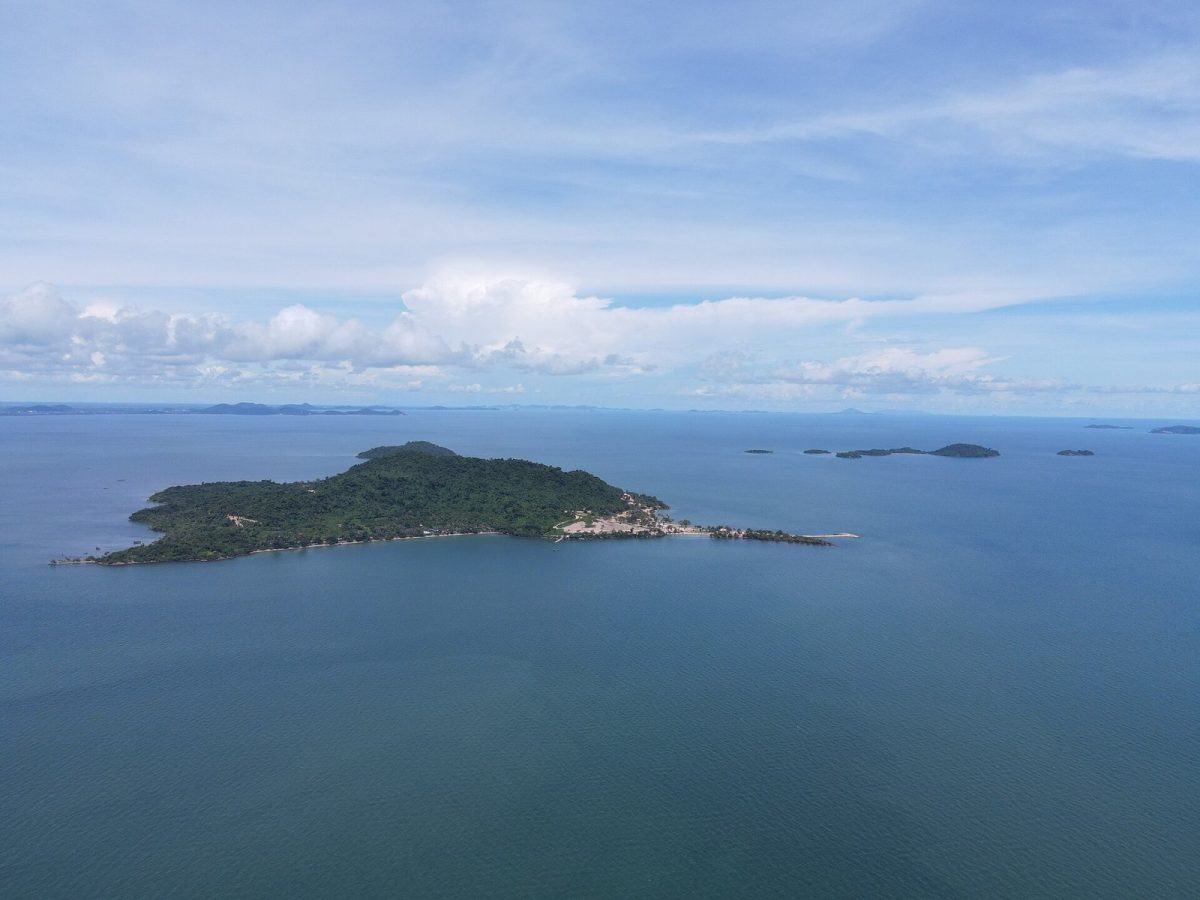
Photo: Kiensvay, CC BY-SA 3.0
| Getting there | Shared or private boat from Kep pier, about 20 to 30 min; morning departures, afternoon return |
|---|---|
| Gateway | Kep |
| Travel time | 20 to 30 min by boat |
| Days | A day trip is enough |
| Best months | Nov–Apr dry and calm; monsoon May–Oct brings rough seas |
| Getting around | On foot only; a path circles the island in about two hours |
| Booking | Nothing ahead; buy boat tickets in Kep the day before or that morning |
| Cost | Cheap, even by Cambodian standards |
| Beaches | Main beach of light sand and shallow water on the north-west; quieter coves round the coast |
| Sea | Gulf of Thailand |
| Area | 1.7 km² |
| Airport | No |
| Car-free | Yes |
| Checked | October 2026 |
Nothing is sold online for Koh Tonsay on its own, and almost nobody needs it. The usual way is the shared boat from the pier at Kep, bought from the ticket desk or through a guesthouse, which leaves in the morning and returns in the afternoon. Private boats can be hired at the same pier for a group or for a different timing, at a price agreed in advance.
Guesthouses and travel agents in Kep and Kampot also sell a simple island day, with return boat, transfer from your hotel and sometimes a seafood lunch on the beach. Some tours from Kampot combine Rabbit Island with a stop at the crab market in Kep and a pepper farm on the way.
On the island itself, the beach shacks rent hammocks and deckchairs, cook fresh crab, squid and fish, and can arrange a snorkel set or a ride in a fishing boat. Snorkelling is limited, as the water is shallow and often cloudy, so treat it as a bonus. If you want to stay, the bungalows are bookable directly on arrival in most seasons.
The plain recommendation is the shared morning boat from Kep, a crab lunch and the afternoon boat back.
Boats land on the north-west shore, where a long strip of light sand faces the mainland and the hills of Kep. The water is warm and shallow for a long way out, safe for children. A row of wooden restaurants and bungalow huts lines the back of the beach, renting hammocks and loungers in exchange for buying food and drinks.
Kep is famous for its crab, and the beach shacks serve it fresh, usually stir-fried with green Kampot pepper, a speciality of this coast. Choose from the catch, agree the price by weight before cooking, and add grilled squid or fish. Eat under the trees in the middle of the day, when the sun on the sand is fierce.
A rough path circles the islet through forest and past fishing hamlets, taking about two hours. It leads to quiet coves on the south and east sides, where you may have the sand to yourself. Wear shoes rather than flip-flops, carry water and start in the morning, as the inland stretches are hot and the path can be overgrown.
If you stay overnight, the evening is the island's best time. The day visitors leave on the afternoon boats, fishermen bring in their catch and the sun goes down over the sea towards the Vietnamese island of Phu Quoc. After dark the generator hum fades, and on moonless nights the sky is full of stars.
Boats to Koh Tonsay leave from the small pier at Kep, a short distance east of the crab market. Shared boats usually depart in the morning and return in the afternoon, taking 20 to 30 minutes each way depending on the sea, and tickets are bought at the pier or from guesthouses. Private longtail-style boats can be chartered at any reasonable hour.
Kep itself is about 25 km from Kampot and roughly three to four hours by road from Phnom Penh; buses and minivans run daily, and tuk-tuks cover the last stretch. There is no airport on the coast here. Coming from Vietnam, the border crossing at Prek Chak near Ha Tien is about an hour from Kep. In rough weather during the monsoon, boats may be cancelled, so keep a spare day.
There are no roads or vehicles on the island. Everything near the main beach is within a few minutes' walk, and a path of several kilometres loops around the coast and through the forest. The trail is uneven and partly overgrown, so wear trainers and take water. Locals with boats can drop you at a quieter cove and pick you up later if you agree a price and time.
The best time to visit is the dry season from November to April, when the sea is calm, the sky is clear and boats run reliably. December to February is the most comfortable, with air temperatures around 30 degrees and lower humidity. March and April are hotter and still dry, with the sea at about 29 degrees.
From May to October the south-west monsoon brings heavy afternoon rain and stronger winds, the sea gets rough and murky, and boats may be cancelled. Some bungalows close, but the island is quiet and greener. Weekends and Khmer New Year in mid-April are busiest, when families from Phnom Penh flock to Kep and the island. A day trip covers it; one night is for those who like simple huts and quiet evenings.
Most visitors stay in Kep, which has guesthouses and boutique hotels in old villas spread along the coast and on the hillside, and come over for the day. On the island, accommodation is limited to basic wooden or bamboo bungalows on the main beach, with mosquito nets, shared or simple bathrooms and power usually only in the evening from generators. They suit backpackers and anyone happy with very simple comforts.
Rabbit Island takes its English name from its Khmer name, said to refer to the shape of the island seen from the coast. Fishing families have long lived here. In the 1950s and 1960s, under Prince Norodom Sihanouk, Kep became the smart resort of Cambodia's elite, and the island served as a rehabilitation centre for convicts, who were also expected to guard it. Paths and thatched lodgings from that time were lost during the decades of war after 1970. Simple guesthouses returned only in the 2000s, and the island stays undeveloped.
Pair Koh Tonsay with a day in Kep for the crab market and the forest trail in Kep National Park, and with Kampot, 25 km away, for the river, the old French town and pepper farms. Bokor Mountain is a scenic drive from Kampot. Phnom Penh is about three to four hours by road, and Ha Tien in Vietnam is about an hour away.
47 km away
Phu Quoc is the largest island in Vietnam, about 575 square kilometres in the Gulf of Thailand, closer to the coast of…
350 tours & trips
113 km away
Koh Rong Sanloem is a jungle-covered island about 9 km long in the Gulf of Thailand, around 45 minutes by speedboat…
2 tours & trips
123 km away
Koh Rong is Cambodia's second-largest island, about 25 km off Sihanoukville in the Gulf of Thailand, with…
7 tours & trips
Shared or private boat from Kep pier, about 20 to 30 min; morning departures, afternoon return.
From Kep: 20 to 30 min by boat.
A day trip is enough.
Nov–Apr dry and calm; monsoon May–Oct brings rough seas.
No. Koh Tonsay (Rabbit Island) is car-free. On foot only; a path circles the island in about two hours.
Go if you want a cheap, back-to-basics beach day or a night in a simple hut off Kep. Skip it or choose Koh Rong Samloem if you want long white beaches, clear water, reliable power and more comfortable places to stay.
Cheap, even by Cambodian standards.
Main beach of light sand and shallow water on the north-west; quieter coves round the coast.
Nothing ahead; buy boat tickets in Kep the day before or that morning.
Cambodia
Koh Rong is Cambodia's second-largest island, about 25 km off Sihanoukville in the Gulf of Thailand, with…
7 tours & trips
Cambodia
Koh Rong Sanloem is a jungle-covered island about 9 km long in the Gulf of Thailand, around 45 minutes by speedboat…
2 tours & trips