Gorée
187 km away
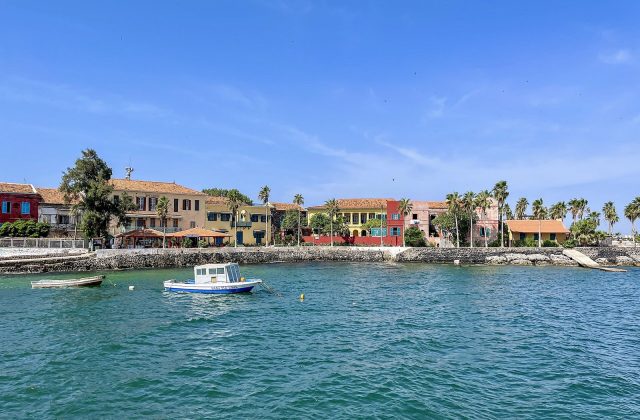
Gorée is a tiny car-free island 2 km off Dakar, an 18-hectare grid of sandy lanes and pastel colonial houses that…
15 tours & trips
Gambia · Lakes & rivers · Historic island
Kunta Kinteh Island, formerly James Island, is a tiny island in the Gambia River about 30 km from its mouth, holding the ruins of Fort James, a centre of the Atlantic slave trade. With the nearby villages of Albreda and Juffureh it forms a UNESCO World Heritage Site, visited by boat on a day trip from the coast.
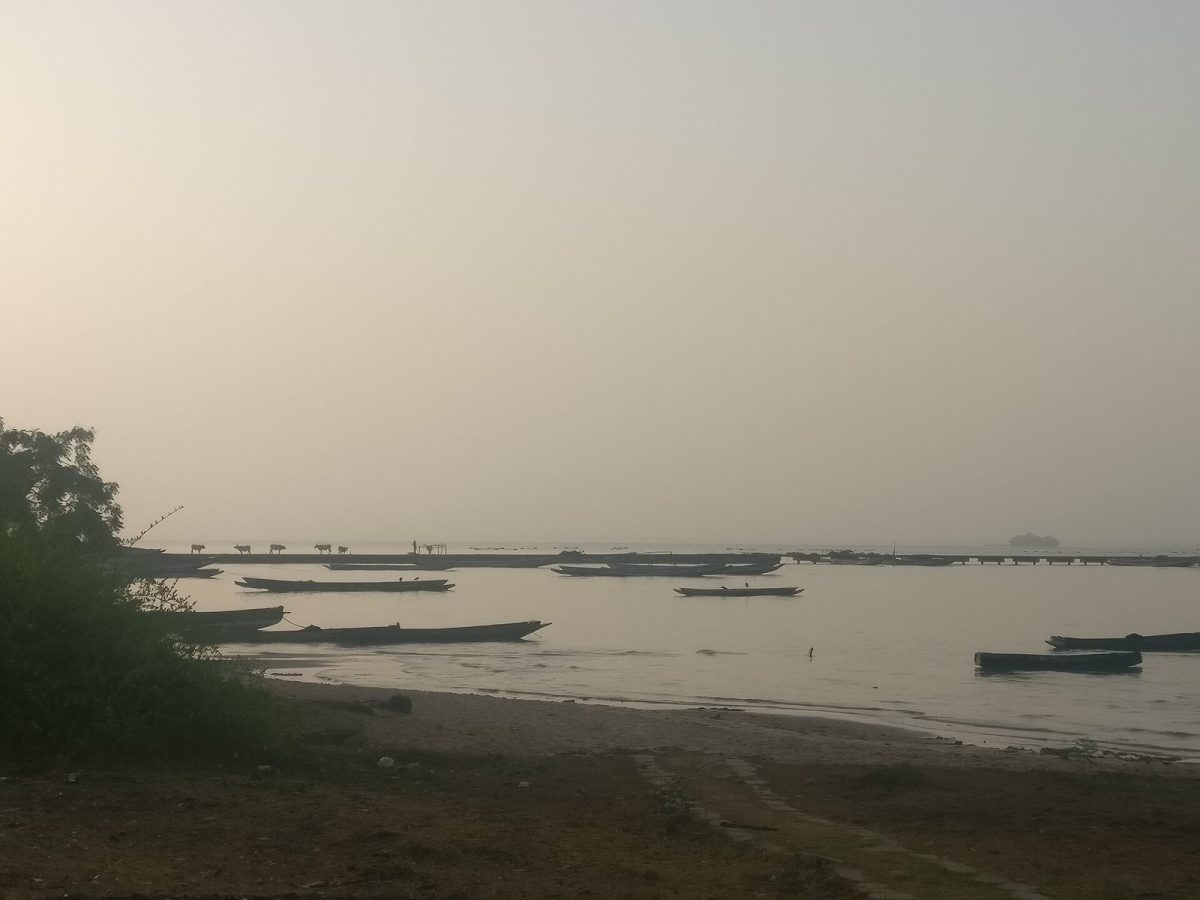
Photo: Kenneth Aitchison, CC BY-SA 4.0
| Getting there | Boat trip up the river from Banjul, or Banjul–Barra ferry and road to Albreda, then a pirogue |
|---|---|
| Gateway | Banjul (boat via Albreda and Juffureh) |
| Travel time | A full day from the coast; pirogue from Albreda 20 min |
| Days | A day trip is enough |
| Best months | Nov–May dry season; Jun–Oct rainy, hot and humid |
| Getting around | On foot; the island is tiny and the ruins take 30 minutes to see |
| Booking | Book a river day trip a day or two ahead through your hotel or a local guide |
| Cost | Cheap; a guided river trip is the main cost |
| Beaches | No beaches; the island is a rocky ruin. Swim on the Atlantic coast near Banjul |
| Sea | Lakes & rivers |
| Population | Uninhabited |
| Airport | No |
| Car-free | Yes |
| UNESCO | Kunta Kinteh Island and Related Sites |
| Checked | October 2026 |
Nothing is sold online for Kunta Kinteh Island on its own, but almost every hotel and ground agent on the Gambian coast sells the same classic outing, often called the Roots trip. It is the normal way to visit.
The river version leaves from Banjul or from Denton Bridge near the coast by large wooden boat and sails up the wide Gambia River for a few hours, often with birdwatching along the mangroves. It stops at Albreda and Juffureh for the museum and the village, then crosses to the island. Lunch, soft drinks, a guide and entrance fees are usually included, and the whole day is long but relaxed.
The road version takes the ferry from Banjul to Barra on the north bank, sometimes with a stop at Fort Bullen, then drives to Albreda, where a pirogue covers the last short crossing. It is faster when the ferry runs well but involves queues and a hot, dusty road.
Independent travellers can make the same trip by ferry, shared taxi and a pirogue hired at Albreda, paying the site fee at the museum. The plain recommendation for most visitors is the river boat day: it is comfortable, includes everything and lets you approach the island as the traders did.
The crumbling walls of the fort cover most of what is left of the island: stone bastions, a few rusting cannon and the remains of storerooms and a small cell where captives were held. A guide explains its many owners and destructions. Walk slowly around the edge, where erosion is eating the island, and look upstream and downstream along the wide brown river.
On the north bank opposite the island, the village of Albreda was a French trading post. Its small museum, the starting point for the island crossing, tells the story of the slave trade on the river with maps, documents and replica shackles. Nearby stand the ruins of a Portuguese chapel and an old colonial warehouse, both part of the World Heritage Site.
A short walk from Albreda, Juffureh is the village Alex Haley identified in his book Roots as the home of his ancestor Kunta Kinteh. Visitors are usually received by members of the Kinteh family, and a donation is expected. The Maurel Freres building, an old French trading house, is also here. Village life of farming and fishing carries on around the visitors.
Coming by boat is part of the experience. The Gambia River is several kilometres wide here, with mangroves along the banks and fishing pirogues working the shallows. Look out for pelicans, herons, kingfishers and sometimes dolphins near the mouth. The trip from the coast takes a few hours each way, so bring a hat and sun cream.
At the mouth of the river, Fort Bullen at Barra and the Six-Gun Battery in Banjul were built by the British in the early 19th century to stop slave ships after abolition. They form part of the same World Heritage listing. Fort Bullen is easy to visit if you travel by road via the Barra ferry; allow 30 minutes.
Most visitors join an organised river trip from Banjul or Denton Bridge, sailing up the Gambia River for about three hours to Albreda and the island, with a return in the late afternoon.
Independently, take the Banjul to Barra ferry across the river mouth. Crossings are frequent in theory, but delays and long queues are common, so start early; smaller pirogues also cross but are less safe. From Barra, shared taxis or a hired car reach Albreda and Juffureh in about 45 minutes on a reasonable road. At the museum in Albreda you pay the site fee, and local boatmen take you to the island by pirogue in about 20 minutes, waiting while you visit.
Banjul International Airport has flights from Europe, mostly charters in the winter season, and connections within West Africa. There is no road to the island and no landing for larger vessels except the small jetty.
The island is tiny, and erosion has reduced it to a fraction of its former size, so a visit on foot takes about half an hour. Paths are uneven and rocky, with loose stones around the ruins, so wear sturdy shoes. There is no shade, water or shop on the island; bring what you need from Albreda. Albreda and Juffureh are a few minutes' walk apart on a sandy track.
The best months are November to May, the dry season, when skies are clear, humidity is low and daytime temperatures are around 30 degrees, with cooler evenings in December and January. This is also the main tourist season on the coast, when river trips run most often. The dry harmattan wind from the Sahara can bring dusty, hazy days between December and March.
From June to October the rainy season brings heavy storms, high humidity and heat, muddy tracks and fewer organised trips, though the countryside turns green and birdlife is rich. The ferry and road journey are harder in this period. The International Roots Festival, held in some years, draws visitors from the African diaspora and fills the area. One day is enough for the island, Albreda and Juffureh together, with an early start.
There is nowhere to stay on the island and very little in Albreda or Juffureh, so almost everyone visits from the Atlantic coast. The resort strip of Kololi, Kotu and Bakau near Serrekunda has most of the hotels, restaurants and tour desks, suiting first-time visitors. Banjul itself has a few simple hotels and is closest to the ferry. A small number of eco-lodges on the north bank suit travellers wanting a rural stay.
Portuguese sailors anchored here in 1456 and named it St Andrew's Island. In 1651 the Baltic Duchy of Courland built the first fort; the English took it in 1661 and renamed it James Island after the Duke of York. Over the next century it was captured, destroyed and rebuilt several times by the British, French and privateers, while enslaved people from the river region passed through it to the Atlantic ships. The fort was abandoned in the late 18th century. In 2011 the island was renamed after Kunta Kinteh, the ancestor described in Roots.
Combine the trip with Banjul's national museum and the Arch 22 monument, and the beaches of Kololi and Kotu. The Makasutu forest and the Abuko nature reserve are within an hour of the coast, and the fishing beach at Tanji is a lively half-day trip. Further upriver, the Wassu stone circles and the old river town of Janjanbureh make a longer, multi-day excursion.
187 km away
Gorée is a tiny car-free island 2 km off Dakar, an 18-hectare grid of sandy lanes and pastel colonial houses that…
15 tours & trips
233 km away
Bubaque is the main gateway to the Bijagos archipelago off Guinea-Bissau, a forested island about 13 km long with a…
3 tours & trips
Boat trip up the river from Banjul, or Banjul–Barra ferry and road to Albreda, then a pirogue.
From Banjul (boat via Albreda and Juffureh): a full day from the coast; pirogue from Albreda 20 min.
A day trip is enough.
Nov–May dry season; Jun–Oct rainy, hot and humid.
No. Kunta Kinteh Island is car-free. On foot; the island is tiny and the ruins take 30 minutes to see.
Go if you want to understand the history of the slave trade on the Gambia River and see where it happened. Skip it if you are after a beach or a scenic island; this is a small ruin and a sobering half day.
Cheap; a guided river trip is the main cost.
No beaches; the island is a rocky ruin. Swim on the Atlantic coast near Banjul.
Book a river day trip a day or two ahead through your hotel or a local guide.
Yes. Kunta Kinteh Island is part of the World Heritage property Kunta Kinteh Island and Related Sites.