K’gari (Fraser Island)
132 km away
K'gari, long known as Fraser Island, is the largest sand island in the world, about 120 km long off the coast of…
8 tours & trips
Australia · Pacific Ocean · Nature & wildlife island
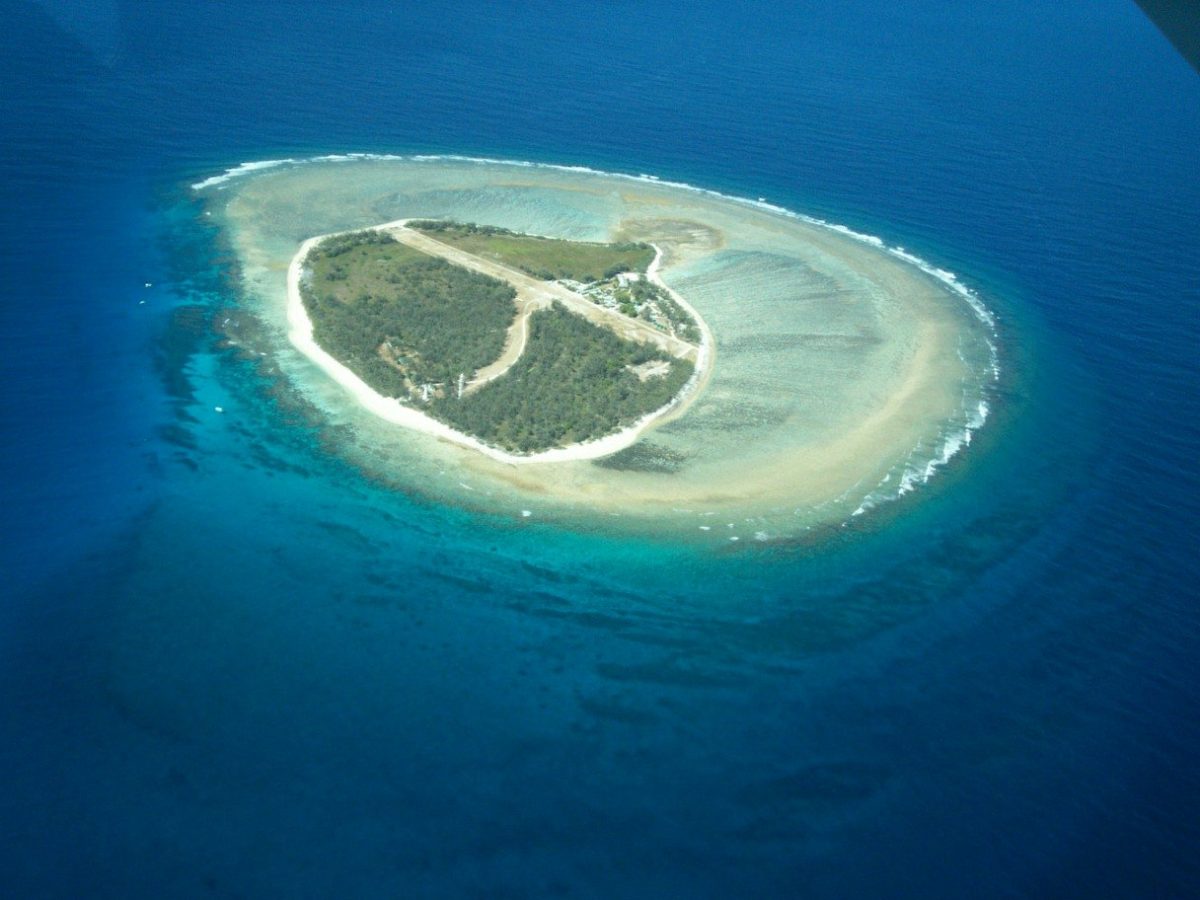
Lady Elliot Island is the southernmost coral cay of the Great Barrier Reef, a 45-hectare speck of land 85 km north-east of Bundaberg reached only by small plane. It sits in a fully protected marine zone, and its clear water, resident manta rays, turtles and an eco resort make it one of the easiest places to snorkel the reef straight from the beach.
| Getting there | Small-plane flights from Bundaberg and Hervey Bay, about 40 min; also from Brisbane and the Gold Coast |
|---|---|
| Gateway | Bundaberg or Hervey Bay (light aircraft) |
| Travel time | About 40 min by light aircraft |
| Days | 1 to 2 nights |
| Best months | Jun–Oct for mantas and whales; Nov–Mar turtle nesting; mild all year |
| Getting around | On foot; the whole island is walked in about 45 minutes |
| Booking | Resort rooms and flights months ahead for school holidays; day trips a few weeks ahead |
| Cost | Expensive, even for Australian reef islands |
| Beaches | Coral rubble and shell shingle, not soft sand; the lagoon on the east side is for snorkelling |
| Sea | Pacific Ocean |
| Archipelago | Capricorn and Bunker Group |
| Area | 0.5 km² |
| Highest point | 5 m |
| Airport | Yes, scheduled flights |
| Car-free | Yes |
| UNESCO | Great Barrier Reef |
| Checked | October 2026 |
Nothing is sold online for Lady Elliot Island on its own through the usual activity channels; flights, day trips and stays are all arranged through the island's single resort, which also books the air service.
The day trip is the most popular product. Flights leave in the morning from Bundaberg, Hervey Bay, Brisbane or the Gold Coast, and the package typically includes the return flight, a buffet lunch, snorkelling gear, a glass-bottom boat ride and a guided reef walk, with about five to six hours on the island. Departures from Brisbane and the Gold Coast cost more and give less time, so Hervey Bay or Bundaberg is better value.
Staying one or two nights lets you snorkel at different tides, see turtles nest or hatch in season and join the free guided activities, such as reef walks at low tide and night talks. Rooms range from simple safari-style tents and lodges to more comfortable suites, usually with breakfast and dinner included.
Extras cost more: scuba dives and courses at the island dive shop, guided snorkel tours to the outer reef and private scenic flights.
The plain recommendation is to stay at least one night; a day trip is good but rushed, and the reef is at its best in the quiet early morning.
On the eastern side of the island, the sheltered lagoon is the main snorkelling area, with hard and soft corals, giant clams and turtles feeding a few metres from shore. It is best around high tide, when you can swim over the reef without touching it. The adjoining Coral Gardens have the densest coral; follow the marked entry points.
A resident population of manta rays visits cleaning stations around the island, especially in winter. Divers meet them at Lighthouse Bommie off the western side, and snorkellers often see them on guided boat trips or swimming by the beach. The best months are June to August, when water clarity peaks; listen for manta sightings announced by the resort staff.
Loggerhead and green turtles come ashore to lay eggs from November to February, and hatchlings scramble down the beach from about January to April. Join the guided turtle walks at night, keep a distance, and use only red light. Even outside nesting season, turtles are often seen in the lagoon and along the reef edge.
At low tide the reef flat on the western side is exposed, and rangers lead walks across it on marked paths, pointing out sea cucumbers, starfish, clams and small sharks in the pools. Wear closed shoes and follow the guide, stepping only on sand. Check the tide times on arrival to plan the walk and your snorkelling around them.
A path circles the whole island in about 45 minutes, passing the historic white lighthouse of 1873, the airstrip and nesting colonies of noddies, terns and other seabirds, which fill the trees in summer. From June to October, humpback whales can be seen offshore from the beach. Walk at sunset, when the light over the reef is soft.
Lady Elliot is one of the few Great Barrier Reef islands with its own airstrip, and flying is the only way to get there. Small planes leave from Bundaberg and Hervey Bay, about 40 minutes away, with regular daily flights, and from Brisbane and the Gold Coast, which take longer and may include a stop. There is no ferry and private boats are rarely allowed to anchor here.
Book flights and stays together through the resort. Luggage is strictly limited by weight because of the small aircraft, so pack light; excess bags can usually be stored at the departure airport. Flights depend on weather and can be delayed by strong winds or storms, so do not plan a tight onward connection on the same day.
The island is only about 45 hectares, so everything is within a few minutes' walk. There are no cars, roads or bikes for guests; paths connect the resort, the beaches, the lighthouse and the airstrip. Coral rubble and shingle cover the beaches, so reef shoes or sandals are useful. Glass-bottom boat and snorkelling trips leave directly from the beach or a small boat ramp.
Lady Elliot has a mild subtropical climate, with water at about 21 degrees in winter and 27 degrees in summer. June to October is the best time for manta rays, the clearest water and humpback whales, which pass between July and October; days are sunny and around 22 degrees, so bring a wetsuit for longer snorkels.
From November to March it is warmer and more humid, with turtle nesting from November and hatching from January. Seabirds nest in their thousands in summer, which makes the island noisy and lively. Summer also brings the risk of storms and cyclones, which can disrupt flights. Australian school holidays, especially Christmas and Easter, fill the resort early. A day trip shows the essentials, but one or two nights give time to snorkel at several tides and see the island without day visitors.
The only place to stay is the eco resort, spread over the western side of the island near the airstrip and the beach. Rooms range from basic tents and simple lodges with shared bathrooms, suiting budget travellers, to reef units and suites with private facilities and sea views, suiting couples and families. Meals are taken in the central dining area. There is no camping and no other accommodation.
The island takes its name from a ship, the Lady Elliot, which sighted it in 1816. In the 1860s guano miners stripped it of its trees and topsoil, leaving a bare coral island. A lighthouse was built in 1873 after several shipwrecks on the reef. From the late 1960s a small resort with an airstrip was established, and replanting and conservation slowly brought back the forest and the seabird colonies. The island now lies in a Green Zone of the Great Barrier Reef Marine Park, the strictest level of protection.
Lady Elliot pairs well with Hervey Bay, a 40-minute flight away, for whale-watching from July to October and trips to K'gari (Fraser Island). From Bundaberg you can visit the turtle rookery at Mon Repos in season and Lady Musgrave Island by boat from the Town of 1770 or Bundaberg. Brisbane is about four to five hours south by road.
132 km away
K'gari, long known as Fraser Island, is the largest sand island in the world, about 120 km long off the coast of…
8 tours & trips
207 km away
Great Keppel Island lies 15 km off Yeppoon on Queensland's Capricorn Coast, at the southern end of the Great…
5 tours & trips
346 km away
Moreton Island is a sand island of high dunes and long beaches on the eastern edge of Moreton Bay, about 58 km…
24 tours & trips
Small-plane flights from Bundaberg and Hervey Bay, about 40 min; also from Brisbane and the Gold Coast.
From Bundaberg or Hervey Bay (light aircraft): about 40 min by light aircraft.
1 to 2 nights.
Jun–Oct for mantas and whales; Nov–Mar turtle nesting; mild all year.
No. Lady Elliot Island is car-free. On foot; the whole island is walked in about 45 minutes.
Go if you want to snorkel with manta rays and turtles from the beach on a protected stretch of the Great Barrier Reef. Skip it or choose Heron Island or a Cairns reef trip if you want lower prices, more varied facilities or a ferry rather than a light aircraft.
Expensive, even for Australian reef islands.
Coral rubble and shell shingle, not soft sand; the lagoon on the east side is for snorkelling.
Resort rooms and flights months ahead for school holidays; day trips a few weeks ahead.
Yes. Lady Elliot Island is part of the World Heritage property Great Barrier Reef.
Capricorn and Bunker Group, Australia
Heron Island is a coral cay on the southern Great Barrier Reef, 87 km north-east of Gladstone in Queensland, only about…
No tours listed