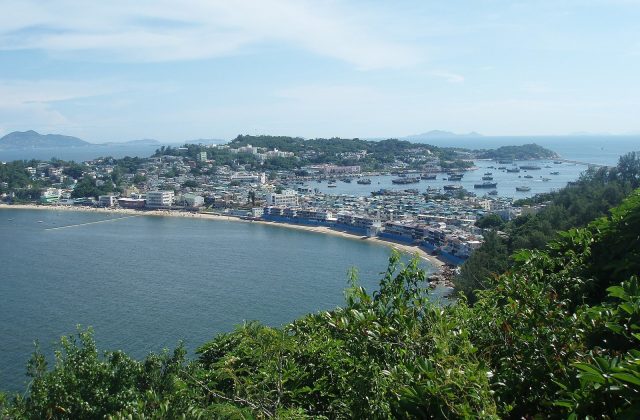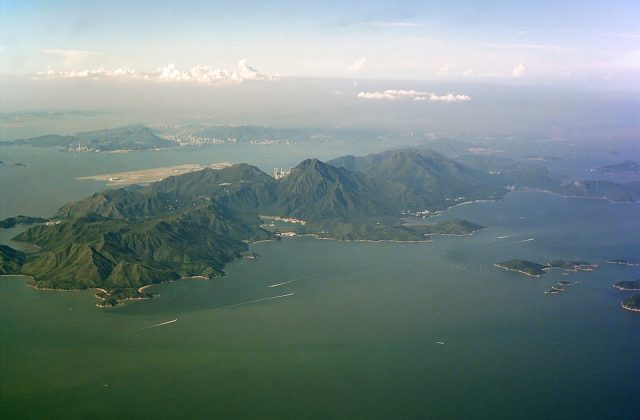
Lantau Island
Hong Kong
Lantau is Hong Kong's largest island, 146 square kilometres of steep green mountains rising to 934 metres at…
18 tours & trips
Hong Kong · South China Sea · Car-free island
Lamma Island is Hong Kong's third-largest island, a car-free place of fishing villages, hillside trails and seafood restaurants about half an hour by ferry from Central. A paved path of about 5 km crosses it between its two ferry villages, passing sandy beaches and hills, and makes an easy half-day escape from the city.
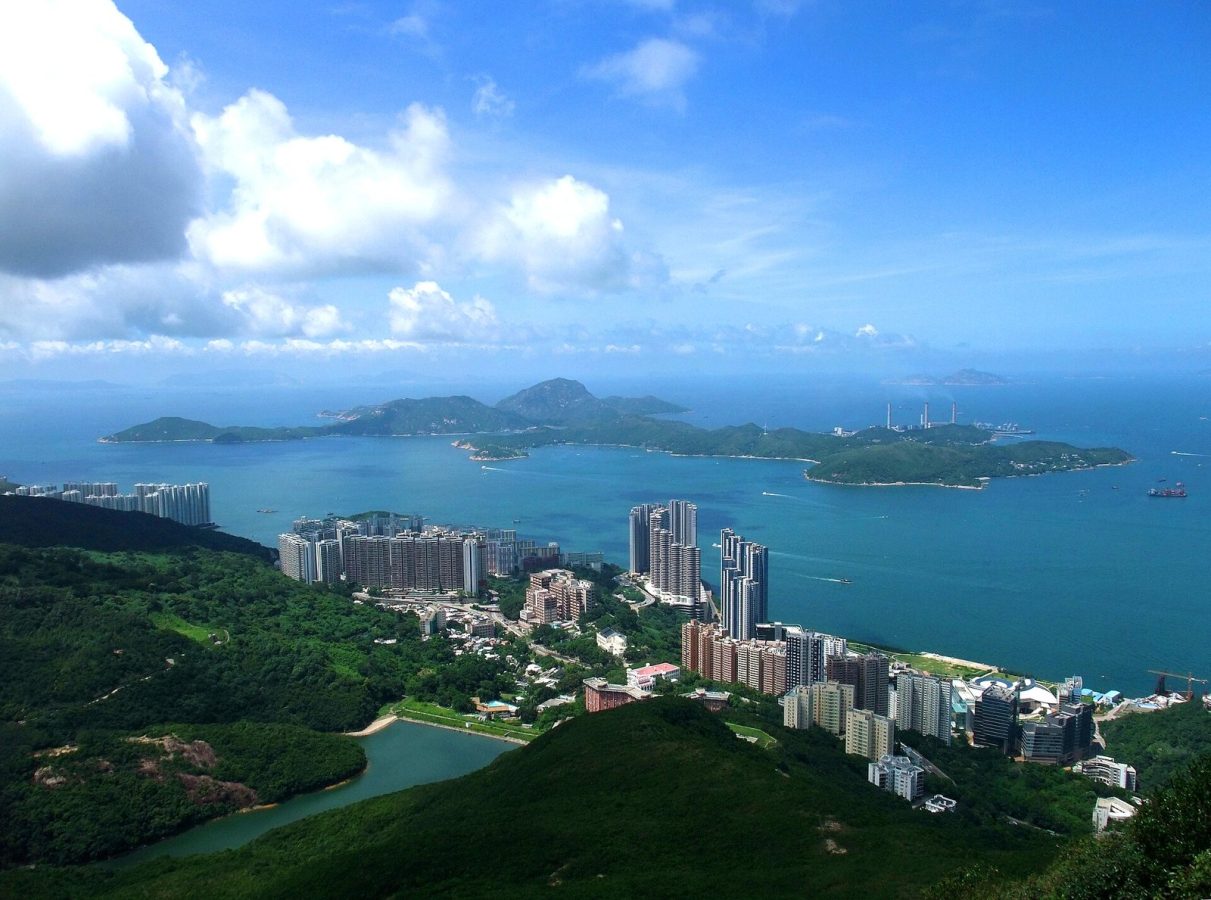
Photo: Minghong, CC BY-SA 4.0
| Getting there | Ferry from Central Pier 4 to Yung Shue Wan in about 30 min or Sok Kwu Wan in about 40 min |
|---|---|
| Gateway | Hong Kong (Central Pier 4) |
| Travel time | 30 to 40 min by ferry |
| Days | A day trip is enough |
| Best months | Oct–Dec dry and mild; Mar–May humid; Jun–Sep hot with typhoon risk |
| Getting around | Car-free: walk the paved trails; a few village vehicles and kaitos to the bays |
| Booking | Nothing far ahead; book a seafood table in Sok Kwu Wan at weekends |
| Cost | Mid-range for Hong Kong |
| Beaches | Hung Shing Yeh and Lo So Shing, sandy with lifeguards and shark nets in summer |
| Sea | South China Sea |
| Area | 14 km² |
| Population | 6,000 (2016) |
| Highest point | 353 m (Mount Stenhouse) |
| Ferry | 30 min from Hong Kong (Central Pier 4) |
| Airport | No |
| Car-free | Yes |
| Checked | October 2026 |
Lamma is one of the simplest islands in Hong Kong to visit alone, so the few products sold for it mainly add a guide and company.
Guided day tours from the city meet you at the Central piers, ride the ferry with you and walk the trail across the island, explaining village life, the temples and the history along the way, often ending with a seafood meal. The guide is normally included, while the ferry fare and meals vary, so check what you are paying for. Some tours add photography stops for those keen on pictures.
Another option combines a boat ride through Aberdeen harbour, with its fishing fleet and houseboats, with a crossing to Lamma, sometimes on the restaurant ferries that link Sok Kwu Wan with the south side of Hong Kong Island.
Independent travel is easy and cheap: tap an Octopus card at the ferry gate, walk the trail at your own pace and choose a restaurant on the waterfront. The plain recommendation is to go on your own, take the ferry to Yung Shue Wan, walk across and return from Sok Kwu Wan, and book a tour only if you want a guide.
The concrete path between Yung Shue Wan and Sok Kwu Wan crosses the island in about 5 km, climbing over low hills with views of the sea, the wind turbine and the islands to the south. It takes about one and a half to two hours with stops. Walk it north to south so you finish with dinner by the water.
The southern ferry village faces a sheltered bay full of floating fish farms, and its waterfront is lined with large seafood restaurants where you choose live fish, prawns and shellfish from tanks. Ask the price by weight before you order. A small Tin Hau temple stands at the edge of the village, and the last ferries leave in the evening.
The larger village in the north has a narrow main street of cafes, bars, small shops and vegetarian restaurants, popular with the island's mix of local and foreign residents. Look into the Tin Hau temple near the end of the street, and watch the fishing boats in the bay. It is busiest on weekend afternoons, when day trippers arrive.
About 20 minutes on foot from Yung Shue Wan, this sandy bay is the island's main swimming beach, with lifeguards, a shark net, changing rooms and a cafe in summer. The power station chimneys across the bay are not pretty, but the water is fine for a swim. Lo So Shing Beach, further along the trail, is smaller and quieter.
The island's highest hill, 353 metres, rises behind Sok Kwu Wan and gives the wildest walking on Lamma, on steep, rough paths with views over the South China Sea. Allow three hours for the climb and return. To the south, Sham Wan beach is a protected nesting site for green turtles and is closed to visitors in summer.
On the shore just outside Sok Kwu Wan, a few tunnels dug into the hillside were built by the Japanese army during the occupation of the Second World War to hide speedboats intended for suicide attacks on Allied ships. They are empty and unlit, but a short stop shows a little-known side of Hong Kong's wartime history.
Our pick for each kind of trip, with live dates and prices. Free cancellation on most.
Best for: First visit, a guided day from the city
A guide takes you across on the ferry and along the island trail with stops in the villages, the easiest way to see Lamma in one day.
Ferries leave from Central Pier 4 on Hong Kong Island to both of Lamma's villages. Boats to Yung Shue Wan run about every half an hour to an hour from early morning until late at night and take about 30 minutes. Boats to Sok Kwu Wan are less frequent, roughly every hour to hour and a half, and take about 40 minutes. Pay with an Octopus card or cash at the gate; fares are a little higher at weekends.
A smaller ferry also links Aberdeen, on the south side of Hong Kong Island, with Yung Shue Wan via Pak Kok Tsuen and with Sok Kwu Wan, and some restaurants run their own boats for diners. There are no cars to bring, so leave all vehicles behind.
Lamma is car-free, apart from a few small village vehicles used for deliveries and emergencies, so you walk. The main path between the two villages is paved, well signposted and gentle, with toilets and a kiosk or two along the way. Hill paths are steeper and rougher. Small boats called kaitos can take you between bays, and bicycles are used by residents around Yung Shue Wan. Wear good shoes and carry water in summer.
October to December is the best season, with dry, sunny days, comfortable temperatures for walking and clear views. January and February are cooler and sometimes grey but still good for the trail. From March to May the air turns humid and misty.
Summer, from June to September, is hot and sticky, with temperatures above 30 degrees, heavy showers and the risk of typhoons; when a typhoon signal is raised, ferries may stop. It is, however, the swimming season, when lifeguards are on duty at the beaches and the sea is warm. Weekends and public holidays bring crowds from the city and queues for the return ferries in the evening, while weekdays are calm. A single day is enough for the trail, a swim and a seafood dinner.
Most visitors come for the day from the city, which is the easiest plan. If you want to stay, Yung Shue Wan is the only real base, with a handful of small guesthouses and holiday flats near the ferry pier, close to cafes, bars and Hung Shing Yeh Beach. A night here gives you the island after the day trippers leave and an early walk. Sok Kwu Wan has very few beds.
People have lived on Lamma for thousands of years; finds at Sham Wan date back to the Neolithic and Bronze Ages. For centuries it was a quiet place of Hakka and Cantonese farming and fishing villages. Its English name comes from a mistake by an eighteenth-century British mapmaker who took a Portuguese note about the muddy seabed for the name of the island. From the 1970s, cheap village houses drew artists and expatriates from the city, and the power station was built on the west coast.
Lamma pairs easily with other outlying islands: Cheung Chau, with its fishing harbour and temples, is about an hour from Central by fast ferry, and Lantau, with the Big Buddha and long trails, is around 40 minutes by ferry to Mui Wo. Aberdeen, on the south side of Hong Kong Island, is a short boat ride from Lamma.
Ferry from Central Pier 4 to Yung Shue Wan in about 30 min or Sok Kwu Wan in about 40 min.
From Hong Kong (Central Pier 4): 30 to 40 min by ferry.
A day trip is enough.
Oct–Dec dry and mild; Mar–May humid; Jun–Sep hot with typhoon risk.
No. Lamma Island is car-free. Car-free: walk the paved trails; a few village vehicles and kaitos to the bays.
Go if you want a relaxed walk, a swim and a seafood dinner by the water within 30 minutes of Central. Skip it or choose Lantau or Cheung Chau if you want big sights, a monastery or a livelier island town. With about 30 min each way from Hong Kong (Central Pier 4), a day trip is easy to do.
Mid-range for Hong Kong.
Hung Shing Yeh and Lo So Shing, sandy with lifeguards and shark nets in summer.
Nothing far ahead; book a seafood table in Sok Kwu Wan at weekends.
Yes. Boat trips, guided tours and day trips for Lamma Island can be booked online; live prices and free cancellation on most are shown on this page.
Hong Kong
Lantau is Hong Kong's largest island, 146 square kilometres of steep green mountains rising to 934 metres at…
18 tours & trips
Hong Kong
Cheung Chau is a small, car-free fishing island 10 km south-west of Hong Kong Island, shaped like a dumbbell with a…
No tours listed