Lamma Island
9 km away
Lamma Island is Hong Kong's third-largest island, a car-free place of fishing villages, hillside trails and…
3 tours & trips
Hong Kong · South China Sea · Car-free island
Cheung Chau is a small, car-free fishing island 10 km south-west of Hong Kong Island, shaped like a dumbbell with a busy harbour town on the narrow middle. Only 2.45 square kilometres in size but home to over 20,000 people, it offers temples, seafood, beaches and coastal walks within an hour of Central.
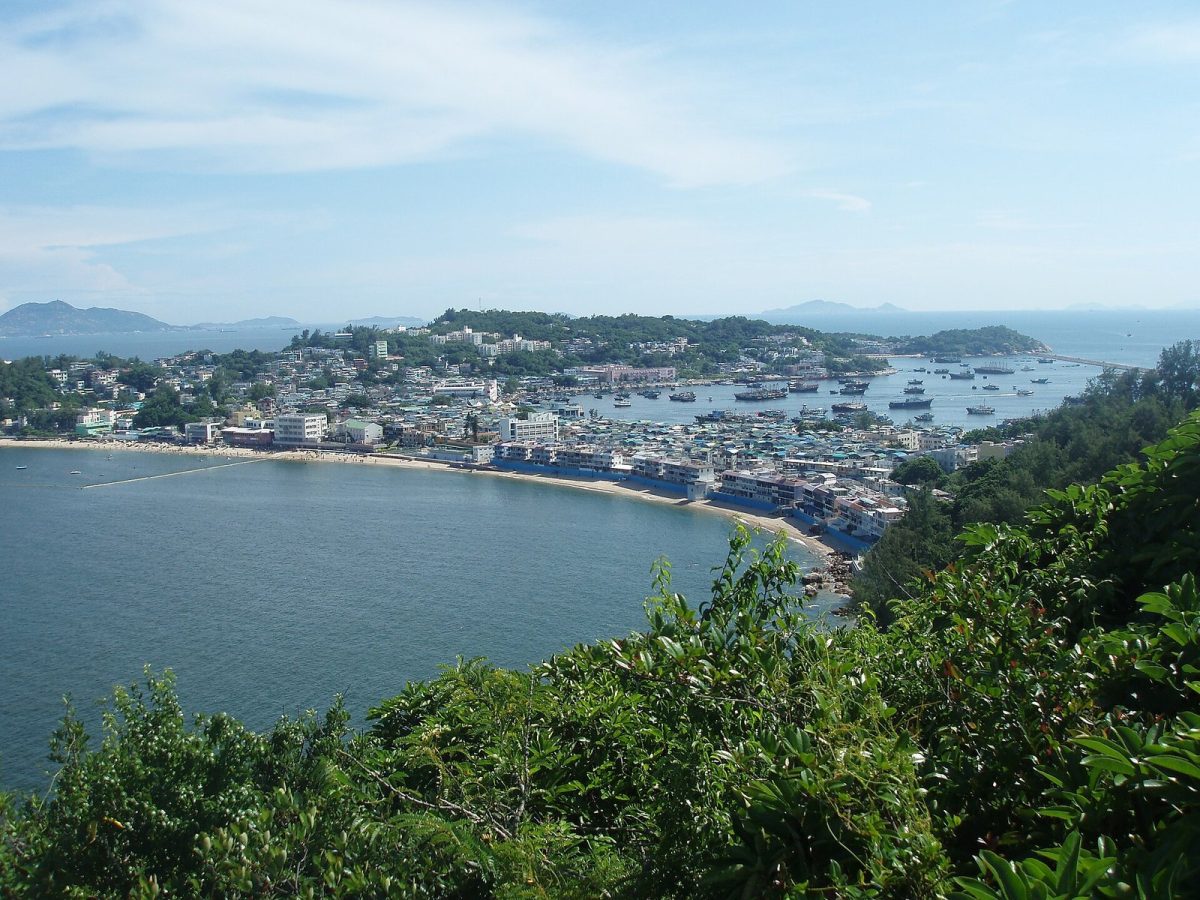
Photo: Man77, CC BY-SA 3.0
| Getting there | Ferries from Central Pier 5 every half hour or so: 35 to 40 min fast, about 1 h ordinary |
|---|---|
| Gateway | Hong Kong (Central Pier 5) |
| Travel time | 35 to 60 min by ferry |
| Days | A day trip is enough |
| Best months | Oct–Apr dry and mild; Jun–Sep hot, humid, typhoons; Bun Festival Apr or May |
| Getting around | Car-free: walk or rent a bike; small boats to the western bay |
| Booking | Nothing ahead; a room only for the Bun Festival or a summer weekend |
| Cost | Cheap by Hong Kong standards |
| Beaches | Tung Wan, a lifeguarded sandy beach by the village; Kwun Yam Wan for windsurfing |
| Sea | South China Sea |
| Area | 2.5 km² |
| Population | 22,740 (2011) |
| Ferry | 35 min from Hong Kong (Central Pier 5) |
| Airport | No |
| Car-free | Yes |
| Checked | October 2026 |
Nothing is sold online for Cheung Chau on its own in this catalogue, and nothing is needed: the island is one of the easiest independent day trips from Hong Kong. You tap a transport card at the ferry pier in Central, ride across, and explore on foot.
Organised options do exist in Hong Kong and occasionally include Cheung Chau. Some outlying-islands tours visit it with a guide who explains the temples, the fishing culture and the festival, usually with a ferry and lunch included. Private junk and yacht charters from Hong Kong sometimes anchor off the island for a swim and a seafood meal. Food walks are another format, built around fish balls, mango desserts and the seafood restaurants on the waterfront.
Locally, kayaks, stand-up paddleboards and windsurfing gear can be rented at Kwun Yam Wan, where there is a well-known windsurfing centre, and bicycles are rented near the pier. Small boats called kaidos run from the main harbour to Sai Wan in the south-west, saving a walk.
The plain recommendation is to go independently on a weekday, take the fast ferry out and the slow one back, and spend the day walking the island loop with a long seafood lunch in the middle.
A few minutes' walk north of the pier along the waterfront, the Pak Tai Temple dates from 1783 and honours the sea god who is said to have saved the island from plague. It is the centre of the Bun Festival. Around it, narrow lanes of shops, snack stalls and old houses fill the strip between the harbour and Tung Wan.
Cross the narrow waist of the island from the harbour and you reach Tung Wan, a long sandy beach with lifeguards, showers and shark nets in summer. A prehistoric rock carving of spirals lies at the southern end near the hotel. Further south, Kwun Yam Wan beach is home to the windsurfing club where Hong Kong's first Olympic champion trained.
From Kwun Yam Wan, a paved path follows the rocky south-eastern coast past granite boulders weathered into odd shapes, each given a fanciful name by islanders. The low walls along it give the trail its nickname. It takes about 30 minutes and ends near the island's southern hills, with views across to Lantau.
At the south-western tip, a narrow cave in the rocks is said to have been a hiding place of Cheung Po Tsai, a feared pirate of the early nineteenth century. You squeeze through with a torch. Sai Wan nearby has a small Tin Hau temple and seafood restaurants; kaidos return to the main harbour from here.
The Praya, the harbour front facing the fishing fleet, is lined with open-air seafood restaurants that display live fish, prawns and shellfish in tanks. Choose, agree the price by weight and cooking style before ordering, and eat at tables by the water. Street snacks along the lanes include giant fish balls and mango mochi.
A quieter walk climbs north from the town through residential lanes over the northern hill, then down to Tung Wan Tsai, a small sandy cove known as Coral Beach, with clear water and a few corals among the rocks. It is a loop of around an hour from the pier and rarely crowded.
Ferries leave from Pier 5 at the Central Ferry Piers on Hong Kong Island, a short walk from Central and Hong Kong stations. Two kinds of boat run: fast ferries take about 35 to 40 minutes and ordinary ferries, with an open deck at the back, about an hour. Together they sail every 20 to 30 minutes for most of the day, with a reduced service overnight. Fares are higher on Sundays and public holidays. Pay with an Octopus card or contactless card at the gate; there is no need to book.
An inter-island ferry also links Cheung Chau with Mui Wo on Lantau and with Peng Chau, a few times a day, useful for a day combining islands. Weekend afternoon return ferries are crowded, so allow time or go back early.
There are no private cars on Cheung Chau; only small village vehicles, including tiny fire engines and ambulances, use the lanes. Walking is easy, and the island can be crossed in 10 minutes at its waist; a full loop of the island takes three to four hours with stops. Bicycles can be rented near the pier, but cycling is not allowed on some paths and the hills are steep. Kaidos run from the main harbour to Sai Wan in the south-west.
The best months are October to April, when the air is dry, the sky clearer and temperatures comfortable for walking, between about 15 and 25 degrees. December to February can feel cool and grey but is good for hiking. Swimming season, with lifeguards on duty, runs from about April to October, when the sea reaches the high twenties.
From June to September the weather is hot and very humid, with heavy showers and typhoons; ferries are suspended when a high typhoon signal is raised. The big event is the Bun Festival in April or May, on the eighth day of the fourth lunar month, with a parade of children dressed as gods and a midnight scramble up towers of buns; the island then fills with visitors, ferries are packed and the island eats vegetarian for the festival days.
Go on a weekday to avoid crowds. A day is enough, but a night lets you see the harbour after the day crowds leave.
Most visitors come for the day, but there is a beach hotel on Tung Wan and many holiday flats rented by the night, advertised by agents with signs near the pier. Staying near the harbour puts you close to restaurants and ferries; flats near Tung Wan or Kwun Yam Wan are quieter and closer to the sea. Prices rise on weekends and during the Bun Festival, so book ahead for those dates.
Cheung Chau has been settled far longer than most of Hong Kong, as the Bronze Age rock carving near Tung Wan shows. It grew as a fishing and trading port, and in the early nineteenth century the pirate Cheung Po Tsai is said to have used it as a base. The Bun Festival began in the eighteenth century, according to local tradition, as a ritual to drive away a plague. Fishing families still work the harbour, and the island remains a working community rather than a resort.
Hong Kong Island is the base, under an hour away. The inter-island ferry reaches Mui Wo on Lantau, where buses run on to the Big Buddha and Tai O, making a full day of two islands. Peng Chau, a smaller and quieter island, is on the same route. Lamma, with its coastal footpath, is a separate trip from Central.
9 km away
Lamma Island is Hong Kong's third-largest island, a car-free place of fishing villages, hillside trails and…
3 tours & trips
10 km away
Lantau is Hong Kong's largest island, 146 square kilometres of steep green mountains rising to 934 metres at…
18 tours & trips
129 km away
Shamian is a small sandbank island in the Pearl River in central Guangzhou, 900 metres long and 300 metres wide, cut…
3 tours & trips
Ferries from Central Pier 5 every half hour or so: 35 to 40 min fast, about 1 h ordinary.
From Hong Kong (Central Pier 5): 35 to 60 min by ferry.
A day trip is enough.
Oct–Apr dry and mild; Jun–Sep hot, humid, typhoons; Bun Festival Apr or May.
No. Cheung Chau is car-free. Car-free: walk or rent a bike; small boats to the western bay.
Go if you want a relaxed day of seafood, temples, beaches and easy walks without cars, an hour from Central. Skip it or choose Lamma or Lantau if you want longer hikes, wilder beaches or quieter weekends. With about 35 min each way from Hong Kong (Central Pier 5), a day trip is easy to do.
Cheap by Hong Kong standards.
Tung Wan, a lifeguarded sandy beach by the village; Kwun Yam Wan for windsurfing.
Nothing ahead; a room only for the Bun Festival or a summer weekend.
Hong Kong
Lantau is Hong Kong's largest island, 146 square kilometres of steep green mountains rising to 934 metres at…
18 tours & trips
Hong Kong
Lamma Island is Hong Kong's third-largest island, a car-free place of fishing villages, hillside trails and…
3 tours & trips