Grenada
273 km away
Grenada is the southernmost of the Windward Islands, a green volcanic island of 344 square kilometres about 160 km…
53 tours & trips
Venezuela · Caribbean Sea · Beach island
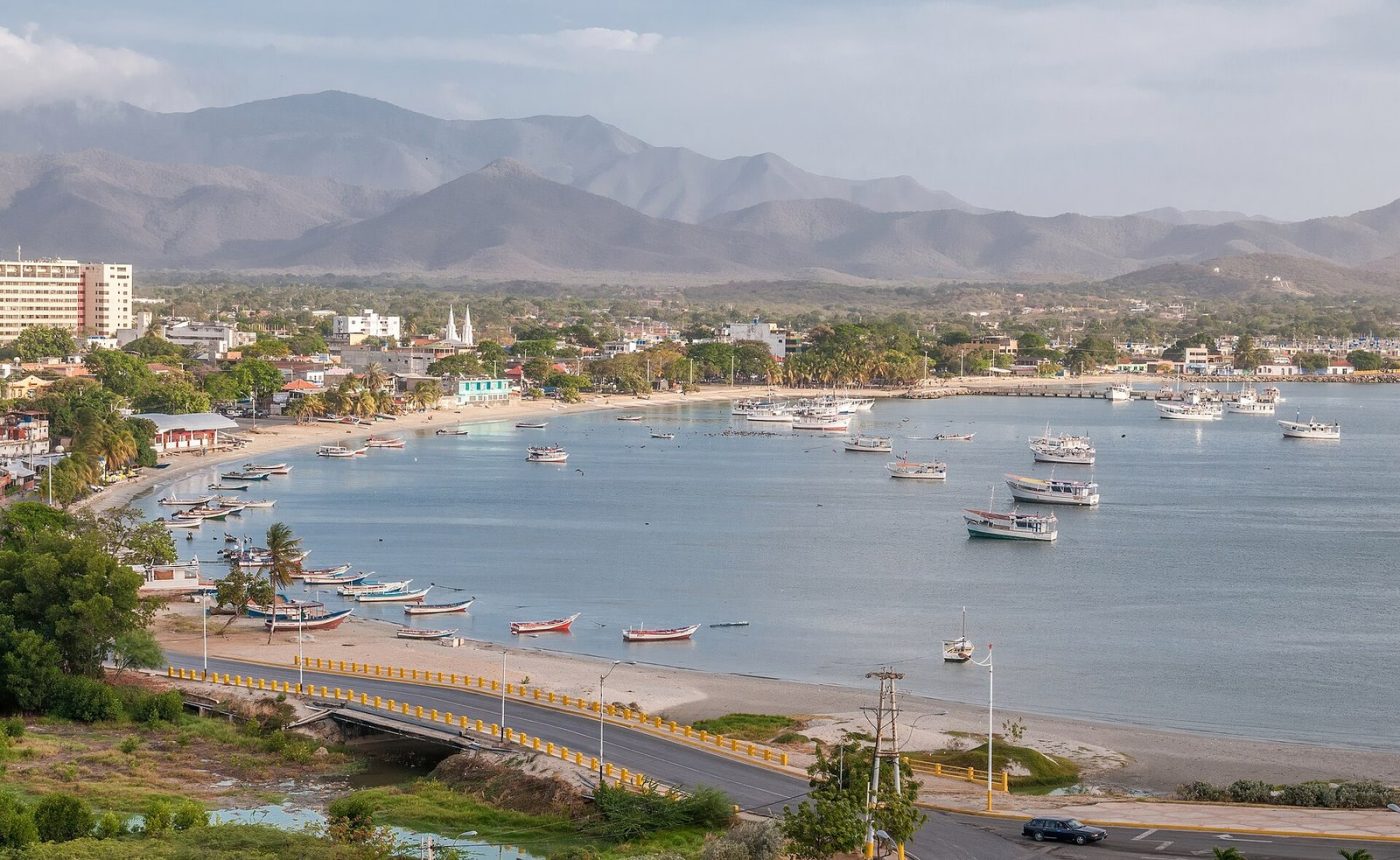
Isla Margarita is Venezuela's largest island, about 1,020 square kilometres in the Caribbean off the north-east coast of the country. Two halves joined by a sandbar offer long beaches, the kitesurfing spot of El Yaque, colonial forts and the mangrove lagoons of La Restinga, and it has long been the country's main holiday island.
| Getting there | Flights to Porlamar from Caracas in under 1 h; ferries from Puerto La Cruz or Cumana to Punta de Piedras |
|---|---|
| Gateway | Porlamar airport; ferry from Puerto La Cruz |
| Travel time | 45 min by air or several hours by ferry |
| Days | A week or more |
| Best months | Dec–Apr, the dry season; Venezuelan holidays at Easter and Christmas are busy |
| Getting around | Taxis or a rental car; buses link Porlamar with the main towns |
| Booking | Flights and rooms ahead for Easter, Carnival and Christmas; trips arranged locally |
| Cost | Cheap for the Caribbean; dollars are widely used |
| Beaches | Long sandy beaches: Playa El Agua and Parguito in the north-east, El Yaque for kiting |
| Sea | Caribbean Sea |
| Area | 1,020 km² |
| Population | 489,917 (2022) |
| Airport | Yes, scheduled flights |
| Car-free | No |
| Checked | November 2026 |
Nothing is sold online for Margarita itself. That is a fair picture of the island today. Most visitors are Venezuelans or travellers who arrange things on the spot, through their hotel or local agencies in Porlamar and Pampatar.
The common outings are boat tours through the mangrove channels of La Restinga National Park, with a stop on the long beach at the end, and day trips by boat to the small island of Coche, with its calm water and kite beach, or to Cubagua. Island tours by car take in the forts at Pampatar and La Asuncion, the basilica at El Valle and a sunset at Juan Griego. The coast was once rich in pearls, and some of the forts built against pirate attacks in Spanish times still stand today. At El Yaque, kite and windsurf schools rent equipment by the hour or day and run courses for beginners.
Prices are usually quoted in dollars and paid in cash. Read your government's travel advice first, choose an established hotel that can arrange transfers and trips, and avoid moving around after dark.
The island's best-known beach is a long arc of pale sand backed by palms and beach restaurants, with strong waves and currents some days. Neighbouring Parguito draws surfers and a younger crowd, and quieter coves lie a few kilometres either side. It is about 30 minutes by road north of Porlamar.
The sandbar joining the two halves of the island encloses a lagoon of mangrove channels. Small boats leave the park jetty and thread through tunnels of roots, where you see oysters clinging to the mangroves, pelicans and sometimes flamingos, before landing on a long, empty beach on the open sea. Trips last about an hour; go in the morning.
A shallow bay near the airport, with steady side-on trade winds and flat, warm water, has made El Yaque one of the best known windsurfing and kitesurfing spots in the Caribbean. Schools along the beach teach complete beginners. Even if you do not ride, it is worth an afternoon to watch the sails.
East of Porlamar, the old port of Pampatar keeps the Castillo de San Carlos Borromeo, a squat 17th-century fortress built to defend against pirates, facing a harbour of fishing boats. The seafront has restaurants and the colonial church, and it is the most pleasant town for an evening stroll. It is 15 minutes by taxi from Porlamar.
The small inland capital of the state has a colonial cathedral and the Santa Rosa fort on the hill above. Nearby El Valle del Espiritu Santo has the basilica of the Virgen del Valle, the patron saint of eastern Venezuela, whose feast in September draws pilgrims and fishermen from across the region.
On the north coast, Juan Griego's bay and the hilltop fort of La Galera are the island's favourite place to watch the sunset. West across La Restinga, the dry Macanao peninsula has cactus scrub, fishing villages and empty beaches; a car is needed to explore it.
Santiago Marino International Airport, south-west of Porlamar near El Yaque, is the main way in. Domestic flights from Caracas take about 45 minutes and run several times a day, and there are connections from other Venezuelan cities; international flights are few and change often, so check current routes.
Ferries cross from Puerto La Cruz and from Cumana on the mainland to Punta de Piedras on the island's southern shore. Conventional car ferries take several hours, while faster passenger boats are quicker; services can be irregular and are best booked through an agency, with tickets checked the day before. Cars can be taken on the large ferries. From Punta de Piedras, taxis and buses run to Porlamar in about 30 minutes.
Porlamar is the hub, and roads link it with the main beaches and towns in 15 to 45 minutes. Taxis are the easiest option for visitors; agree the price before setting off or book through your hotel. Local buses and shared vans are cheap but crowded and confusing for newcomers. Rental cars are available at the airport and give access to Macanao, though fuel supply has been unreliable. Avoid driving at night.
Margarita is hot all year, around 27 to 32 degrees Celsius, with warm sea and little rain compared with the mainland. The dry season from December to April is the most comfortable, with steady breezes and clear skies; the trade winds that serve El Yaque blow for much of the year. From about June to November there are more showers, but they rarely last long, and the island lies south of the usual hurricane track.
Venezuelan holidays shape the crowds and prices more than the weather. Carnival, Easter week, the July and August school holidays and Christmas fill the hotels and ferries with visitors from the mainland, while other weeks can be very quiet. The pilgrimage to the Virgen del Valle in early September is the main religious festival. A week allows time to see both halves of the island and spend days on the beach.
Porlamar, the commercial centre, has the most hotels and shops but little charm. Pampatar, just east, is calmer, with a seafront and some of the better hotels. Playa El Agua and the north-east coast suit a beach holiday with restaurants on the sand, and El Yaque, near the airport, is the base for kitesurfers and windsurfers, with small guesthouses on the bay. Choose a place with its own generator and water supply.
The Guaiqueri people lived on Margarita when Columbus sighted it in 1498, and the oyster beds off its coast soon made it a centre of the Spanish pearl trade, worked by enslaved divers. Pirates and rebels raided it repeatedly: the conquistador Lope de Aguirre seized the island in 1561, and forts were built in response. During the wars of independence the islanders' resistance earned the state the name Nueva Esparta, after Sparta. From the 1970s a duty-free port turned Porlamar into a shopping destination, and tourism became the island's economy.
Coche, 30 minutes or so by boat to the south, has calm beaches and a kite spot, and tiny Cubagua holds the ruins of an early Spanish town. On the mainland, Puerto La Cruz is the gateway to the islands of Mochima National Park. Los Roques, Venezuela's coral archipelago, is a separate trip by small plane from Caracas.
273 km away
Grenada is the southernmost of the Windward Islands, a green volcanic island of 344 square kilometres about 160 km…
53 tours & trips
299 km away
Trinidad is the larger island of Trinidad and Tobago, the southernmost island in the Caribbean, lying just 11…
10 tours & trips
358 km away
Tobago is the smaller, quieter partner of Trinidad, an island of about 300 square kilometres 35 km north-east of it,…
36 tours & trips
Flights to Porlamar from Caracas in under 1 h; ferries from Puerto La Cruz or Cumana to Punta de Piedras.
From Porlamar airport; ferry from Puerto La Cruz: 45 min by air or several hours by ferry.
A week or more.
Dec–Apr, the dry season; Venezuelan holidays at Easter and Christmas are busy.
Taxis or a rental car; buses link Porlamar with the main towns.
Go if you are already travelling in Venezuela and want beaches, kitesurfing, forts and mangroves at low prices. Skip it or choose Curacao or Aruba if strict travel advisories, shortages and unreliable services would spoil a holiday.
Cheap for the Caribbean; dollars are widely used.
Long sandy beaches: Playa El Agua and Parguito in the north-east, El Yaque for kiting.
Flights and rooms ahead for Easter, Carnival and Christmas; trips arranged locally.