Guadeloupe
Lesser Antilles, French West Indies
Guadeloupe is a French overseas department in the Lesser Antilles, shaped like a butterfly: the volcanic, rain-forested…
32 tours & trips
French West Indies · Caribbean Sea · Beach island
Martinique is a French island in the eastern Caribbean, about 1,128 square kilometres, where the volcano of Mount Pelee rises to 1,397 metres above rainforest in the north and white-sand coves line the drier south. It combines Creole culture, rum distilleries, turtles and good hiking with French roads, euros and baguettes.
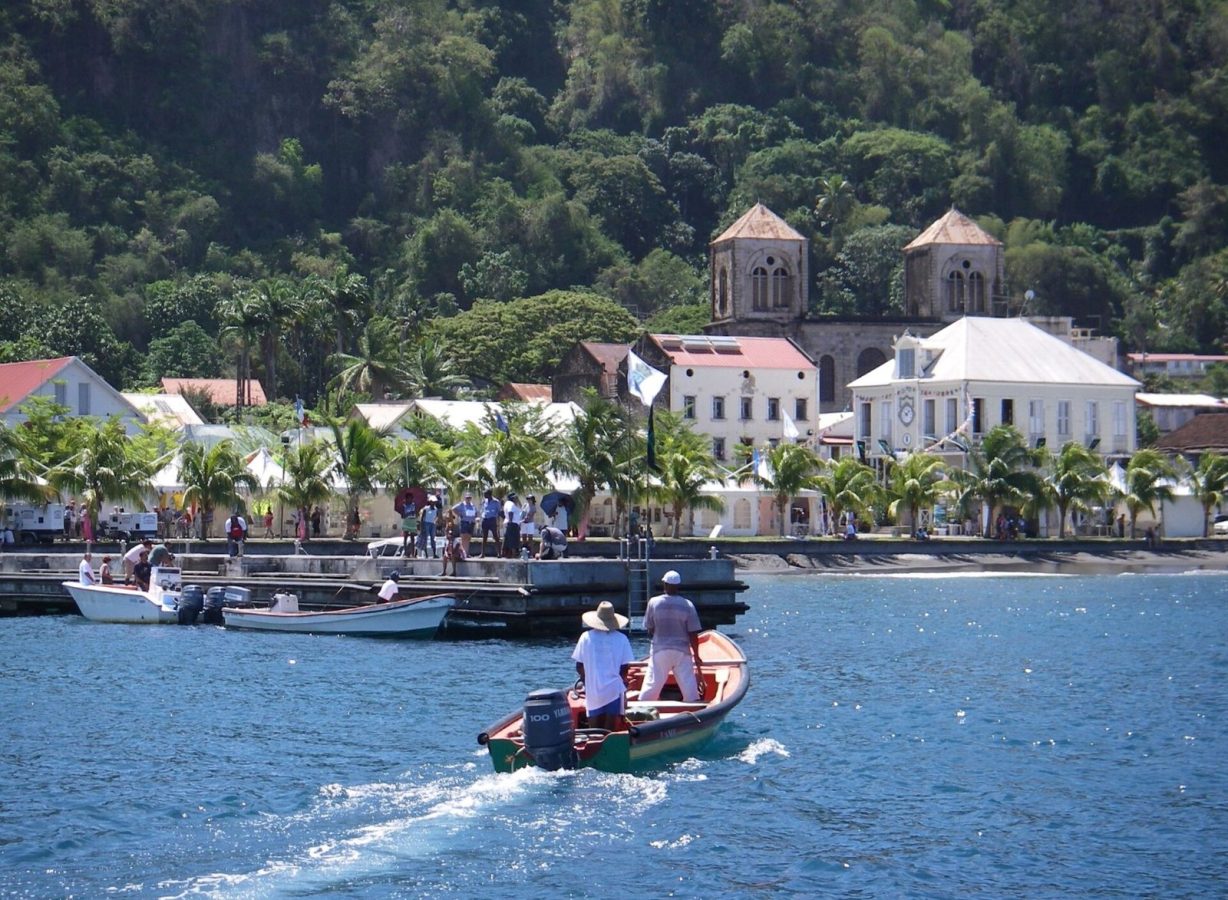
Photo: Jean & Nathalie, CC BY-SA 2.0
| Getting there | Flights from Paris about 8.5 h, seasonally from North America; ferries from Guadeloupe and Saint Lucia |
|---|---|
| Gateway | Fort-de-France (Aime Cesaire airport) |
| Travel time | About 8.5 h flight from Paris |
| Days | A week or more |
| Best months | Dec–Apr in the dry season; hurricane season Jun–Nov |
| Getting around | Rent a car; buses are patchy, but ferries cross the bay from Fort-de-France |
| Booking | Flights, cars and rooms for Christmas, February and Easter early; boats days ahead |
| Cost | Mid-range; prices close to mainland France |
| Beaches | Pale sand in the south at Les Salines and Anse d'Arlet; black sand in the north; rough Atlantic side |
| Sea | Caribbean Sea |
| Archipelago | Lesser Antilles |
| Area | 1,128 km² |
| Population | 349,925 (2024) |
| Highest point | 1,397 m (Mount Pelee) |
| Airport | Yes, scheduled flights |
| Car-free | No |
| UNESCO | Volcanoes and Forests of Mount Pelee and the Pitons of Northern Martinique |
| Checked | November 2026 |
Tours on Martinique start from several towns rather than one hub, so choose by where you stay. Most last half a day or a full day, and hotel pickup is not always included.
On the Caribbean coast the bestseller is a boat trip to see turtles and dolphins. Boats from Les Trois-Ilets, Les Anses d'Arlet, Fort-de-France, Bellefontaine and Le Marin cruise past Diamond Rock and the sea caves, stop to snorkel over coral and seagrass where green turtles feed, and usually serve a rum punch on the way back. Catamaran, speedboat and private versions exist, there are sunset aperitif trips and night snorkels, and dive shops in Les Anses d'Arlet run first dives and outings on underwater scooters.
On the Atlantic side, boats from Le Francois and Le Robert go out to the islets and the Fonds Blancs, white sandbanks such as the Baignoire de Josephine where you stand waist-deep in clear water; full days add a grilled lobster or fish lunch on an islet. Licence-free boats can be rented in Robert Bay, and mangrove trips by boat leave from Les Trois-Ilets and Fort-de-France.
On land, guided tours cover the green north with Saint-Pierre, the rainforest road and a rum distillery, or the beaches of the south; cruise passengers get shorter versions, and there are distillery visits, fishing trips and spa mornings. Rent a car, book one turtle trip and one sandbank day, and drive the rest yourself.
The old capital on the north-west coast was wiped out by the eruption of 1902, and its ruined theatre, church walls and the cell of a prisoner who survived still stand among the rebuilt town. Above it rises Mount Pelee; the hike from the Aileron car park to the rim takes two to three hours up, on clear mornings only.
On the south-west coast, the village of Grande Anse d'Arlet and its neighbour Anse Dufour are where green turtles feed on seagrass a short swim from the beach. Bring a mask, keep a few metres away and never touch them. The church by the jetty in Petite Anse d'Arlet is one of the most photographed views on the island.
Near Sainte-Anne, at the southern tip, Les Salines is the island's best-known beach: a long curve of pale sand under coconut palms, busy with local families at weekends. A coastal path continues east along empty coves and dry savannah to the petrified forest area. Come on a weekday morning for space and shade.
The mountain road north from Fort-de-France climbs through tree ferns, bamboo and dense rainforest towards the Pitons du Carbet. Stop at the Balata garden, with its tropical plants and rope bridges in the canopy, and at the Sacre-Coeur copy in Balata village. Short trails along the way lead to waterfalls and river pools.
Martinique makes rhum agricole from fresh cane juice rather than molasses, with its own protected name. Several estates welcome visitors with tastings and old plantation houses: Habitation Clement near Le Francois has gardens and modern art, and Depaz sits below Mount Pelee near Saint-Pierre. The cane harvest and pressing season runs roughly from February to June.
The capital has the Savane park, the ornate Schoelcher Library and a busy covered market for spices and fruit. From the waterfront, small ferries cross the bay in about 20 minutes to Les Trois-Ilets, where the birthplace of the Empress Josephine is now a museum and the beach resort of Anse Mitan lies nearby.
Our pick for each kind of trip, with live dates and prices. Free cancellation on most.
Best for: First visit, the south coast by boat
A half-day from Les Trois-Ilets along the Caribbean shore to Diamond Rock, with sea caves and a swim among the turtles that graze in the southern bays.
Martinique Aime Cesaire airport at Le Lamentin, just east of Fort-de-France, is the only airport. Air France, Air Caraibes and Corsair fly daily from Paris in about eight and a half hours, and there are seasonal direct flights from North America and connections from other Caribbean islands, often via Guadeloupe. As part of France it uses the euro, but it is not in the Schengen area, so travellers who need a visa should check the rules before booking.
Fast ferries link Fort-de-France with Saint Lucia in about an hour and a half and, via Dominica, with Guadeloupe in around four to five hours, several times a week. Fort-de-France is also a regular call for Caribbean cruise ships, which dock close to the centre.
A car is close to essential. Rentals are available at the airport, roads are French-standard but winding in the north, and traffic around Fort-de-France is heavy at rush hours, so plan drives for mid-morning. Public buses and shared taxis exist but are infrequent and confusing for visitors, and stop early in the evening. Ferries cross the bay from Fort-de-France to Les Trois-Ilets and Anse Mitan, which helps if you stay on that side.
The dry season, from December to April, is the best time: sunny days, around 28 degrees, cooling trade winds and the clearest views of Mount Pelee. It is also the high season, with peak prices at Christmas, the February school holidays in France and Easter. Carnival fills the streets in the days before Lent and ends with the burning of the king figure on Ash Wednesday.
From June to November is the wet season, with heavy showers, humidity and the risk of hurricanes, most likely from August to October. Prices drop and the island is green, but check forecasts and travel insurance. The sea stays warm all year, at roughly 26 to 29 degrees. In July and August, the yole races around the island draw big crowds. Allow a week to see both the north and the south without rushing.
Most visitors stay in the south, which has the beaches and the sun. Les Trois-Ilets and Anse Mitan have the most hotels and a ferry to the capital; Sainte-Luce and Sainte-Anne suit beach days and families; Les Anses d'Arlet is small and good for snorkellers. The north, around Le Carbet and Saint-Pierre, suits hikers and those who want rainforest and quiet, with darker sand. On the Atlantic side, Le Francois is the base for lagoon trips.
The Kalinago people called the island Madinina. Columbus landed in 1502, and France settled it in 1635, turning the land into sugar plantations worked by enslaved Africans until slavery was abolished in 1848, a struggle remembered in many memorials. Josephine, later the wife of Napoleon, was born on a plantation at Les Trois-Ilets. The 1902 eruption of Mount Pelee killed nearly the whole population of Saint-Pierre. Since 1946 Martinique has been part of France, and the poet Aime Cesaire made it a centre of Caribbean thought. The north's volcanoes and forests became a World Heritage Site in 2023.
Martinique pairs naturally with Saint Lucia, an hour and a half south by fast ferry, and with Dominica and Guadeloupe to the north on the same ferry line, which makes a good island-hopping trip through the French and English Caribbean. Short flights connect it with Guadeloupe, Barbados and Saint Martin.
Flights from Paris about 8.5 h, seasonally from North America; ferries from Guadeloupe and Saint Lucia.
From Fort-de-France (Aime Cesaire airport): about 8.5 h flight from Paris.
A week or more.
Dec–Apr in the dry season; hurricane season Jun–Nov.
Rent a car; buses are patchy, but ferries cross the bay from Fort-de-France.
Go if you want a large, varied Caribbean island with volcano hikes, rum, turtle snorkelling and good food. Skip it or choose Saint Lucia or Barbados if you want all-inclusive resorts, English everywhere and long stretches of quiet sand.
Mid-range; prices close to mainland France.
Pale sand in the south at Les Salines and Anse d'Arlet; black sand in the north; rough Atlantic side.
Flights, cars and rooms for Christmas, February and Easter early; boats days ahead.
Yes. Boat trips, guided tours and day trips for Martinique can be booked online; live prices and free cancellation on most are shown on this page.
Lesser Antilles, French West Indies
Guadeloupe is a French overseas department in the Lesser Antilles, shaped like a butterfly: the volcanic, rain-forested…
32 tours & trips
Lesser Antilles, French West Indies
St Martin is an 87-square-kilometre island in the north-east Caribbean shared since 1648 by France and the Netherlands,…
No tours listed