Santorini
Cyclades, Greece
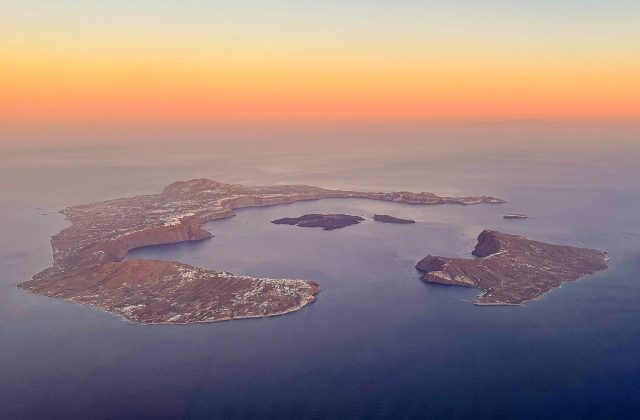
Santorini is the ring of a drowned volcano in the southern Cyclades: white villages along a 300-metre cliff, black-sand…
772 tours & trips
Greece · Aegean Sea · Beach island
Milos is a volcanic island at the south-western edge of the Cyclades, wrapped round a large flooded caldera that forms one of the best natural harbours in the Aegean. Its coast of white, red and ochre rock, sculpted by the sea into arches and caves, has some 70 beaches, from white rock ledges to red sand.
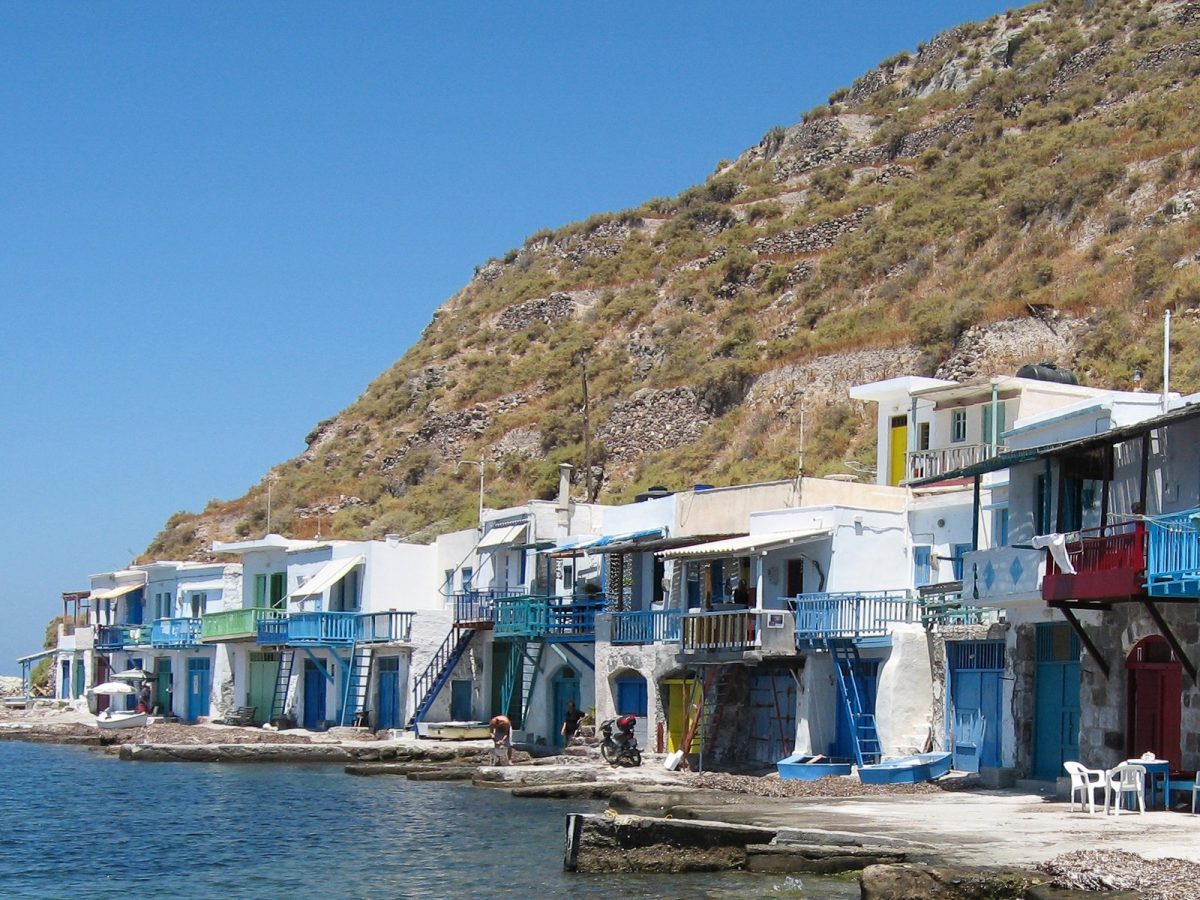
Photo: Oliwan, CC BY-SA 3.0
| Getting there | Ferry from Piraeus in 3 to 7 h, or a 45-min flight from Athens; boats link Sifnos, Serifos and Kimolos |
|---|---|
| Gateway | Athens (Piraeus) |
| Travel time | 3 to 4 h by fast ferry or 45 min by air |
| Days | 3 to 5 nights |
| Best months | June and September; July–August hot, busy and windy; quiet Nov–Mar |
| Getting around | Rent a car or quad; buses link Adamas, Plaka and some beaches; 4x4 for the far west |
| Booking | Rooms and cars months ahead for July–August; Kleftiko boat trips a few days ahead |
| Cost | Mid-range, rising fast; cheaper than Santorini or Mykonos |
| Beaches | White rock at Sarakiniko; sand at Firiplaka, Paleochori and Provatas; Kleftiko only by boat |
| Sea | Aegean Sea |
| Archipelago | Cyclades |
| Area | 151 km² |
| Population | 5,193 (2021) |
| Highest point | 0 m |
| Airport | Yes, scheduled flights |
| Car-free | No |
| Checked | October 2026 |
On Milos almost everything sold is a boat trip, because Kleftiko, the most famous sight, can only be reached from the sea.
The standard is a full-day sailing boat or catamaran from Adamas or Pollonia that circles the west coast to Kleftiko, often stopping at the Sykia cave and at Gerakas, with lunch, drinks and snorkel gear included. Half-day speedboat and RIB trips cover the same coast faster and in smaller groups, and a sunset version returns past the cliffs at dusk. A second common route crosses to the uninhabited island of Polyaigos, whose shallow turquoise water is the clearest in the area, sometimes adding Kimolos.
If you want independence, self-drive boats need no licence for small engines and allow you to set your own pace on calm days. On land, small-group tours combine Sarakiniko, Plaka, the catacombs and the ancient theatre, and specialist guides explain the island's geology and mining. Jeep safaris head down the dirt tracks of the west, and e-bike tours link Plaka and Pollonia.
Check whether lunch and drinks are included and from which port the boat leaves. A full-day Kleftiko trip is the one to book first.
On the remote south-west coast, white cliffs rise from the sea with arches, tunnels and sea caves that pirates once used as a hideout. Boats anchor in the bay and you swim through the arches and into the caves; the water is deep, clear and often calm here even when the north wind blows. It is reachable by sea or by a long, rough hike.
On the north coast, a short drive from Adamas, waves have carved soft white volcanic rock into smooth ridges and a narrow inlet. Swim in the inlet, jump from the low rocks if the sea is calm, and explore the old mining tunnels at the edges. Come early or at sunset; there is no shade, and midday light is blinding.
The hilltop capital is a maze of whitewashed lanes, small shops and tavernas. Climb to the Kastro, the ruined Venetian castle at the top, for one of the finest sunsets in the Cyclades over the caldera. The small archaeological museum holds a copy of the Venus de Milo, found nearby in 1820.
Below Plaka at Tripiti, early Christian catacombs cut into the soft rock hold hundreds of tomb niches; a short section is open with a guide. A path leads down past the spot where the Venus was discovered to a Roman marble theatre overlooking the bay. Continue to the fishing village of Klima, its boathouses painted in bright colours at the water's edge.
Small fishing coves with brightly painted boathouses line the north coast. Firopotamos has a little beach and a chapel on the point; Mandrakia is a tiny harbour with a taverna. Pollonia, in the north-east, is a relaxed fishing village with good fish restaurants and boats to Kimolos across the strait.
When the north wind blows, head south. Firiplaka has pale sand under red and white cliffs; Tsigrado is a tiny cove reached by a rope and ladder; Paleochori has volcanic heat bubbling through the sand and colourful cliffs. Provatas is a long, shallow sandy beach that suits families.
Our pick for each kind of trip, with live dates and prices. Free cancellation on most.
Best for: First visit, the west coast by boat
The classic Milos day: a catamaran along the cliffs of the west coast to the sea caves and arches of Kleftiko, with swimming stops and a meal on board.
Ferries leave Piraeus for Adamas every day in summer. High-speed boats take about three to four hours; conventional ferries take five to seven but are cheaper and steadier in wind. In winter there are fewer sailings, mostly conventional, so check schedules ahead. In season Milos is also linked by fast boat to Sifnos, Serifos, Folegandros, Santorini and Crete, which makes it easy to include in island hopping.
The small airport near Adamas has flights of about 45 minutes from Athens, several times a day in summer; there are no international flights, so connect in Athens. Planes are small and seats sell out in high season.
Bringing a car from Piraeus is possible but rarely worth it; rental is easy at the port if booked ahead. Kimolos is reached by a short car ferry from Pollonia.
Milos is bigger than it looks, and the western half is mostly dirt roads. Buses run from Adamas to Plaka, Pollonia, Provatas and a few beaches in summer, but a car or quad gives far more freedom. For the far west, including Sykia and the Kleftiko trail, a 4x4 is required, and many rental contracts forbid normal cars on unpaved tracks. Parking in Plaka is outside the village. Taxis are few, so book them in advance.
June and September are the best months, with warm sea, long days and fewer visitors. July and August are hot and very busy, and rooms and cars must be booked months ahead.
The meltemi, a strong north wind, often blows in July and August. It can cancel boat trips and make the northern beaches rough; choose the sheltered southern beaches on those days. When the wind comes from the south, swap. Sea temperatures reach about 24 degrees by late summer.
May and October are pleasant for walking and photography, with cooler water and fewer boats. From November to March most tourist services close, ferries are reduced and the island is quiet and windy. Three to five nights lets you see the island by land and by sea.
Adamas, the port, is the most practical base, with the ferry, buses, car rental and boat departures. Plaka and Tripiti offer sunsets and village atmosphere, but parking is hard. Pollonia is relaxed, with good restaurants and easy access to Kimolos, and suits couples. Klima, Firopotamos and Mandrakia have a few rooms in converted boathouses, popular and expensive. Provatas and the south suit families who want a sandy beach close by.
Milos was known for its obsidian as early as 15,000 years ago, when traders paddled to collect the volcanic glass for blades. In the Bronze Age the town of Phylakopi traded across the Aegean. In 416 BC Athens besieged the island, killing the men and enslaving the women and children, a story told by Thucydides. Later came Romans, early Christians, Venetians and pirates. In 1820 a farmer found the Venus de Milo, now in the Louvre. Mining of bentonite, perlite and other minerals continues today, visible in the quarries and the mining museum in Adamas.
Kimolos, a quiet island just across the strait, is a short ferry ride from Pollonia and makes a day trip. Sifnos and Serifos are an hour or two by fast boat, making a good western Cyclades route. Folegandros and Santorini are reachable in summer by fast boat. Athens is the starting point for all routes, with about three to four hours by fast ferry.
Ferry from Piraeus in 3 to 7 h, or a 45-min flight from Athens; boats link Sifnos, Serifos and Kimolos.
From Athens (Piraeus): 3 to 4 h by fast ferry or 45 min by air.
3 to 5 nights.
June and September; July–August hot, busy and windy; quiet Nov–Mar.
Rent a car or quad; buses link Adamas, Plaka and some beaches; 4x4 for the far west.
Go if you want strange volcanic coastline, boat trips to sea caves and beaches for every wind direction. Skip it or choose Naxos if you want easy sandy beaches near town, smooth roads everywhere and a lively nightlife.
Mid-range, rising fast; cheaper than Santorini or Mykonos.
White rock at Sarakiniko; sand at Firiplaka, Paleochori and Provatas; Kleftiko only by boat.
Rooms and cars months ahead for July–August; Kleftiko boat trips a few days ahead.
Yes. Boat trips, guided tours and day trips for Milos can be booked online; live prices and free cancellation on most are shown on this page.
Cyclades, Greece
Santorini is the ring of a drowned volcano in the southern Cyclades: white villages along a 300-metre cliff, black-sand…
772 tours & trips
Cyclades, Greece
Mykonos is a small, dry and windy island in the central Cyclades, about 85 square kilometres of brown hills ringed by…
294 tours & trips
Cyclades, Greece
Naxos is the largest and greenest of the Cyclades, 428 square kilometres of long sandy beaches, marble villages and…
208 tours & trips
Cyclades, Greece
Paros sits at the heart of the Cyclades, about 150 km south-east of Piraeus and a short hop from Naxos and Mykonos, a…
138 tours & trips
Cyclades, Greece
Antiparos is a small, relaxed island in the Cyclades, separated from Paros by a channel less than two kilometres wide…
38 tours & trips
Cyclades, Greece
Delos is a tiny, uninhabited island in the Cyclades, half an hour by boat from Mykonos, and one of the great…
36 tours & trips