Santorini
Cyclades, Greece
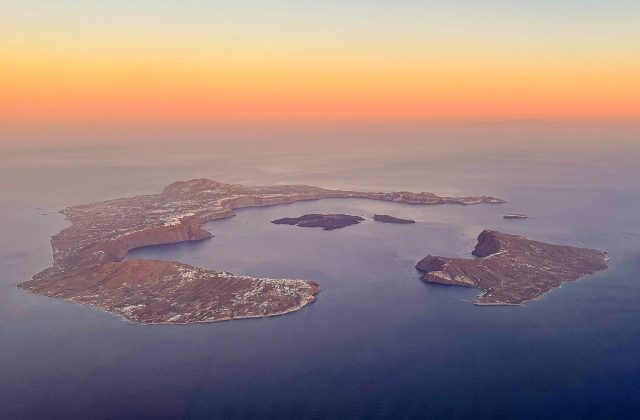
Santorini is the ring of a drowned volcano in the southern Cyclades: white villages along a 300-metre cliff, black-sand…
772 tours & trips
Greece · Aegean Sea · Party island
Mykonos is a small, dry and windy island in the central Cyclades, about 85 square kilometres of brown hills ringed by sandy coves. It draws visitors for the white lanes and windmills of its main town, a long south coast of organised beaches and the most famous nightlife in Greece, and it is the departure point for boats to ancient Delos.
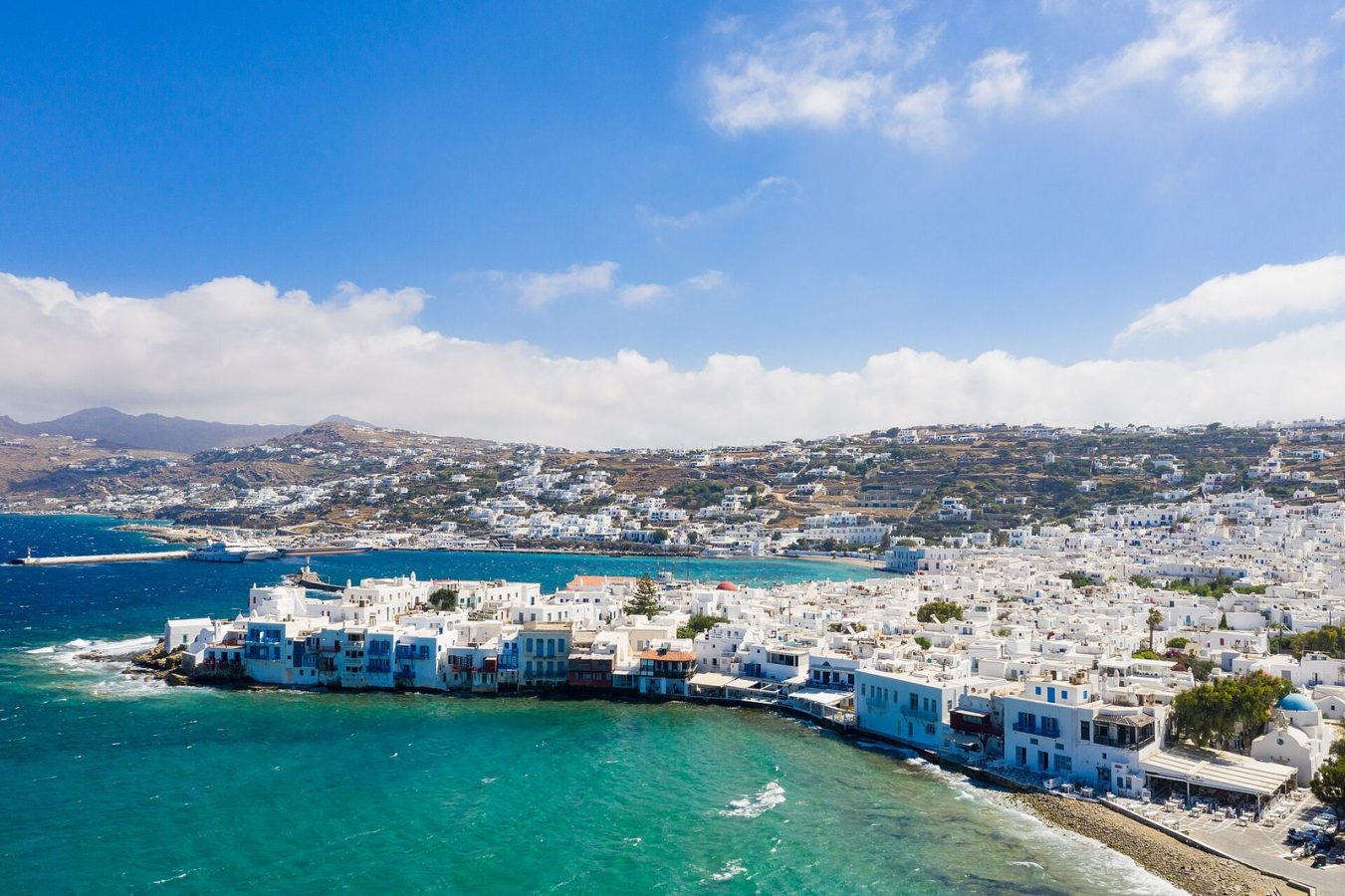
Photo: dronepicr, CC BY 2.0
| Getting there | Ferry from Rafina or Piraeus in 2.5 to 5 h, or a 40-min flight from Athens; fast boats to Tinos, Paros, Naxos |
|---|---|
| Gateway | Athens (Piraeus or Rafina) |
| Travel time | 40 min by air or 2.5 to 5 h by ferry |
| Days | 3 to 4 nights |
| Best months | June and September; July–August busiest and priciest; most things shut Nov–Mar |
| Getting around | Buses from Mykonos Town to the main beaches, sea taxis along the south coast; rent a car or quad |
| Booking | Rooms and summer ferries months ahead; Delos boats and beach-club sunbeds a day ahead |
| Cost | Expensive for Greece, among the priciest islands |
| Beaches | Golden sand in the south: Ornos, Psarou, Platis Gialos, Paradise; quieter Agios Sostis, Fokos |
| Sea | Aegean Sea |
| Archipelago | Cyclades |
| Area | 86 km² |
| Population | 10,704 (2021) |
| Highest point | 341 m |
| Ferry | 2 h 30 min from Athens (Piraeus or Rafina) |
| Airport | Yes, scheduled flights |
| Car-free | No |
| Checked | October 2026 |
What is sold on Mykonos falls into a few clear groups, and the first one is the reason many people come.
Delos is the essential trip. Boats leave the old harbour of Mykonos Town several times a day in season and take about 30 minutes; guided versions add an archaeologist-trained guide for the two or three hours on site, which helps on an island of bare foundations with little shade. Longer boat days combine Delos with a swim off neighbouring Rhenia and usually include lunch.
The second group is the sea: south coast cruises on catamarans or small yachts with swimming stops, snorkelling and drinks, sunset sails, and a large choice of private boats by the hour, which are the main luxury purchase here. Party boats with a DJ and open bar aim at a younger crowd.
On land you find jeep and quad tours of the quiet north and east, walking tours of the town, cooking classes at farms near Ano Mera and tastings of local beer and wine. Ferry and helicopter transfers to other islands are also sold.
Our advice: book Delos with a guide, and pick one boat day on the south coast or Rhenia rather than paying for several.
The main town is a maze of whitewashed lanes, built to confuse the wind and pirates alike, with small chapels on every corner. Walk from the harbour through Matoyianni Street to Little Venice, where old captains' houses hang over the sea, and see the white church of Paraportiani. Go early in the morning before the cruise passengers arrive.
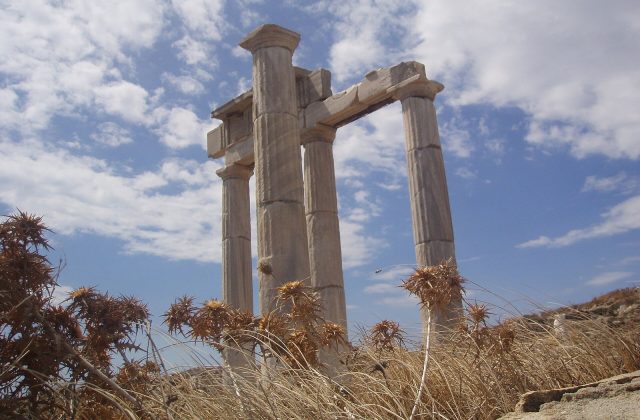
The uninhabited island 30 minutes by boat from the old harbour was the birthplace of Apollo in myth and one of the great sanctuaries of the Greek world, now a UNESCO World Heritage site. Walk past the Terrace of the Lions, houses with mosaic floors and the theatre, then climb Mount Kynthos for the view. Bring water, a hat and good shoes.
A row of thatched windmills stands on the low ridge just above Little Venice, a five-minute walk from the town centre. They once ground grain for passing ships and are now the island's symbol. The ridge is the classic sunset spot, so it fills up in the evening; the view back across Little Venice is best in the late afternoon.
The sheltered south coast holds most of the sand. Ornos and Psarou are close to town and good for families; Platis Gialos is the hub for sea taxis that hop to Paradise, Super Paradise and Elia, where beach clubs and loud music take over in the afternoon. Sunbeds at the smartest clubs cost a lot, so check before you sit.
The island's only inland village lies about 8 km east of town around a square of tavernas. Its monastery of Panagia Tourliani, founded in the 16th century, has a carved wooden iconostasis and a fine marble bell tower. It is a good lunch stop on a drive to the quieter beaches of the east, such as Kalafatis and Agia Anna.
The north coast faces the wind and feels empty: stone walls, chapels and beaches such as Agios Sostis and Fokos with one taverna each and no clubs. The Armenistis lighthouse on the north-west cape looks across to Tinos and makes a quiet alternative for the sunset, about 20 minutes by car from town.
Our pick for each kind of trip, with live dates and prices. Free cancellation on most.
Best for: First visit, ancient Delos
A guided morning at the sanctuary of Apollo on Delos, the one excursion that gives a stay on Mykonos real depth, with the boat from the old harbour included.
Mykonos airport lies just outside the main town, with flights of about 40 minutes from Athens all year and direct flights from many European cities in summer.
Most visitors still come by sea. Fast boats from Rafina, the closer Athens port, take around two and a half hours; from Piraeus fast ferries take about three hours and conventional ships up to five. In season there are several sailings a day, falling to one or two in winter, when the wind often delays them. Most boats use the new port at Tourlos, about 2 km north of town, linked by buses and a small sea bus. Fast connections run on to Tinos, Paros, Naxos and Santorini. Cruise ships also dock at Tourlos, sometimes several on one day. There is little reason to bring a car from Athens.
The island is small, and buses from two stations in Mykonos Town reach Ornos, Platis Gialos, Paradise, Kalafatis, Ano Mera and the new port, frequently in summer. Sea taxis connect Platis Gialos and Ornos with the south coast beaches. Taxis are scarce in high season, so many people rent a small car, scooter or quad; roads are narrow and winding, and parking near the town is difficult, so use the edge-of-town car parks and walk in.
June and September are the best months: hot, long days, sea warm enough for long swims and prices below the August peak. July and August bring the strongest meltemi, the north wind that can blow for days, cancel small boats and make the north coast unswimmable, along with the highest prices and the busiest clubs. The sea is at its warmest in late August and September.
May and October are quieter and cheaper, good for walking and Delos, though the water is cooler and some beach clubs are not yet open or already closed. From November to March most hotels, restaurants and clubs shut, ferries are fewer and the island returns to its residents. Three or four nights cover the town, Delos and a few beaches; party travellers often stay longer.
Mykonos Town is the best base without a car: everything is on foot, the nightlife is on your doorstep and buses leave for the beaches, but rooms are noisy and expensive. Ornos and Agios Stefanos are close to town with their own beaches. The south coast around Platis Gialos, Psarou and Paradise suits beach and party stays, and the smart hotels gather here. Ano Mera and the east around Kalafatis are quieter and better value if you have a car.
In antiquity Mykonos was a poor, rocky neighbour of sacred Delos, and its fortunes followed those of the sanctuary. Under Venetian and then Ottoman rule it lived from the sea, from trade and, by many accounts, from dealings with the pirates who used the Cyclades as a base; the tight lanes of the town were a defence. Mykonian ships joined the Greek War of Independence in the 1820s, led by the local heroine Manto Mavrogenous. After the Second World War artists and wealthy travellers discovered the island, and by the 1970s it was famous for its open, gay-friendly nightlife, which still shapes it today.
Tinos, with its pilgrimage church and marble villages, is only 15 to 30 minutes away by boat and makes a calmer counterpoint. Paros and Naxos are about an hour by fast ferry, and Santorini two to three hours, so a classic route is Athens, Mykonos, Naxos or Paros, then Santorini. Syros, the capital of the Cyclades, is another short hop.
Ferry from Rafina or Piraeus in 2.5 to 5 h, or a 40-min flight from Athens; fast boats to Tinos, Paros, Naxos.
From Athens (Piraeus or Rafina): 40 min by air or 2.5 to 5 h by ferry.
3 to 4 nights.
June and September; July–August busiest and priciest; most things shut Nov–Mar.
Buses from Mykonos Town to the main beaches, sea taxis along the south coast; rent a car or quad.
Go if you want sandy beaches, beach clubs, late nights and an easy half-day trip to Delos. Skip it or choose Naxos or Paros if you want quiet villages, family tavernas and Greek island prices in July and August. At about 2 h 30 min each way from Athens (Piraeus or Rafina), it is worth staying at least one night.
Expensive for Greece, among the priciest islands.
Golden sand in the south: Ornos, Psarou, Platis Gialos, Paradise; quieter Agios Sostis, Fokos.
Rooms and summer ferries months ahead; Delos boats and beach-club sunbeds a day ahead.
Yes. Boat trips, guided tours and day trips for Mykonos can be booked online; live prices and free cancellation on most are shown on this page.
Cyclades, Greece
Santorini is the ring of a drowned volcano in the southern Cyclades: white villages along a 300-metre cliff, black-sand…
772 tours & trips
Cyclades, Greece
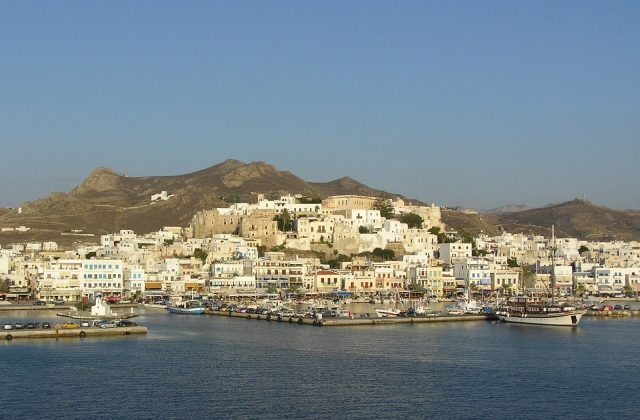
Naxos is the largest and greenest of the Cyclades, 428 square kilometres of long sandy beaches, marble villages and…
208 tours & trips
Cyclades, Greece
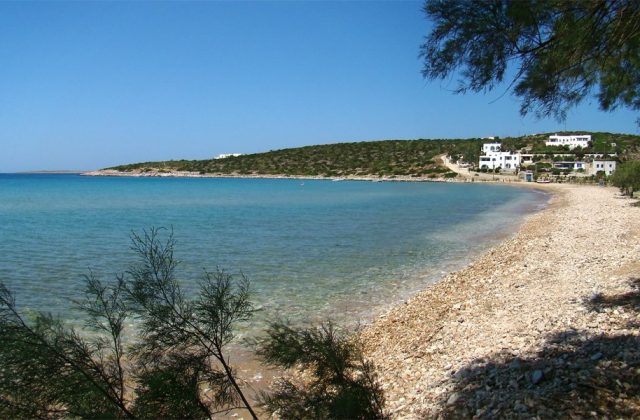
Paros sits at the heart of the Cyclades, about 150 km south-east of Piraeus and a short hop from Naxos and Mykonos, a…
138 tours & trips
Cyclades, Greece
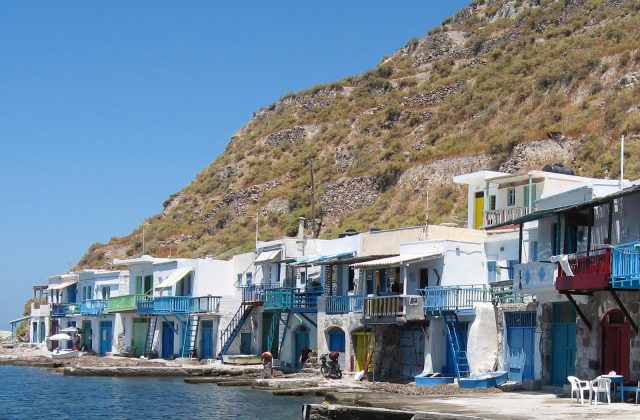
Milos is a volcanic island at the south-western edge of the Cyclades, wrapped round a large flooded caldera that forms…
122 tours & trips
Cyclades, Greece
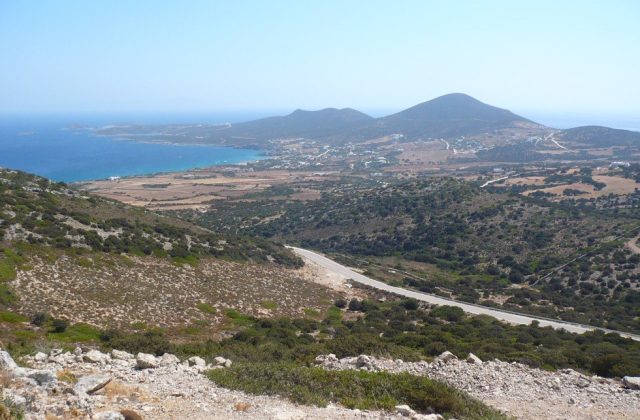
Antiparos is a small, relaxed island in the Cyclades, separated from Paros by a channel less than two kilometres wide…
38 tours & trips
Cyclades, Greece
Delos is a tiny, uninhabited island in the Cyclades, half an hour by boat from Mykonos, and one of the great…
36 tours & trips