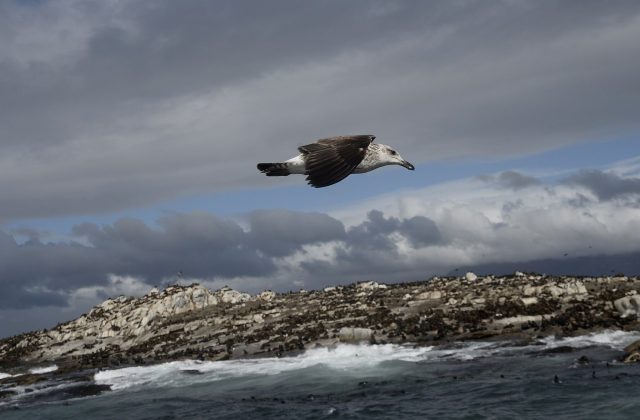
Seal Island, False Bay
South Africa
Seal Island is a bare granite rock of about two hectares in False Bay, 5.7 km off the beaches south-east of Cape Town,…
No tours listed
South Africa · Atlantic Ocean · Historic island
Robben Island is a flat, windswept island of about 5 square kilometres in Table Bay, roughly 7 km off the Cape Town coast, where Nelson Mandela spent 18 years in prison. Now a museum and UNESCO World Heritage Site, it is visited on guided tours led partly by former political prisoners.
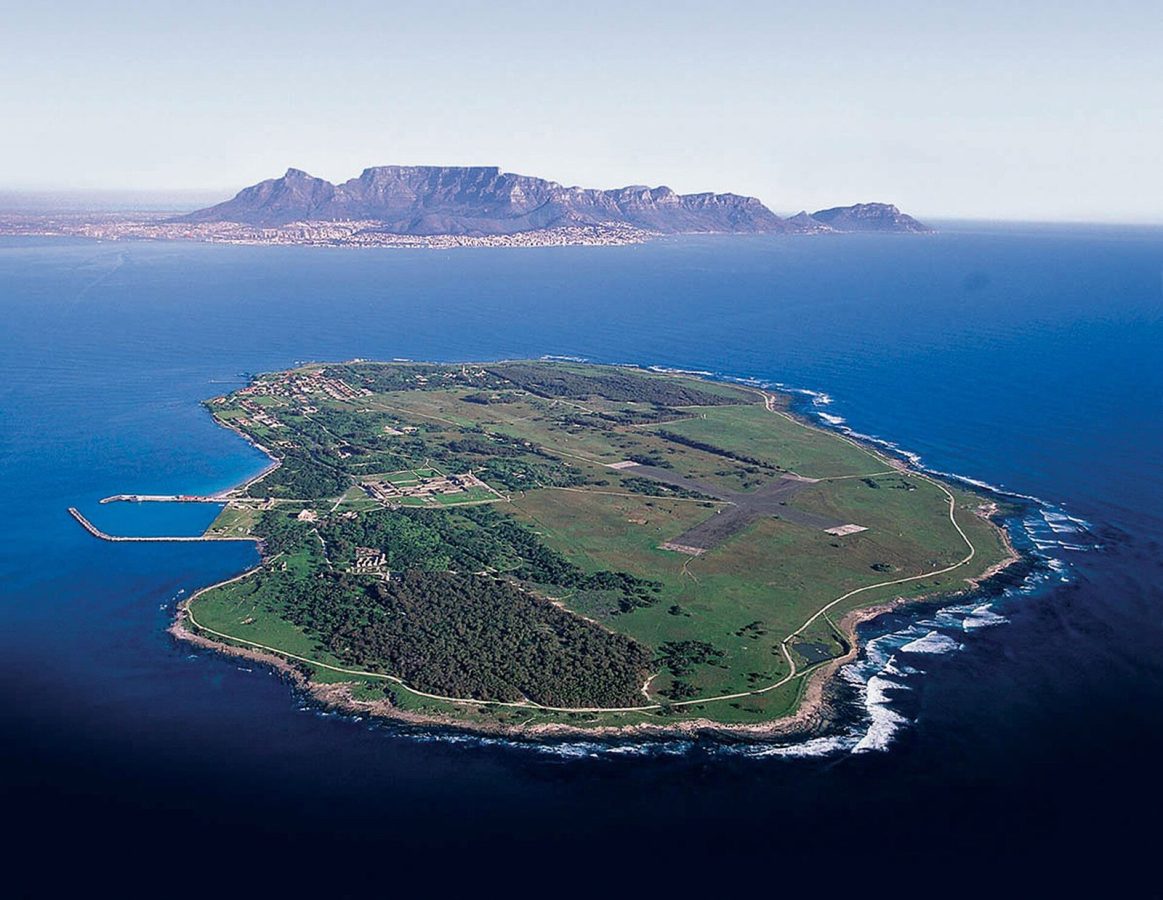
Photo: South African Tourism from South Africa, CC BY 2.0
| Getting there | Ferry from the Nelson Mandela Gateway at the V&A Waterfront in about 30 to 45 min |
|---|---|
| Gateway | Cape Town (V&A Waterfront, Nelson Mandela Gateway) |
| Travel time | 30 to 45 min by ferry |
| Days | A half-day trip |
| Best months | Oct–Apr calmer seas; May–Sep crossings often cancelled by swell |
| Getting around | Guided bus tour plus a walk through the prison; no independent exploring |
| Booking | Tickets several days ahead, weeks in Dec–Jan; check the ferry status that morning |
| Cost | Mid-range; the museum ticket includes the ferry |
| Beaches | No beaches for visitors; penguins and seals on the rocky shore |
| Sea | Atlantic Ocean |
| Area | 5.1 km² |
| Highest point | 17 m |
| Ferry | 30 min from Cape Town (V&A Waterfront, Nelson Mandela Gateway) |
| Airport | No |
| UNESCO | Robben Island |
| Checked | October 2026 |
Every visit to Robben Island follows the same official format run by the museum: a ferry from the Nelson Mandela Gateway at the V&A Waterfront, a bus tour of the island with a guide, a walk through the maximum security prison with a former political prisoner, and the ferry back. The whole trip takes about three and a half to four hours, and departures run several times a day, weather permitting.
What tour operators sell is mainly access and logistics around this. Ticket bundles guarantee a place on a ferry at busy times, often with a hotel transfer or a host who handles check-in. Half-day tours combine the island with a city drive, the Bo-Kaap or a museum, while full-day tours pair it with the Table Mountain cable car, the Two Oceans Aquarium or a drive to Cape Point and the penguins at Boulders. Private and multi-day Cape Town tours include it too. The museum ticket and the ferry are normally included; meals rarely are.
If you can, book directly early; otherwise buy a ticket bundle, and keep a flexible day in case of cancellation.
The heart of the visit is the prison complex, where former inmates guide groups through the communal cells, the censorship office and B Section. They describe daily life, the food rules that differed by race, and the hunger strikes and study groups that turned the prison into a university of the struggle. Questions are welcome; allow about an hour.
In B Section, a small cell about two metres square held Mandela from 1964 to 1982, with a mat, a blanket and a bucket. It is left as it was, seen through the bars, and groups pause there briefly. In the courtyard outside he and others gardened and hid the early manuscript of his autobiography.
The bus stops at the bright white quarry where political prisoners broke stone for years, damaging their eyesight in the glare. A pile of stones marks the 1995 reunion of former inmates, each adding a stone. The cave at one side served as a toilet and a place for discussion, where future leaders debated politics.
The leader of the Pan Africanist Congress was held here in solitary confinement from 1963 to 1969, in a small house apart from the prison, under a law renewed each year specifically for him. Guards and dogs kept him isolated, and he was forbidden to speak to other prisoners. The bus tour passes it with commentary.
The bus loop also passes the domed Kramat, the shrine of a Muslim leader exiled here in the 18th century, the graveyard of the leper colony from the 19th century, the 1865 lighthouse and wartime gun emplacements. African penguins nest on the shore, and on clear days the view back to Table Mountain is classic.
Our pick for each kind of trip, with live dates and prices. Free cancellation on most.
Best for: First visit, the museum tour
The straightforward option: the return ferry and the official guided visit of the island and the prison, with no extra stops to fit around.
Ferries leave from the Nelson Mandela Gateway at the Clock Tower in the V&A Waterfront, Cape Town's harbour district. The crossing takes about 30 to 45 minutes depending on the boat, and departures run several times a day, more often in summer. Tickets include the ferry and the tour and are sold by the museum online and at the Gateway, where there is a small exhibition to see while you wait.
Tours are often cancelled by wind and swell, especially from May to September, so check the status on the morning of travel and keep a spare day. Arrive at least 30 minutes early for check-in. The Waterfront has paid parking, and minibus taxis, ride-hailing cars and buses link it with the city centre and hotels.
You cannot explore Robben Island on your own. On landing at Murray's Bay harbour, visitors board buses for a guided loop of about 45 minutes with stops at the quarry and the viewpoint, then walk through the prison with a former inmate. Paths are flat but the wind can be strong and the sun fierce, so bring a jacket, hat and water. The prison and buses have limited access for wheelchairs; ask when booking.
The best time is the southern summer from October to April, when the sea in Table Bay is calmer and ferries run most reliably. December and January bring the main South African holidays and international visitors, when tickets sell out days ahead and morning ferries fill first.
From May to September Cape Town's winter storms bring rain and big swell, and tours are cancelled more often, sometimes for several days in a row. When they run, though, the island is quieter and the light is clear.
Morning departures are generally calmer than afternoon ones, when the southeasterly wind can pick up in summer. Freedom Day on 27 April and Mandela Day on 18 July bring special events. Allow half a day for the trip and combine it with the Waterfront or a city museum.
There is no accommodation for visitors on the island. Stay in Cape Town: the V&A Waterfront is the most convenient, steps from the ferry and with many restaurants, but it is the priciest area. The City Bowl and Gardens are close to museums and cheaper, Green Point and Sea Point are near the Waterfront with an ocean promenade, and Bloubergstrand, across the bay, has the famous view of Table Mountain.
Named after the seals the Dutch called robben, the island has been a place of banishment since the 17th century, when the Dutch East India Company held Khoikhoi leaders and political exiles from its eastern colonies here. Later it served as a leper colony, an asylum and a military base in the Second World War. From 1961 the apartheid government used it as a maximum security prison for political prisoners, among them Nelson Mandela. The last prisoners left in 1991, and the museum opened in 1997.
Robben Island fills half a day in Cape Town, best paired with the District Six Museum or the Bo-Kaap for more history and the Table Mountain cable car if the weather is clear. A full day can add the Cape Peninsula, with the penguins at Boulders Beach and Cape Point, about an hour and a half south, and the winelands of Stellenbosch are under an hour away.
Ferry from the Nelson Mandela Gateway at the V&A Waterfront in about 30 to 45 min.
From Cape Town (V&A Waterfront, Nelson Mandela Gateway): 30 to 45 min by ferry.
A half-day trip.
Oct–Apr calmer seas; May–Sep crossings often cancelled by swell.
Guided bus tour plus a walk through the prison; no independent exploring.
Go if you want to understand apartheid and the struggle against it, told by people who were imprisoned here. Skip it or visit the District Six Museum instead if tickets are sold out, the sea is rough or you get seasick. With about 30 min each way from Cape Town (V&A Waterfront, Nelson Mandela Gateway), a day trip is easy to do.
Mid-range; the museum ticket includes the ferry.
No beaches for visitors; penguins and seals on the rocky shore.
Tickets several days ahead, weeks in Dec–Jan; check the ferry status that morning.
Yes. Boat trips, guided tours and day trips for Robben Island can be booked online; live prices and free cancellation on most are shown on this page.
South Africa
Seal Island is a bare granite rock of about two hectares in False Bay, 5.7 km off the beaches south-east of Cape Town,…
No tours listed