Palau
33 km away
Palau is a small Pacific nation of about 340 islands in western Micronesia, with a land area of only 466 square…
1 tour
Palau · Pacific Ocean · Nature & wildlife island
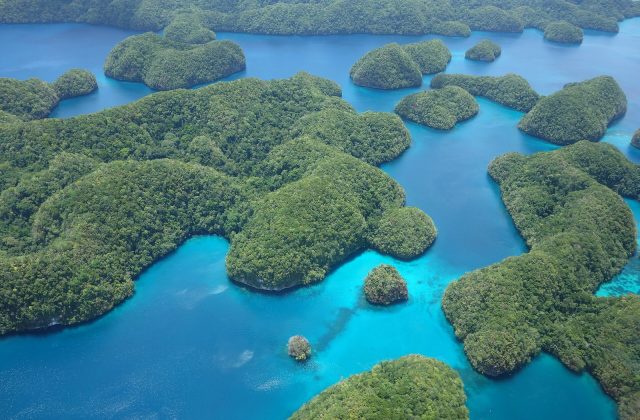
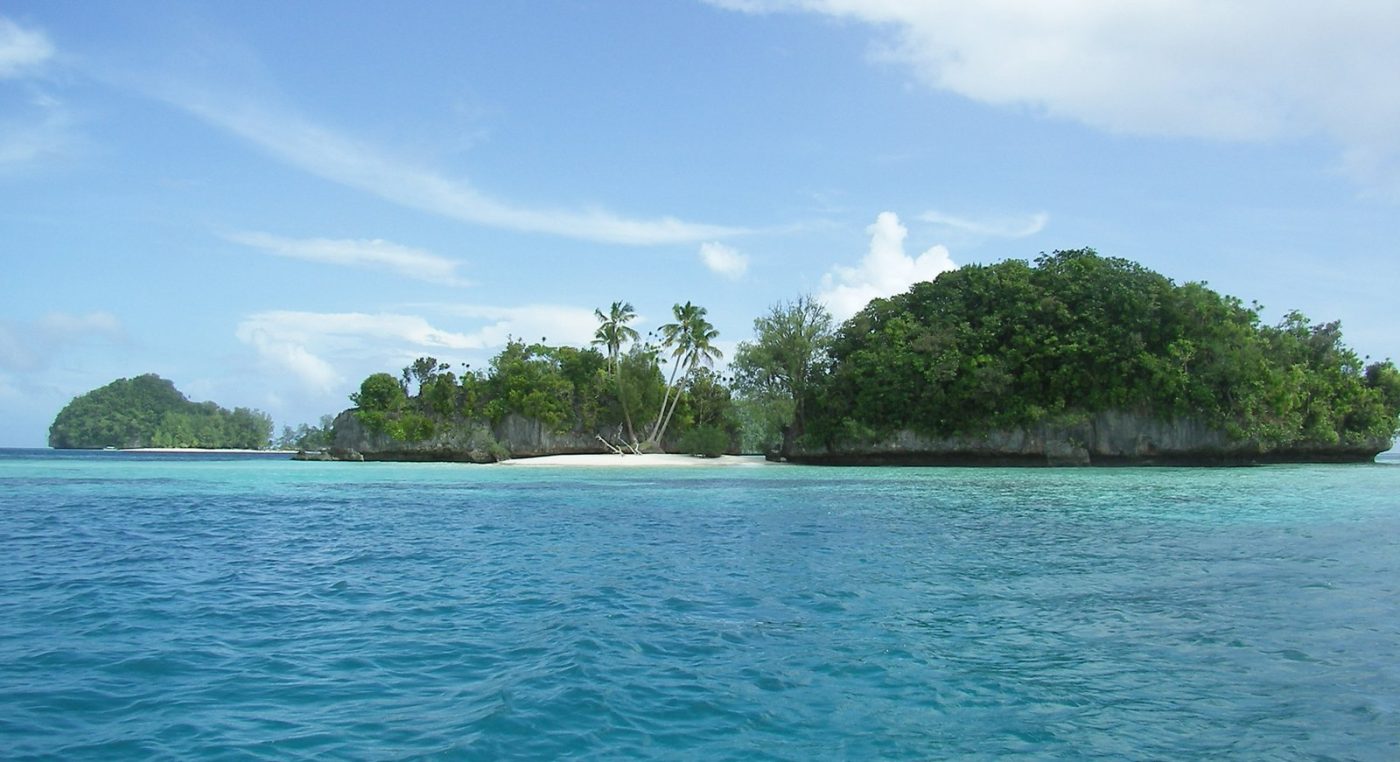
The Rock Islands are a maze of some 250 to 300 small limestone islands in the southern lagoon of Palau, between Koror and Peleliu, many shaped like green mushrooms undercut by the sea. They are uninhabited and protected as a World Heritage Site, and the reefs, marine lakes and channels around them give some of the best snorkelling and diving in the Pacific.
| Getting there | Fly to Palau's airport on Babeldaob; day boats leave Koror for the islands in 20 to 60 min |
|---|---|
| Gateway | Koror |
| Travel time | 20 to 60 min by speedboat from Koror |
| Days | 3 to 5 nights |
| Best months | Nov–Apr drier and calmer; Jun–Oct wetter and windier; warm sea all year |
| Getting around | Only by boat or sea kayak from Koror, with a guide or licensed operator |
| Booking | Flights and dive boats well ahead; snorkel and kayak trips a day or two before |
| Cost | Expensive: permits, boat trips and rooms are priced in USD |
| Beaches | Small white coral-sand coves, such as Long Beach at low tide, used for picnic stops |
| Sea | Pacific Ocean |
| Area | 42 km² |
| Population | 6 (2014) |
| Highest point | 207 m |
| Airport | No |
| Car-free | Yes |
| UNESCO | Rock Islands Southern Lagoon |
| Checked | October 2026 |
Nothing is sold online for the Rock Islands as a single product, but nearly every visit is an organised boat day from Koror, booked through a dive shop, hotel or local operator.
The most popular choice is the full-day snorkelling trip by speedboat. It typically visits two or three reefs, the white limestone mud of the Milky Way, a lunch stop on a sandy beach and, when it is open, Jellyfish Lake. Dive trips are the second big category: two or three tank days to Blue Corner, German Channel or the Blue Holes on the outer reef, where currents bring sharks, rays and big schools of fish; some include certification courses. Guided kayak days through the sheltered bays of Nikko Bay and the inner islands are quieter, with snorkelling in between.
Prices usually include the boat, guide, lunch and drinks; the Rock Islands permit, which is required for every visitor, is often extra, and Jellyfish Lake needs a separate, more expensive permit. Some operators also arrange overnight camping on designated beaches. The plain recommendation for a first visit is one snorkelling day, one kayak day and, if you dive, at least two days on the outer reefs.
A marine lake inside one of the larger islands holds millions of golden jellyfish with very mild stings, through which you can snorkel slowly. The population collapsed in a drought in 2016 and has been recovering, so the lake has been closed and reopened since; check before you go. Diving is banned there, and no sunscreen is allowed in the water.
On the outer reef south-west of the islands, about an hour by boat from Koror, Blue Corner is a reef hook where divers clip on and watch grey reef sharks, barracuda and turtles in the current. German Channel, cut through the reef in the early 20th century, is known for manta rays at cleaning stations. Both are for experienced divers.
In a sheltered cove among the islands, the sea floor is covered in fine white limestone mud, and the water above turns an opaque turquoise. Guides scoop the mud from the bottom so visitors can spread it on their skin before swimming it off. It is usually combined with a snorkelling reef and a lunch beach on the same day.
Close to Koror, Nikko Bay is a calm basin ringed by small islets, sea caves and overhanging cliffs, perfect for a half-day or full day on a sea kayak. Guides point out giant clams, corals, and remains from the Japanese period. The water is sheltered even when the open lagoon is choppy, which makes it a good first trip.
Between the islands, small white-sand beaches serve as picnic stops on boat days. Long Beach is a sand bar that appears at low tide between two islands, where you can walk across the lagoon. Ulong Island has a beach and a sheltered reef, with a well-known drift dive in the channel nearby. Most coves have basic shelters and toilets, and some have permitted camping.
The Rock Islands have no airport, public jetty or ferry. You fly to Palau International Airport on the big island of Babeldaob, about 30 minutes by road from Koror; flights connect through Guam, Manila, Taipei and other Asian hubs, with schedules that change often. Palau asks every arriving visitor to sign an environmental pledge, stamped in the passport.
From Koror, boats reach the nearest islands in about 20 minutes and the outer dive sites in about an hour. Every visitor needs a Rock Islands permit, paid through the operator or at the state office; keep it with you, as rangers check. Most trips leave from the harbours of Koror and Malakal in the morning and return in the afternoon. Bring only reef-safe sunscreen: Palau bans sunscreens with chemicals that harm coral.
The Rock Islands can only be reached by water. Guided speedboat tours and dive boats cover most of the area, and sea kayaks are used in the sheltered bays near Koror. Independent travel without a licensed operator is limited, as permits and navigation in the shallow lagoon are tricky. On land in Koror, taxis, hotel shuttles and rental cars are the options, and most operators collect guests from their hotels. Driving is on the right.
Palau is warm and humid all year, with air temperatures around 30 degrees and sea temperatures between about 28 and 30. The drier and calmer season runs from November to April, with the best visibility and smoothest crossings to the outer reefs; this is the main diving season and the busiest for flights and hotels.
From June to October the rain and the south-west winds increase, with heavy showers and rougher water on some days, though trips usually still run in the sheltered inner lagoon. Typhoons rarely hit Palau directly, as it lies south of the main tracks, but storms nearby can cause swell. Manta and shark sightings are good all year. The lunar cycle matters for divers: some fish spawning events follow the full moon. Three to five nights allow a snorkelling day, a kayak day and several dives, with a spare day for weather before flying home.
You cannot stay on the Rock Islands except at permitted campsites. Everyone bases themselves in Koror, Palau's largest town, which has hotels, dive resorts and guesthouses of all levels. Malakal island, joined to Koror by a causeway, is closest to the main dive harbours and suits divers. Hotels near the centre of Koror are handy for restaurants and shops. A few resorts with private jetties face the Rock Islands for the views.
Palauans have lived in the islands for about 3,000 years, and the Rock Islands hold remains of stone-walled villages, terraces and burial caves, abandoned centuries ago as the population moved to larger islands. Later came Spanish, German and Japanese rule; under Japan from 1914 Koror became a busy colonial town, and in the Second World War the lagoon and Peleliu saw heavy fighting. After decades under US administration Palau became independent in 1994. In 2012 the Rock Islands Southern Lagoon was inscribed on the World Heritage list for both its nature and its archaeology.
The Rock Islands are the main reason to visit Palau, but there is more nearby. Peleliu, scene of a fierce Second World War battle in 1944, is about an hour by boat south of Koror, and Babeldaob has waterfalls, stone monoliths and the capital at Ngerulmud. Many visitors combine Palau with Guam or Yap, or with a stopover in Manila or Taipei.
33 km away
Palau is a small Pacific nation of about 340 islands in western Micronesia, with a land area of only 466 square…
1 tour
Fly to Palau's airport on Babeldaob; day boats leave Koror for the islands in 20 to 60 min.
From Koror: 20 to 60 min by speedboat from Koror.
3 to 5 nights.
Nov–Apr drier and calmer; Jun–Oct wetter and windier; warm sea all year.
No. Rock Islands, Palau is car-free. Only by boat or sea kayak from Koror, with a guide or licensed operator.
Go if you want world-class diving and snorkelling, sea kayaking and empty white-sand coves among jungle-covered limestone islets. Skip it or choose Yap or the Philippines if your budget is tight, or if you do not want to spend most days in a boat.
Expensive: permits, boat trips and rooms are priced in USD.
Small white coral-sand coves, such as Long Beach at low tide, used for picnic stops.
Flights and dive boats well ahead; snorkel and kayak trips a day or two before.
Yes. Rock Islands, Palau is part of the World Heritage property Rock Islands Southern Lagoon.
Caroline Islands, Palau
Palau is a small Pacific nation of about 340 islands in western Micronesia, with a land area of only 466 square…
1 tour