Orcas Island
San Juan Islands, United States
Orcas Island is the largest of the San Juan Islands in north-west Washington, a horseshoe of forested hills, farms and…
3 tours & trips
United States · Pacific Ocean · Nature & wildlife island
San Juan Island is the busiest of the San Juan Islands in northwest Washington, a rolling island of farms, forests and rocky shores where orcas are watched from land. It lies about an hour by ferry from Anacortes, with Friday Harbor as its only town and two historic camps from the Pig War.
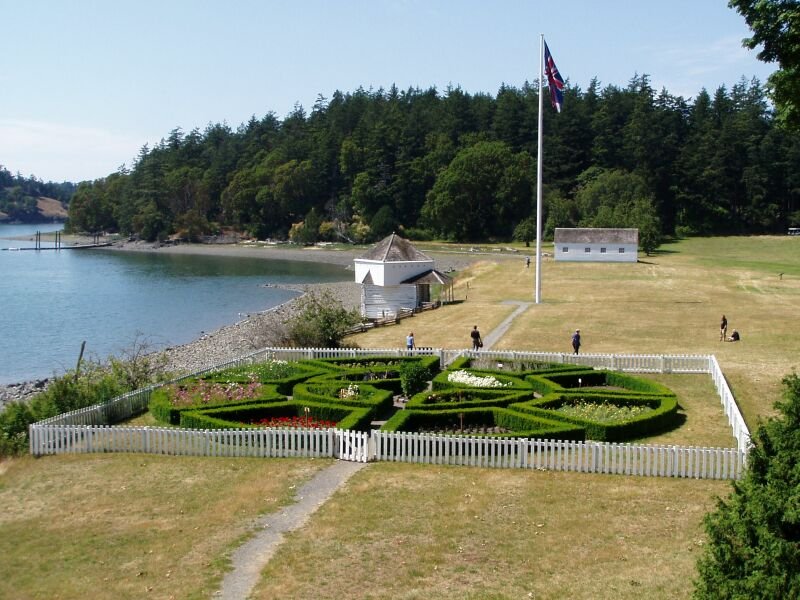
Photo: Chris Light (talk), CC BY-SA 3.0
| Getting there | Washington State Ferries from Anacortes to Friday Harbor in about 1 to 2 h; seaplanes from Seattle |
|---|---|
| Gateway | Anacortes (Washington State Ferries) |
| Travel time | About 1 h direct by ferry, up to 2 h with stops |
| Days | 1 to 2 nights |
| Best months | Jun–Sep for orcas and dry weather; Jul–Aug busiest |
| Getting around | Car useful; bikes and mopeds for rent in Friday Harbor; seasonal shuttle buses |
| Booking | Car ferry space and rooms weeks ahead in summer; whale boats and kayaks a few days ahead |
| Cost | Expensive, even by Washington standards |
| Beaches | Rocky and pebbly shores; South Beach and the coves of the west side for walking, cold water |
| Sea | Pacific Ocean |
| Archipelago | San Juan Islands |
| Area | 143 km² |
| Population | 8,632 (2020) |
| Highest point | 329 m (Mount Dallas) |
| Airport | Yes, scheduled flights |
| Car-free | No |
| Checked | October 2026 |
Two kinds of trip dominate San Juan Island: whale watching and sea kayaking.
Whale-watching boats leave Friday Harbor several times a day from spring to autumn, and from Roche Harbor too. Trips last about three hours, carry a naturalist and look for orcas, humpbacks, minke whales, seals and porpoises. Smaller, faster boats cover more water but are colder and wetter, while the larger ones have heated cabins and are better with children. Boats keep a set distance from the whales by law.
Sea kayaking is the other classic. Guided half-day and full-day paddles start on the west side, near Lime Kiln and San Juan County Park, where orcas sometimes pass close to shore. Kayaks, paddles, spray skirts and instruction are included, and no experience is needed. In late summer, night paddles show the bioluminescent plankton, and multi-day trips camp on small islands.
On land, you can visit lavender and alpaca farms, the cidery and the vineyard, and the national historical park with its rangers.
For a first visit, book a half-day kayak tour on the west side, and add a whale-watching boat only if you have not seen orcas from the shore at Lime Kiln.
On the west coast, about 30 minutes by car from Friday Harbor, a small white lighthouse stands on rocks above deep water where orcas pass close to shore in summer. Bring binoculars and patience, and check the recent sightings board. The restored lime kilns and the coastal trail make the visit worthwhile even without whales.
The ferry lands right in the only town, a compact place of wooden buildings, cafes and galleries climbing from the marina. Visit the Whale Museum to learn to recognise individual orcas, then wander the waterfront. Most whale-watching boats, kayak shops and bike rentals are within a few minutes' walk of the ferry.
On Garrison Bay in the northwest, the British garrison of the Pig War left a blockhouse, barracks and a formal garden, now part of the national historical park. A trail climbs Mount Young behind the camp in about 45 minutes, with views across Haro Strait to Vancouver Island and the Olympic Mountains.
At the windswept southern tip, the American camp sits on open prairie with a few original buildings, foxes and eagles. Trails lead down to South Beach, the island's longest stretch of shore, and to Cattle Point lighthouse. The views over the Strait of Juan de Fuca are wide.
At the northern end, Roche Harbor grew around a lime works and is now a resort village of white buildings, a marina full of yachts and a historic hotel. Walk to the sculpture park just inland, look at the old kilns and stay for the flag ceremony at sunset.
The centre of the island is farmland, and a loop by car or bike passes a lavender farm, alpaca and cider farms, a winery and roadside stands selling vegetables and flowers. Lavender blooms in July. Mount Dallas, the highest point at 329 metres, rises above the west side.
Our pick for each kind of trip, with live dates and prices. Free cancellation on most.
Best for: First visit, kayaking the west side
A guided paddle along the rocky western shore, where orcas, seals and eagles are most often seen, with all equipment and instruction provided.
Most visitors arrive on Washington State Ferries from Anacortes, about 90 minutes' drive north of Seattle. Sailings run several times a day all year; direct boats take about an hour, while others call at Lopez, Shaw and Orcas and take up to two hours. In summer the car queue is long, so reserve a vehicle space when the bookings open, or go as a foot passenger and rent a car, bike or moped in Friday Harbor. Shuttle buses link Seattle and its airport with the Anacortes terminal.
Seaplanes fly from Seattle to Friday Harbor and Roche Harbor in about 45 minutes, and small planes use Friday Harbor's airport. In summer a passenger boat has also run directly from Seattle, though schedules vary by year.
San Juan Island is about 30 km long, and a car is the easiest way to reach the west side, Roche Harbor and the national park sites. Cars, scooters, mopeds and electric bikes can be rented near the ferry in Friday Harbor. Cycling is popular, but the roads are narrow, hilly and without shoulders in places. A seasonal shuttle bus links Friday Harbor with Roche Harbor and Lime Kiln. Taxis are few, and in the evening it is hard to find one.
June to September brings the driest and sunniest weather, long days, calm water for kayaking and the best chance of orcas, as well as the lavender bloom in July. July and August are also the busiest months, with full ferries, high room prices and booked-out whale boats; come midweek if you can.
May and late September are a good compromise, quieter and still mild, with whale-watching boats running. From October to April the weather is cool, grey and often wet, but the island is calm and prices fall, and some restaurants keep shorter hours.
Whatever the month, the sea stays cold, around 10 to 12 degrees, so swimming is for the brave. Bring layers for the boats even in summer. One or two nights are enough to see the island, with a whale or kayak trip and the west side.
Friday Harbor is the most convenient base, with the ferry, most restaurants and walking access to the tours; it suits visitors without a car. Roche Harbor offers a resort atmosphere, a marina and sunsets, but fewer places to eat. The quieter west side and the farmland have cottages, bed and breakfasts and a county park campground right on the water, ideal for whale watching from your door but requiring a car or bike.
The Coast Salish peoples fished and harvested here for thousands of years before Spanish explorers named the archipelago in 1791. The Hudson's Bay Company set up a farm, and Americans settled too, while the border through the islands was unclear. In 1859 an American farmer shot a company pig, and the dispute brought British and American troops to the island; they shared it peacefully for 12 years until arbitration by the German emperor in 1872 gave it to the United States. The pig was the only casualty. Lime quarrying, fishing and farming followed, then tourism.
The ferry from Anacortes calls at Orcas Island, with its mountain views from Mount Constitution, and Lopez Island, favoured by cyclists; hopping between them is easy. Seattle is about three hours away by road and ferry, so the island fits well at the end of a Seattle stay or a drive around the Olympic Peninsula and Puget Sound.
Washington State Ferries from Anacortes to Friday Harbor in about 1 to 2 h; seaplanes from Seattle.
From Anacortes (Washington State Ferries): about 1 h direct by ferry, up to 2 h with stops.
1 to 2 nights.
Jun–Sep for orcas and dry weather; Jul–Aug busiest.
Car useful; bikes and mopeds for rent in Friday Harbor; seasonal shuttle buses.
Go if you want whales, sea kayaking, quiet roads and good local food a few hours from Seattle. Skip it or choose Orcas Island if you want mountain hiking, or Lopez Island for flat cycling and fewer visitors.
Expensive, even by Washington standards.
Rocky and pebbly shores; South Beach and the coves of the west side for walking, cold water.
Car ferry space and rooms weeks ahead in summer; whale boats and kayaks a few days ahead.
Yes. Boat trips, guided tours and day trips for San Juan Island can be booked online; live prices and free cancellation on most are shown on this page.
San Juan Islands, United States
Orcas Island is the largest of the San Juan Islands in north-west Washington, a horseshoe of forested hills, farms and…
3 tours & trips