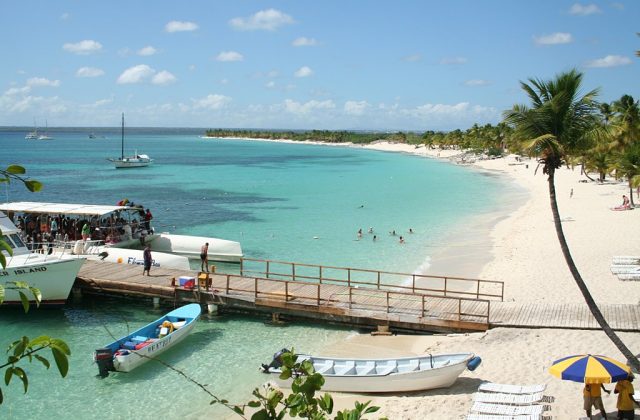
Isla Catalina
Dominican Republic
Isla Catalina is a small uninhabited coral island 2.4 km off the south-east coast of the Dominican Republic, near La…
No tours listed
Dominican Republic · Caribbean Sea · Beach island
Isla Saona is a flat, palm-covered island of about 110 square kilometres off the south-east tip of the Dominican Republic, protected as part of Cotubanamá National Park. It has no roads or resorts, only two small settlements, and its long white beaches and shallow starfish sandbar make it the country's most popular boat day trip.
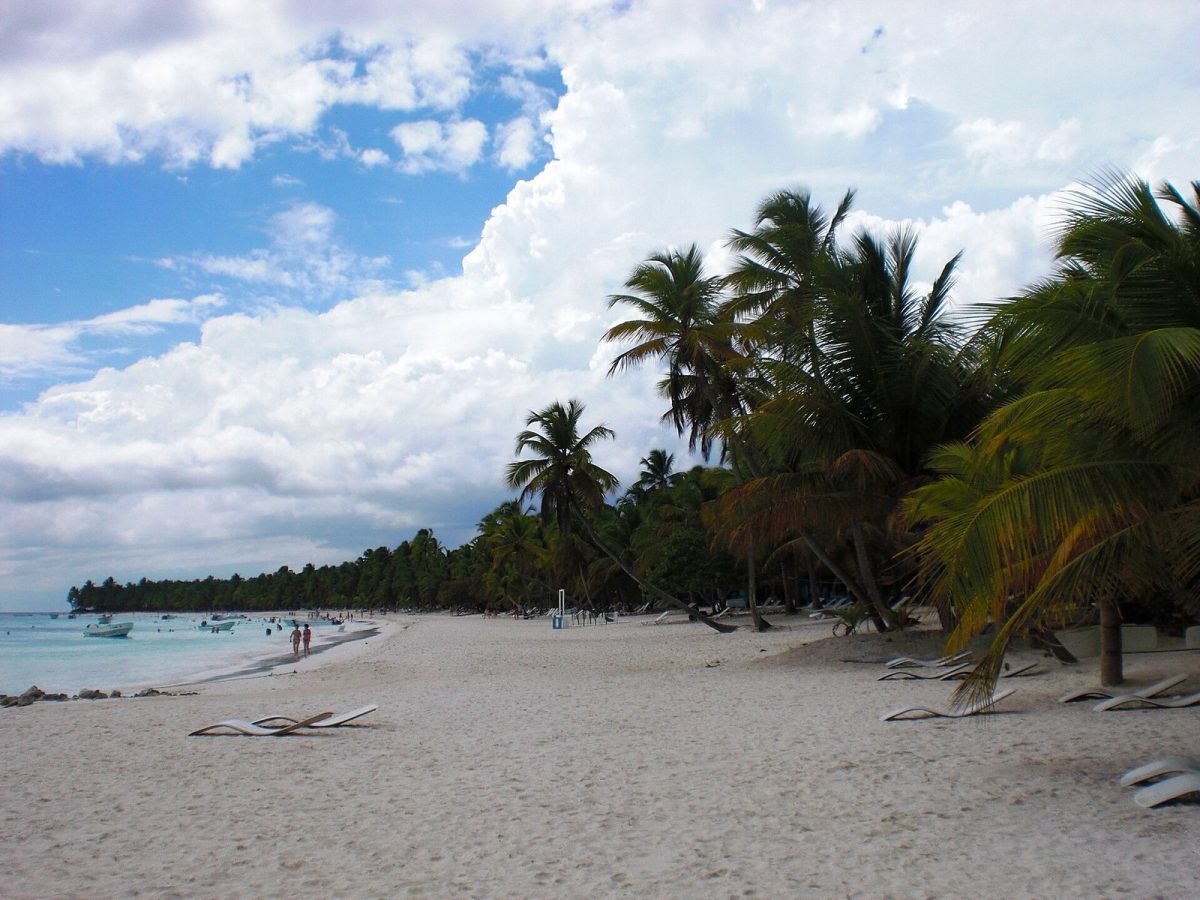
Photo: Mihai mad, CC BY-SA 3.0
| Getting there | Boat from Bayahibe in 30 to 60 min; day tours from Punta Cana, La Romana and Santo Domingo include the drive |
|---|---|
| Gateway | Bayahibe (tours from Punta Cana) |
| Travel time | 30 min by speedboat, 1 h by catamaran |
| Days | A day trip is enough |
| Best months | Dec–Apr dry and calm; May–Nov hotter and wetter; hurricane risk Aug–Oct |
| Getting around | No roads or cars: you walk on the beach; boats move between landing spots |
| Booking | Tours a few days ahead in high season; avoid cruise-ship days if you can |
| Cost | Mid-range; day tours with lunch and drinks are the norm |
| Beaches | Long white sand under coconut palms at Canto de la Playa, Palmilla and Mano Juan; calm, clear water |
| Sea | Caribbean Sea |
| Area | 110 km² |
| Population | 300 |
| Highest point | 5 m |
| Airport | No |
| Checked | October 2026 |
Almost everyone visits Saona on an organised day trip, and most of them follow the same pattern.
A bus or minibus collects you from your hotel in Punta Cana, La Romana or Santo Domingo and drives to Bayahibe, the fishing village next to the national park. From there, one leg is by catamaran with music and drinks, the other by speedboat. On the way, boats stop at the natural pool, a waist-deep sandbar where starfish live, and then land on one of the beaches for a buffet lunch, open bar and two to three hours of free time. Park fees, lunch and drinks are usually included; tips, photos and extra snorkel stops are not.
Variations include smaller groups, premium versions with quieter beach areas, a visit to the village of Mano Juan and its turtle hatchery, combinations with Isla Catalina or the river at Altos de Chavón, and private catamarans or speedboats. Cruise passengers at La Romana get shorter versions.
From Punta Cana the road transfer alone takes about an hour and a half each way, so expect a long day. If you can, stay in Bayahibe and book a small-group trip from there.
A sandbar off the island's western end leaves a wide stretch of warm, clear water only knee to waist deep, far from shore. Boats anchor here for half an hour or so; you stand in the sea and look for red cushion starfish on the sand. Look but do not lift them out of the water, which harms them.
Most boats land at the long beaches near the western tip, such as Canto de la Playa and Palmilla, where coconut palms lean over white sand and the water is calm and turquoise. Each tour has its own section with tables and a bar, so walk a few minutes along the shore to find a quieter spot.
The island's small fishing village on the south coast has a row of brightly painted wooden houses, a few simple shops and a sea turtle hatchery, where volunteers protect nests and release hatchlings. Only some tours stop here, usually for a short walk; it shows something of everyday life on the island.
The water around Saona is clear, and some speedboat tours stop on patches of coral near Bayahibe or the island for snorkelling, with fish, rays and sometimes turtles. Coral is better around Isla Catalina, so serious snorkellers and divers should consider a trip there or a dive from Bayahibe.
On the way to or from the island, boats pass through the mangrove-lined channel of Catuano, between Saona and the mainland, where you may see herons, frigate birds and sometimes dolphins. The whole area is part of Cotubanamá National Park, which also protects coastal caves with Taino rock art on the mainland.
Our pick for each kind of trip, with live dates and prices. Free cancellation on most.
Best for: First visit, a day from Punta Cana
A small-group day with a capped number of guests and a speedboat for the crossing, which feels less like a mass outing than the big buses and catamarans.
There is no airport on Saona and no public ferry. Boats leave from Bayahibe and the neighbouring Dominicus beach area, about 30 minutes by speedboat or an hour by catamaran, and some boats depart from Boca de Yuma or La Romana.
Punta Cana airport, the main arrival point for most visitors, is around an hour and a half by road from Bayahibe; La Romana airport is much closer, about 30 minutes away, and Santo Domingo is around two hours. Cruise ships dock at La Romana, and many passengers visit Saona on a shore excursion. You can drive to Bayahibe yourself and arrange a boat locally, but park rules and fees apply, and most people find a tour simpler.
There are no roads or vehicles for visitors on the island. You walk along the beaches and paths near the landing points, and boats carry you between the natural pool, the beaches and Mano Juan. The interior is dry forest and largely off limits. Bring reef-safe sunscreen, water shoes for the sandbar and cash for tips, since there are no cash machines on the island.
The dry season from December to April is the best time, with sunny days, calm seas and temperatures around 28 to 30 degrees. It is also the busiest season, when dozens of boats can arrive on the same morning, especially when cruise ships are in La Romana.
From May to November it is hotter and more humid, with short tropical downpours, and the hurricane season brings a risk of storms from August to October, when trips can be cancelled at short notice. Summer can bring sargassum seaweed to some beaches. The sea stays warm, around 27 to 29 degrees, all year. Weekends and Dominican holidays, including Easter week, are busy with local visitors. One day is enough to see the island.
Visitors do not stay on Saona itself, which has no resorts. Bayahibe and the Dominicus area are the best bases: closest to the boats, with small hotels and all-inclusive resorts, dive shops and quiet beaches. La Romana has large resorts and Casa de Campo. Punta Cana and Bávaro have the most hotels but mean the longest transfer, and Santo Domingo works if you combine the beach with city sightseeing.
The Taino called the island Adamanay and left drawings in its caves. Columbus landed in 1494 on his second voyage and named it after Savona, the hometown of his friend Michele da Cuneo, who became its first governor. The Spanish conquest wiped out the native population within a few decades; the Taino chief Cotubanamá made his last stand here. For centuries the island was almost empty, used by fishermen and pirates. Today it is protected as a national park, home to a few hundred people, and the destination of thousands of day visitors.
Isla Catalina, off La Romana, is better for snorkelling and is often sold as a separate day. Altos de Chavón, a replica Mediterranean village above a river, is 20 minutes from Bayahibe. Santo Domingo's colonial zone is two hours by road, and the Los Haitises mangroves can be reached from Punta Cana.
Boat from Bayahibe in 30 to 60 min; day tours from Punta Cana, La Romana and Santo Domingo include the drive.
From Bayahibe (tours from Punta Cana): 30 min by speedboat, 1 h by catamaran.
A day trip is enough.
Dec–Apr dry and calm; May–Nov hotter and wetter; hurricane risk Aug–Oct.
No roads or cars: you walk on the beach; boats move between landing spots.
Go if you want a classic Caribbean beach day, with white sand, palms, a catamaran ride and a swim in a shallow natural pool. Skip it or choose Isla Catalina or Los Haitises if you hate crowds, long transfers and party boats.
Mid-range; day tours with lunch and drinks are the norm.
Long white sand under coconut palms at Canto de la Playa, Palmilla and Mano Juan; calm, clear water.
Tours a few days ahead in high season; avoid cruise-ship days if you can.
Yes. Boat trips, guided tours and day trips for Isla Saona can be booked online; live prices and free cancellation on most are shown on this page.
Dominican Republic
Isla Catalina is a small uninhabited coral island 2.4 km off the south-east coast of the Dominican Republic, near La…
No tours listed