Isla Saona
39 km away
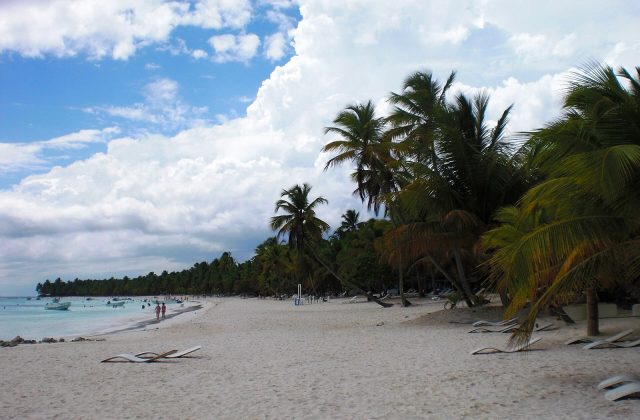
Isla Saona is a flat, palm-covered island of about 110 square kilometres off the south-east tip of the Dominican…
219 tours & trips
Dominican Republic · Caribbean Sea · Beach island
Isla Catalina is a small uninhabited coral island 2.4 km off the south-east coast of the Dominican Republic, near La Romana. With white beaches, clear shallow water and a reef wall that drops into the deep, it is one of the best snorkelling and diving spots in the country and an easy day trip.
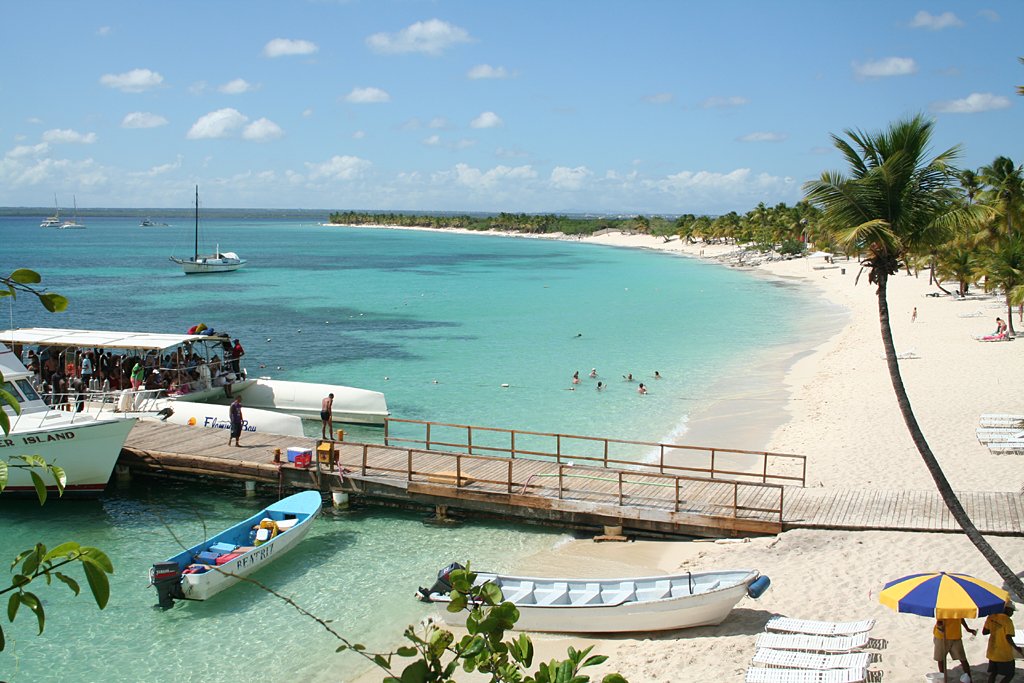
Photo: Original uploader was Niedźwiadek78 (Michał Sulczyński) at p, CC BY-SA 3.0
| Getting there | Boat trips of 30 to 60 min from La Romana or Bayahibe; road transfers from Punta Cana resorts |
|---|---|
| Gateway | La Romana or Bayahibe |
| Travel time | 30 to 60 min by boat |
| Days | A day trip is enough |
| Best months | Dec–Apr dry and calm; Jun–Nov hurricane season, rain showers Aug–Oct |
| Getting around | Small enough to walk; no roads, cars or hotels on the island |
| Booking | Day trips a day or two ahead; dives with a Bayahibe centre a few days ahead |
| Cost | Mid-range for the Dominican Republic |
| Beaches | White coral sand on the west shore facing the mainland; calm, shallow water |
| Sea | Caribbean Sea |
| Area | 9.6 km² |
| Population | Uninhabited |
| Highest point | 18 m |
| Airport | No |
| Checked | October 2026 |
Nothing is sold online for Isla Catalina on its own in this catalogue, but the island is visited every day. Almost everyone comes on a day trip arranged through a hotel, a dive centre or one of the boat operators in Bayahibe and La Romana.
The usual format is a catamaran or speedboat day: hotel pickup, the boat out, two snorkelling stops on the reef, a few hours on the beach with a buffet lunch and drinks, and the ride home in the afternoon. Snorkelling gear, lunch and an open bar are normally included; port or island fees, tips and photos are sometimes extra, so check. From Punta Cana the day is much longer because of the road transfer on each end.
Divers do better with a dive centre in Bayahibe, which runs two-tank trips to the wall and to the shallow reefs, often with a stop on the beach between dives. Snorkellers and divers can also visit the wreck site associated with Captain Kidd, which lies in shallow water off the island.
Cruise passengers land on the island by tender and spend their day on a reserved beach.
The plain recommendation is a small-boat snorkelling trip from Bayahibe or La Romana rather than a big party catamaran from Punta Cana: less time on the road, more time in the water.
On one side of the island the reef ends abruptly and drops into deep blue water. Snorkellers float over the lip and look down the face; divers descend along it among sponges, sea fans, parrotfish and, with luck, turtles. Visibility is often excellent. Currents can run here, so this stop is usually reserved for calm mornings and led by a guide.
A second favourite stop lies in shallow water of a few metres, where coral heads and sea grass draw shoals of tropical fish. It is the easiest snorkelling around the island, suitable for beginners and children with a life vest, and many boats stop here first. Wear a rash vest: the sun is strong and the water so clear you lose track of time.
The landing beach faces the mainland, with fine white sand, palms and sea grape for shade and water that stays shallow for a long way out. Boats anchor offshore and lunch is served under thatched shelters. Walk a few minutes along the shore in either direction to leave the crowd, but stay out of the fenced private areas.
In 2007 researchers found the remains of a seventeenth-century merchant ship in about three metres of water off the island and identified it as the vessel abandoned by Captain William Kidd. Cannons and anchors lie on the sand, and the site is now protected as an underwater museum. Dive centres in Bayahibe can arrange a visit.
Away from the beach the island is low coral rock, at most 18 metres high, covered in dry scrub, dunes and a fringe of mangroves. There are no marked trails and day visitors mostly stay near the shore, but you will see frigatebirds, pelicans and herons overhead, and the sandbars off the coast turn pale green at low water.
There is no ferry and nobody lives on the island, so the way to reach it is on an organised boat or a dive boat. The shortest crossing is from the marina at La Romana, about half an hour; boats from Bayahibe, the small dive town east of La Romana, take a little under an hour.
La Romana has its own international airport with flights from North America and seasonal charters, and Punta Cana airport is roughly an hour and a half away by road. Santo Domingo is about two hours to the west. Hotels in Bayahibe and La Romana include pickup for most trips; from Punta Cana or Santo Domingo, tours add a coach transfer, making a long day.
Cruise ships anchor offshore and bring passengers ashore in tenders.
There is nothing to arrange on the island itself. It is about 9.6 square kilometres of flat scrub with no roads, cars, shops or hotels, and visitors keep to the beach and the water. Your boat crew handles all movement between snorkelling stops. On the mainland, Bayahibe is small and walkable; to explore further, taxis or a rental car cover La Romana, Altos de Chavon and the coast, and buses run along the main highway between the towns.
The best time is December to April, the dry season, with sunny days around 28 degrees, light winds and the calmest seas for snorkelling. This is also the busiest period, especially at Christmas, Easter and on cruise days, so book a day or two ahead. Water temperature stays between about 26 and 29 degrees all year.
May to November is hotter and more humid, with short afternoon showers and the hurricane season from June, at its riskiest from August to October. Trips still run on most days and boats are less crowded, but a storm offshore can cancel a crossing or stir up the water.
Go on a weekday if you can, as local families and groups from the capital fill boats at weekends. A single day is enough for the island; stay longer in Bayahibe if you plan several days of diving.
You cannot sleep on Isla Catalina. Bayahibe is the best base: a small fishing village turned dive centre, with guesthouses, all-inclusive resorts on the beach at Dominicus nearby and boats leaving from the village beach. La Romana suits golfers and those who want the large resort at Casa de Campo, close to the marina. Punta Cana has far more hotels but adds three hours of driving to the day.
Columbus passed the island in 1494 on his second voyage and named it Santa Catalina. For centuries it stayed empty, used by fishermen and occasionally by pirates. In 1699 William Kidd, the Scottish privateer, left his captured ship, the Quedagh Merchant, in these waters before sailing north to his arrest; the hull burned and sank, and its remains were found in 2007, a few metres down. Tourism began with day boats from La Romana and Bayahibe and grew when cruise lines started landing guests here.
Isla Saona, the largest island off the coast, is a full day from Bayahibe by catamaran, with a stop at a shallow sandbar natural pool. Altos de Chavon, a mock Mediterranean village above the Chavon River near La Romana, makes a good half day. Santo Domingo, with its colonial old town, is about two hours away by road.
39 km away
Isla Saona is a flat, palm-covered island of about 110 square kilometres off the south-east tip of the Dominican…
219 tours & trips
265 km away
Puerto Rico is the smallest of the Greater Antilles, a US territory of about 9,100 square kilometres with Spanish…
73 tours & trips
378 km away
Vieques is a quiet island municipality of Puerto Rico, about 13 km off the main island's east coast and some 32 km…
14 tours & trips
Boat trips of 30 to 60 min from La Romana or Bayahibe; road transfers from Punta Cana resorts.
From La Romana or Bayahibe: 30 to 60 min by boat.
A day trip is enough.
Dec–Apr dry and calm; Jun–Nov hurricane season, rain showers Aug–Oct.
Small enough to walk; no roads, cars or hotels on the island.
Go if you want a day of snorkelling, diving and beach time on calm, clear water close to La Romana. Skip it or choose Saona if you want a longer boat ride, a natural pool and a bigger, wilder island.
Mid-range for the Dominican Republic.
White coral sand on the west shore facing the mainland; calm, shallow water.
Day trips a day or two ahead; dives with a Bayahibe centre a few days ahead.
Dominican Republic
Isla Saona is a flat, palm-covered island of about 110 square kilometres off the south-east tip of the Dominican…
219 tours & trips