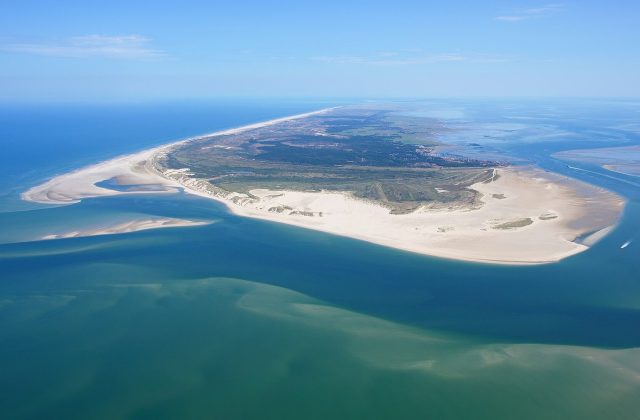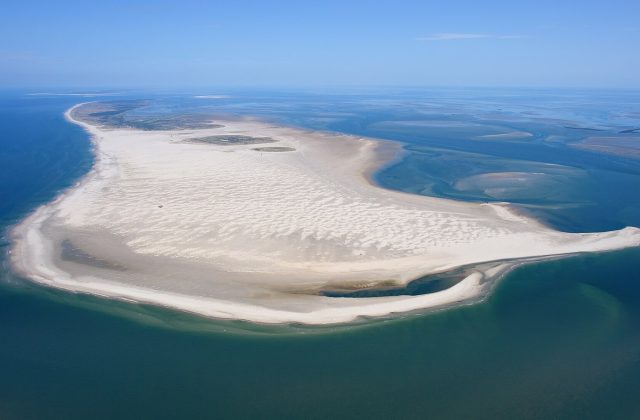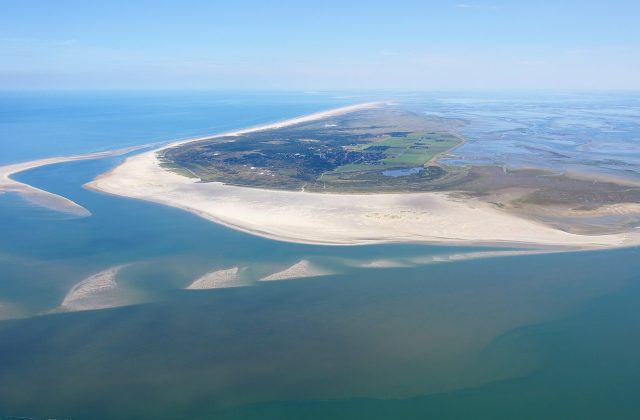
Schiermonnikoog
West Frisian Islands, Netherlands
Schiermonnikoog is the smallest inhabited Dutch Wadden island, 16 km long and 4 km wide, with one village and fewer…
No tours listed
Netherlands · North Sea & Channel · Nature & wildlife island
Texel is the largest and most westerly of the Dutch Wadden Islands, a 20-minute ferry ride from Den Helder and about 90 minutes from Amsterdam. It packs a 30-km North Sea beach, dunes full of birds, a seal centre and seven villages into an island that is easy to explore by bike.
Photo: Maanhond, CC BY-SA 4.0
| Getting there | Car ferry from Den Helder in about 20 min, at least hourly; train from Amsterdam to Den Helder about 1 h 15 min |
|---|---|
| Gateway | Den Helder; about 1.5 h from Amsterdam |
| Travel time | 20 min by car ferry |
| Days | 1 to 2 nights |
| Best months | May–September; spring and autumn for birdwatching; July–August busy |
| Getting around | Bike on the dense cycle network; local buses and demand-responsive shuttles; car optional |
| Booking | Holiday homes and hotels ahead for summer; the ferry itself needs no booking |
| Cost | Mid-range by Dutch standards |
| Beaches | A continuous wide sandy North Sea beach along the west coast, best around De Koog and Paal 17 |
| Sea | North Sea & Channel |
| Archipelago | West Frisian Islands |
| Area | 463 km² |
| Population | 13,656 |
| Ferry | 20 min from Den Helder; about 1.5 h from Amsterdam |
| Airport | No |
| Car-free | No |
| Checked | October 2026 |
Texel is easy to visit on your own: the train, bus and ferry connect smoothly, and once on the island a rented bike does most of the work. What is sold online reflects this.
For visitors without much time, there are guided day trips from Amsterdam. Some travel by train with a guide who handles the connections and the ferry, then offer cycling or bus touring on the island; others are small-group minibus tours that visit the villages, the dunes and the seal centre. Entry fees and lunch are usually extra. They make a long day, but they work if you have only one.
The bigger category is rentals. Electric bikes, fat-tyre e-bikes, e-scooters and retro electric mopeds can be booked near the ferry terminal or in the villages, often with a route map. Guided rides and scooter tours from Oudeschild combine the harbour with the Wadden shore.
Locally you can also book boat trips from Oudeschild to watch seals on the sandbanks, shrimp-fishing trips, walks with a ranger in the dunes, and horse rides on the beach.
For most people the best plan is to take the train and ferry, rent an e-bike at the terminal and stay a night.
Just outside De Koog, Ecomare is a seal sanctuary and museum of the Wadden Sea and North Sea, where injured seals are cared for and fed in outdoor pools. Allow two hours, then follow the cycle paths into the surrounding dunes of the national park, a landscape of heath, pine woods and freshwater lakes, and on to the beach beyond.
The whole west coast is one wide sandy beach about 30 km long, marked by numbered posts, with beach pavilions at regular intervals. De Koog is the lively stretch with lifeguards in summer; further south near Den Hoorn and north towards the lighthouse it gets emptier. The water is cool and the currents strong, so swim only near lifeguards.
In the north-west the sea breaks through the dunes into De Slufter, a broad tidal valley of salt marsh and creeks that floods at high tide. A path climbs to a viewpoint on the dune ridge, and a walk of an hour or two circles the edge. In summer the marsh turns purple with sea lavender, and birds are everywhere.
The island's main town lies in the middle, about 6 km from the ferry, with a ring of shopping streets, a weekly market, cafes and the main bus stop. It is the place to try Texel lamb, local cheese and beer from the island's brewery. The little museum of island history and the old church are worth a short visit.
On the east coast, the harbour village of Oudeschild is home to the fishing fleet and to Kaap Skil, a maritime museum telling the story of the ships that waited off Texel before sailing to the East Indies. Seal-watching boats leave from the harbour. Cycle north along the sea wall to see the wide mudflats of the Wadden Sea.
At the northern tip, the red lighthouse of Eierland stands among the dunes and can be climbed for a view over the island and across to Vlieland. De Cocksdorp nearby is a quiet village with campsites and holiday parks. On the way, the polders of the north are good for spotting spoonbills, avocets and geese.
Our pick for each kind of trip, with live dates and prices. Free cancellation on most.
Best for: First visit, a day from Amsterdam
A guided day out with the train or coach and the ferry crossing arranged, useful if you have only one day and no car.
The TESO ferry sails from Den Helder to 't Horntje at the southern tip of Texel, taking about 20 minutes. Boats run at least hourly from early morning to late evening all year, more often on summer weekends, and carry cars, bikes and foot passengers; you buy a return ticket in Den Helder and need no reservation.
From Amsterdam, direct trains reach Den Helder in about one hour and 15 minutes, and a bus connects the station with the ferry terminal. By car it is about 90 minutes from Amsterdam. Taking a car over is easy and fairly cheap, but many visitors leave it in Den Helder and rent a bike on the island. There is no airport for scheduled flights.
Texel is about 25 km long and largely flat, with well over 100 km of cycle paths linking all the villages, dunes and beaches. Bike rental shops are at the ferry terminal and in every village, and e-bikes help against the strong headwinds. A bus line runs from the ferry through Den Burg to De Koog and De Cocksdorp, and a shared on-demand shuttle covers other trips. Driving is easy, and parking is generally available.
Summer, from June to August, brings the warmest weather, with daytime temperatures around 20 degrees and the sea only around 17 to 18, and the busiest period when Dutch and German families arrive for the school holidays. Holiday homes and campsites fill up, but the beaches are long enough to find space.
Spring and autumn are excellent for birdwatching, as Texel lies on a major flyway and the marshes fill with migrating waders and geese; April and May are also lambing time, with sheep everywhere. Autumn brings storms and the best skies. In winter the island is quiet, cold and windy, and many beach pavilions close, but the ferries keep running. One night is enough for a sample; two or three let you cycle the whole island.
De Koog, the only village directly on the beach, has the most hotels, holiday apartments, restaurants and nightlife, and suits families and beach lovers. Den Burg is central and convenient without a car. Den Hoorn and Oosterend are pretty, quieter villages for a calmer stay, and De Cocksdorp in the north has big campsites and holiday parks near the lighthouse. Holiday homes and farm stays are spread across the island.
Texel was joined to the mainland until a storm surge in the 12th or 13th century cut it off. The northern part was once a separate island, Eierland, linked by a dyke in the 17th century. In the Golden Age the sheltered roads off Oudeschild were where merchant fleets waited for a fair wind to the East Indies. In April 1945 Georgian soldiers serving in the German army rebelled against their officers, and fighting continued after the liberation of the rest of the country. Sheep farming and tourism now shape the island.
Amsterdam is the obvious starting point, with Alkmaar's cheese market and the fishing towns of North Holland on the way. Vlieland, the next Wadden island, can be reached in summer by a small boat from De Cocksdorp, and from there the Wadden island chain continues to Terschelling. Most visitors combine a Texel weekend with a few days in Amsterdam.
Car ferry from Den Helder in about 20 min, at least hourly; train from Amsterdam to Den Helder about 1 h 15 min.
From Den Helder; about 1.5 h from Amsterdam: 20 min by car ferry.
1 to 2 nights.
May–September; spring and autumn for birdwatching; July–August busy.
Bike on the dense cycle network; local buses and demand-responsive shuttles; car optional.
Go if you want long sandy beaches, cycling through dunes and polders, seals and birdlife, all within easy reach of Amsterdam. Skip it or choose a southern island if you want warm sea, reliable sunshine or old-town sightseeing. With about 20 min each way from Den Helder; about 1.5 h from Amsterdam, a day trip is easy to do.
Mid-range by Dutch standards.
A continuous wide sandy North Sea beach along the west coast, best around De Koog and Paal 17.
Holiday homes and hotels ahead for summer; the ferry itself needs no booking.
Yes. Boat trips, guided tours and day trips for Texel can be booked online; live prices and free cancellation on most are shown on this page.
West Frisian Islands, Netherlands
Schiermonnikoog is the smallest inhabited Dutch Wadden island, 16 km long and 4 km wide, with one village and fewer…
No tours listed
West Frisian Islands, Netherlands
Terschelling is one of the Dutch Wadden Islands, a long strip of dunes, woods and beaches between the North Sea and the…
No tours listed
West Frisian Islands, Netherlands
Vlieland is the quietest of the Dutch Wadden Islands, a narrow ribbon of dunes, woods and beach between the North Sea…
No tours listed