Sylt
North Frisian Islands, Germany
Sylt is Germany's northernmost island, a narrow strip of dunes and heath in the North Sea with a sandy beach about…
20 tours & trips
Germany · North Sea & Channel · Beach island
Amrum is a small North Frisian island in the German Wadden Sea, south of Sylt and west of Föhr, famous for the Kniepsand, a sandbank beach more than a kilometre wide along its whole west coast. Thatched villages, dunes, a tall red-and-white lighthouse and mudflat walks make it a calm family island.
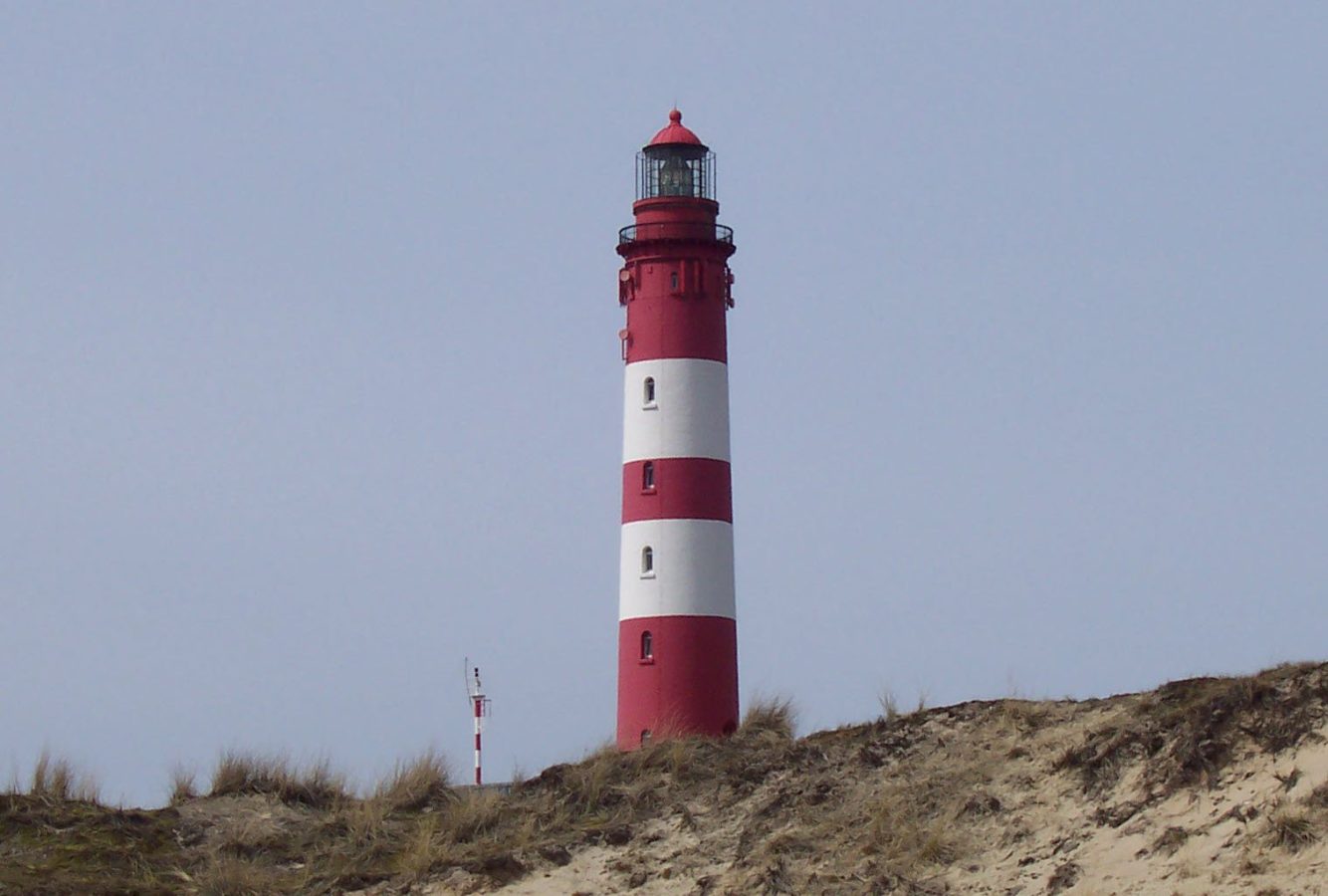
Photo: Stefan Ellinger, CC BY-SA 3.0
| Getting there | Ferry from Dagebüll Mole via Wyk auf Föhr to Wittdün in about 2 h; cars carried with booking |
|---|---|
| Gateway | Dagebüll Mole (ferry via Föhr) |
| Travel time | About 2 h by ferry |
| Days | 3 to 5 nights |
| Best months | Jun–Sep for the beach; Apr–May and Sep–Oct for birds and walking |
| Getting around | Bike or bus: buses run the length of the island; a car is unnecessary |
| Booking | Holiday flats months ahead for summer; car places on the ferry well ahead |
| Cost | Mid-range for German islands |
| Beaches | The Kniepsand: a vast white sandbank beach along the west coast, with lifeguards in summer |
| Sea | North Sea & Channel |
| Archipelago | North Frisian Islands |
| Area | 20 km² |
| Population | 2,331 (2020) |
| Highest point | 0 m |
| Airport | No |
| Car-free | No |
| Checked | October 2026 |
Amrum is mostly visited independently: people take the regular ferry, rent a bike and spend their days on the beach and in the dunes. What is sold online consists of boat excursions, in two directions.
Day trips to Amrum leave from Dagebüll, Nordstrand, Wyk auf Föhr and Hörnum on Sylt. They are simply a return passage on an excursion ship with several hours ashore, usually without a guide, and they suit visitors staying elsewhere on the coast who want to see the island once. Day trips from Amrum go the other way: to Sylt, to Föhr, to Hallig Hooge and, in summer, out to Heligoland on the open sea. Some ships stop by sandbanks where seals rest. The boat fare is included; island buses, bike hire, lunch and museum entry are extra.
On the island, the most memorable activities are booked locally: guided mudflat walks to Föhr at low tide, nature walks with the national park rangers, lighthouse climbs and bike rental.
Recommendation: stay at least three nights rather than coming for a day, book a guided mudflat walk once you arrive, and add the hallig trip if you have a spare day.
Amrum's west coast is one enormous beach: a sandbank that has joined the island, about 10 km long and in places more than a kilometre wide. Wooden boardwalks cross the dunes from the villages; then you walk across the sand to the water. Beach chairs, lifeguards and swimming areas are set up near Wittdün, Nebel and Norddorf in summer.
Nebel, in the middle of the island, is the prettiest village, with thatched Frisian houses, a windmill from the 18th century and a small local museum in an old captain's house. In the churchyard of St Clemens, carved gravestones of sailors and whaling captains tell their life stories in detail. It is about 4 km from the ferry port.
Between Wittdün and Süddorf, the red-and-white lighthouse stands on a high dune, its lantern more than 60 metres above the sea, making it one of the tallest lights on the German coast. In season you can climb its spiral stairs for a view over the Kniepsand, Föhr, the halligs and, on clear days, Sylt. Opening times are limited, so check locally.
At low tide you can walk across the seabed of the Wadden Sea from Amrum to Föhr, about 8 km through mud, sand and shallow channels. Go only with a licensed guide, who knows the tides and routes, and return by ferry. Guides explain worms, crabs and birds on the way. Wear shorts and old trainers or go barefoot.
North of Norddorf, the island ends in the Odde, a nature reserve of dunes, heath and beach where thousands of seabirds and waders breed and rest. A marked path leads towards the tip; parts are closed during the breeding season. Norddorf itself is a small resort with cafes, and the dune walks between it and Nebel are among the best on the island.
Our pick for each kind of trip, with live dates and prices. Free cancellation on most.
Best for: First visit, a day from the mainland
A day return by ship from Dagebüll with several hours on Amrum, enough to walk to the Kniepsand, see Nebel and climb the lighthouse.
Ferries leave from Dagebüll Mole on the mainland coast, call at Wyk auf Föhr and continue to Wittdün at the southern end of Amrum; the crossing takes about two hours, with several sailings a day in summer and fewer in winter. Sailing times depend on the tides, so check the timetable. Ferries also link Amrum with Föhr several times a day.
Trains run to Dagebüll Mole from Niebüll, on the main line from Hamburg, with connections timed to the ferry. Cars can be taken over, but space is limited and must be booked well ahead in summer; most visitors leave their car in the paid car parks at Dagebüll and take bikes or luggage carts instead. In summer, excursion boats also connect Amrum with Hörnum on Sylt and with Nordstrand. There is no airport, though small planes can land at the airfield on Föhr.
Amrum is about 10 km long and flat, so a bike is the natural way to move: rental shops in every village have bikes, electric bikes and trailers for children, and cycle paths link Wittdün, Süddorf, Nebel and Norddorf. Buses run the length of the island, timed to the ferries. Walking is a pleasure on the dune and forest paths. Bringing a car is possible but rarely necessary.
The beach season runs from June to September. July and August are the warmest months, with daytime temperatures around 20 degrees and sea temperatures of about 17 to 19 degrees; German school holidays fill the island and holiday flats are booked months ahead. June and early September are quieter, often sunny and cheaper.
Spring and autumn are excellent for birdwatching, when huge flocks of geese and waders stop on the mudflats during migration. Many visitors also come at Easter and in October for walking and fresh air. Winter is cold, windy and very quiet, but the long walks on the empty Kniepsand have their own appeal, and some hotels remain open.
Wind is a constant companion, so bring layers even in summer. Three to five nights suit a relaxed stay with beach, bike, mudflat walk and a boat trip.
Wittdün, beside the ferry port, is the largest resort, with shops, restaurants and the most accommodation, convenient for short stays. Nebel, in the centre, is the most traditional village, with thatched cottages and holiday flats, ideal for a quiet stay. Norddorf, in the north, is close to the dunes and the Odde reserve and has a relaxed resort atmosphere. Süddorf and Steenodde are small and peaceful. Most accommodation is in holiday flats and guesthouses rather than hotels.
Amrum was settled in the Stone Age, when it was still part of the mainland, and Bronze Age burial mounds remain on the heath. Frisians arrived in the Middle Ages and lived by farming, salt making and seafaring; in the 17th and 18th centuries many island men sailed as whaling captains on Dutch ships to Greenland, as their gravestones in Nebel recall. The island belonged to Denmark until 1864. Tourism began in the 1890s at Wittdün, and the island's pine forest was planted after the Second World War.
Föhr, the larger green island next door, is linked by frequent ferries and is easy to combine on the same trip. Sylt lies to the north, reached by summer boat to Hörnum. The halligs, especially Hooge and Langeness, are popular day trips, and Heligoland can be reached on summer excursions. On the mainland, Husum and the Wadden Sea National Park centres are worth a stop.
Ferry from Dagebüll Mole via Wyk auf Föhr to Wittdün in about 2 h; cars carried with booking.
From Dagebüll Mole (ferry via Föhr): about 2 h by ferry.
3 to 5 nights.
Jun–Sep for the beach; Apr–May and Sep–Oct for birds and walking.
Bike or bus: buses run the length of the island; a car is unnecessary.
Go if you want a huge, uncrowded sandy beach, dune walks, cycling and a quiet Frisian village atmosphere. Skip it or choose Sylt if you want nightlife, smart restaurants and a direct rail link to the mainland.
Mid-range for German islands.
The Kniepsand: a vast white sandbank beach along the west coast, with lifeguards in summer.
Holiday flats months ahead for summer; car places on the ferry well ahead.
Yes. Boat trips, guided tours and day trips for Amrum can be booked online; live prices and free cancellation on most are shown on this page.
North Frisian Islands, Germany
Sylt is Germany's northernmost island, a narrow strip of dunes and heath in the North Sea with a sandy beach about…
20 tours & trips
North Frisian Islands, Germany
Föhr is a flat, green island in the Wadden Sea off the coast of Schleswig-Holstein, the second-largest German island in…
9 tours & trips