Isle of Skye
81 km away
The Isle of Skye is the largest island of the Inner Hebrides, 1,656 square kilometres of sea lochs, moorland and jagged…
62 tours & trips
United Kingdom · North Sea & Channel · Nature & wildlife island
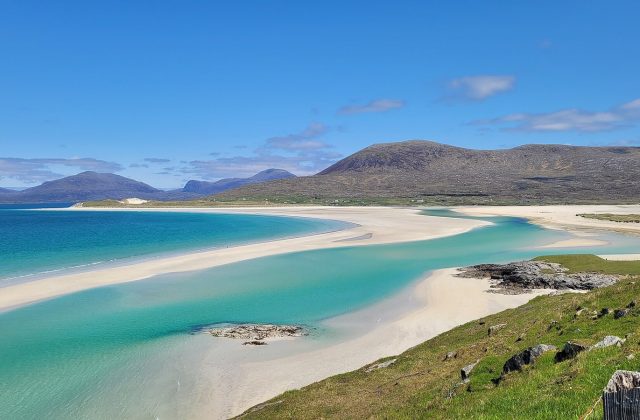
Barra is a small island at the southern end of the Outer Hebrides, about 14 kilometres long, where the plane from Glasgow lands on a beach at low tide. It has white shell-sand bays, a medieval castle in the harbour, Gaelic spoken in the shops and one road that circles the island in about 23 kilometres.
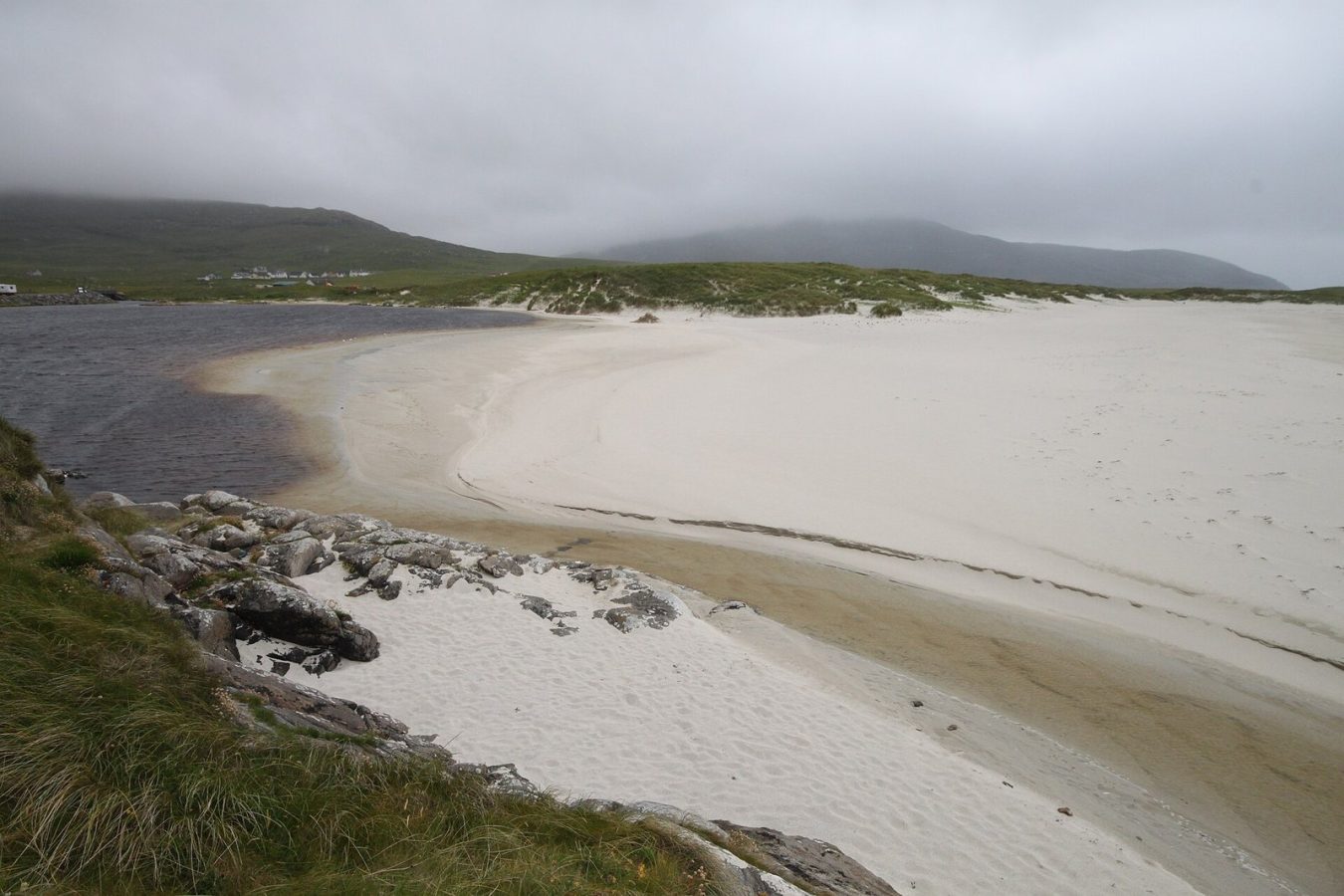
Photo: Nessy-Pic, CC BY-SA 3.0
| Getting there | Ferry from Oban to Castlebay about 4 h 45 min, or a 1-hour flight from Glasgow landing on the beach |
|---|---|
| Gateway | Oban (ferry) or Glasgow (flights) |
| Travel time | About 4 h 45 min by ferry or 1 h by air |
| Days | 3 to 5 nights |
| Best months | May–Sep; long light Jun–Jul; machair flowers in summer; stormy winters |
| Getting around | Bring a car or hire a bike; a bus circles the island; single-track roads |
| Booking | Car space on the ferry and rooms months ahead for summer; flights early |
| Cost | Mid-range for Scotland; few places to eat |
| Beaches | White shell sand: Traigh Mhor, Halaman Bay, Tangasdale; Vatersay's twin bays across the causeway |
| Sea | North Sea & Channel |
| Archipelago | Outer Hebrides |
| Area | 59 km² |
| Population | 1,209 (2022) |
| Highest point | 383 m (Heaval) |
| Ferry | 4 h 45 min from Oban (ferry) or Glasgow (flights) |
| Airport | Yes, scheduled flights |
| Car-free | No |
| Checked | November 2026 |
Almost nothing is sold online for Barra itself. Visitors here arrange things themselves, and that is easy.
Most people arrive by ferry from Oban with a car or bike and spend a few days exploring at their own pace. Some fly in from Glasgow for the experience of the beach landing and hire a bike or use the bus. A popular option is to make Barra the start or end of a journey through the whole Outer Hebrides, following the Hebridean Way north by car, bicycle or on foot, with the short ferry from the north of the island to Eriskay and South Uist.
Locally you can book a few things on the spot. A small boat crosses from Castlebay to Kisimul Castle in summer, run with the castle's admission. Sea kayaking trips and hire, guided wildlife and boat outings to the uninhabited islands south of Vatersay, and bike rental are offered by small local operators, usually bookable a day or two ahead by phone or at the tourist office.
Recommendation: plan the ferry first, bring your own transport, and leave room for weather; trips depend on the sea.
The main village wraps around a sheltered bay where the ferry docks. On a rock in the middle stands Kisimul Castle, the medieval seat of the MacNeils, reached in summer by a small boat from the slipway. Inside are the hall, the chapel and the well. Above the village, the church and the heritage centre tell the island's story in Gaelic and English.
In the north of the island, the wide cockle-shell strand of Traigh Mhor doubles as the runway. The timetable follows the tides, and watching the small plane touch down on the wet sand is the classic Barra moment. Between flights, walk the beach and look for cockle pickers. The airport cafe overlooks the strand, 20 minutes by road from Castlebay.
A causeway south of Castlebay leads to Vatersay, where a neck of dunes separates two bays of white sand and turquoise water, one facing the Atlantic and one the sheltered east. Near the dunes stands a memorial to the emigrant ship Annie Jane, wrecked here in 1853. It is the start of the Hebridean Way.
A path climbs from the road above Castlebay to the top of Heaval, the island's highest hill at 383 metres, passing a marble statue of the Madonna and Child. Allow two hours up and down. The summit view covers the southern isles and the long west coast, where Halaman Bay and Tangasdale beach face the open Atlantic.
The northern tip is low machair and dunes, bright with flowers in early summer and home to the rasping corncrake. At Cille Bharra, a ruined church and chapels hold carved grave slabs and the grave of Compton Mackenzie, the author of Whisky Galore. From the nearby Ardmhor slipway, the small ferry crosses to Eriskay.
The main ferry sails from Oban to Castlebay in about four hours and 45 minutes, usually once a day in summer and less often in winter, operated by CalMac. It carries cars, and car spaces in July and August sell out early, so book as soon as the timetable opens. Some sailings call at Lochboisdale on South Uist. From the north of Barra, a short car ferry of about 40 minutes runs several times a day to Eriskay, which is joined by causeway to South Uist.
Loganair flies from Glasgow to Barra in about an hour, landing on the beach at Traigh Mhor. Times shift with the tides, the planes are small, and flights can be cancelled in strong wind or fog. Oban is about three hours from Glasgow by train or road. In winter, gales sometimes cancel sailings, so leave a spare day.
A single-track road of about 23 kilometres loops around the south of the island, with a branch north to the airport and Eoligarry and another across the causeway to Vatersay. A car gives most freedom, but cycling is pleasant on a calm day, and bikes can be hired in Castlebay. A local bus runs around the island several times a day except Sundays. Use the passing places, watch for sheep, and fill up with fuel in Castlebay.
The visiting season runs from May to September. May and June are often the driest and sunniest months, with very long evenings, while the machair flowers and the corncrakes call in June and July. July and August are the warmest, with temperatures usually in the mid to high teens, and the busiest, though busy on Barra still means quiet beaches. Midges are milder here than on the mainland thanks to the wind, but come prepared. The sea stays cold all year, even on the brightest day.
Autumn brings big Atlantic swells and storms, and winter days are short, wet and windy, with fewer ferries and some guesthouses and cafes closed. Sunday is quiet, with limited services. Three to five nights let you see the island and Vatersay without hurrying, with a margin for a cancelled boat or flight.
Castlebay is the obvious base: it has the ferry, the shop, the hotels, a few places to eat and most of the guesthouses. Northbay and the area near the airport are quieter and closer to the Eriskay ferry, useful if you are heading north on the Hebridean Way. Self-catering cottages are scattered along the west coast near the beaches. There is a hostel and camping in the south, and campervans are common in summer.
Barra has been settled for thousands of years, and Norse names still mark the land. For centuries it belonged to the MacNeils, who ruled from Kisimul Castle and were known as sea raiders. In the nineteenth century the island was sold, and many families were cleared to make room for sheep, sailing to Canada and elsewhere. Barra stayed Roman Catholic and strongly Gaelic. The wreck of a cargo ship full of whisky nearby in 1941 inspired the book Whisky Galore, filmed here. Fishing, crofting and tourism keep the island going today.
Barra is the natural start or end of an Outer Hebrides journey. The 40-minute ferry to Eriskay leads to South Uist, Benbecula and North Uist, linked by causeways, then on to Harris and Lewis, about 200 kilometres in all. With a week you can travel the whole chain and return to the mainland from Stornoway. Oban, with boats to Mull, is the mainland gateway.
81 km away
The Isle of Skye is the largest island of the Inner Hebrides, 1,656 square kilometres of sea lochs, moorland and jagged…
62 tours & trips
90 km away
The Outer Hebrides are a 210-km chain of islands off the north-west coast of Scotland, from Lewis and Harris in the…
3 tours & trips
92 km away
Staffa is a tiny uninhabited island of basalt columns off the west coast of Mull, only 33 hectares and 42 metres high.
1 tour
Ferry from Oban to Castlebay about 4 h 45 min, or a 1-hour flight from Glasgow landing on the beach.
From Oban (ferry) or Glasgow (flights): about 4 h 45 min by ferry or 1 h by air.
3 to 5 nights.
May–Sep; long light Jun–Jul; machair flowers in summer; stormy winters.
Bring a car or hire a bike; a bus circles the island; single-track roads.
Go if you want empty white beaches, a beach-landing flight, Gaelic culture and gentle hill walks on a small island. Skip it or choose Skye or Mull if you want dramatic mountains, more places to eat and an easier journey. At about 4 h 45 min each way from Oban (ferry) or Glasgow (flights), it is worth staying at least one night.
Mid-range for Scotland; few places to eat.
White shell sand: Traigh Mhor, Halaman Bay, Tangasdale; Vatersay's twin bays across the causeway.
Car space on the ferry and rooms months ahead for summer; flights early.
Outer Hebrides, United Kingdom
Lewis and Harris is the largest island in Scotland, a single landmass of 2,178 square kilometres at the top of the…
1 tour
Outer Hebrides, United Kingdom
St Kilda is a remote group of islands in the Atlantic, about 65 km west of North Uist, the westernmost outpost of the…
No tours listed